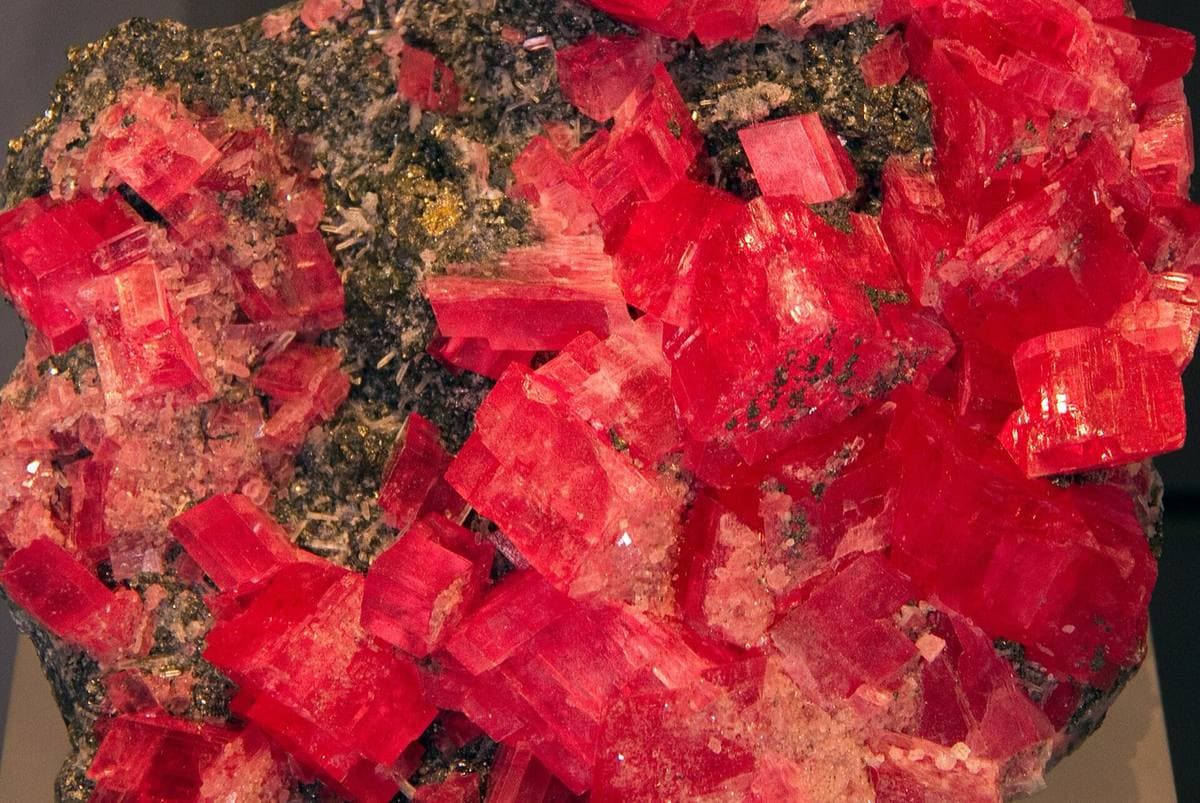
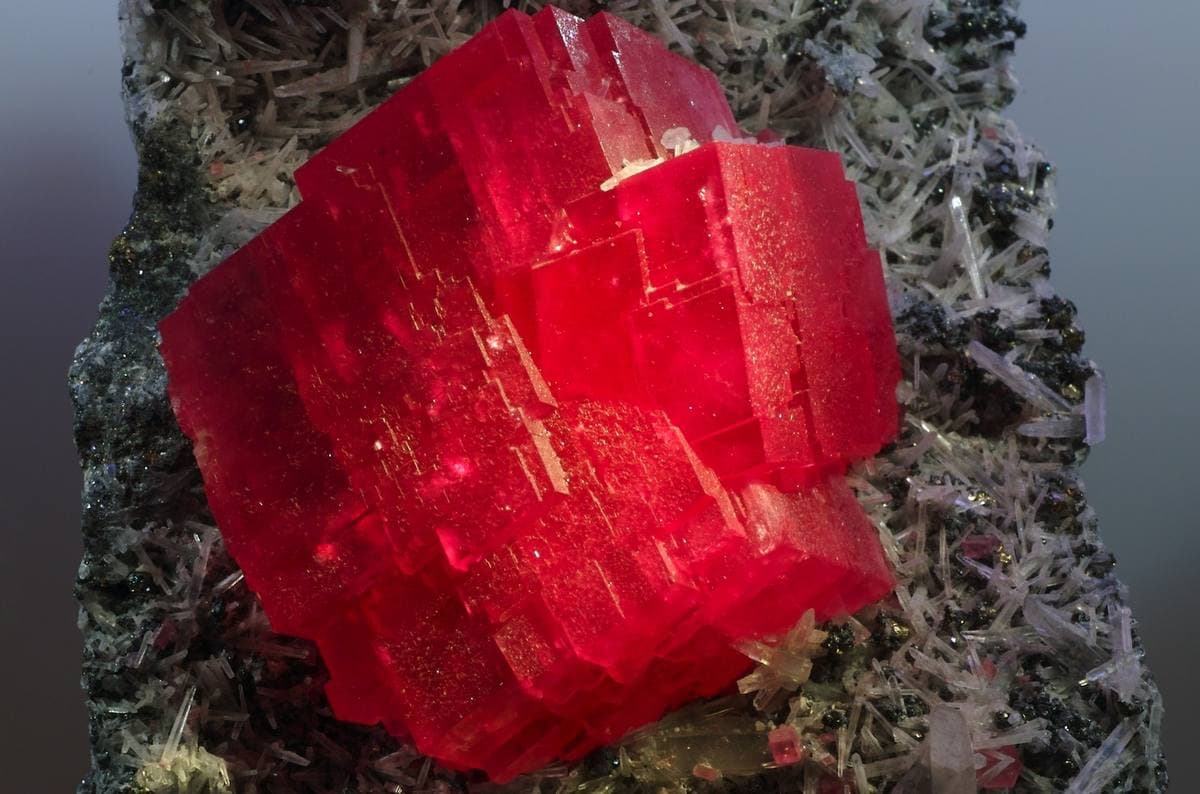
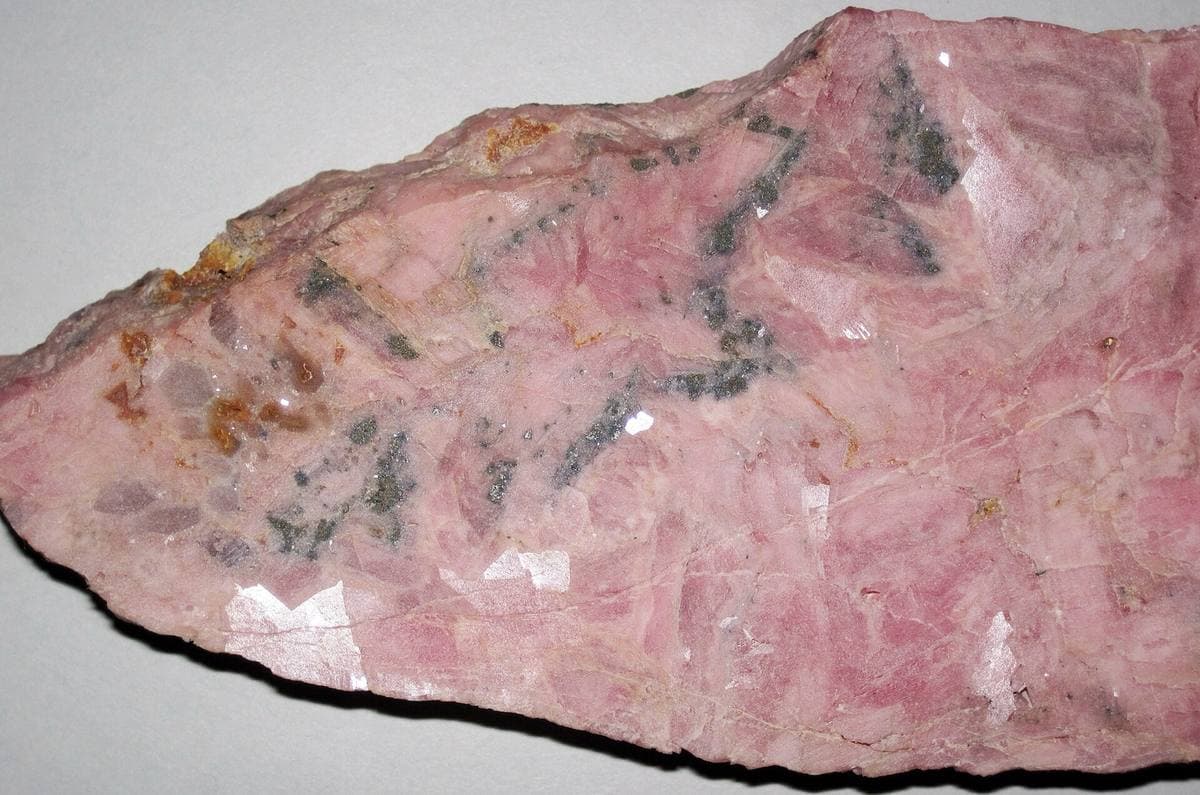
Rhodochrosite is a highly prized manganese carbonate mineral known for its vibrant, intense pink to raspberry-red coloration. Collectors look for its distinctive rhombohedral crystal form or polished bands in stalactitic material, which often exhibit a beautiful concentric layering pattern.
Spotting rhodochrosite in the field
Field marks- 1
Rose pink to deep red, either as banded stalactitic masses or as sharp rhombic crystals
- 2
Banded material shows concentric pink and white zoning
- 3
Soft at 3.5 to 4, with three perfect cleavages, and it fizzes in warm acid
Two very different forms share the name. Banded pink rhodochrosite from Argentina forms as stalactites in caves and is cut into slabs showing concentric rings. Crystallized rhodochrosite from hydrothermal veins forms sharp red rhombs, and Colorado's Sweet Home Mine near Alma produced the finest in the world before it closed. It is the Colorado state mineral. The three perfect cleavages make it fragile to dig and fragile to cut.
Straight answers
- Is it worth cutting?
- Soft and cleavable, which makes it demanding. Cut slowly, avoid heat, and finish gently. Banded slabs are far more forgiving than crystal material.
- What is it really worth?
- Banded Argentine material is inexpensive. Fine red crystallized specimens are among the most valuable mineral specimens in the world.
- Can you legally keep it?
- The Sweet Home Mine is closed. Colorado occurrences elsewhere are on claimed or private ground.
Often confused with
Rhodochrosite vs. its common look-alikes, and how to tell them apart in the field.
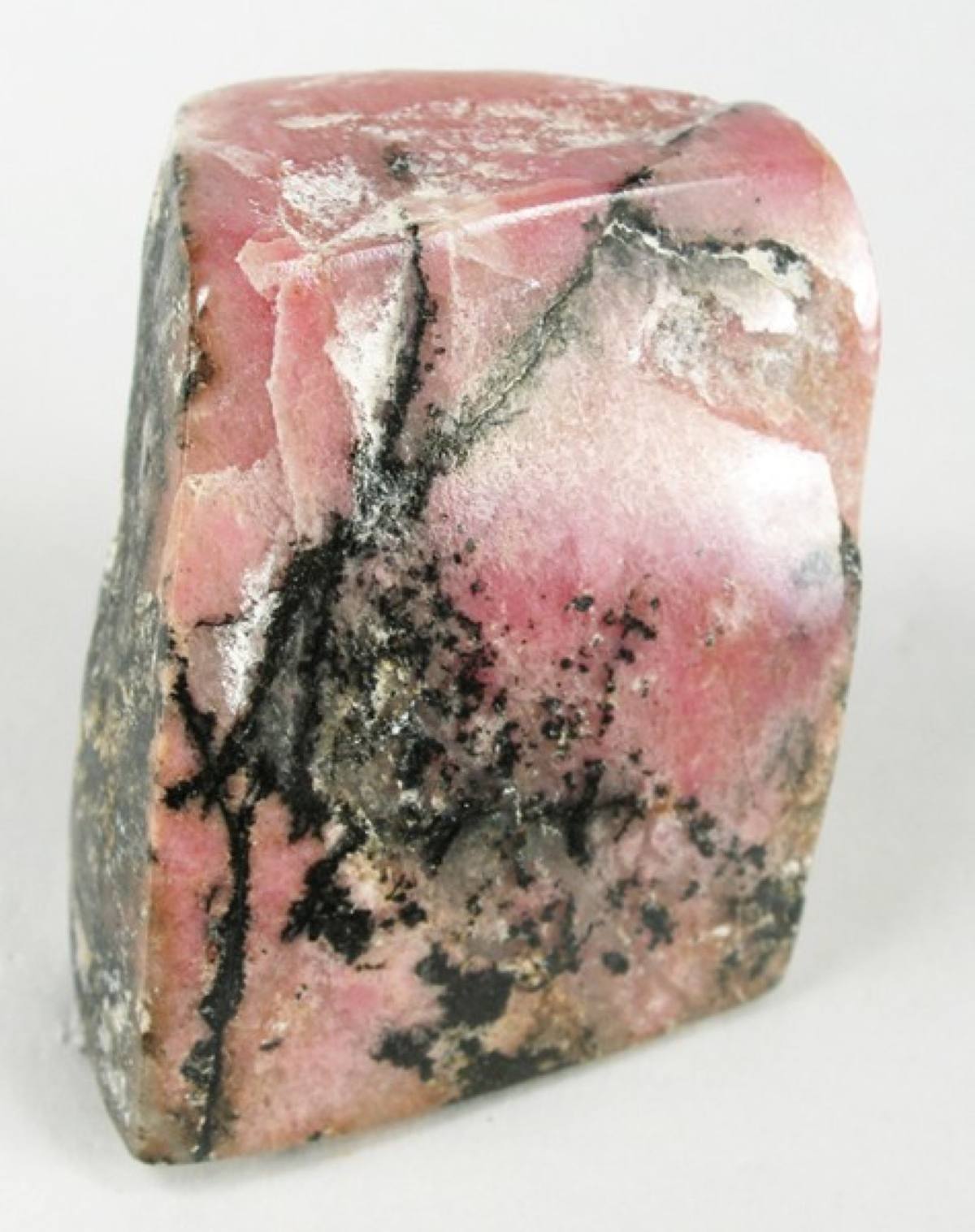
How to tell apart: Rhodonite is much harder at 5.5 to 6.5, has black manganese veining rather than white banding, and does not fizz in acid.
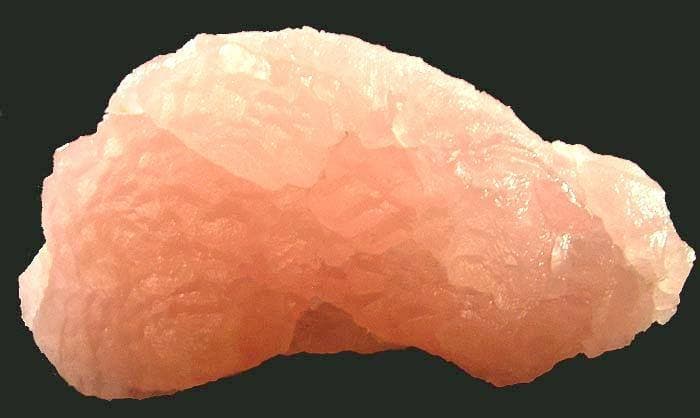
How to tell apart: Both are carbonates with rhombic cleavage and both fizz. Rhodochrosite is denser and its pink is deeper and more saturated.
Often found alongside rhodochrosite
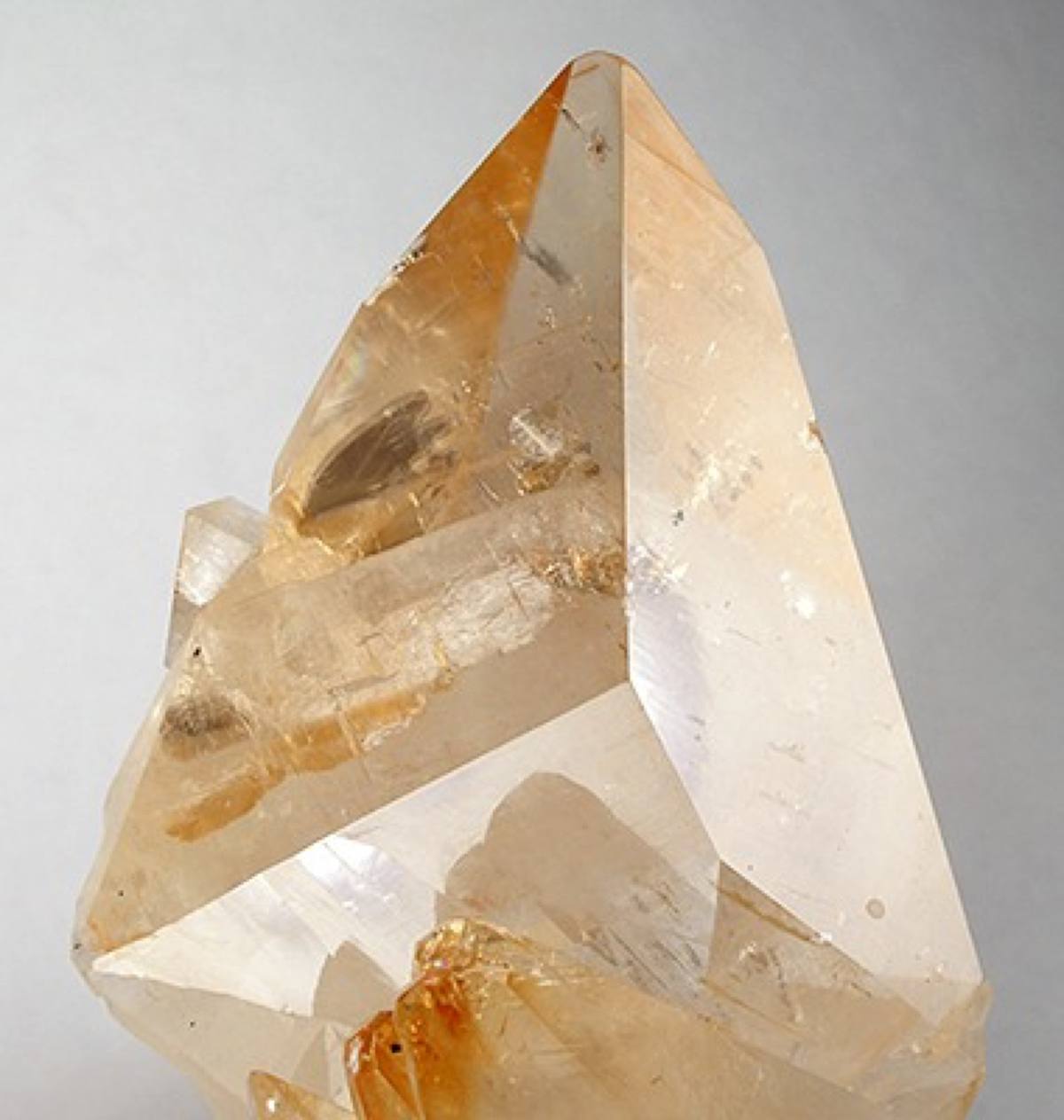
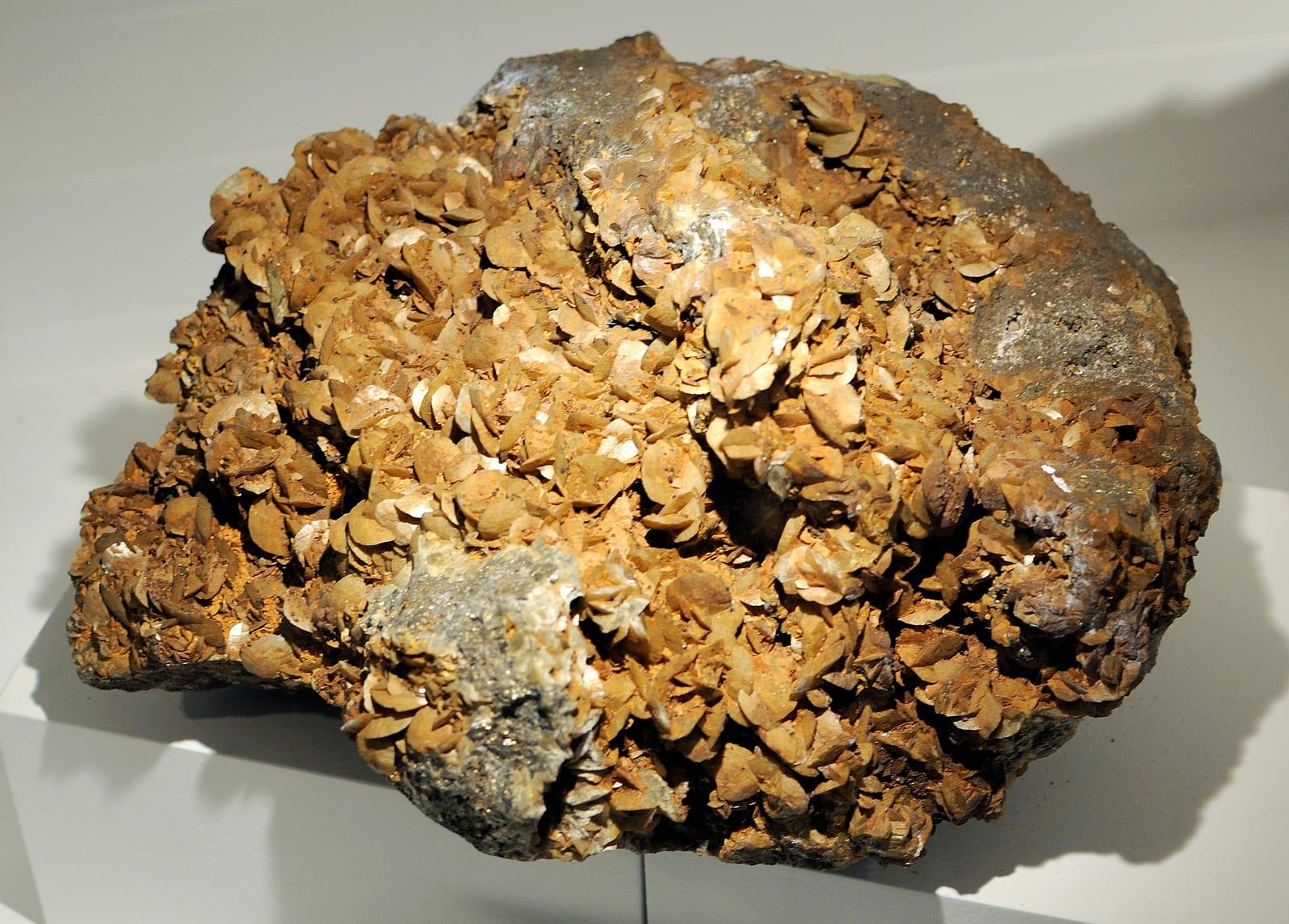
Minerals reported to co-occur with rhodochrosite. Spotting these in float or country rock is a strong cue you are in the right ground.
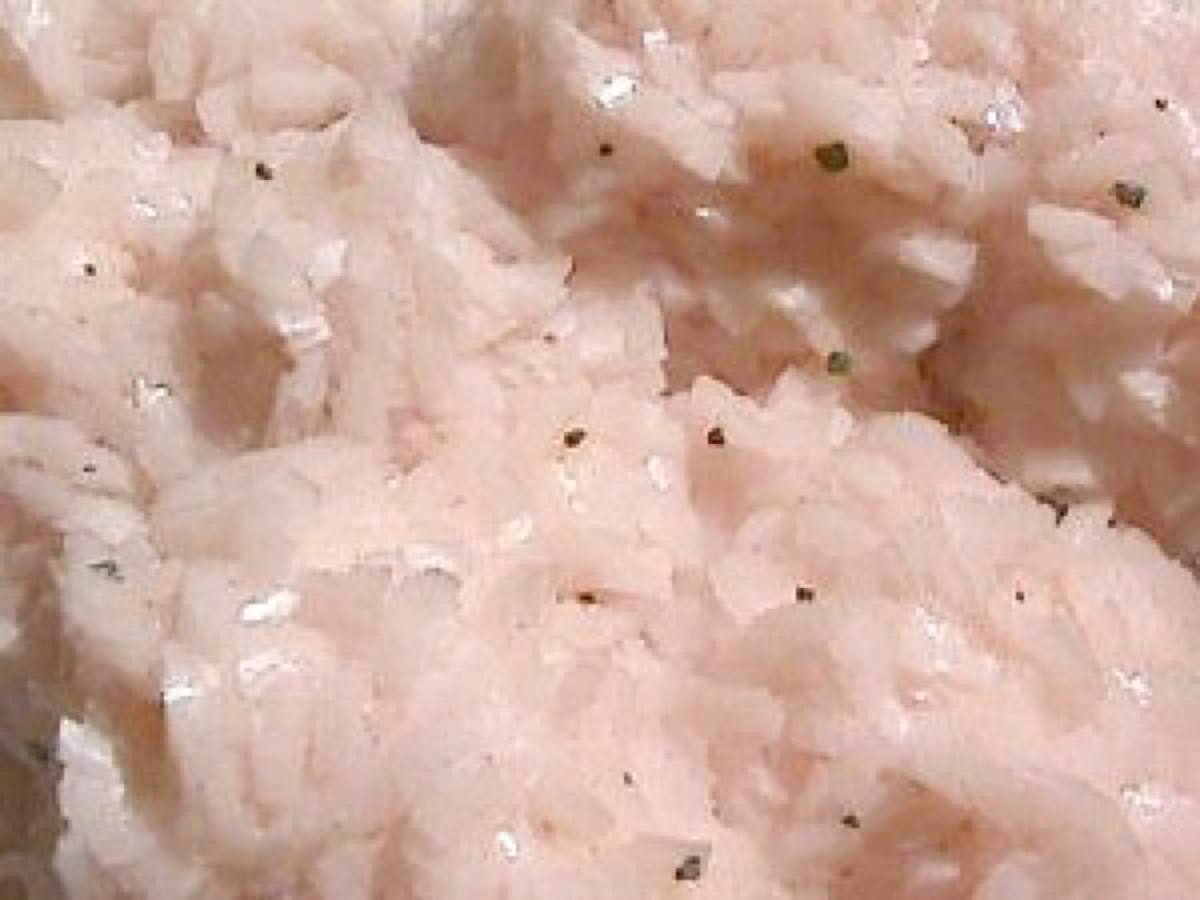
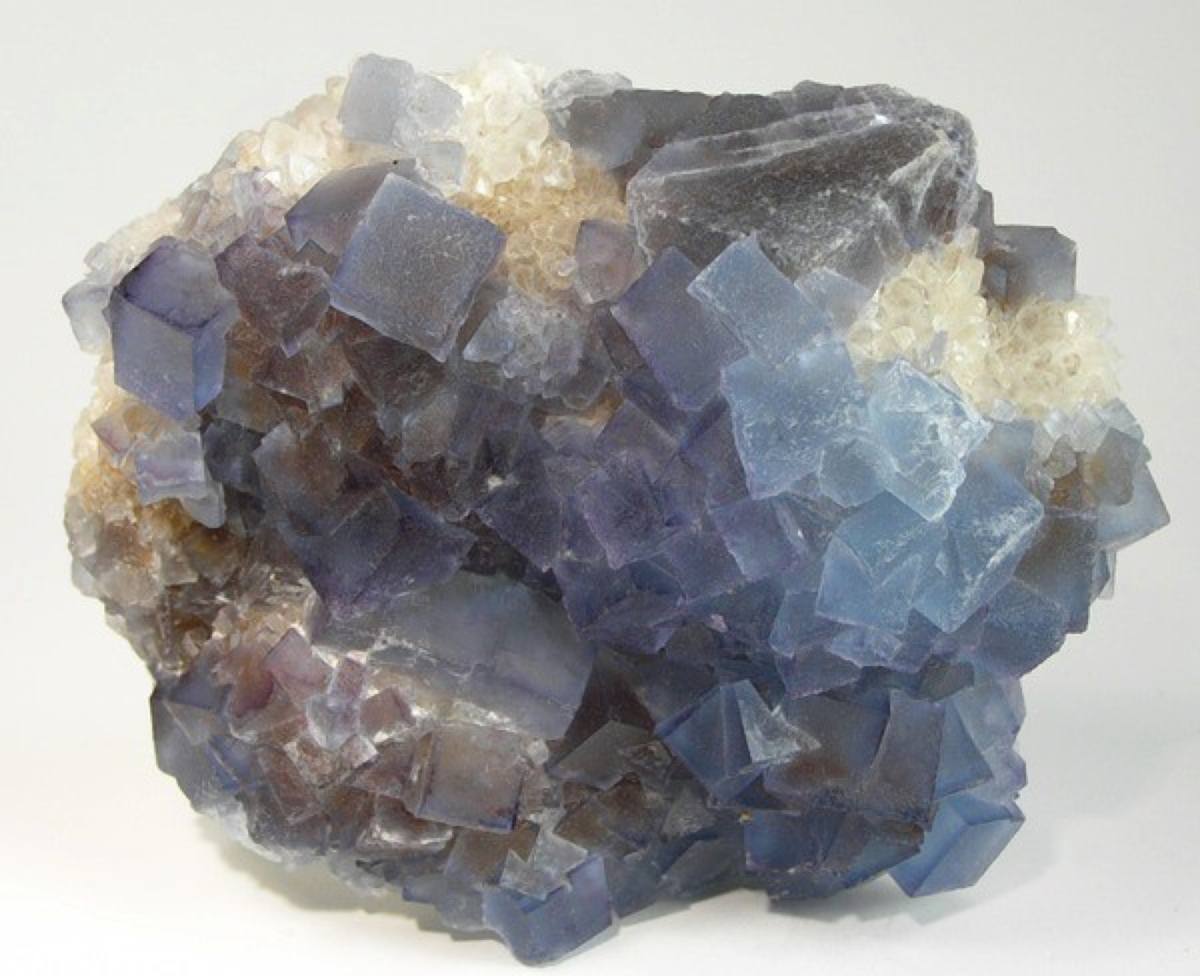
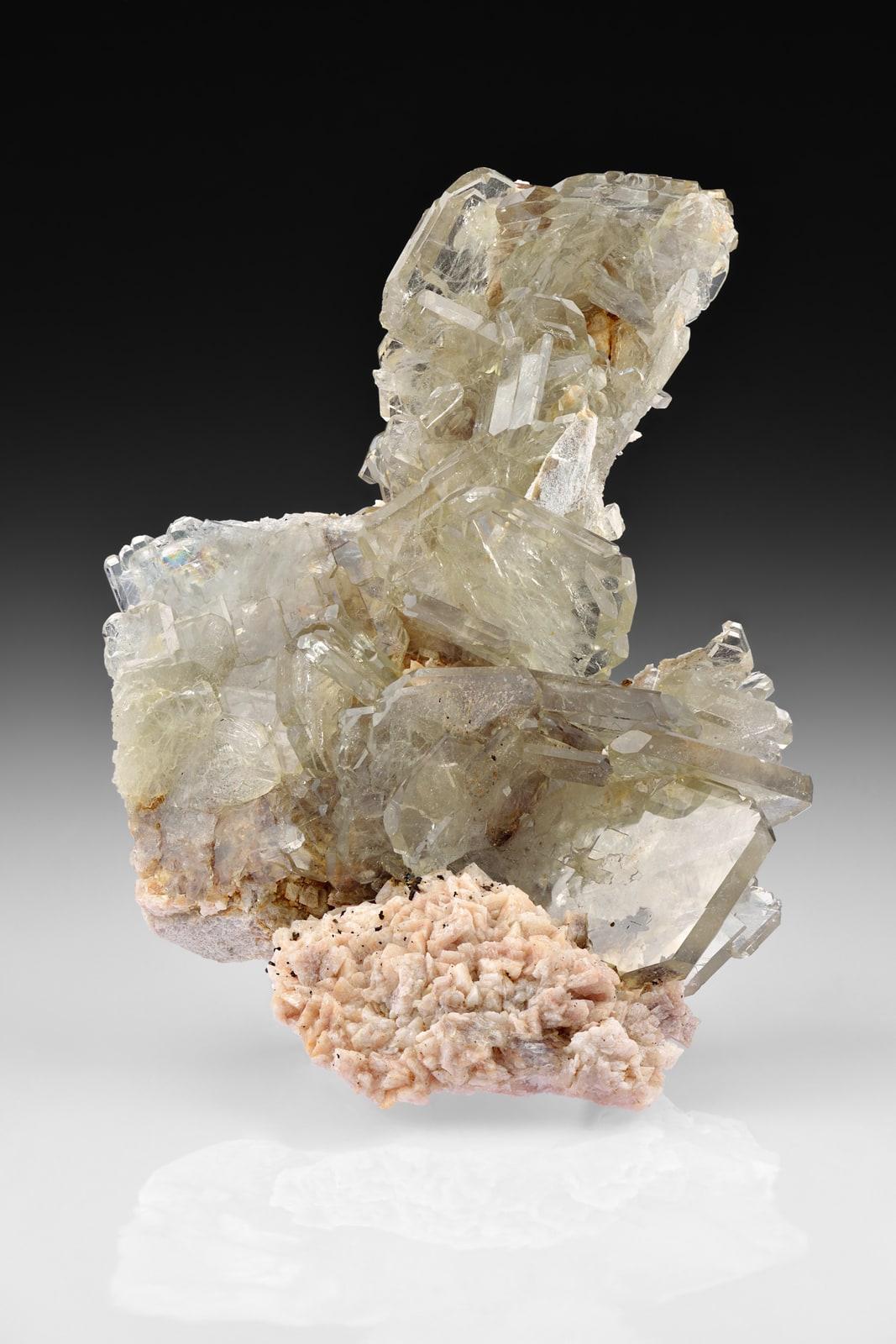
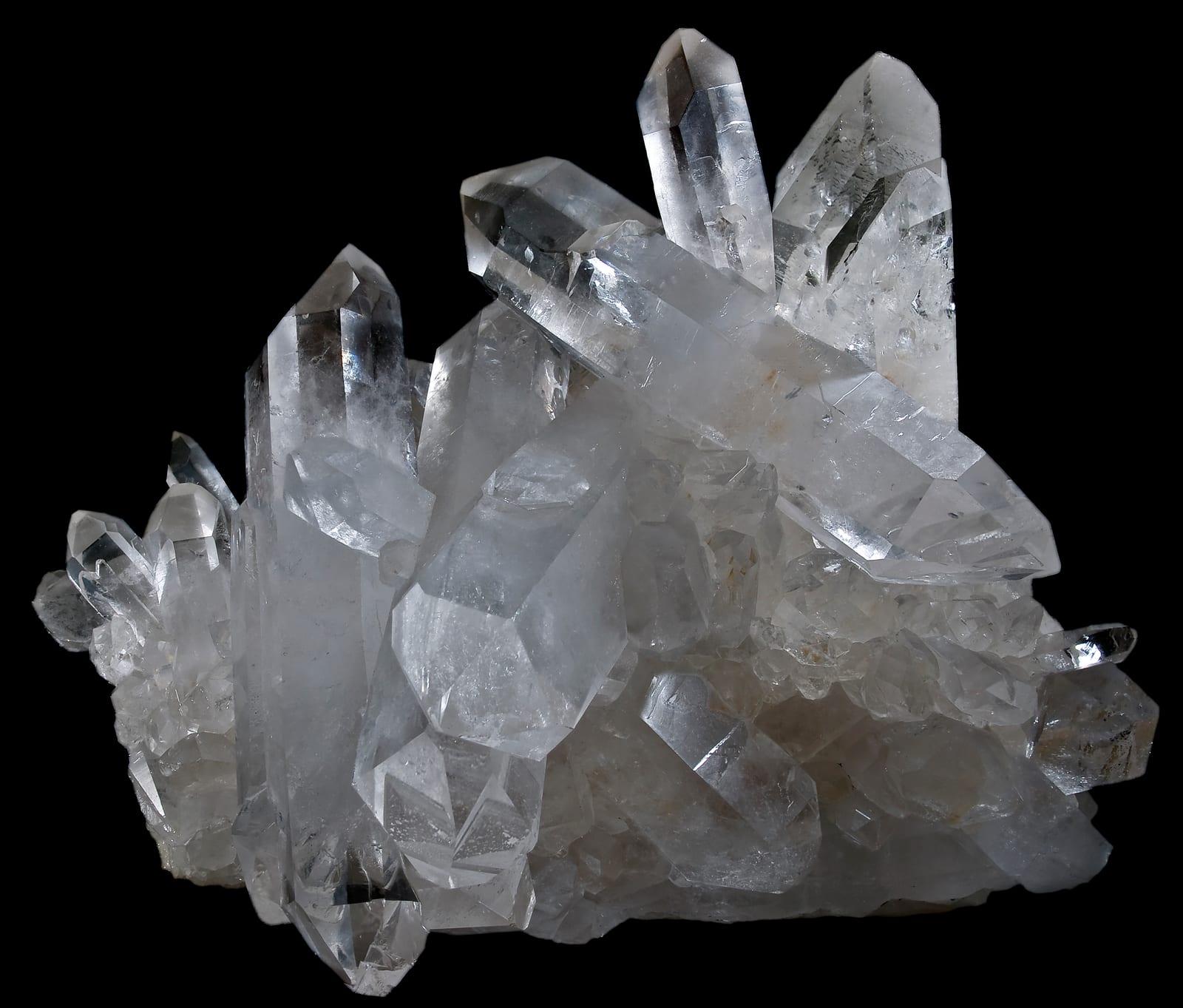
All properties
- Chemical formula
- MnCO₃
- Mohs hardness
- 3.5-4
- Density
- 3.70 g/cm³
- Streak
- White
- Luster
- Vitreous, pearly in aggregates
- Transparency
- Transparent to translucent
- Crystal system
- Trigonal
- Crystal habit
- Rhombohedral crystals, botryoidal, stalactitic, massive
- Cleavage
- {1011}, perfect; {0112}, a parting
- Rarity
- Uncommon
- Uses
- Collector, Gemstone, Lapidary
- Host rock
- A primary mineral in low- to moderate-temperature hydrothermal veins; in metamorphic deposits; common in carbonatites; authigenic and secondary in sediments; uncommon in granite pegmatites
Where rockhounds find rhodochrosite
20 mapped spotsClassic worldwide localities
- Emma mine, Butte, Silver Bow Co., Montana, USA
- Cavnic (Kapnikbánya) and Herja (Kisbánya), Baia Mare (Nagybánya) district, Romania
- Wolf mine, near Herdorf, Westphalia, Germany
- Vuoriyarvi carbonatite complex and the Kovdor massif, Kola Peninsula, Russia
- Mont Saint-Hilaire, Quebec, Canada
- Cananea, Sonora, and Santa Eulalia, Chihuahua, Mexico
U.S. states with rhodochrosite
Each link opens a state-specific list of mapped rockhounding spots that produce rhodochrosite.
Field-hunting tip
Where it forms: A primary mineral in low- to moderate-temperature hydrothermal veins; in metamorphic deposits; common in carbonatites; authigenic and secondary in sediments; uncommon in granite pegmatites. If you start seeing calcite, siderite, dolomite in float, you are in the right ground. Typical habit: rhombohedral crystals, botryoidal, stalactitic, massive. Train your eye for that shape before scanning the outcrop. In the U.S., the densest reported localities are in Utah, California, North Carolina. Start trip planning there.
More rhodochrosite photos
Common questions
How do you identify rhodochrosite?+
Where is rhodochrosite found?+
Can I find rhodochrosite in the United States?+
What rocks look like rhodochrosite?+
What minerals are found with rhodochrosite?+
What kind of rock does rhodochrosite form in?+
What is rhodochrosite used for?+
Find rhodochrosite on the map
RockHoundR shows mapped rockhounding spots, access rules, and lets you log every find.