Sagenite agate is characterized by intricate, needle-like or hair-like inclusions, often formed by minerals like rutile, goethite, or actinolite trapped within chalcedony. Collectors prize these specimens for their delicate, fan-shaped or starburst patterns that appear suspended within the translucent stone.
Spotting sagenite agate in the field
Field marks- 1
Straight, needle-like crystal sprays radiating from a point inside the chalcedony
- 2
Needles are rigid and geometric, fanning out like a starburst or a wheat sheaf
- 3
Usually golden, red-brown or black against a translucent body
Sagenite is agate that grew around pre-existing needle crystals, most often a mineral that has since altered away and left the mold behind. The pattern is unmistakable once you have seen it, because nothing else in agate is that straight and that radial. It shows up as a bonus inside other agates rather than as its own bed, so you find it when you cut, not when you walk.
Straight answers
- Is it worth cutting?
- Center the burst and cut parallel to the spray. A slab that clips the sprays at an angle turns a spectacular starburst into a scatter of unrelated dashes.
- What is it really worth?
- Sold as a feature of a named agate rather than on its own. A strong sagenite burst can double what a piece of otherwise ordinary agate is worth.
- Can you legally keep it?
- Follows whatever bed it came out of.
Often confused with
Sagenite Agate vs. its common look-alikes, and how to tell them apart in the field.
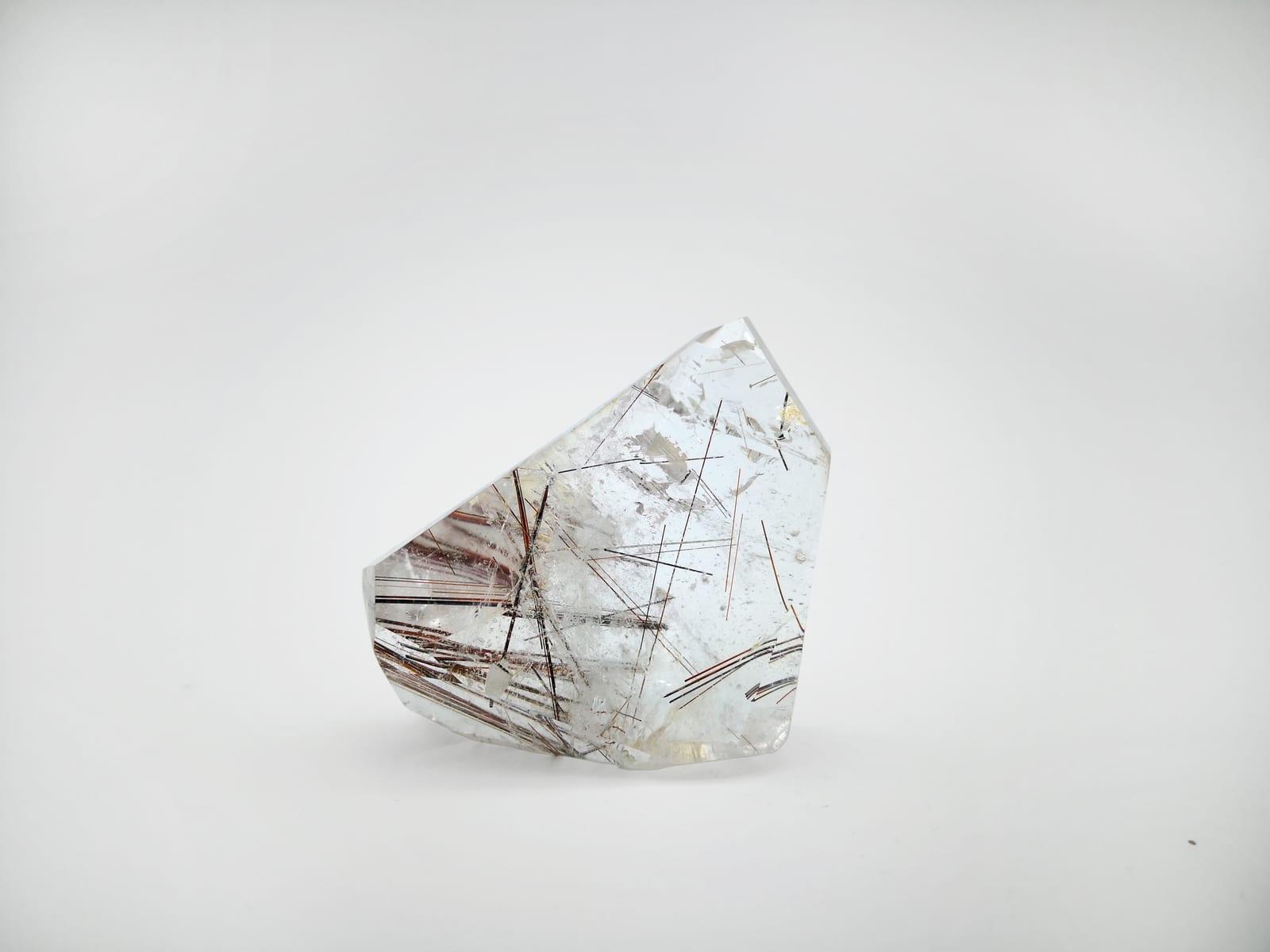
How to tell apart: Same needles, different host. Rutilated quartz is transparent crystalline quartz; sagenite needles sit in translucent, banded chalcedony.
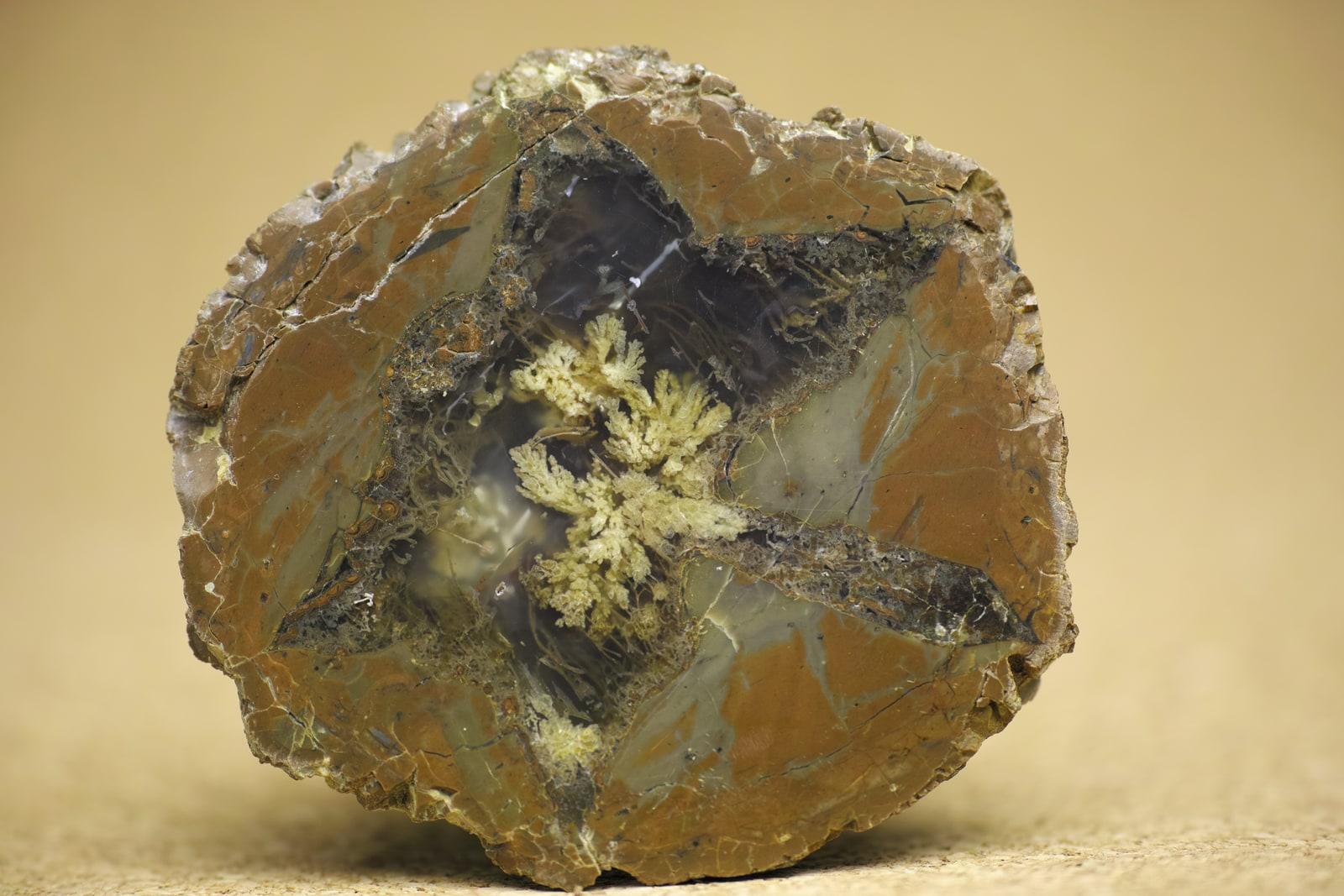
How to tell apart: Plume is soft and feathery. Sagenite needles are dead straight and hold their line to the tip.
Often found alongside sagenite agate
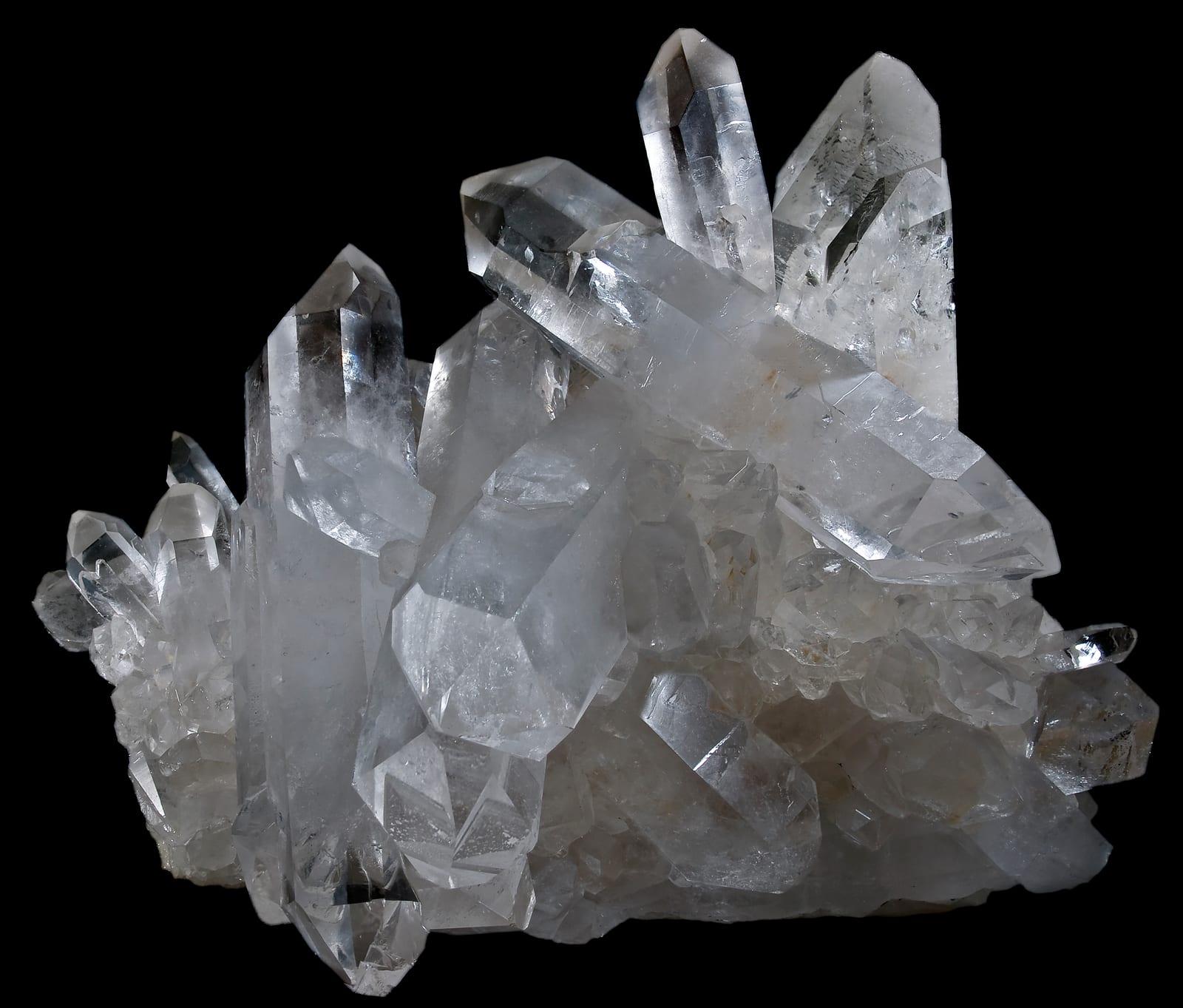
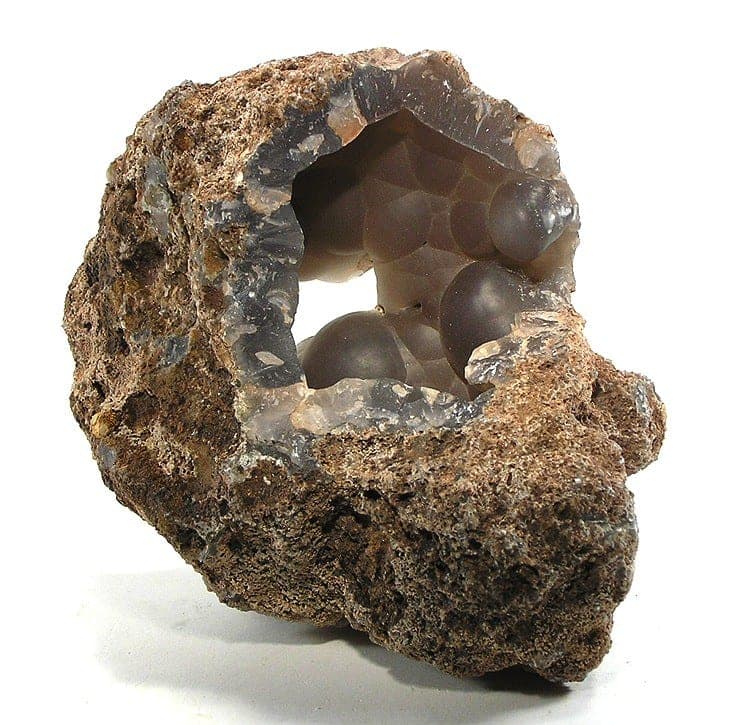
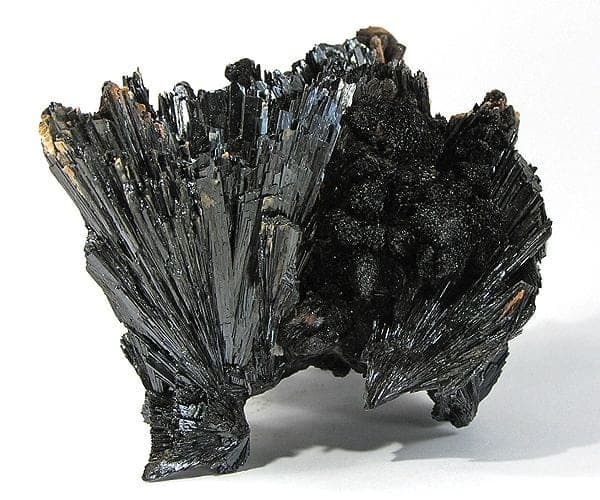
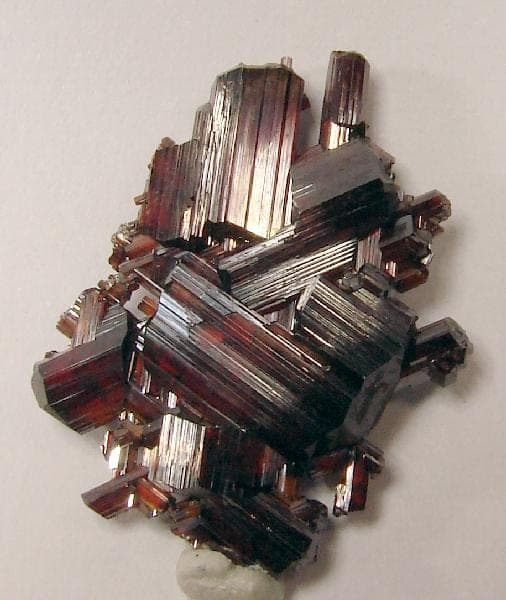
Minerals reported to co-occur with sagenite agate. Spotting these in float or country rock is a strong cue you are in the right ground.
All properties
- Chemical formula
- SiO₂
- Mohs hardness
- 6.5-7
- Density
- 2.6-2.7 g/cm³
- Streak
- White
- Luster
- Vitreous
- Transparency
- Translucent
- Crystal system
- Trigonal
- Crystal habit
- Acicular inclusions in massive quartz
- Cleavage
- None
- Rarity
- Common
- Uses
- Lapidary, Collector, Decorative
- Host rock
- hydrothermal veins and volcanic cavities
Where rockhounds find sagenite agate
1 mapped spotsClassic worldwide localities
- USA
- Brazil
- Mexico
- Madagascar
- Czech Republic
Field-hunting tip
Where it forms: hydrothermal veins and volcanic cavities. If you start seeing quartz, chalcedony, goethite in float, you are in the right ground. Typical habit: acicular inclusions in massive quartz. Train your eye for that shape before scanning the outcrop. In the U.S., the densest reported localities are in California. Start trip planning there.
Common questions
How do you identify sagenite agate?+
Where is sagenite agate found?+
Can I find sagenite agate in the United States?+
What rocks look like sagenite agate?+
What minerals are found with sagenite agate?+
What kind of rock does sagenite agate form in?+
What is sagenite agate used for?+
Find sagenite agate on the map
RockHoundR shows mapped rockhounding spots, access rules, and lets you log every find.