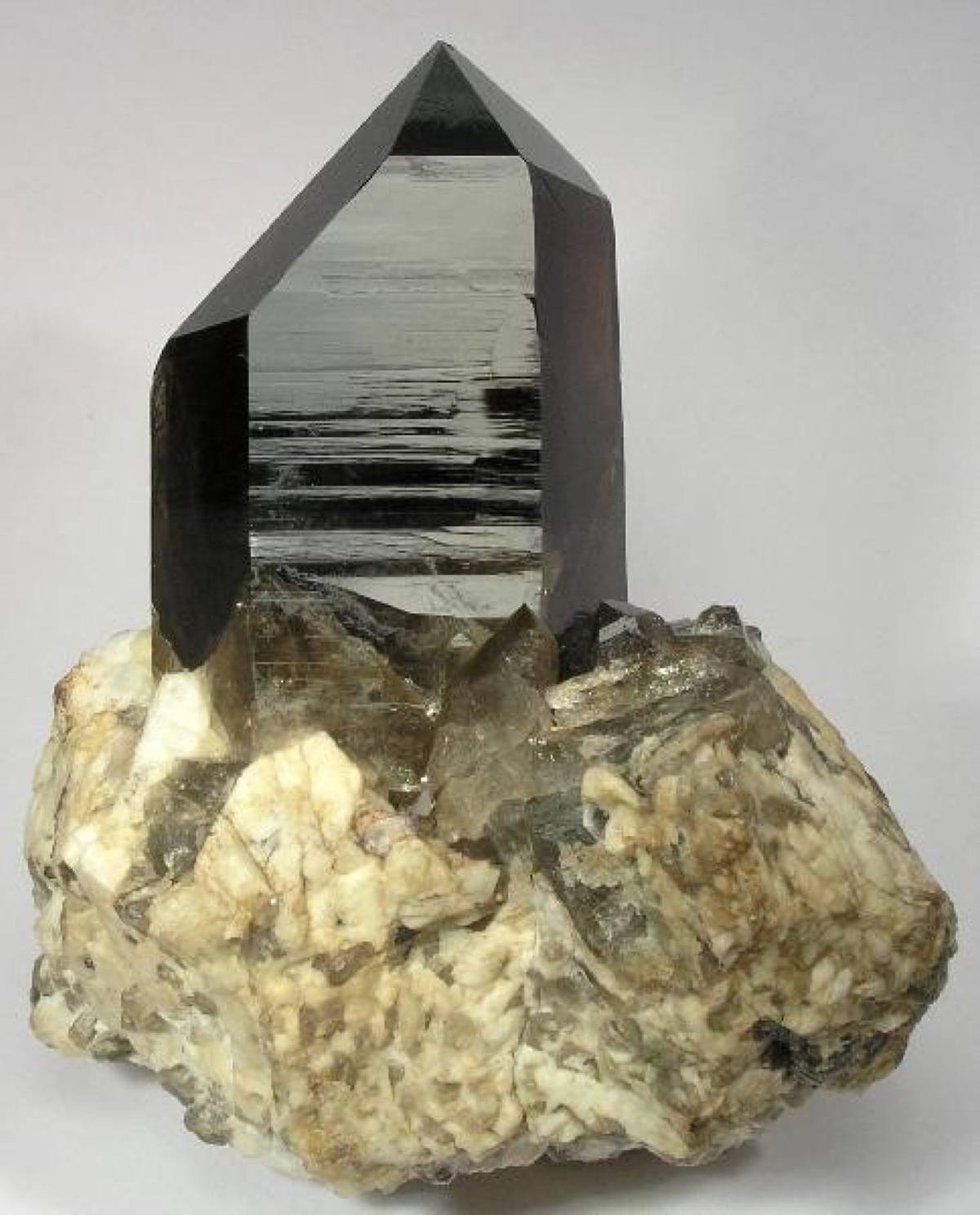
Smoky Quartz is a variety of quartz that ranges in color from light smoky gray to deep brownish-black due to natural irradiation of aluminum impurities within the crystal structure. It is highly prized by collectors for its sharp, well-terminated prismatic crystals often found in granitic pegmatites and alpine-type fissures.
Spotting smoky quartz in the field
Field marks- 1
Grey to deep brown, sometimes nearly black, but still transparent on thin edges
- 2
Standard six-sided quartz prism with glassy faces
- 3
Color is a radiation effect in the crystal lattice, so it is strongest in granite country
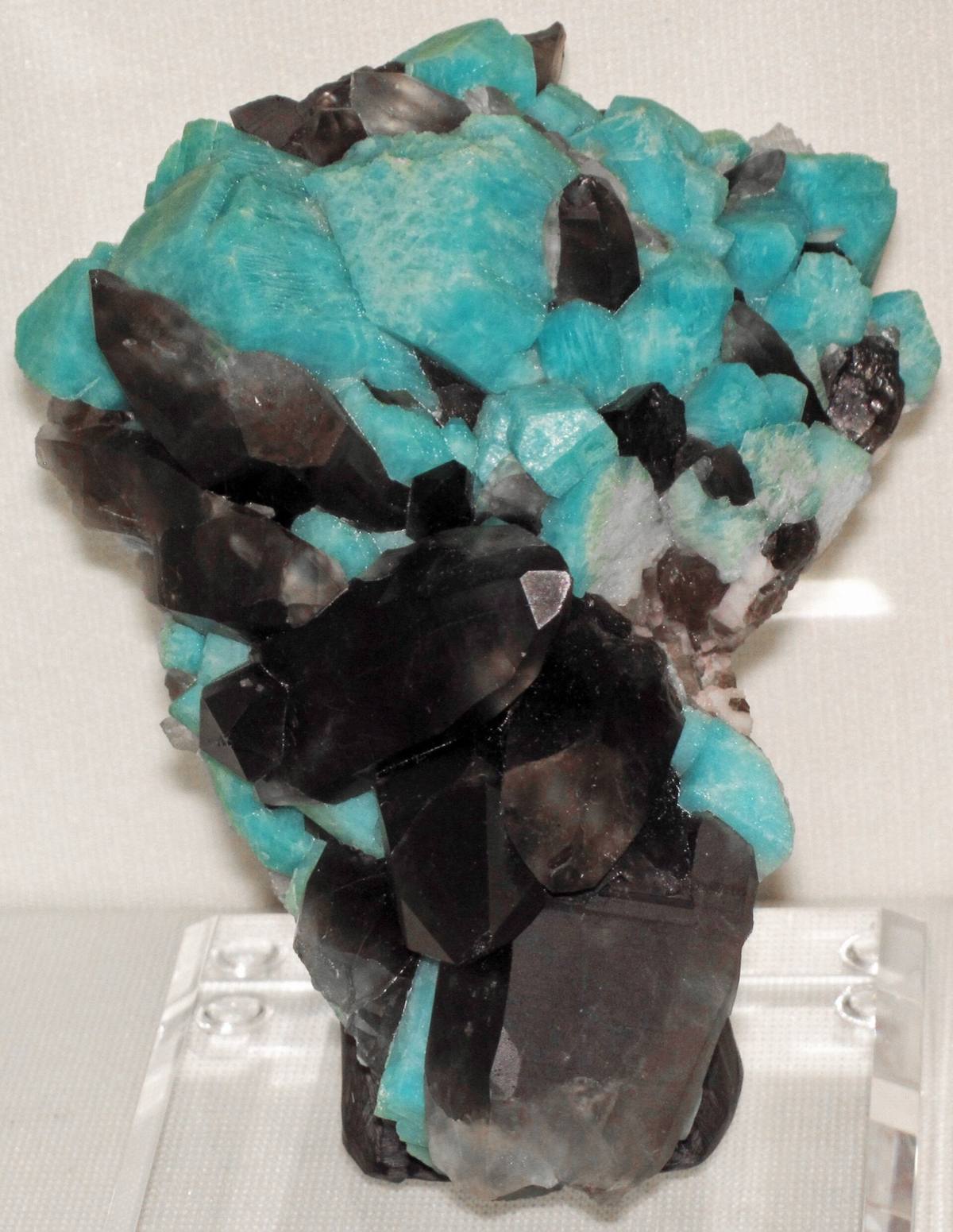
Smoky quartz gets its color from natural radiation acting on trace aluminium, which is why the classic localities sit in granites with elevated uranium and thorium. The Pikes Peak granite in Colorado is the textbook example, and its pockets famously produce smoky quartz standing on amazonite, which is one of the most recognizable mineral pairings in North America. Look for pocket zones where the granite is weathered and clay-filled, and dig with a hand tool rather than a bar, because the crystals are fragile at the tips.
Straight answers
- Is it worth cutting?
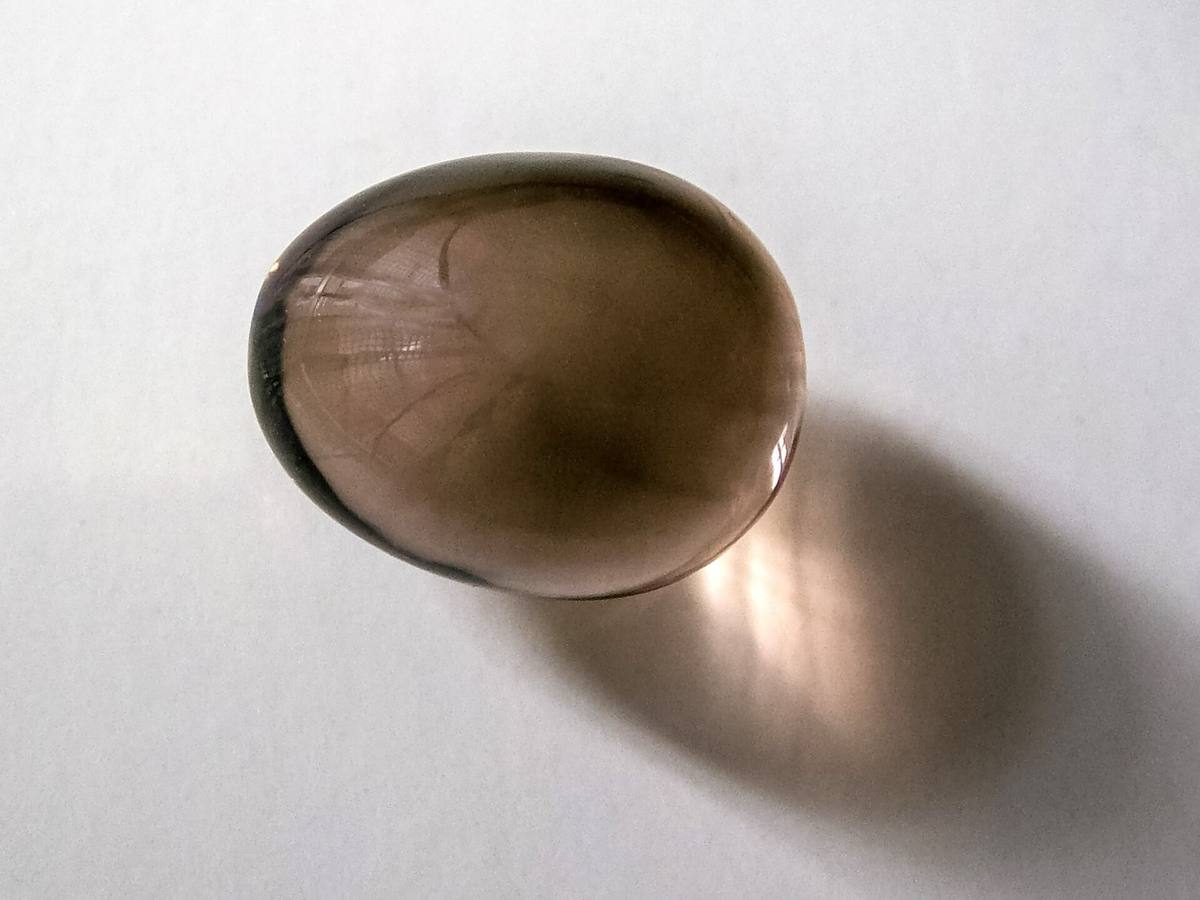
- Excellent faceting material and it tumbles well. Strong heat pales it, so keep it cool on the wheel.
- What is it really worth?
- Inexpensive as material. Value sits in crystal quality and in association specimens, especially smoky quartz on amazonite.
- Can you legally keep it?
- The Colorado localities are a mix of national forest land open to personal-use collecting and active private claims. Look for claim posts, and do not dig on a claim without permission.
Where it is worth going
- Crystal Peak and Lake GeorgeTeller and Park counties, Colorado
The classic smoky quartz and amazonite pockets. Mixed claim status, plus commercial fee digs.
Often confused with
Smoky Quartz vs. its common look-alikes, and how to tell them apart in the field.
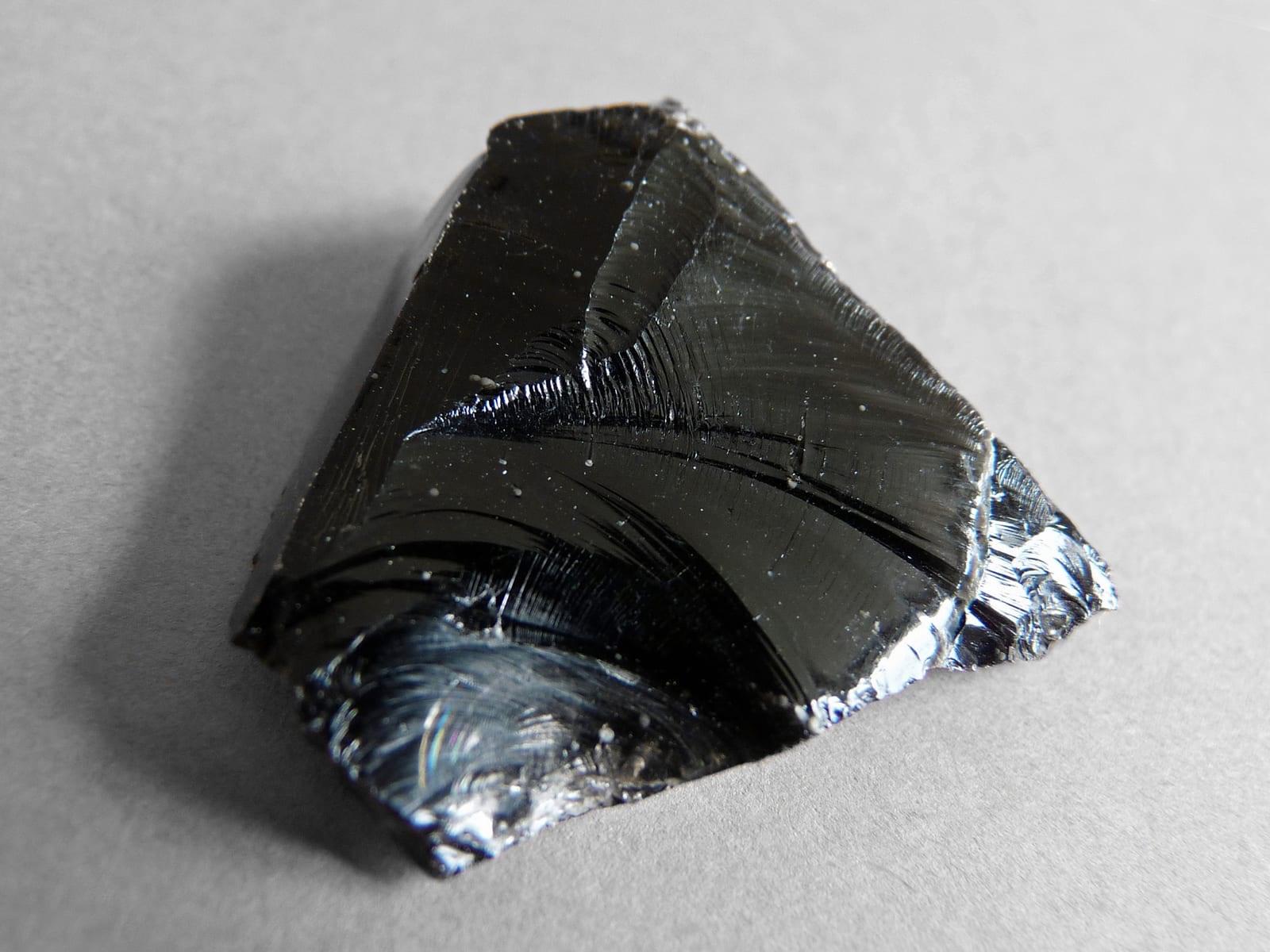
Often found alongside smoky quartz
Minerals reported to co-occur with smoky quartz. Spotting these in float or country rock is a strong cue you are in the right ground.
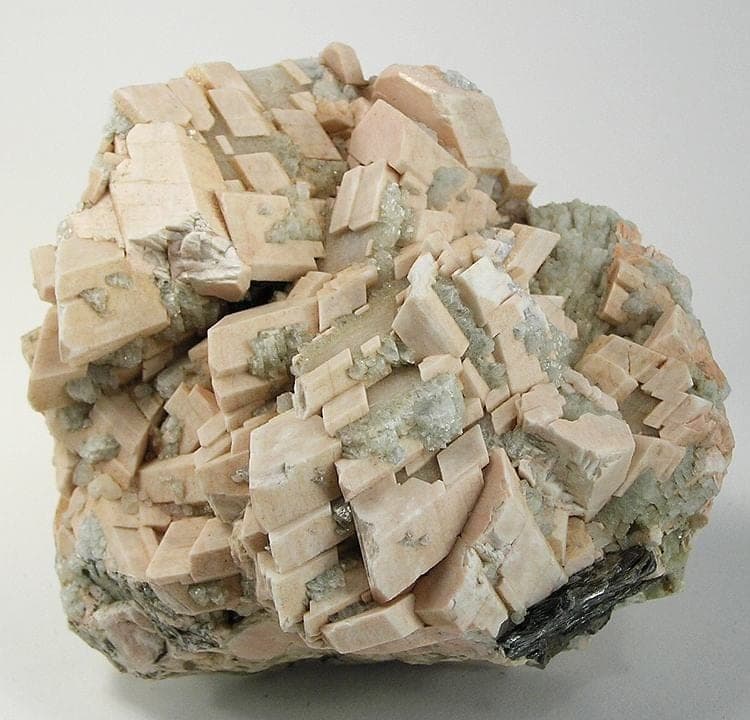
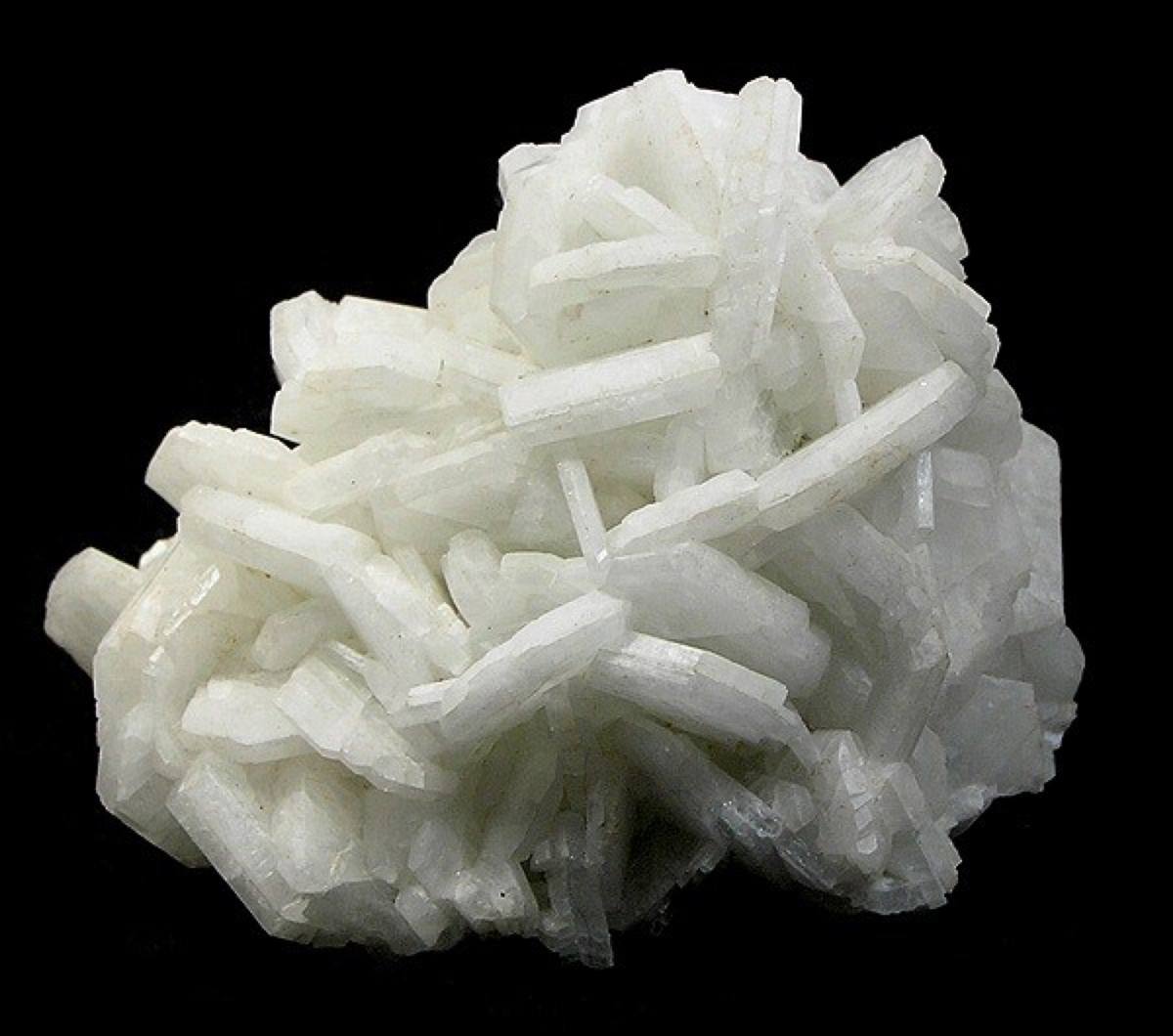
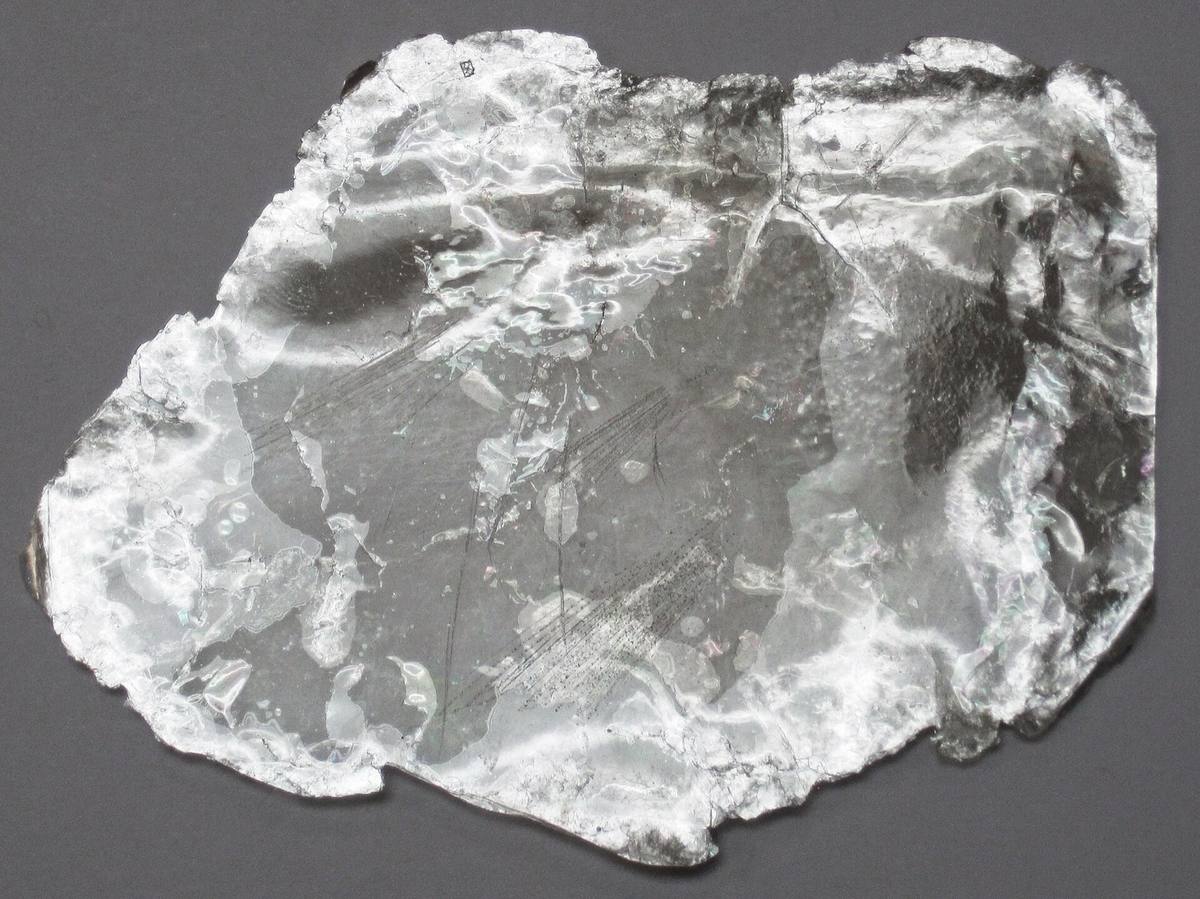
All properties
- Chemical formula
- SiO₂
- Mohs hardness
- 7
- Density
- 2.65 g/cm³
- Streak
- White
- Luster
- Vitreous
- Transparency
- Transparent
- Crystal system
- Trigonal
- Crystal habit
- Prismatic crystals
- Cleavage
- None
- Rarity
- Common
- Uses
- Collector, Lapidary, Gemstone
- Host rock
- pegmatites, granites, and hydrothermal veins
Where rockhounds find smoky quartz
91 mapped spotsClassic worldwide localities
- Brazil
- Scotland
- Switzerland
- USA
- Madagascar
U.S. states with smoky quartz
Each link opens a state-specific list of mapped rockhounding spots that produce smoky quartz.
- North Carolina10 spots
- Colorado8 spots
- Maine8 spots
- Connecticut7 spots
- New Hampshire7 spots
- South Carolina6 spots
- Massachusetts5 spots
Field-hunting tip
Where it forms: pegmatites, granites, and hydrothermal veins. If you start seeing microcline, albite, muscovite in float, you are in the right ground. Typical habit: prismatic crystals. Train your eye for that shape before scanning the outcrop. In the U.S., the densest reported localities are in North Carolina, Colorado, Maine. Start trip planning there.
More smoky quartz photos
Common questions
How do you identify smoky quartz?+
Where is smoky quartz found?+
Can I find smoky quartz in the United States?+
What rocks look like smoky quartz?+
What minerals are found with smoky quartz?+
What kind of rock does smoky quartz form in?+
What is smoky quartz used for?+
Find smoky quartz on the map
RockHoundR shows mapped rockhounding spots, access rules, and lets you log every find.