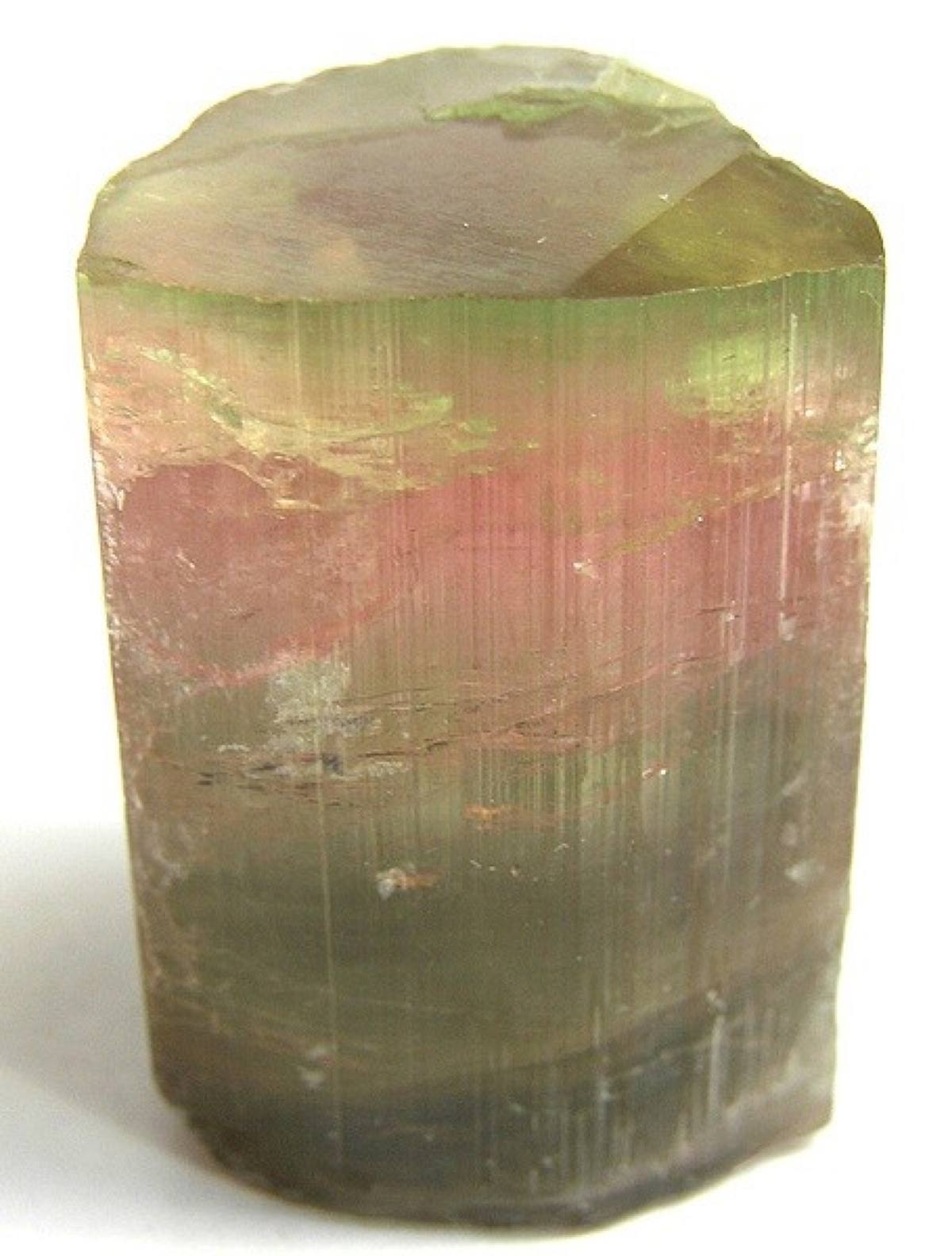
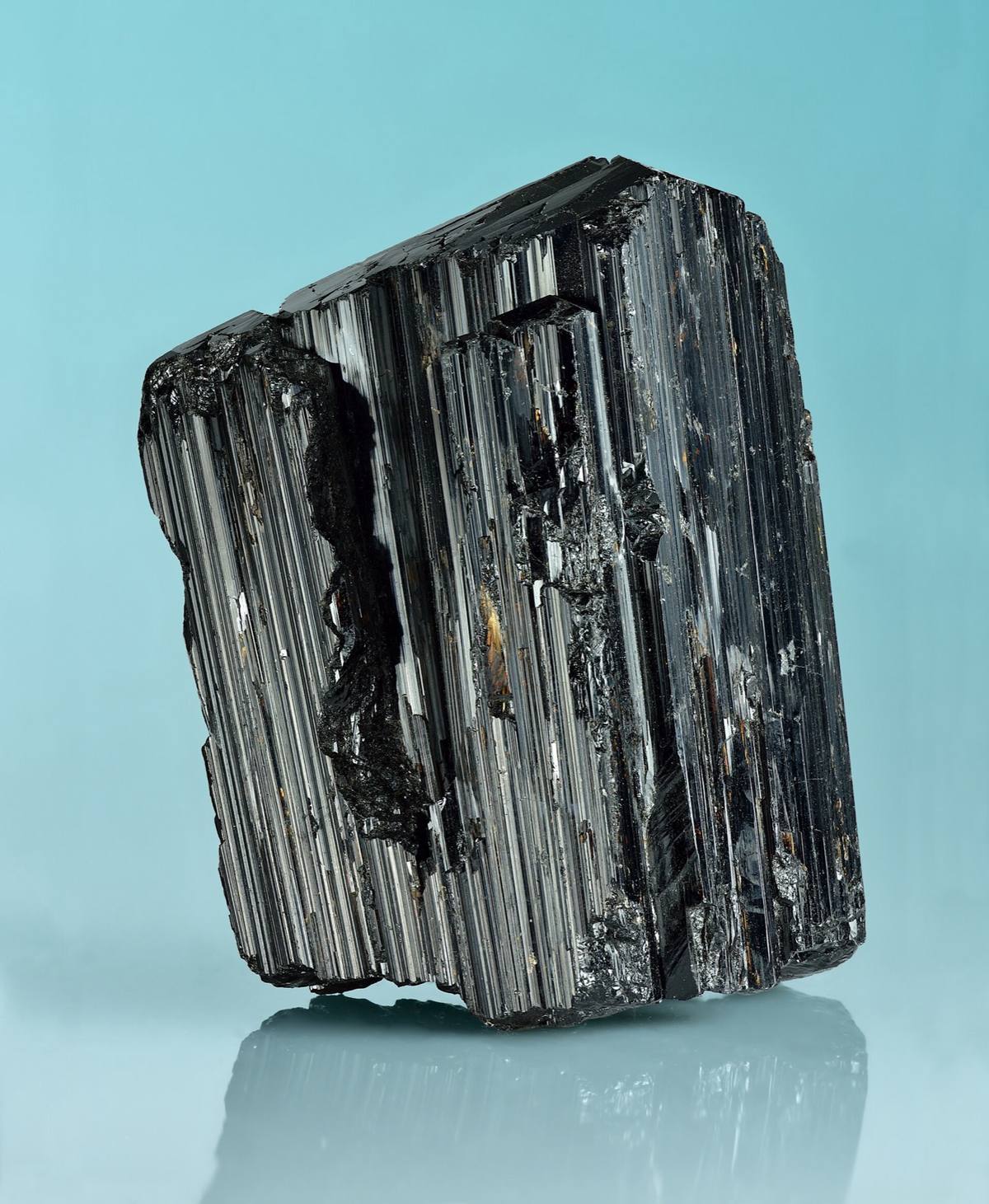
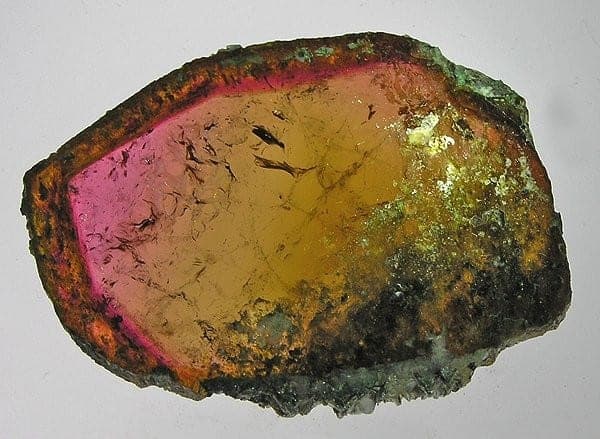
Tourmaline is famous for its wide spectrum of colors and distinct vertically striated, prism-like crystal habits. Collectors look for its unique pleochroism and its tendency to occur in bicolor or zoned patterns, often referred to as watermelon tourmaline. It is most commonly recovered from granitic pegmatites worldwide.
Spotting tourmaline in the field
Field marks- 1
Long prisms with a rounded triangular cross-section and heavy lengthwise striations
- 2
Striations run the length of the crystal like grooves in a column
- 3
Often color-zoned along its length, sometimes green at one end and pink at the other
The triangular cross-section with rounded sides is unique and worth learning, because nothing else in a pegmatite looks like it. Black schorl is the common form and turns up in granite and pegmatite everywhere; the colored varieties are pocket minerals and much rarer. Work pegmatite dumps and weathered pocket zones, and look for the striated prisms in feldspar and quartz matrix. Crystals are brittle across their length and break easily, so dig them out with the matrix rather than levering them free.
Straight answers
- Is it worth cutting?
- Strongly pleochroic, so it looks different down the length of the crystal than across it. Orient a faceted stone to get the best color, which usually means cutting across the c-axis for darker material.
- What is it really worth?
- Schorl is cheap. Gem tourmaline runs from moderate to very high, with fine Paraiba-type copper-bearing material among the most valuable colored stones on Earth.
- Can you legally keep it?
- Pegmatite localities are a mix of private mines, fee digs and open public land. Maine and California have the best-known American gem tourmaline.
Where it is worth going
- Mount MicaOxford County, Maine
The first commercial gem mine in the United States and still producing. Private operation.
- Himalaya MineSan Diego County, California
Famous pink and bicolor tourmaline. Screening of mine material is offered to the public.
Often confused with
Tourmaline vs. its common look-alikes, and how to tell them apart in the field.
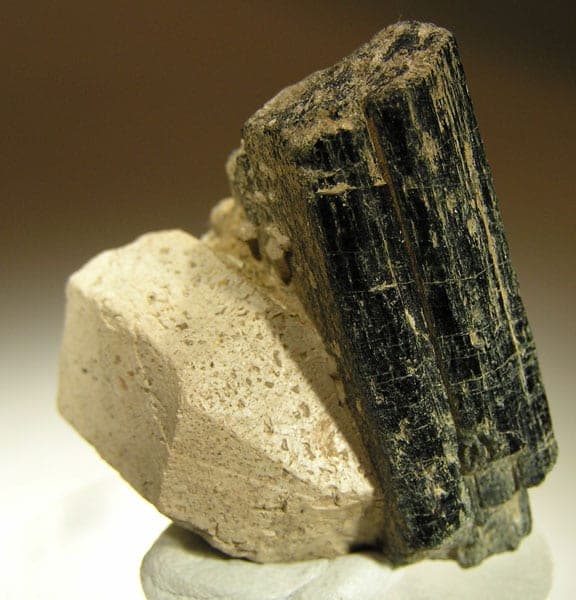
How to tell apart: Hornblende has two good cleavages meeting at about 120 degrees and a diamond-shaped cross-section. Tourmaline has no cleavage and a rounded triangular section.
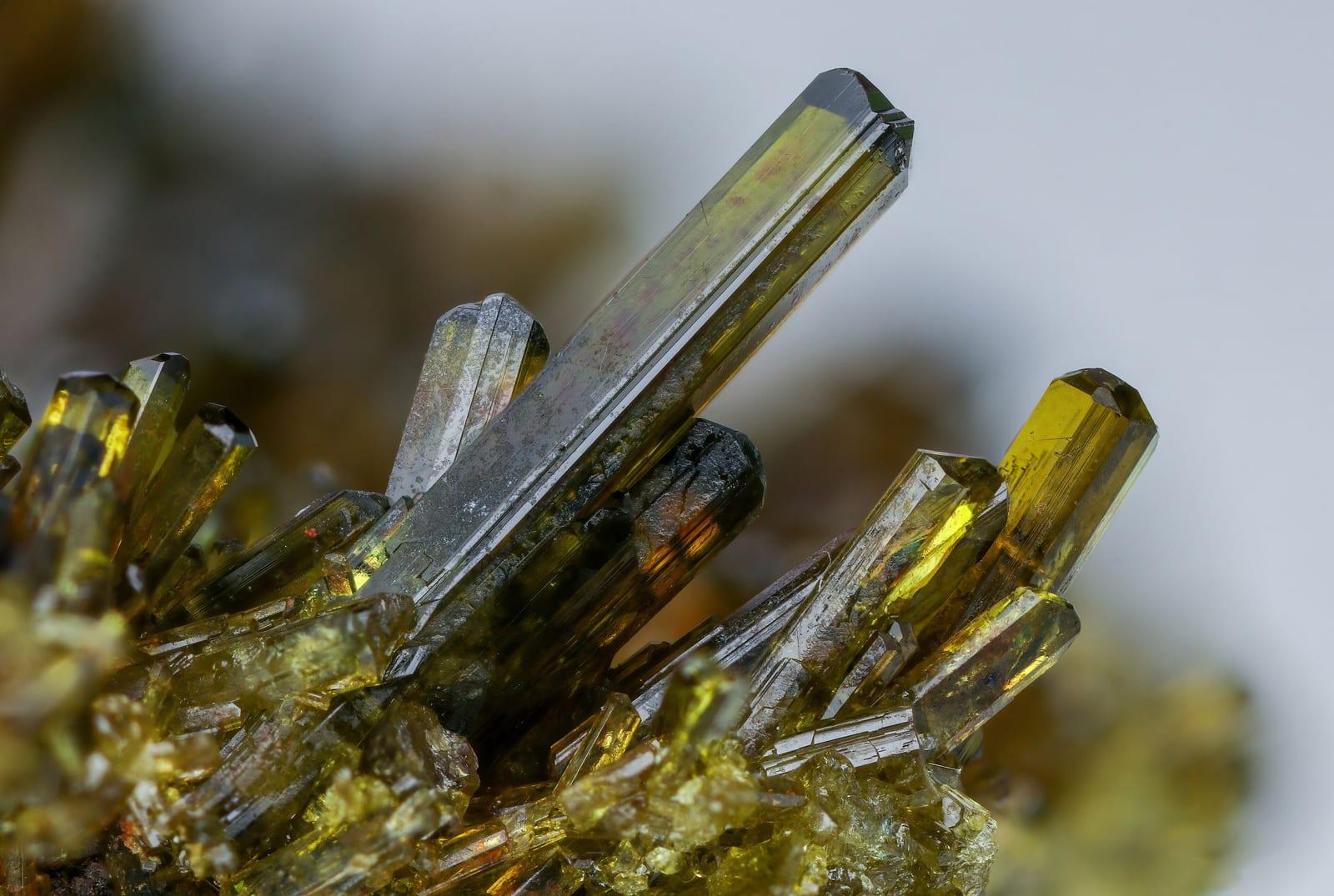
How to tell apart: Epidote is a distinctive yellow-green, has one perfect cleavage, and forms more blade-like crystals.
Often found alongside tourmaline
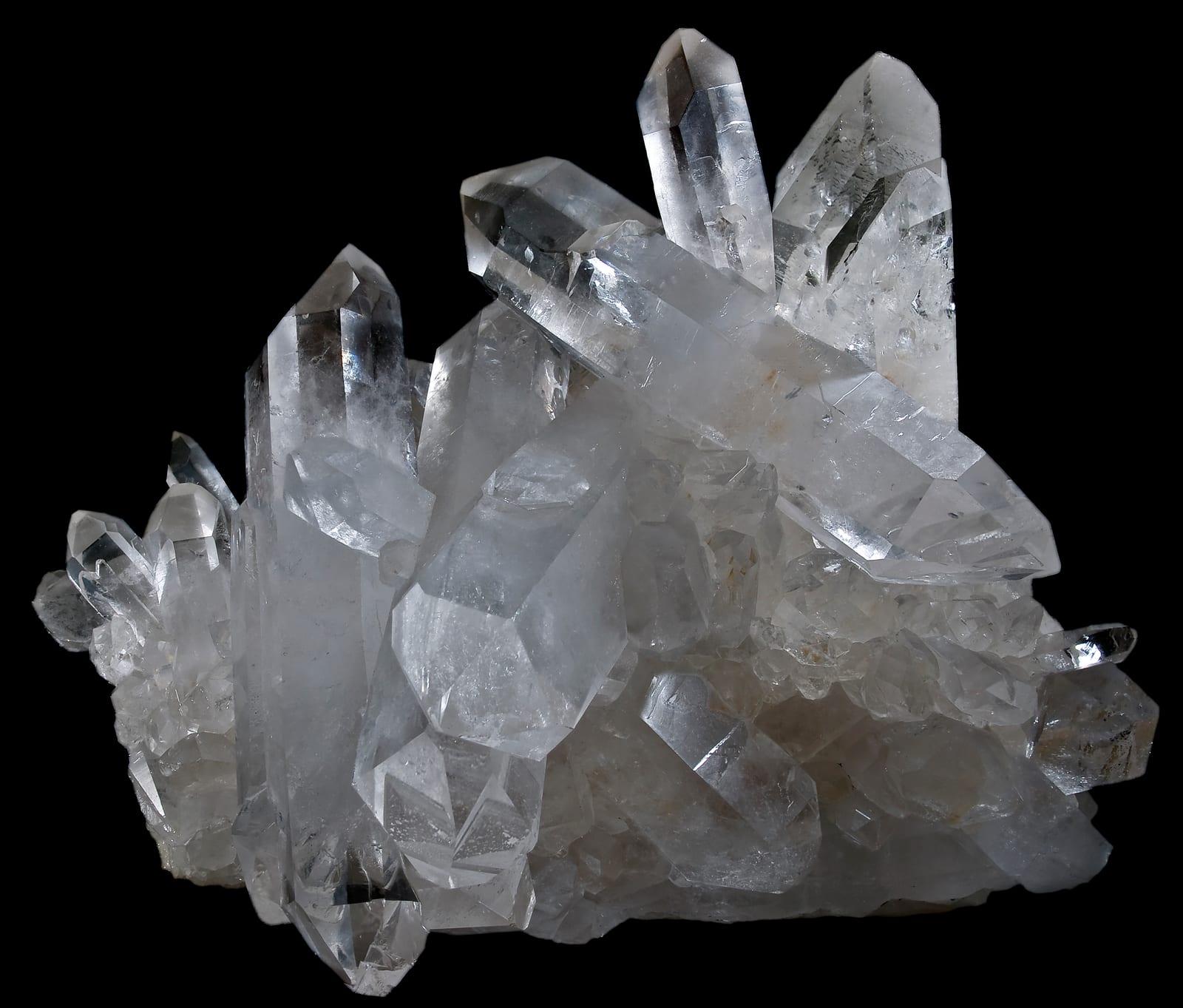
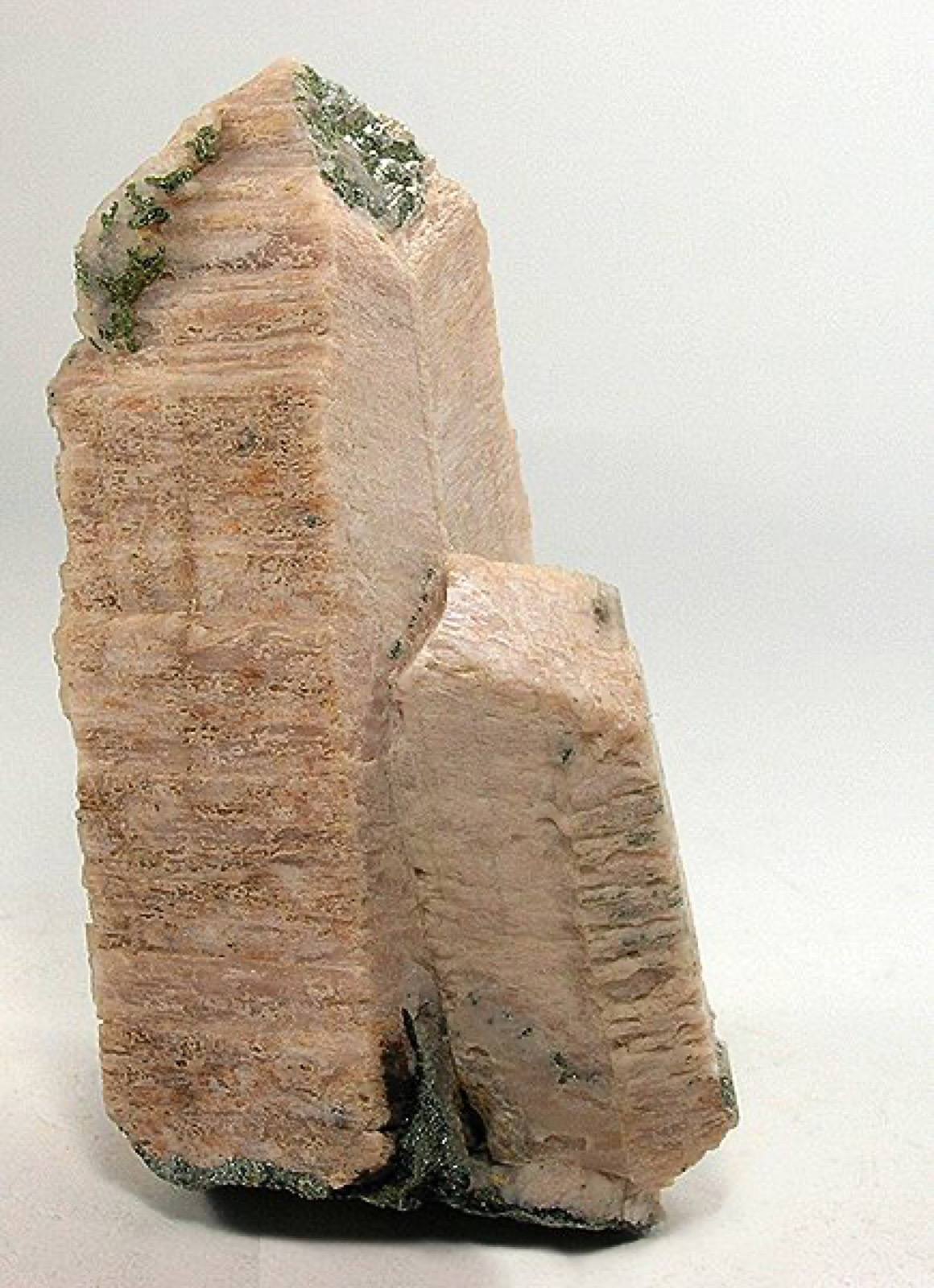
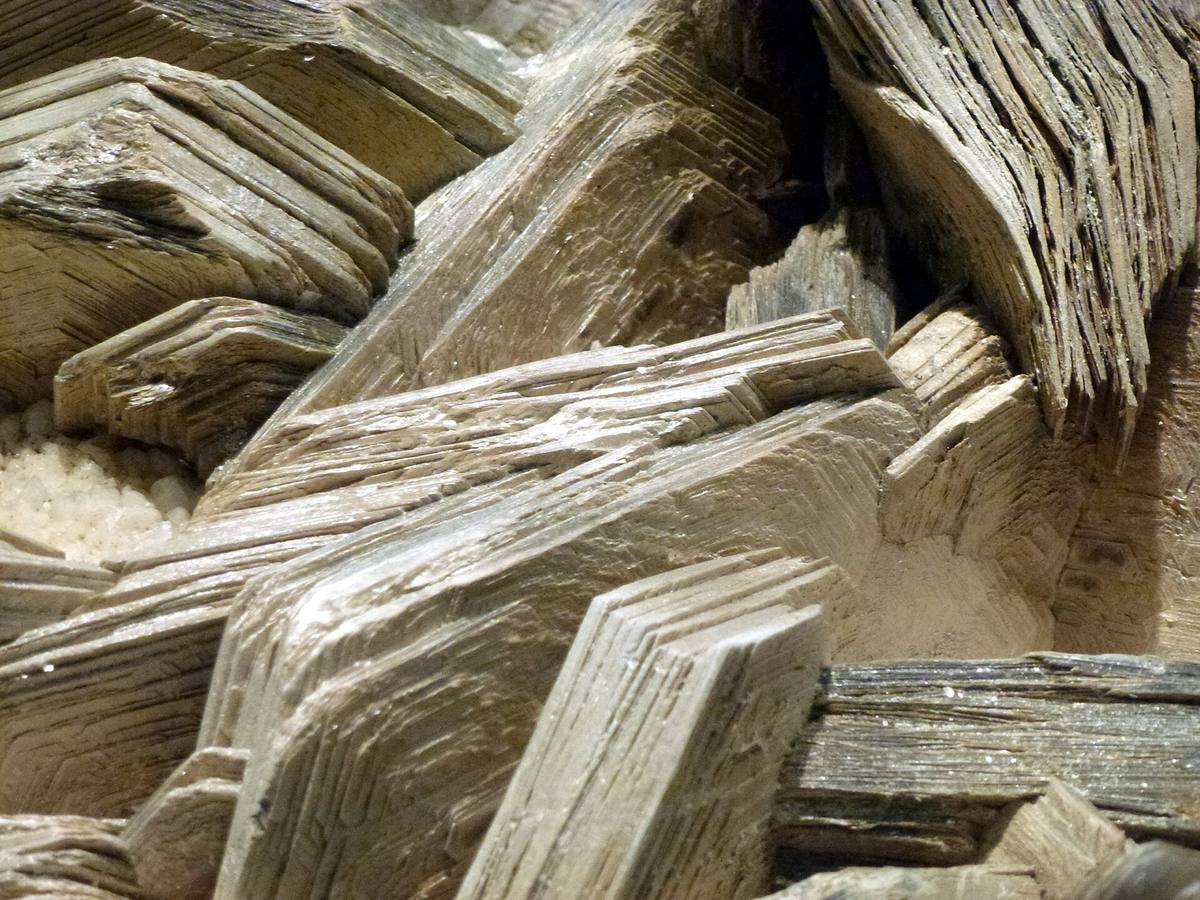
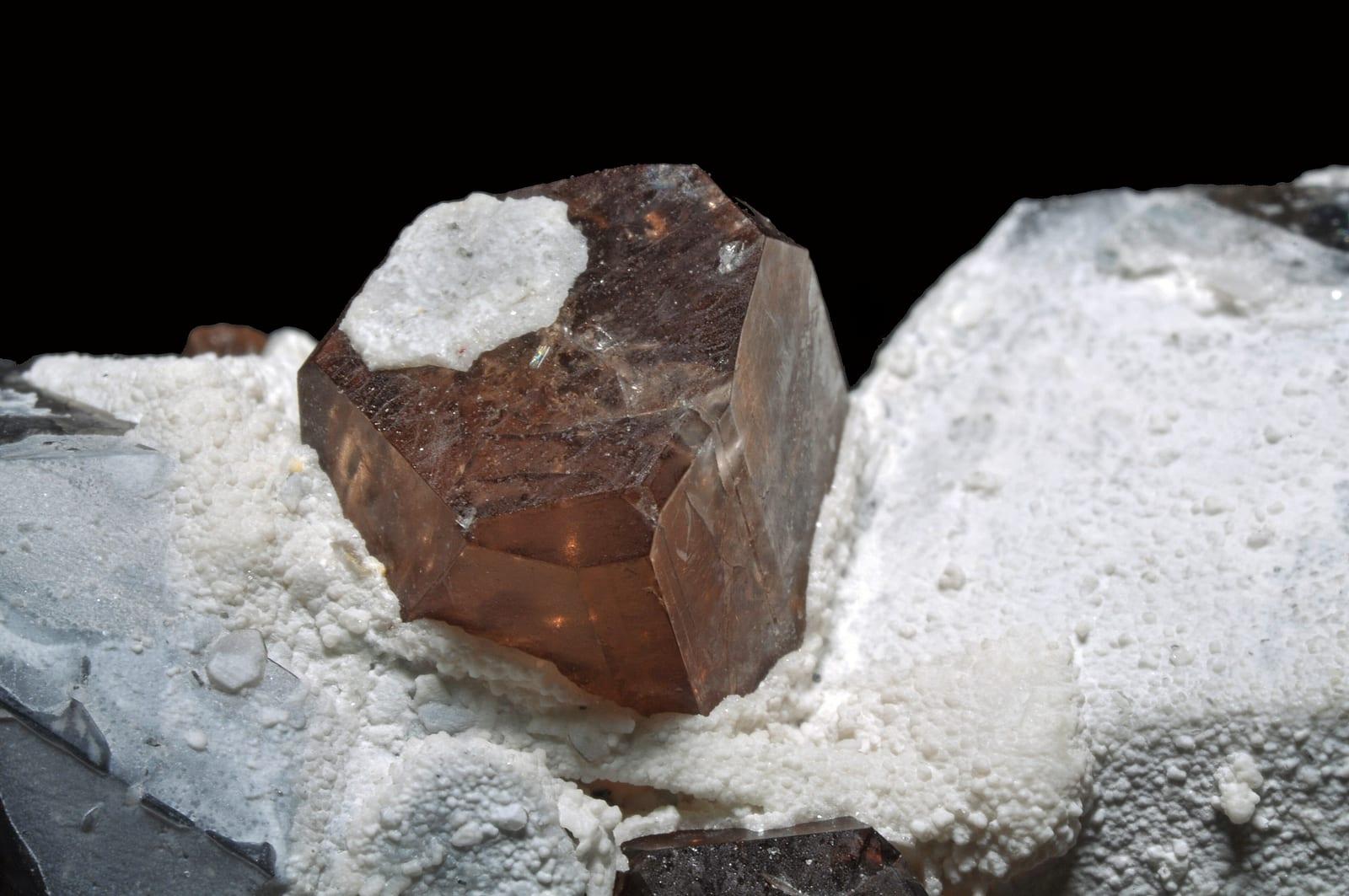
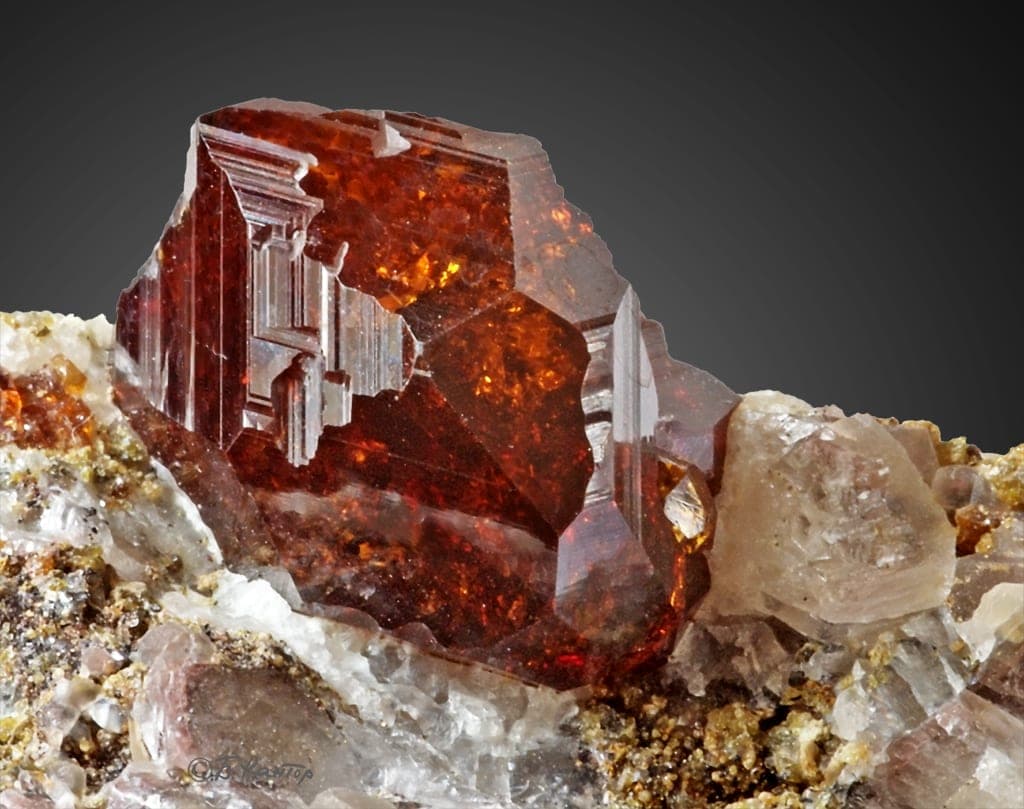
Minerals reported to co-occur with tourmaline. Spotting these in float or country rock is a strong cue you are in the right ground.
All properties
- Chemical formula
- Na(Mg,Fe,Li,Mn,Al)₃Al₆(BO₃)₃Si₆O₁₈(OH,F)₄
- Mohs hardness
- 7-7.5
- Density
- 3.0-3.25 g/cm³
- Streak
- White
- Luster
- Vitreous
- Transparency
- Transparent
- Crystal system
- Trigonal
- Crystal habit
- Prismatic, vertically striated crystals, columnar
- Cleavage
- None
- Rarity
- Common
- Uses
- Gemstone, Collector, Industrial
- Host rock
- granite pegmatites, metamorphic schists, hydrothermal veins
Where rockhounds find tourmaline
84 mapped spotsClassic worldwide localities
- Brazil
- Madagascar
- Afghanistan
- USA
- Nigeria
- Pakistan
U.S. states with tourmaline
Each link opens a state-specific list of mapped rockhounding spots that produce tourmaline.
Field-hunting tip
Where it forms: granite pegmatites, metamorphic schists, hydrothermal veins. If you start seeing quartz, feldspar, mica in float, you are in the right ground. Typical habit: prismatic, vertically striated crystals, columnar. Train your eye for that shape before scanning the outcrop. In the U.S., the densest reported localities are in North Carolina, Georgia, Utah. Start trip planning there.
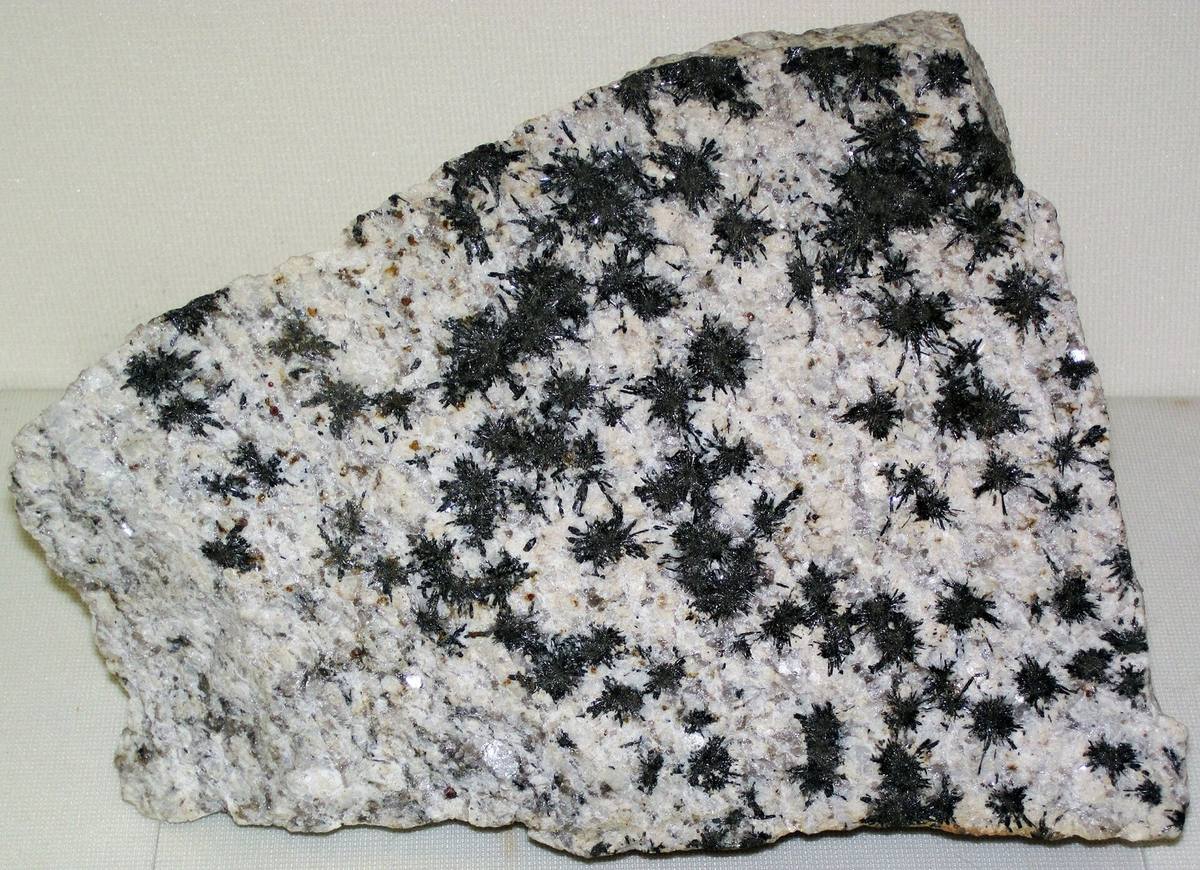
More tourmaline photos
Common questions
How do you identify tourmaline?+
Where is tourmaline found?+
Can I find tourmaline in the United States?+
What rocks look like tourmaline?+
What minerals are found with tourmaline?+
What kind of rock does tourmaline form in?+
What is tourmaline used for?+
Find tourmaline on the map
RockHoundR shows mapped rockhounding spots, access rules, and lets you log every find.