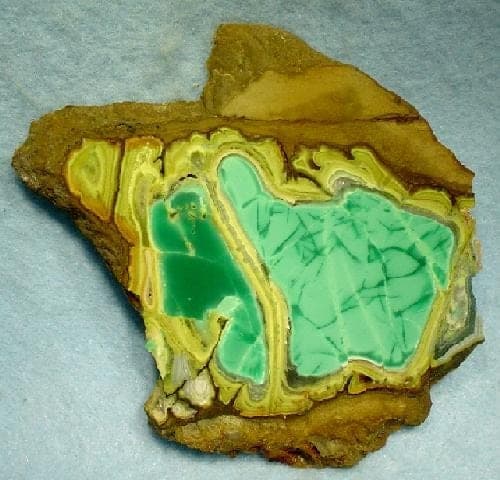
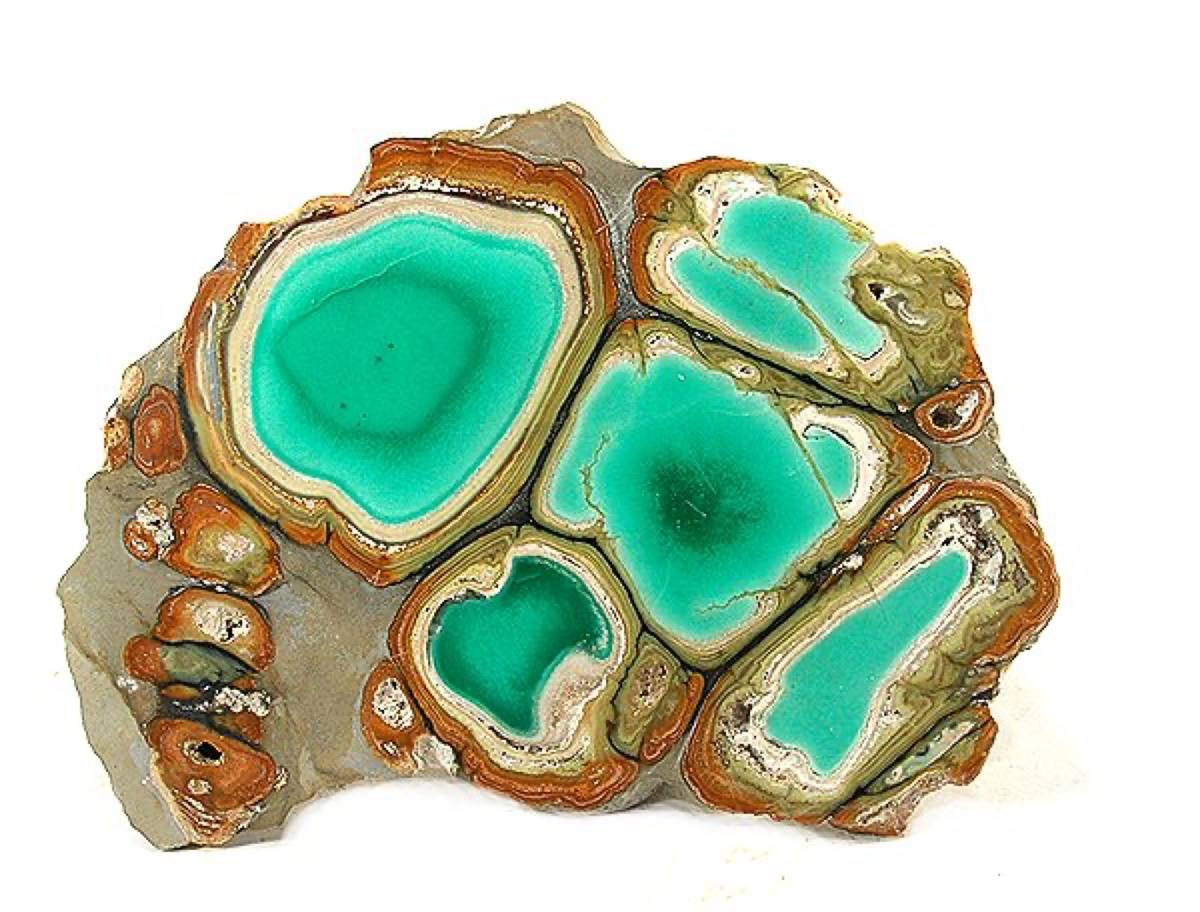
Variscite is a hydrated aluminum phosphate mineral prized for its beautiful apple-green to mint-green color. It is typically found in massive, nodular, or crust forms rather than distinct crystals, making it a favorite material for cabochons and lapidary work.
Spotting variscite in the field
Field marks- 1
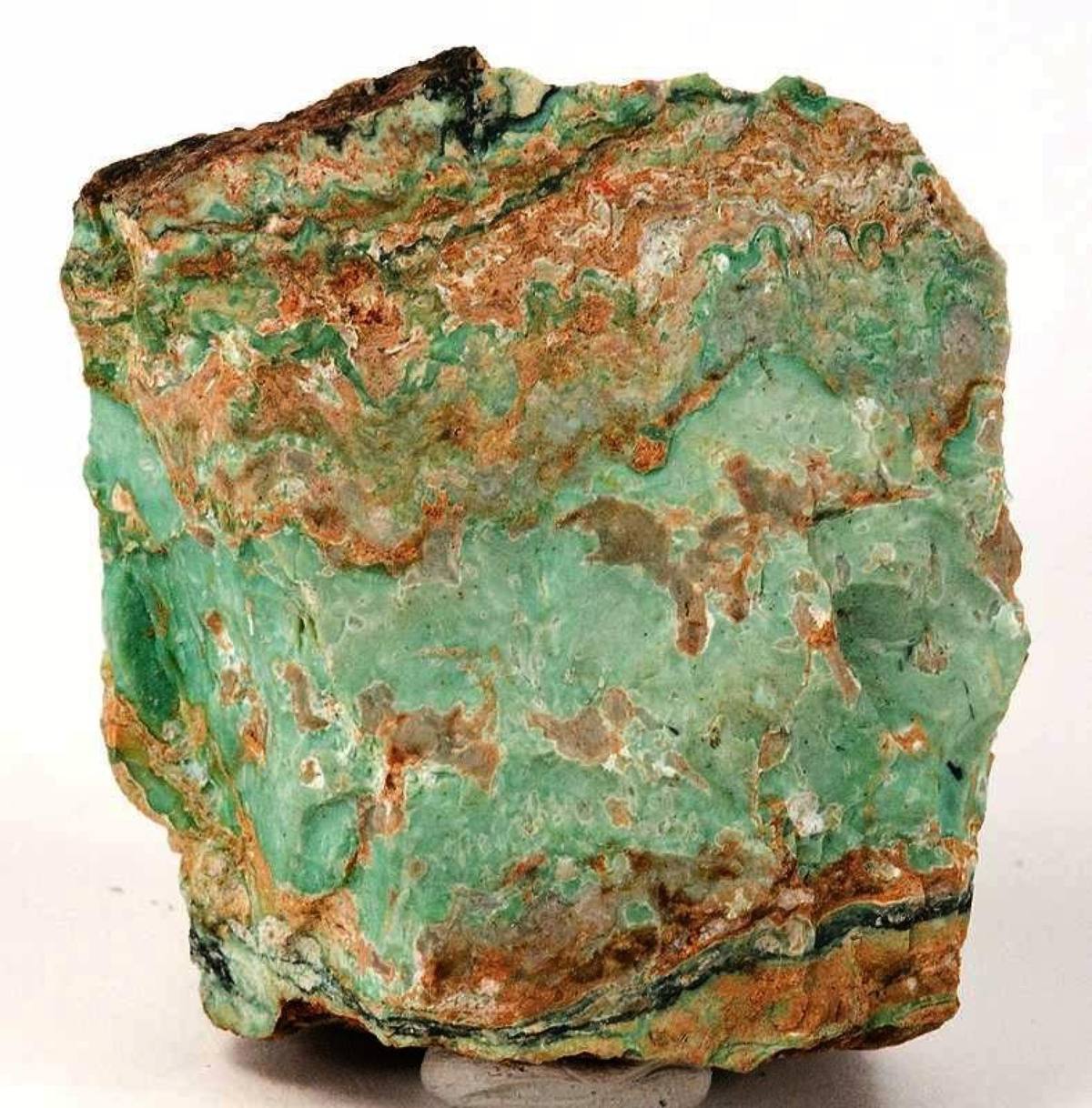
Apple green to blue-green, opaque, often in rounded nodules
- 2
Frequently veined with white or brown, giving a spiderweb pattern
- 3
Softer than quartz at 4 to 5, waxy luster
Variscite is an aluminium phosphate, and unlike turquoise it contains no copper, which is why it stays green rather than reaching sky blue. It forms nodules in aluminium-rich sedimentary rock in dry country, with Utah's Clay Canyon material near Fairfield the historic benchmark and Nevada producing most of what is on the market now. Look for pale green nodules in altered shale and chert.
Straight answers
- Is it worth cutting?
- Cuts nicely, and the spiderweb veining is what people want, so orient to keep it on the dome. Softer material may need stabilizing.
- What is it really worth?
- Moderate, and rising as good material becomes scarce. Utah Clay Canyon variscite is a collector item priced well above ordinary green nodules.
- Can you legally keep it?
- Historic Utah localities are largely exhausted and privately held. Nevada occurrences are a mix of claimed and open BLM ground.
Often confused with
Variscite vs. its common look-alikes, and how to tell them apart in the field.
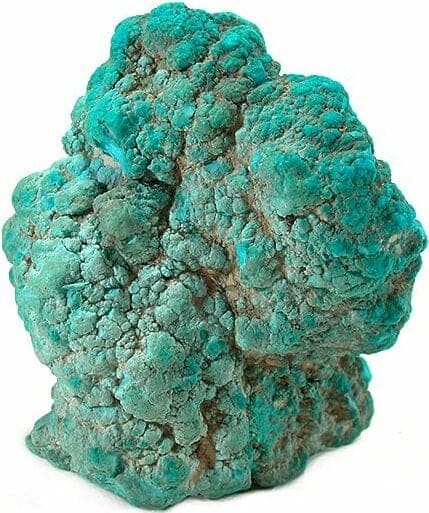
How to tell apart: Color is the practical test. Variscite is green, turquoise leans blue. Green turquoise and blue-green variscite genuinely overlap, and dealers get this wrong often.
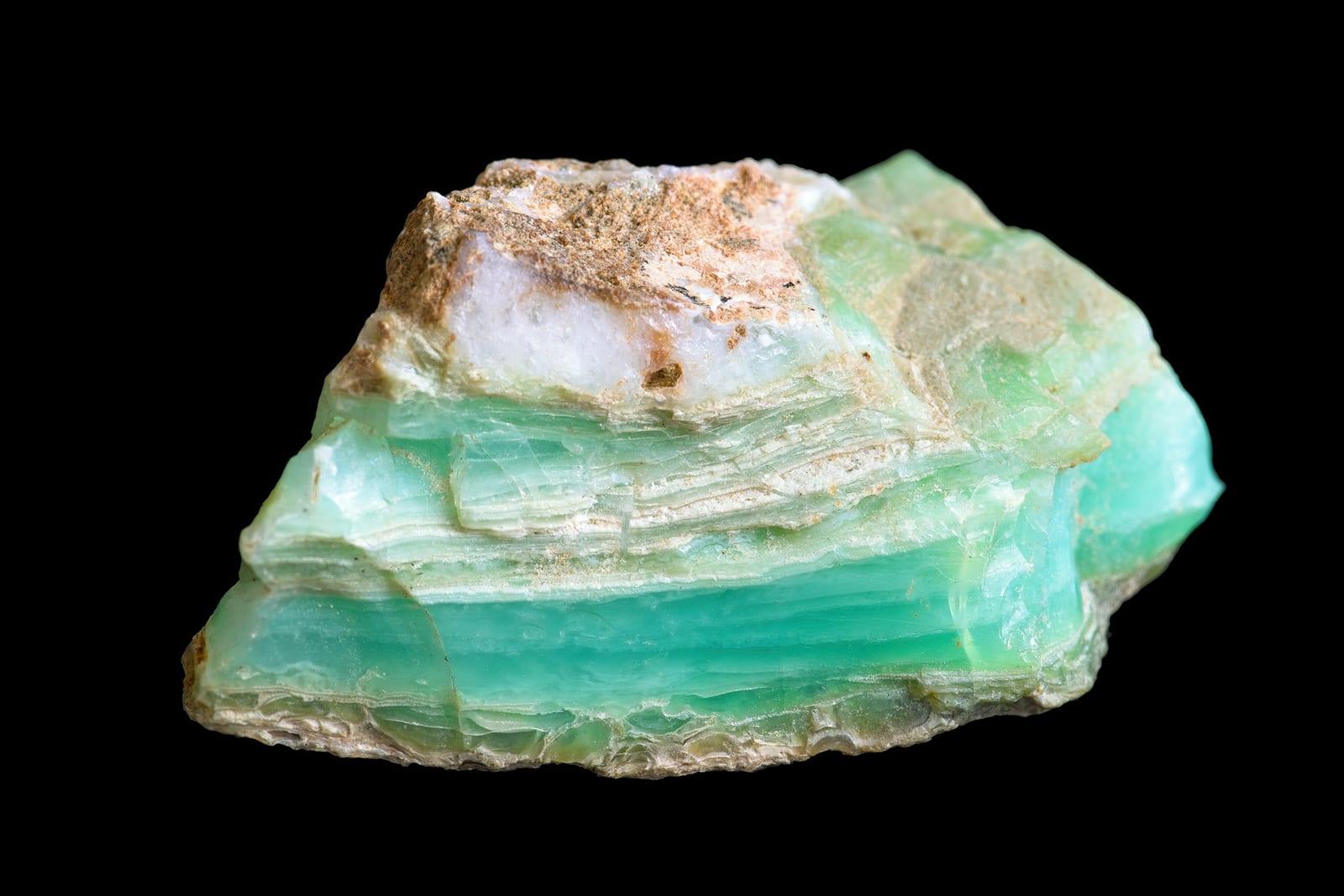
How to tell apart: Chrysoprase is chalcedony at hardness 7 and translucent. Variscite is opaque and much softer.
Often found alongside variscite
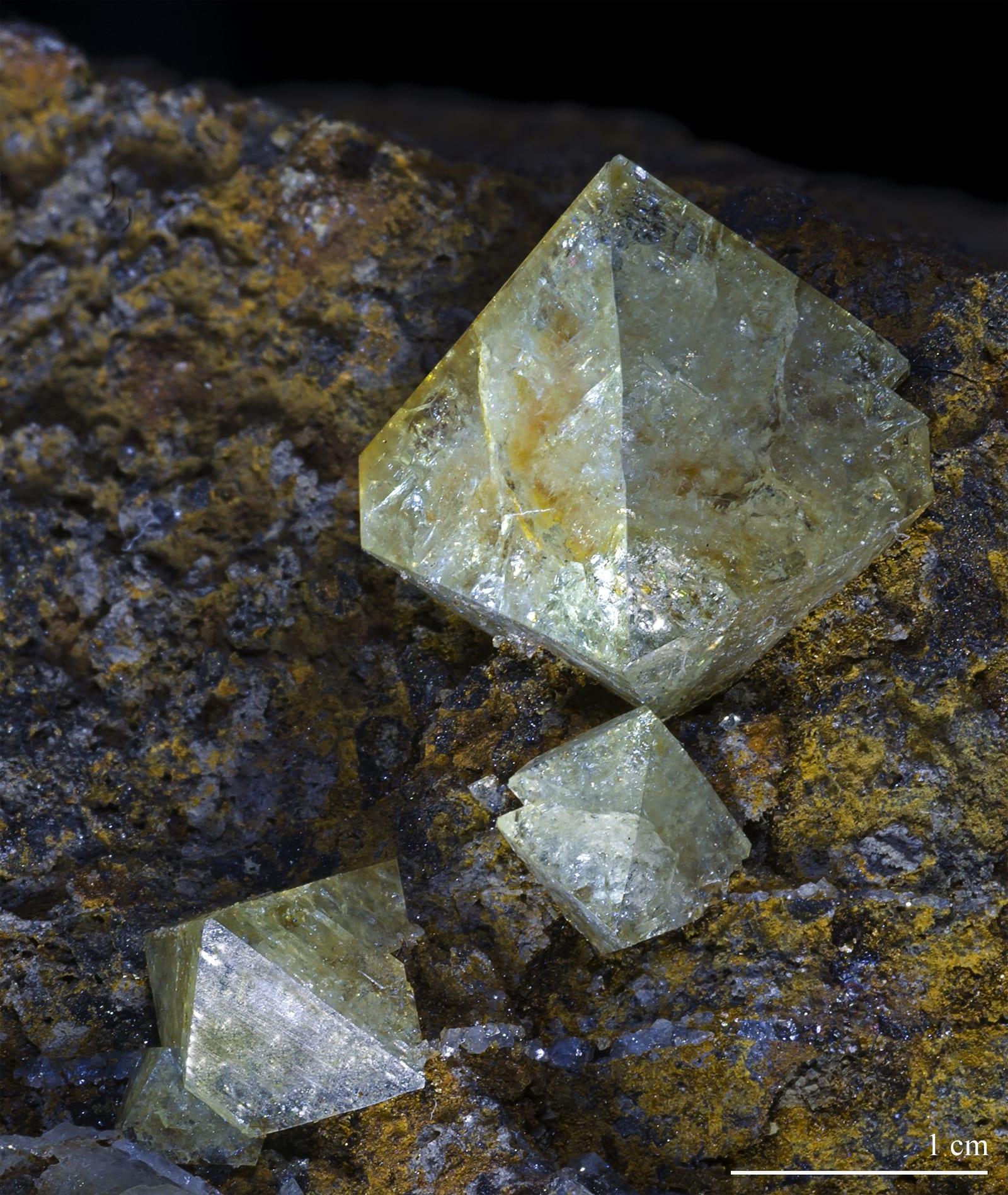
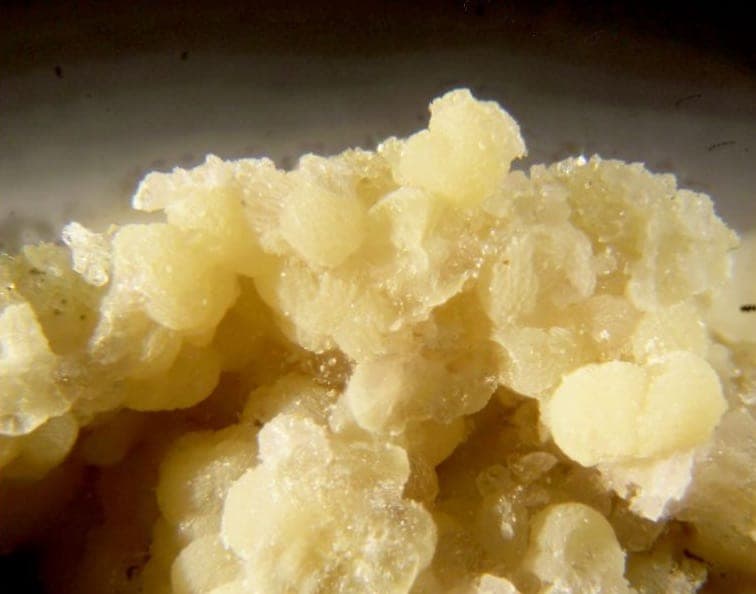
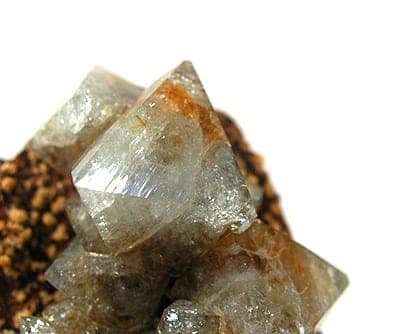
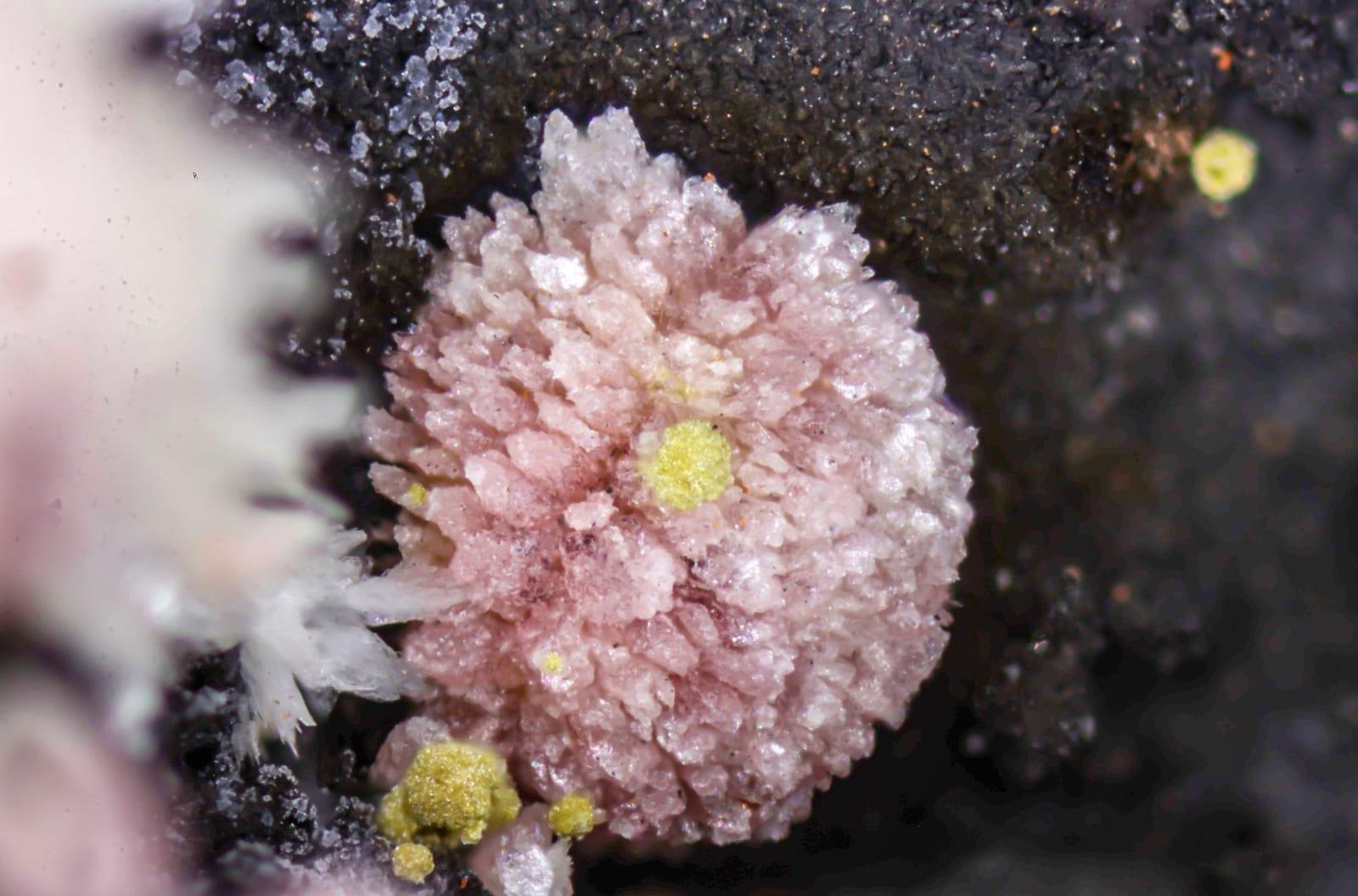
Minerals reported to co-occur with variscite. Spotting these in float or country rock is a strong cue you are in the right ground.
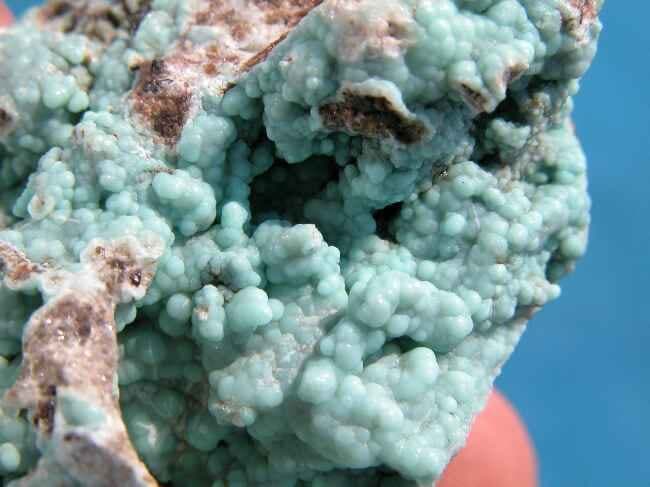
All properties
- Chemical formula
- AlPO₄·2H₂O
- Mohs hardness
- 4.5
- Density
- 2.57-2.61 g/cm³
- Streak
- White
- Luster
- Vitreous to waxy
- Transparency
- Transparent to translucent
- Crystal system
- Orthorhombic
- Crystal habit
- Massive, nodules, crusts, botryoidal
- Cleavage
- On {010}, good; on {001}, poor
- Fluorescence
- Grass green under LW UV
- Rarity
- Uncommon
- Uses
- Lapidary, Gemstone, Collector
- Host rock
- Typically deposited from phosphate-bearing waters in contact with aluminous rocks
Where rockhounds find variscite
8 mapped spotsClassic worldwide localities
- Large nodules from the Little Green Monster mine, Clay Canyon, about nine km west of Fairfield, Utah Co., on Utahlite Hill, about eight km northwest of Lucin, Box Elder Co., from Amatrice Hill, Stansbury Mountains, Tooele Co., USA
- Henry de Linde mine #3, and Dug Hill, near Avant, Garland Co., Arkansas, USA
- Cole mine, Bisbee, Cochise Co., Arizona, USA
- Goldstrike and Genesis mines, Lynn district, and the Gold Quarry mine, Maggie Creek district, Eureka Co., Nevada, USA
- Saxony, from Messbach, near Oelsnitz, Germany
- Langenstriegis, east of Frankenberg, and at Lichtenberg, near Ronneburg, Thuringia, Germany
Field-hunting tip
Where it forms: Typically deposited from phosphate-bearing waters in contact with aluminous rocks. If you start seeing crandallite, carbonate-fluorapatite, wardite in float, you are in the right ground. Typical habit: massive, nodules, crusts, botryoidal. Train your eye for that shape before scanning the outcrop. In the U.S., the densest reported localities are in Utah, Nevada, Arkansas. Start trip planning there.
More variscite photos
Common questions
How do you identify variscite?+
Where is variscite found?+
Can I find variscite in the United States?+
What rocks look like variscite?+
What minerals are found with variscite?+
What kind of rock does variscite form in?+
What is variscite used for?+
Find variscite on the map
RockHoundR shows mapped rockhounding spots, access rules, and lets you log every find.