
Turquoise is a hydrated phosphate mineral known for its distinctive robin's egg blue to greenish color. It typically forms as massive, botryoidal, or crusty deposits in arid regions where phosphorus-rich groundwater reacts with aluminum and copper-bearing minerals. Collectors look for high-grade 'spiderweb' patterns or matrix-free solid blue material.
Spotting turquoise in the field
Field marks- 1
Sky blue to green, opaque, with a waxy to dull surface luster
- 2
Often veined with brown or black host rock, called the matrix
- 3
Soft at 5 to 6, and chalky material is softer still
Turquoise forms where copper-bearing solutions weather through aluminous rock in dry country, so it is a desert mineral of the American Southwest and it sits in seams and nodules rather than crystals. In the field it shows as thin blue veins in altered brown rock, and the hard part is that most of what you find is chalk: porous, pale, and too soft to cut. Press a fingernail into a broken edge, because good turquoise resists and chalk gives. Almost every historic mine is patented private ground or under active claim.
Straight answers
- Is it worth cutting?
- Most natural turquoise is too porous to cut as-is, which is why stabilizing with resin is standard practice rather than a cheat. Cut stabilized material normally, and treat untreated hard nodule turquoise as the rare exception it is.
- What is it really worth?
- Enormous spread, and honesty about treatment is most of the price. Natural untreated hard turquoise from a named American mine is genuinely expensive. Stabilized material is moderate. Reconstituted turquoise, which is powder and resin pressed into a block, is near worthless and is sold constantly.
- Can you legally keep it?
- Nearly all productive American turquoise ground is private or claimed, and much of the best is on tribal land where collecting is controlled by the nation, not by federal rockhounding rules. There is very little legitimate free collecting.
Where it is worth going
- Royston districtNye County, Nevada
One of the few historic turquoise mines that offers paid public digging.
Often confused with
Turquoise vs. its common look-alikes, and how to tell them apart in the field.
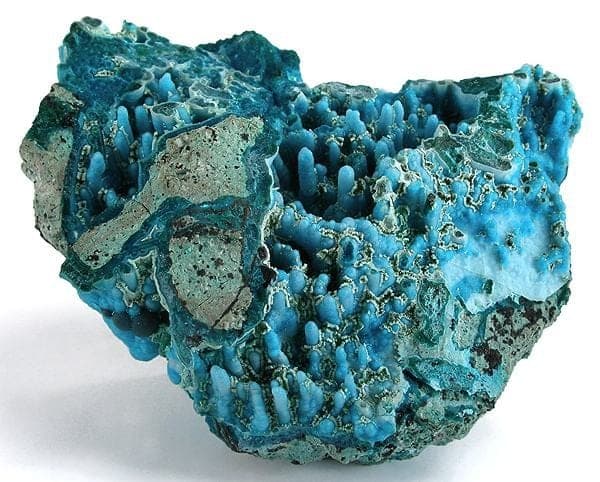
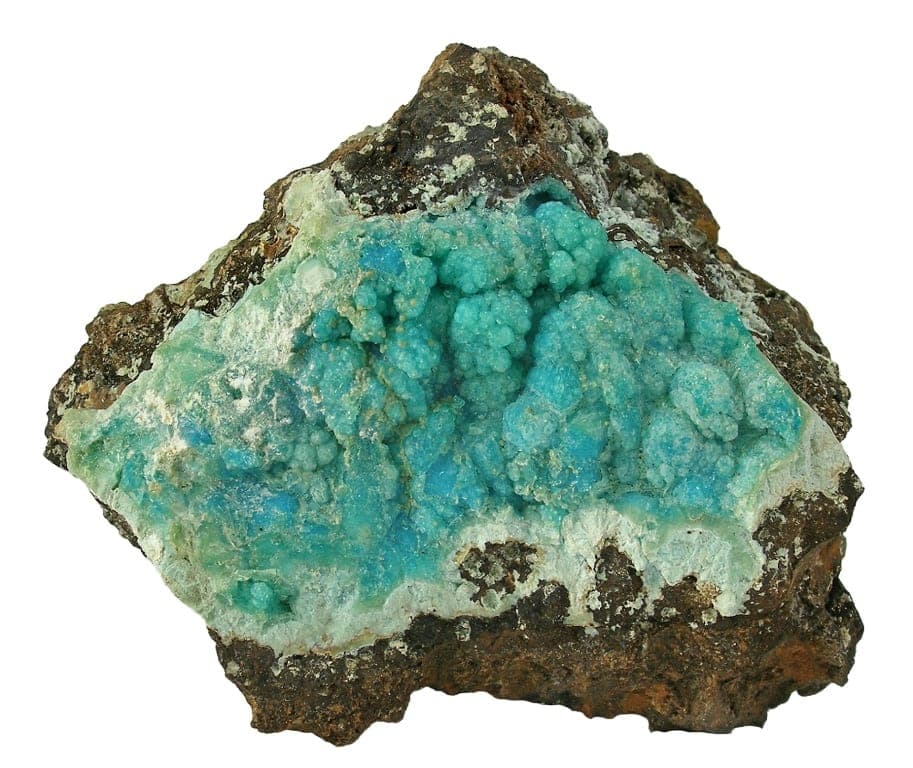
How to tell apart: Chrysocolla is a brighter, more electric blue-green and much softer at 2 to 4. It also tends to botryoidal crusts rather than seams.
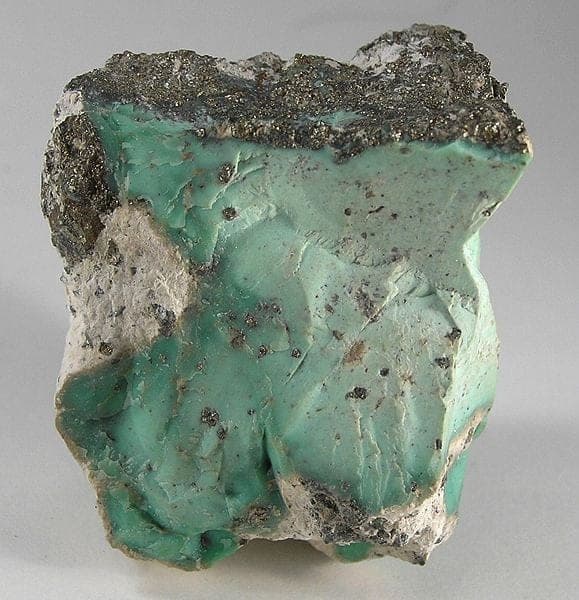
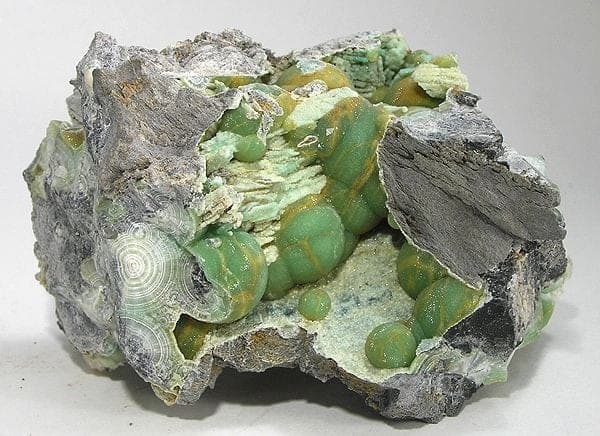
How to tell apart: Variscite is green rather than blue and is a phosphate without copper. Where both occur they look similar, and variscite rarely reaches turquoise's sky blue.
Often found alongside turquoise
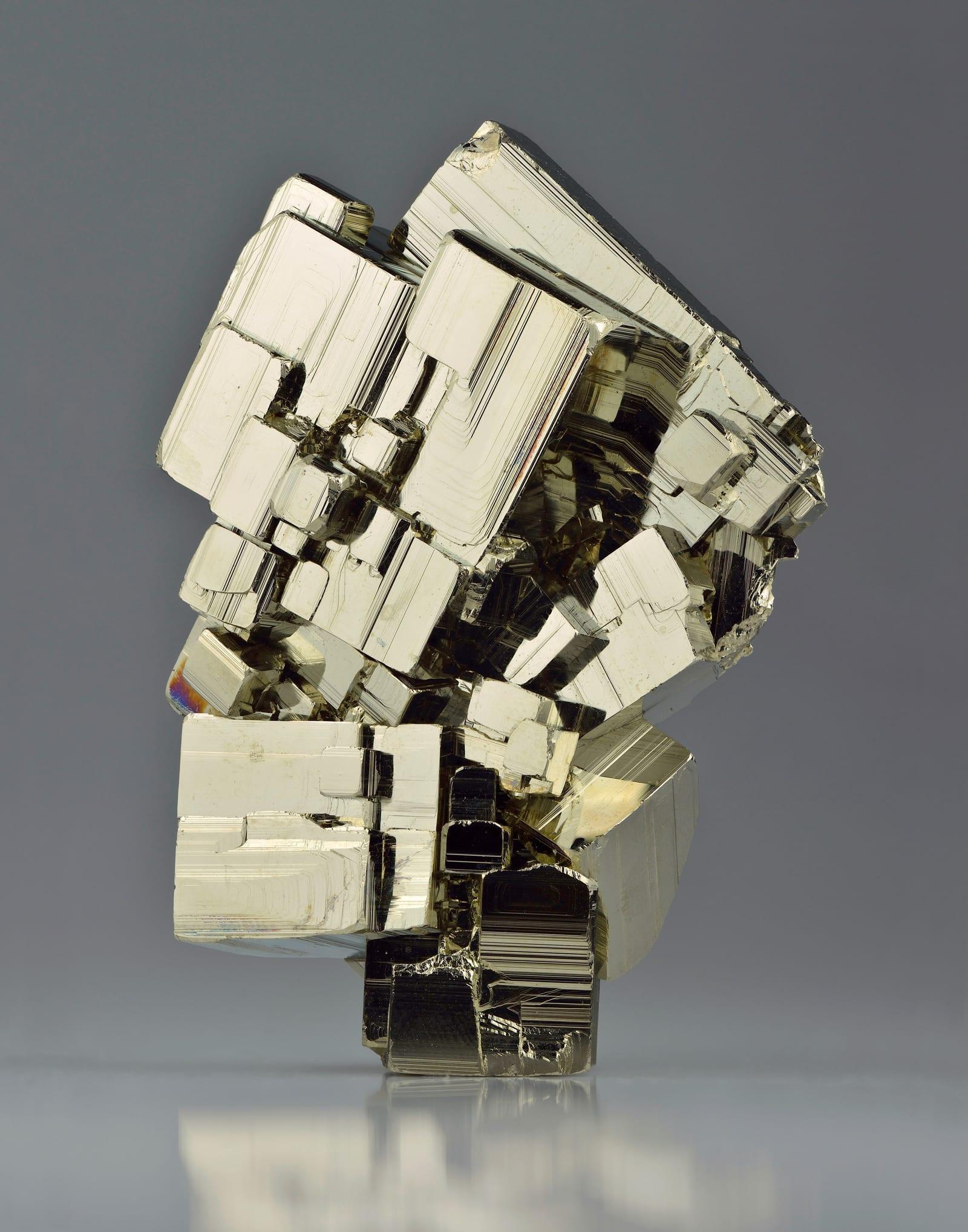
Minerals reported to co-occur with turquoise. Spotting these in float or country rock is a strong cue you are in the right ground.
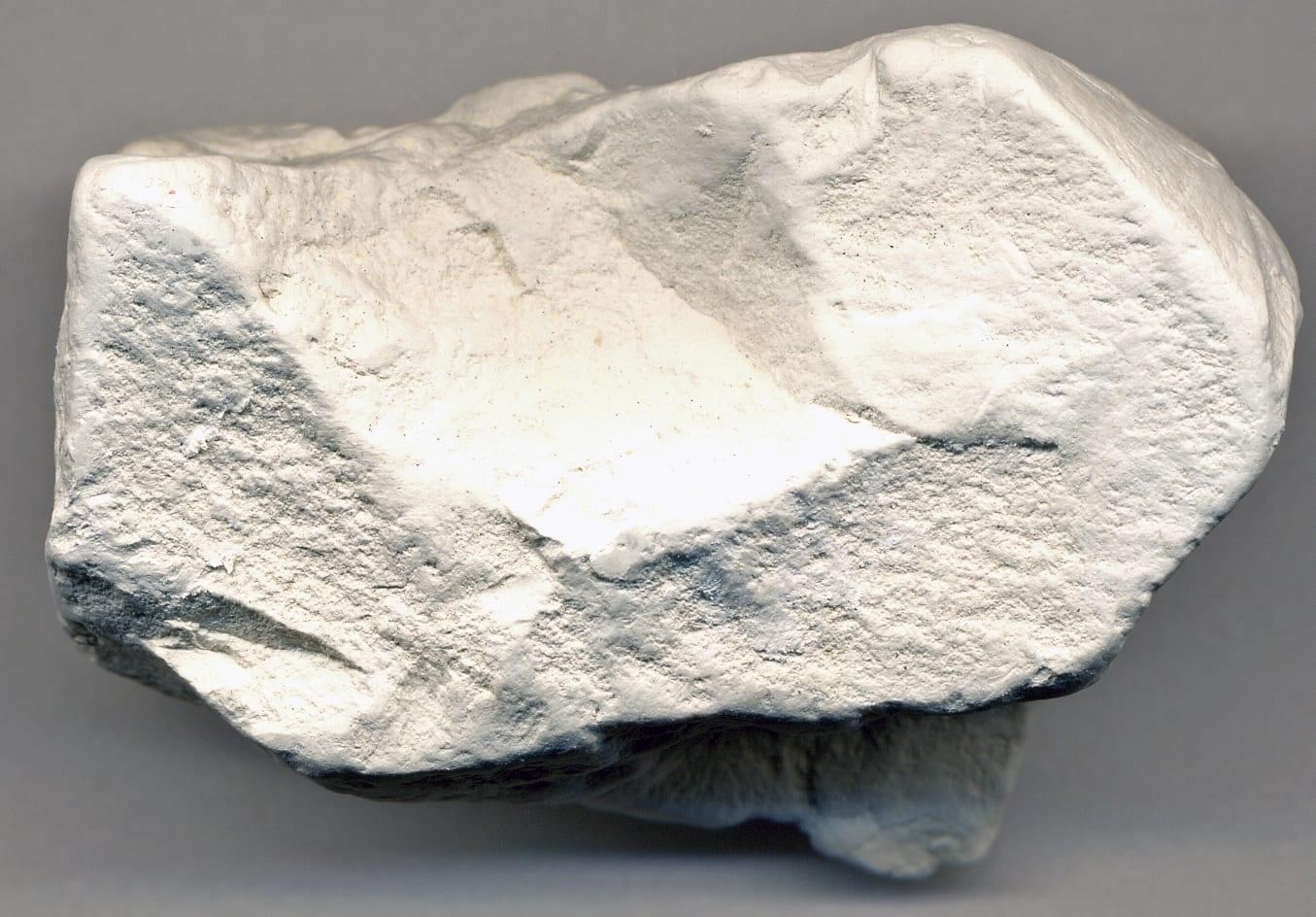
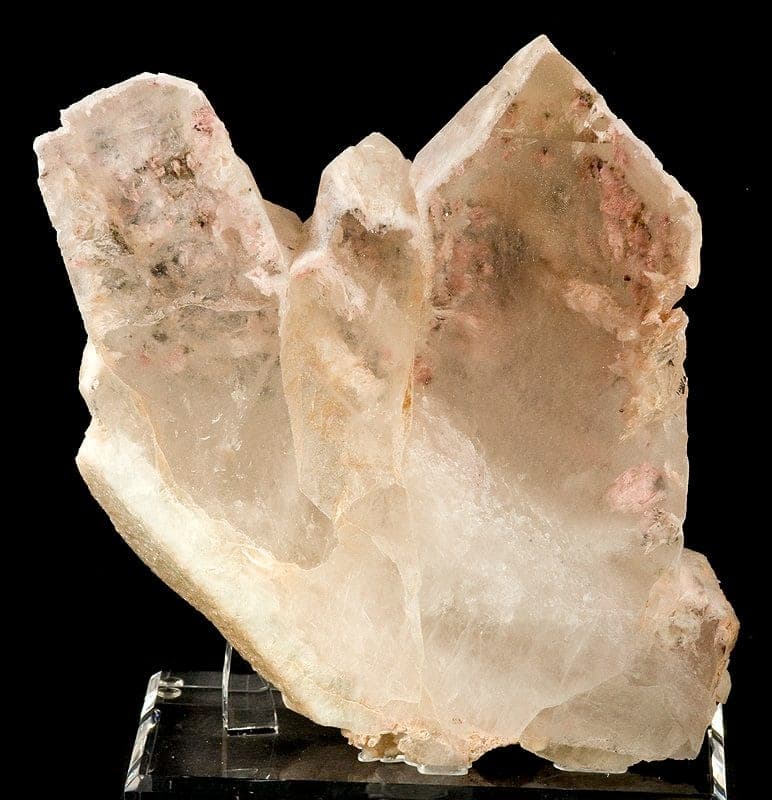
All properties
- Chemical formula
- CuAl₆(PO₄)₄(OH)₈·4H₂O
- Mohs hardness
- 5-6
- Density
- 2.86 g/cm³
- Colors
- Streak
- White to pale greenish blue
- Luster
- Vitreous in crystals; dull to waxy if massive
- Transparency
- Opaque
- Crystal system
- Triclinic
- Crystal habit
- Massive, cryptocrystalline, botryoidal, crusts
- Cleavage
- Perfect on {001}; good on {010}
- Rarity
- Common
- Uses
- Gemstone, Lapidary, Decorative, Jewelry
- Host rock
- A secondary mineral formed in the potassic alteration zone of hydrothermal porphyry copper deposits; a vein-filling in volcanic rocks and phosphate-rich sediments
Where rockhounds find turquoise
18 mapped spotsClassic worldwide localities
- Bishop mine, Lynch Station, Campbell Co., Virginia, USA
- Cerrillos district, Santa Fe Co., and the Burro Mountains district, Grant Co., New Mexico, USA
- Mineral Park, Mohave Co., Morenci, Greenlee Co., the Globe-Miami district, Gila Co., Arizona, USA
- Ma’dan, 45 km northwest of Neyshabur (Nishapur), Iran
- Ottré, near Vielsalm, Belgium
- Bunny mine, St. Austell, in Cornwall, England
U.S. states with turquoise
Each link opens a state-specific list of mapped rockhounding spots that produce turquoise.
Field-hunting tip
Where it forms: A secondary mineral formed in the potassic alteration zone of hydrothermal porphyry copper deposits; a vein-filling in volcanic rocks and phosphate-rich sediments. If you start seeing kaolinite, montmorillonite, allophane in float, you are in the right ground. Typical habit: massive, cryptocrystalline, botryoidal, crusts. Train your eye for that shape before scanning the outcrop. In the U.S., the densest reported localities are in Nevada, New Mexico, Texas. Start trip planning there.
Common questions
How do you identify turquoise?+
Where is turquoise found?+
Can I find turquoise in the United States?+
Is turquoise safe to handle?+
What rocks look like turquoise?+
What minerals are found with turquoise?+
What kind of rock does turquoise form in?+
What is turquoise used for?+
Find turquoise on the map
RockHoundR shows mapped rockhounding spots, access rules, and lets you log every find.

