
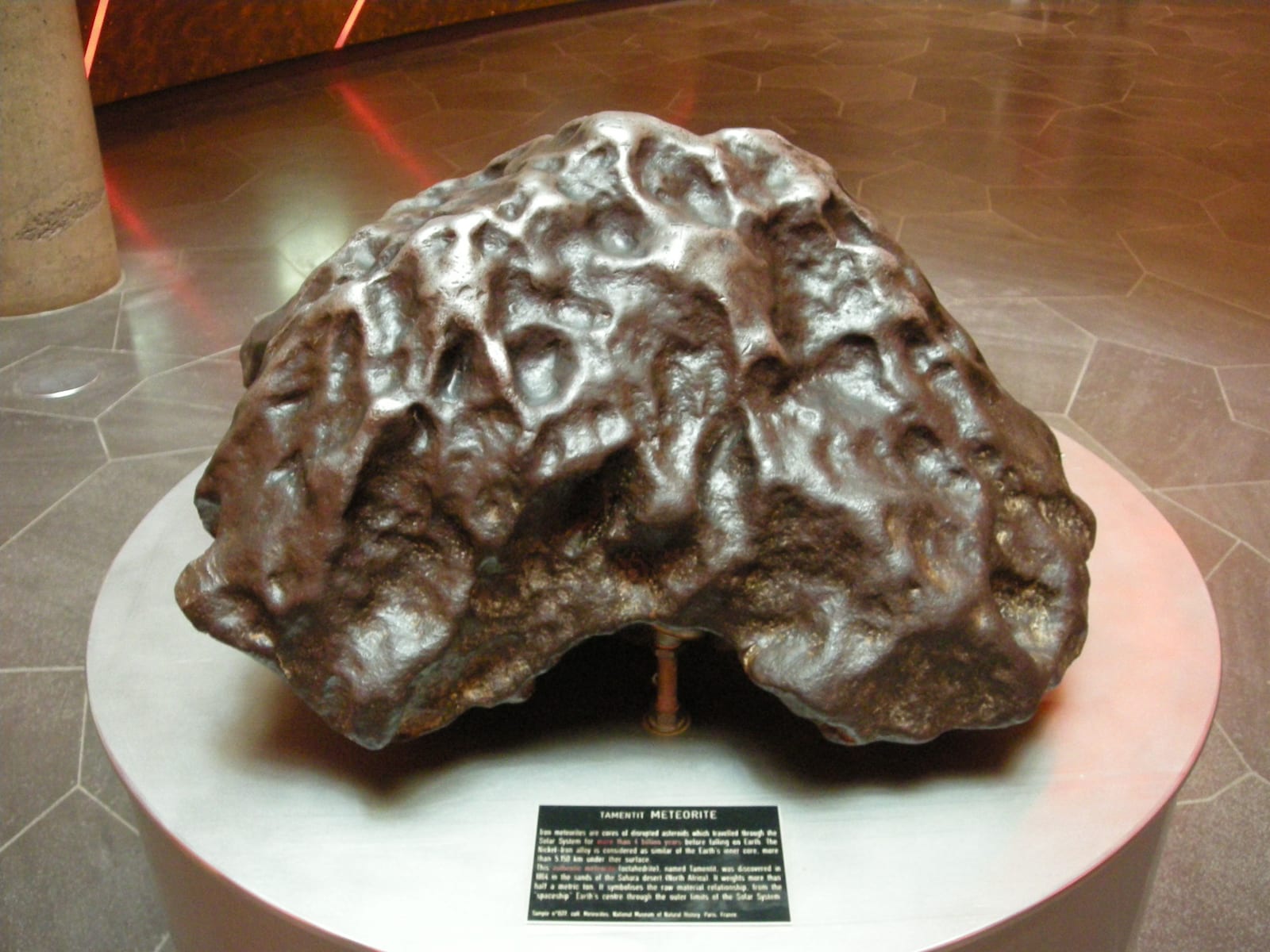
Iron MeteoriteMohs 4-5
Very heavy, strongly magnetic, dark fusion-crusted surface often with regmaglypts. Cut interior shows Widmanstätten pattern after etching.
Photo: Wikipedia contributors · wikipedia
Most rocks people suspect of being meteorites are not meteorites. They're slag, hematite, magnetite, or vesicular basalt: dense, dark, sometimes magnetic terrestrial rocks that share the visual cues people associate with space. This identifier defaults to skepticism: it reads the photo for fusion crust, regmaglypts, density hints, and the most common meteorwrong lookalikes, then returns three ranked candidates with the test that confirms or rules out each.
Reviewed by RockHoundR Field Team · Field identification & geology editors · Last verified
Quick answer
Most suspected meteorites are not meteorites. Run the magnet test first; no magnetic response rules it out. Then upload a clear photo of the broken interior and the outer surface, and the identifier will rank the three most likely terrestrial lookalikes alongside the meteorite candidate so you can take the next test.
Real meteorites are rare. Of the roughly 80,000 confirmed specimens in the global record, only a fraction were found by amateurs, and almost every photo submitted to identifier services turns out to be terrestrial. The four most common 'meteorwrongs' (slag, hematite, magnetite, and vesicular basalt) share the visual cues people associate with meteorites: dark color, density, sometimes a magnetic response. They are not space rocks.
Real meteorite cues are specific and stack: a thin (0.5–1 mm) dark fusion crust formed during atmospheric entry; shallow thumbprint-like depressions called regmaglypts; a dense, often gray-metallic interior with small spherical chondrules (in chondrites) or visible nickel-iron metal (in irons and stony-irons); and no vesicles (bubbles), which terrestrial volcanic rocks have and meteorites do not.
The single most useful field test is the magnet. No magnetic response at all? Almost certainly not a meteorite. Weak response is consistent with stony chondrites. Strong response is consistent with iron meteorites, and also with magnetite, which is a common terrestrial ore. The magnet is necessary but not sufficient, so the identifier writes the next test (streak, density, fusion-crust check) into each card.
Real specimens of the three meteorite classes and the three most common meteorwrongs. The card for each names the single feature that separates it from the rest.
Very heavy, strongly magnetic, dark fusion-crusted surface often with regmaglypts. Cut interior shows Widmanstätten pattern after etching.
Photo: Wikipedia contributors · wikipedia
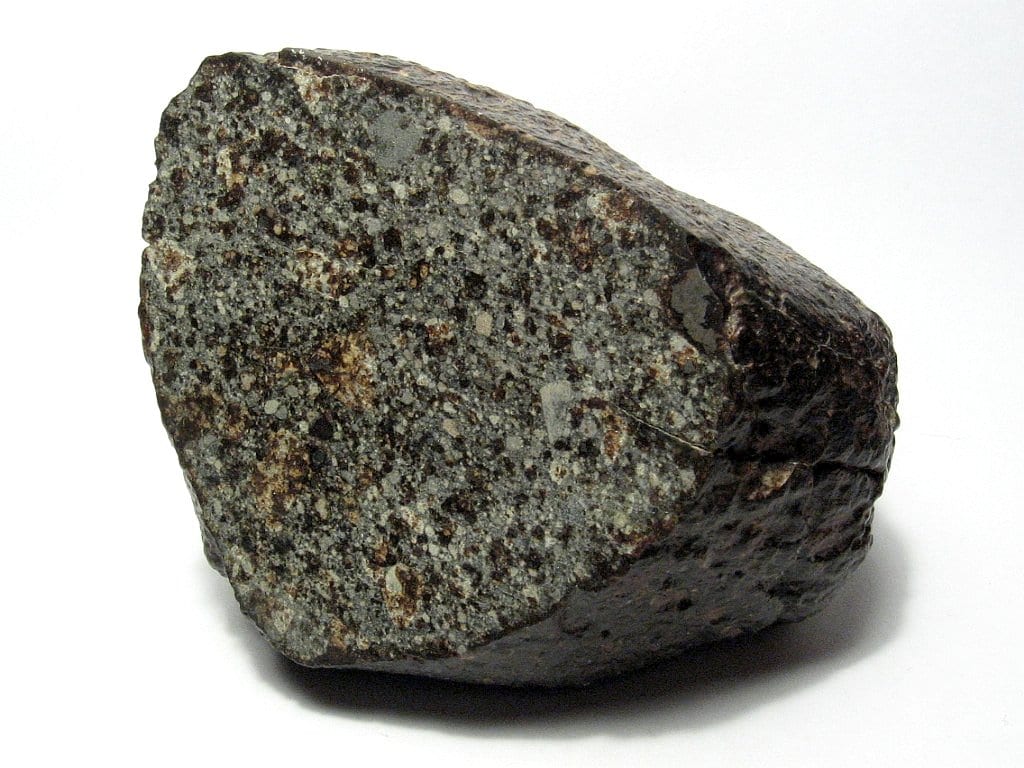
Most common real meteorite. Gray interior with small spherical chondrules (sub-mm to a few mm) visible on a fresh break. Weakly magnetic.
Photo: Wikipedia contributors · wikipedia
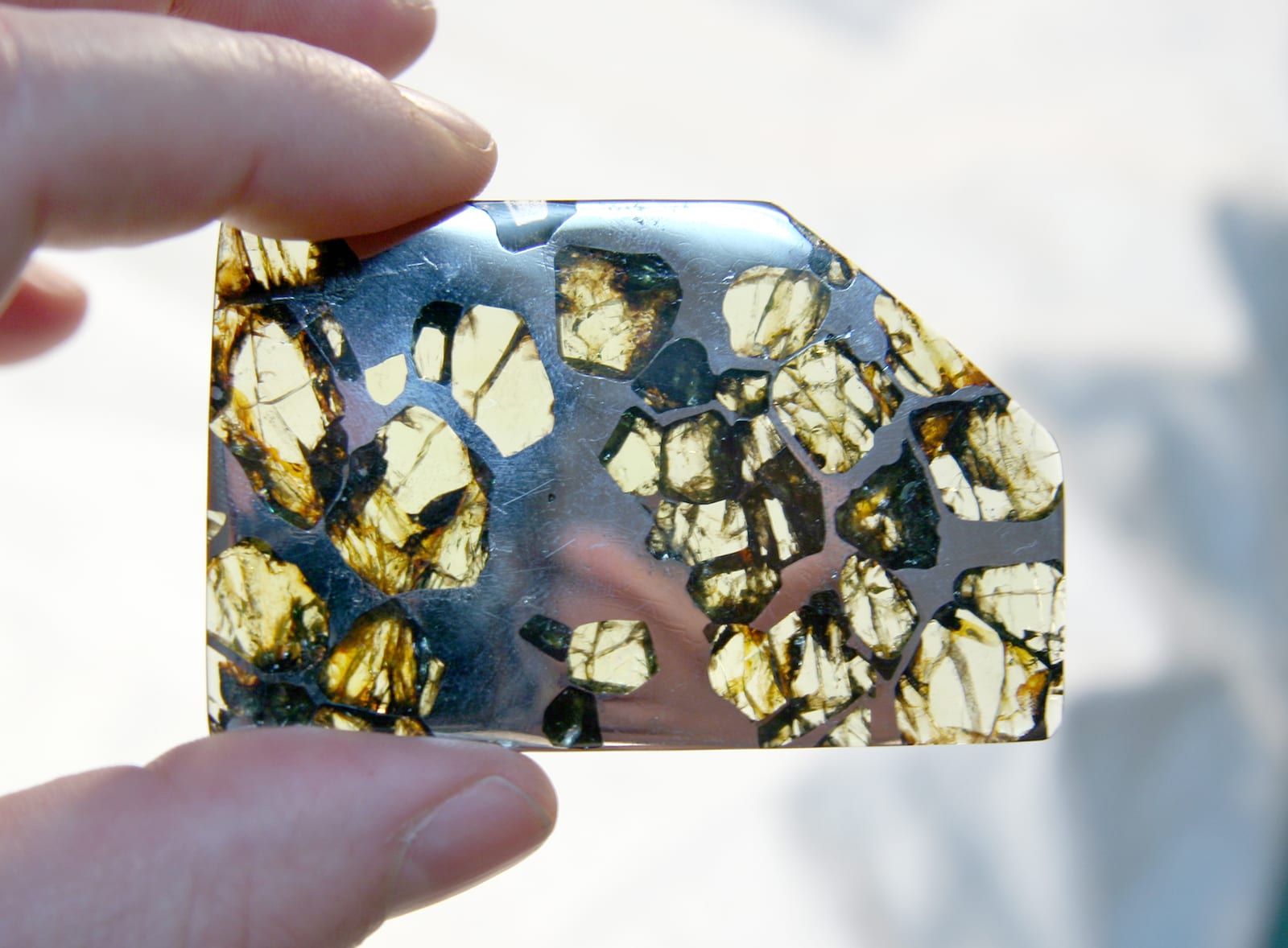
Stony-iron. Olivine (peridot) crystals suspended in a nickel-iron matrix. Visually unmistakable when cut. Very rare.
Photo: Wikipedia contributors · wikipedia
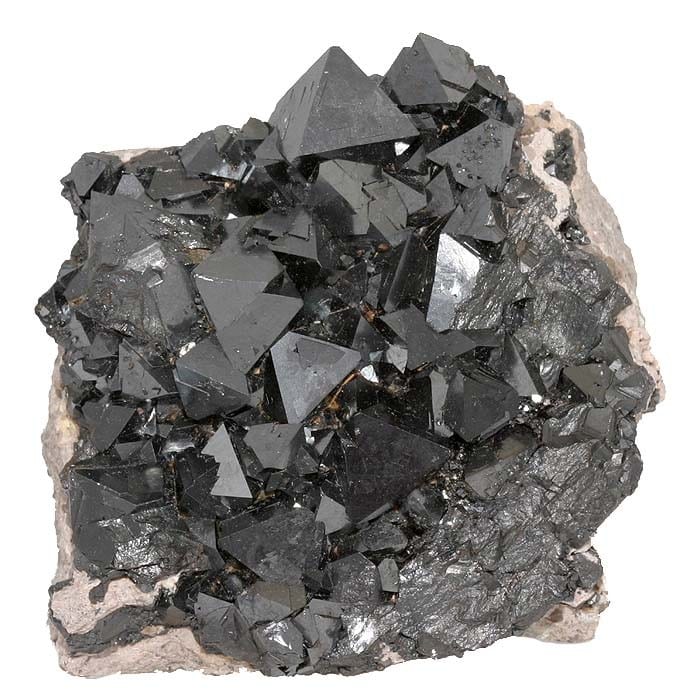
Common terrestrial iron oxide. Strongly magnetic and dense, easy to mistake for an iron meteorite. Black streak. No fusion crust.
Photo: Wikipedia contributors · wikipedia
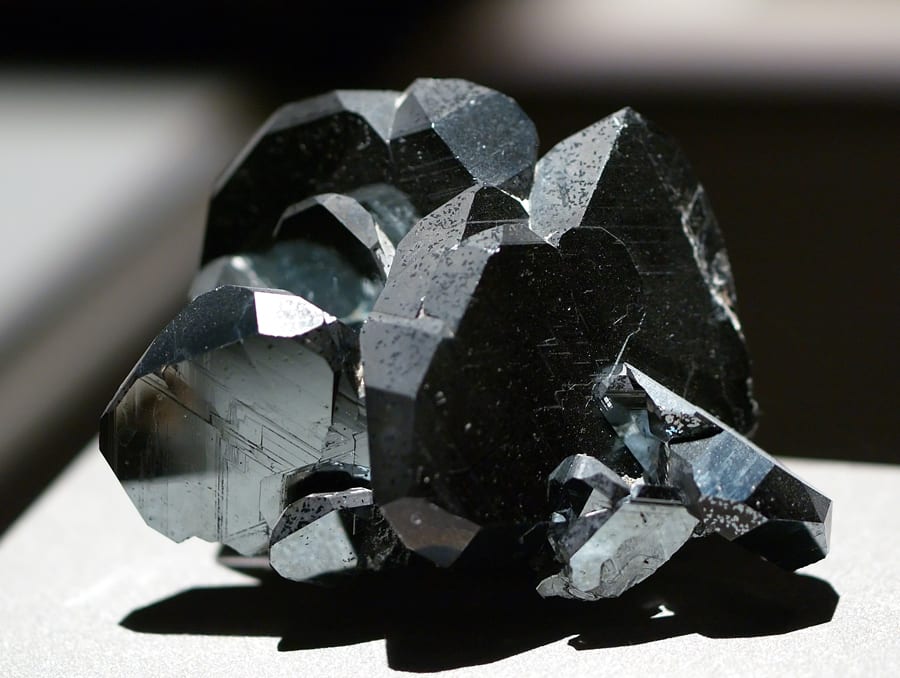
Dense, sometimes metallic luster, weakly magnetic in some forms. Red-brown streak gives it away, since meteorites do not streak red.
Photo: Wikipedia contributors · wikipedia
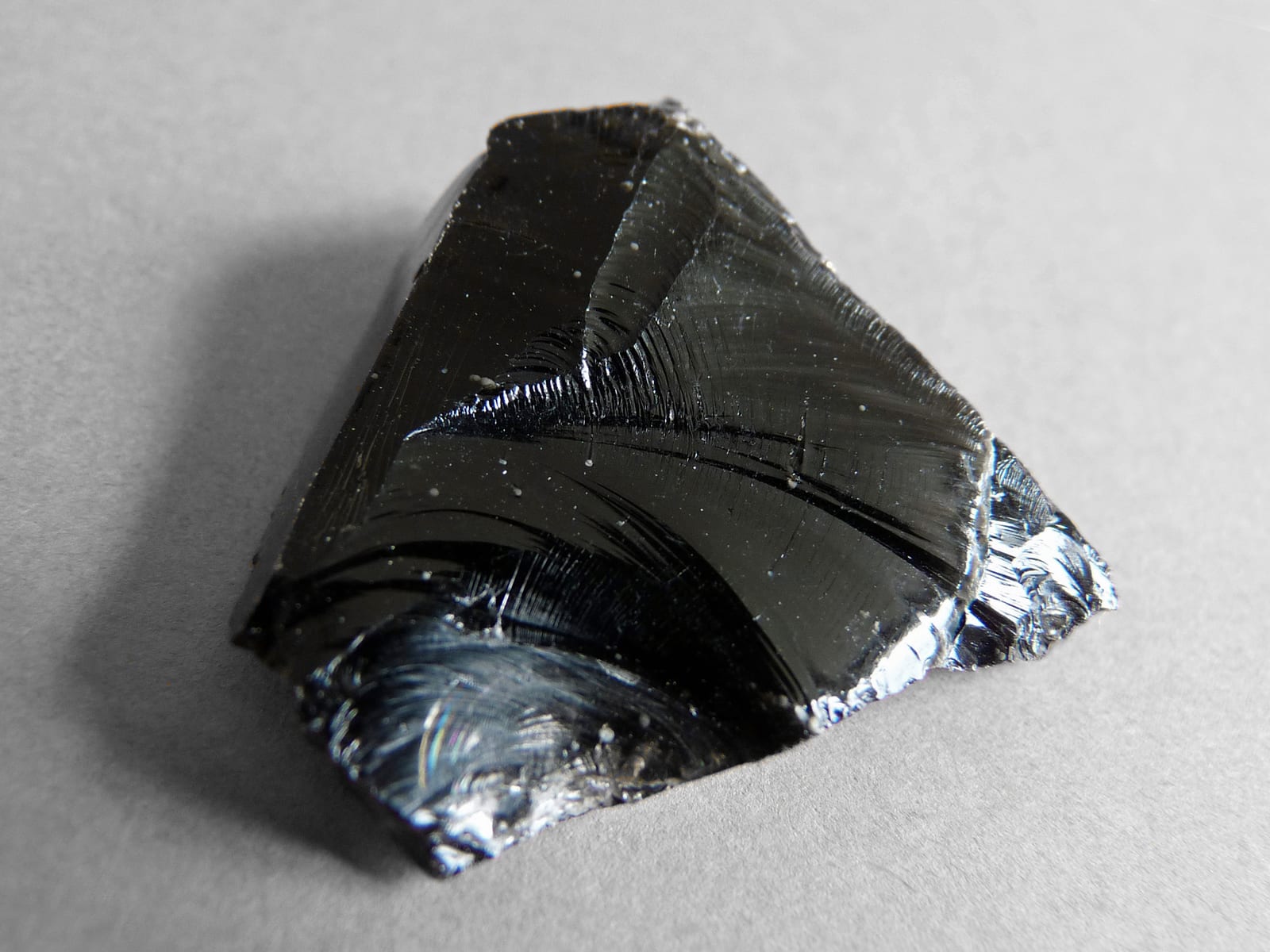
Volcanic glass. Black, glossy, conchoidal fracture. Sometimes mistaken for fusion crust, but obsidian is glassy throughout, not just at the surface.
Photo: Wikipedia contributors · wikipedia
Side-by-side cues for what to look for on each candidate. Magnetic response and the presence or absence of vesicles do most of the work.
| Specimen | Magnetic | Density | Streak | Field tell |
|---|---|---|---|---|
| Iron Meteorite | Varies | 7.5–8.0 g/cm³ (very heavy) | none, or a weak grayish streak if pressed hard | Fusion crust + regmaglypts + Widmanstätten pattern on a polished cut. |
| Chondrite | Varies | 3.0–3.7 g/cm³ (heavy for size) | none, or a weak grayish streak if pressed hard | Chondrules visible on a fresh break, thin fusion crust, and no vesicles. |
| Pallasite | Varies | 4.5–4.9 g/cm³ | none, or a weak grayish streak if pressed hard | Olivine crystals suspended in a metal matrix; visually unmistakable when cut. |
| Magnetite | Varies | 5.1 g/cm³ | black | Strongly magnetic but black streak, octahedral crystals where formed, no fusion crust. |
| Hematite | Varies | 5.3 g/cm³ | cherry-red or reddish brown | Red-brown streak is diagnostic, even when specimen looks black. |
| Obsidian | Varies | 2.4 g/cm³ (light for size) | white | Glassy throughout, not just at the surface. No magnetism, no fusion crust. |
Stony chondrite
Dark fusion crust, dense, weakly magnetic. Most common real find, but still rare.
Iron meteorite
Very heavy, strongly magnetic, often pitted with regmaglypts.
Stony-iron (pallasite)
Olivine crystals embedded in nickel-iron. Rare and visually distinctive.
Slag (meteorwrong)
Industrial smelter waste. Vesicles, glassy surface, often found near old foundries. Not a meteorite.
Hematite / magnetite (meteorwrong)
Dense, magnetic terrestrial iron ore. Red-brown streak (hematite) or black streak (magnetite). Not a meteorite.
Vesicular basalt (meteorwrong)
Dark volcanic rock with bubbles. Meteorites do not have vesicles.
Cheap, fast, and decides 80% of cases. Use the strongest magnet you have. A rare-earth (neodymium) is ideal, but a fridge magnet works.
Five visual cues, ranked by how diagnostic they are. The more that stack, the more likely the specimen is real.
Three specimens the way they actually arrive, walked through the same test order the identifier uses. Two are meteorwrongs, one earns a lab referral, which is roughly the honest ratio.
A rancher plowing a field turns up a dense, dark, rounded rock the size of a grapefruit. A shop magnet snaps onto it. It has to be an iron meteorite, right?
Verdict: Magnetite, terrestrial iron ore. The magnet said 'maybe'; the streak and the filed corner said no. This exact sequence (strong magnet, black streak, no metal interior) is the most common meteorwrong story there is.
A bottle digger finds a dark, glassy, surprisingly light lump full of small holes near a 19th-century rail siding and wonders if it fell from the sky.
Verdict: Slag, smelter or locomotive-firebox waste. Bubbles plus low density ends the meteorite question in under a minute, no lab needed.
A hiker on Arizona desert pavement picks up a fist-size brown stone that feels too heavy, with shallow scalloped depressions across one face. A magnet pulls weakly but definitely.
Verdict: A real candidate. Nothing here proves a meteorite, but nothing rules it out, and the cues stack. This is the point to stop testing, photograph everything, and send it to a lab for confirmation. Do not cut it further.
Touch a strong magnet to the rock. No magnetism? Almost certainly not a meteorite. Weak attraction is consistent with stony chondrites; strong is iron.
Fusion crust, the broken interior, and any regmaglypts. A scale and the magnet result help.
Three ranked identifications, including 'meteorwrong' explanations like slag, hematite, or basalt when those fit better.
Confirming a meteorite from a photo alone is not reliable. The tool is calibrated to be skeptical and to suggest the next test rather than over-promise.
If the magnet, streak, density, and visual cues all stack in favor, stop working on the rock and get expert eyes on it. Verification is cheap or free; a destroyed or mishandled specimen is not recoverable.
The RockHoundR app works offline, saves every find to your map, and overlays them onto 250,000+ rockhounding spots with geology and land-access data.


Statistically, very unlikely. The overwhelming majority of suspected meteorites turn out to be slag, hematite, magnetite, or vesicular basalt. The identifier defaults to skepticism and ranks the most likely terrestrial lookalike alongside the meteorite candidate rather than telling you what you want to hear.
Touch a strong magnet to the rock. No response rules out almost all meteorites; weak response is consistent with stony chondrites; strong response is consistent with iron meteorites, but also with terrestrial magnetite, which is common. The magnet is necessary but not sufficient. After it, check streak (hematite streaks red-brown; magnetite streaks black; meteorites streak neither distinctly), density, and the broken interior.
A thin, dark, sometimes flow-lined crust 0.5 to 1 mm thick, formed when the meteorite burned through the atmosphere. It's matte to slightly glossy, not glassy throughout like obsidian, and it's unique enough that an experienced meteoriticist can usually call it on sight. On a recovered specimen, fusion crust may be partially weathered off, so look at multiple faces.
Not before you're confident. A small chip from a non-display corner shows the interior. Real chondrites reveal a gray metallic matrix with small spherical chondrules visible to the naked eye; irons show metal throughout. Don't slice a candidate before getting expert eyes on it. Cutting destroys value if it does turn out to be real.
If the assessment leans meteorite, send photos and physical-test results to a university geology department or a Meteoritical Society classifier. Several U.S. museums also accept candidates. Field photos, a magnet/streak result, and density estimate speed the process significantly.
Slag and ore minerals are heavy, dark, and often magnetic, the three things that make people think 'meteorite'. Slag has vesicles (bubbles) which meteorites don't; hematite has a red-brown streak which meteorites don't; magnetite has octahedral crystals where it's well-formed. The identifier names the most likely terrestrial match when that's the better answer rather than over-promising.
Property data and reference imagery used on this page are cross-checked against the following sources.
Official record of all classified meteorites. Reference for fusion crust, regmaglypts, and class properties.
Reference imagery for chondrites, achondrites, irons, and stony-irons.
Federal guidance on the magnet test, density, and fusion crust as field cues.