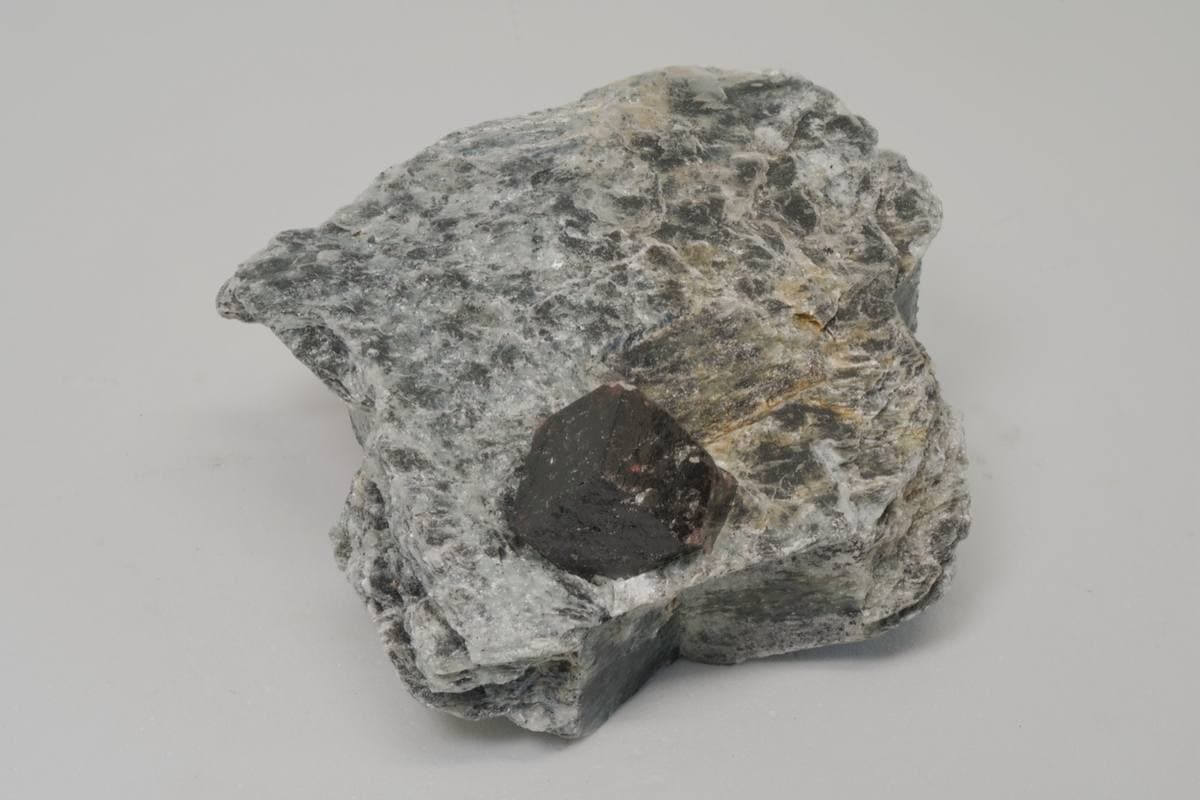
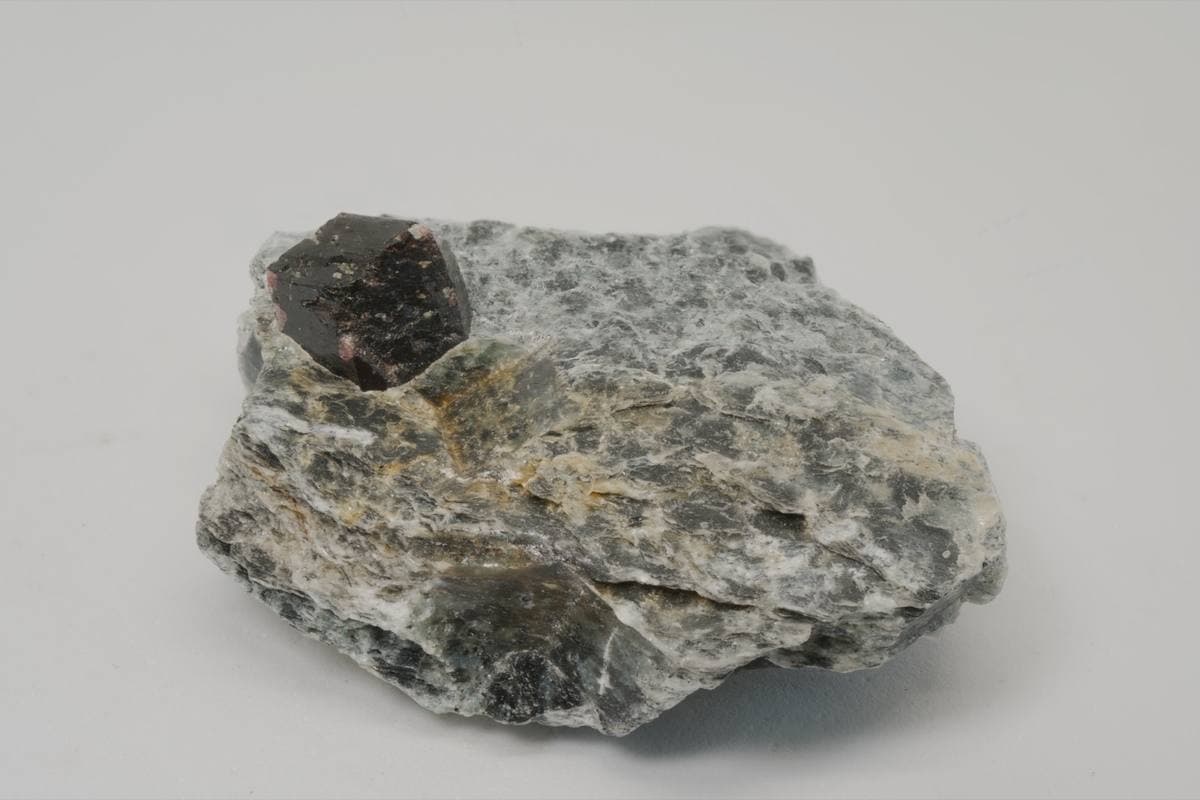
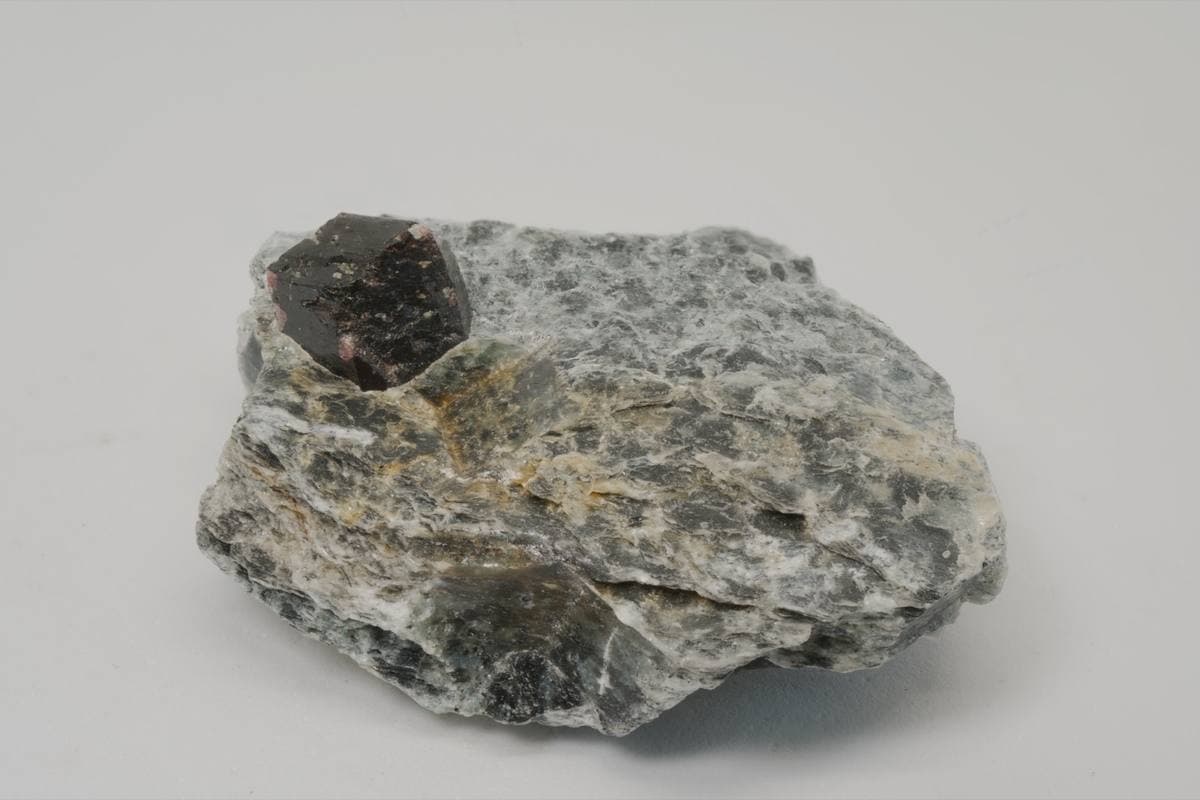
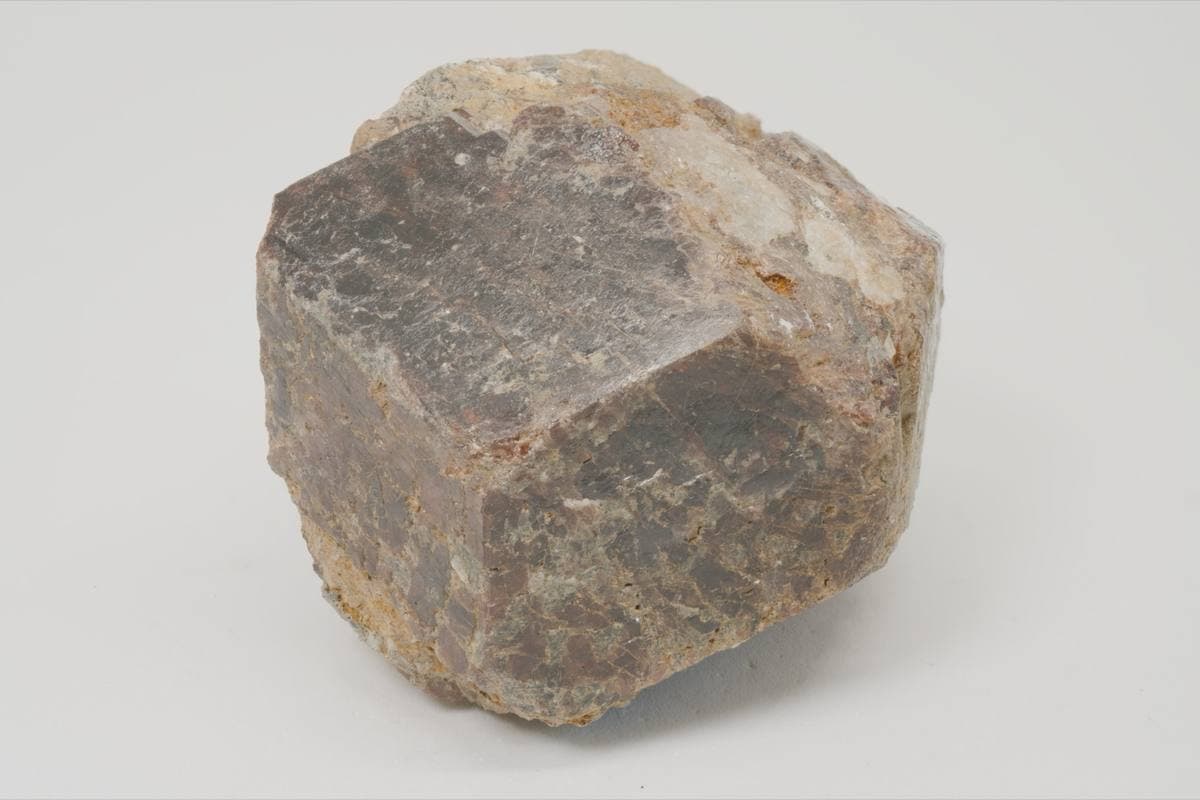
Almandine is the most common species of the garnet group, typically found in high-grade metamorphic rocks. Collectors prize its sharp, complex crystal forms, which often appear as deep red, translucent dodecahedrons embedded in mica schist.
Spotting almandine in the field
Field marks- 1
Deep red to reddish brown, often nearly opaque in larger crystals
- 2
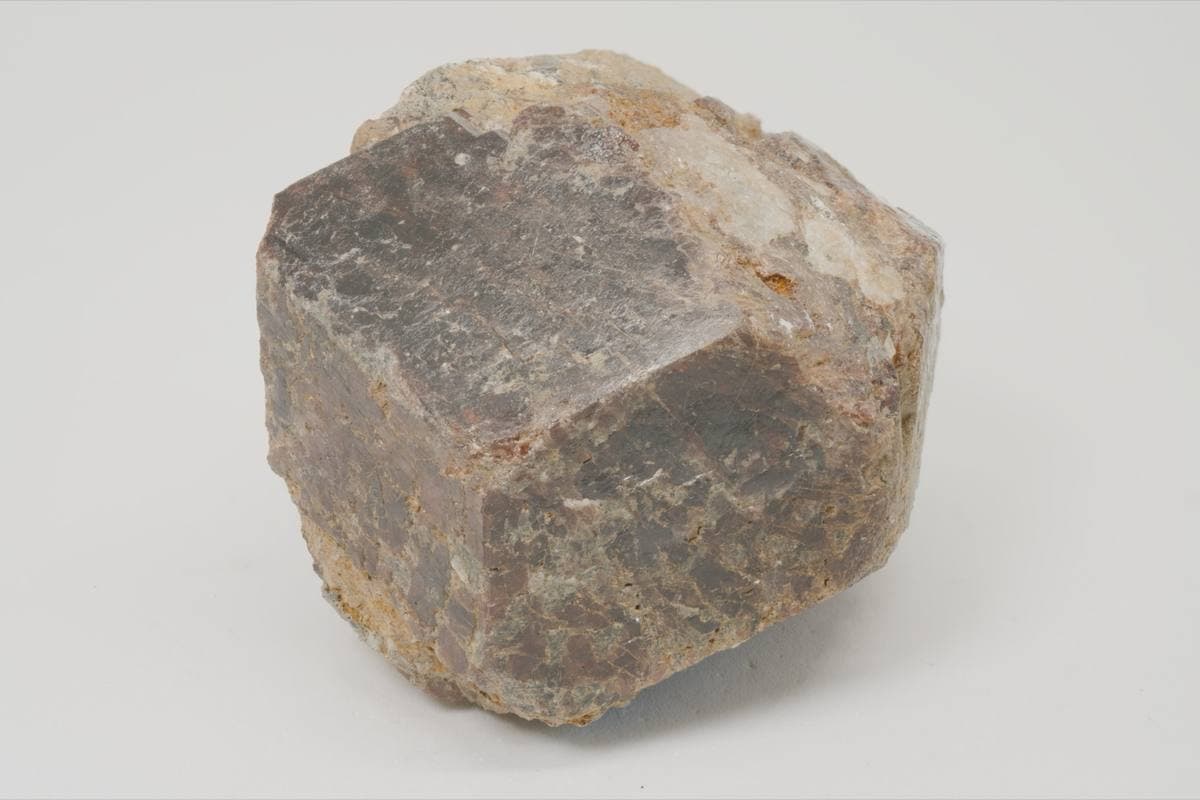
Classic rounded 12-sided or 24-sided crystal form
- 3
The commonest garnet, and the one weathering out of mica schist everywhere
Almandine is the iron-aluminium garnet and the one you are most likely to find. In schist it sits as red knobs standing proud of the weathered surface, and in placer gravel it concentrates with the heavy fraction. New York's Gore Mountain is the famous American occurrence, producing enormous crystals used historically as industrial abrasive, and the mine runs public tours and collecting.
Straight answers
- Is it worth cutting?
- Facets well when transparent, and darker material is often cut as a shallow stone to let light through. Star almandine exists and should be cut as a high dome.
- What is it really worth?
- Inexpensive. Clean transparent material of good size, and star stones, are the exceptions.
- Can you legally keep it?
- Ordinary personal-use collecting rules apply on public land. Gore Mountain is a commercial site with paid access.
Where it is worth going
- Gore MountainWarren County, New York
Giant almandine crystals in a historic garnet mine. Public tours and collecting for a fee.
Often confused with
Almandine vs. its common look-alikes, and how to tell them apart in the field.
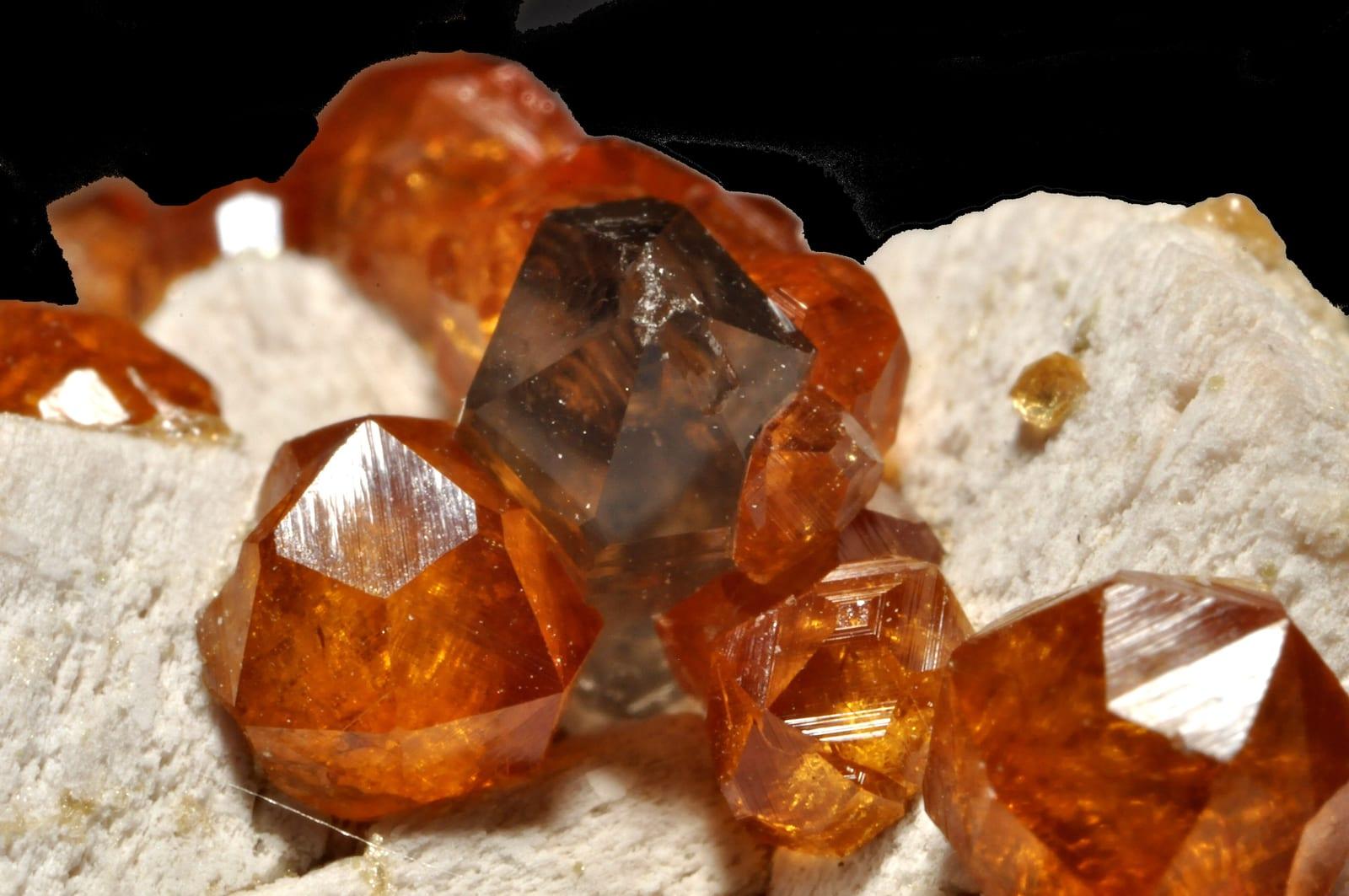
How to tell apart: Spessartine runs orange to reddish orange. Almandine is deeper red with a brownish or purplish cast.
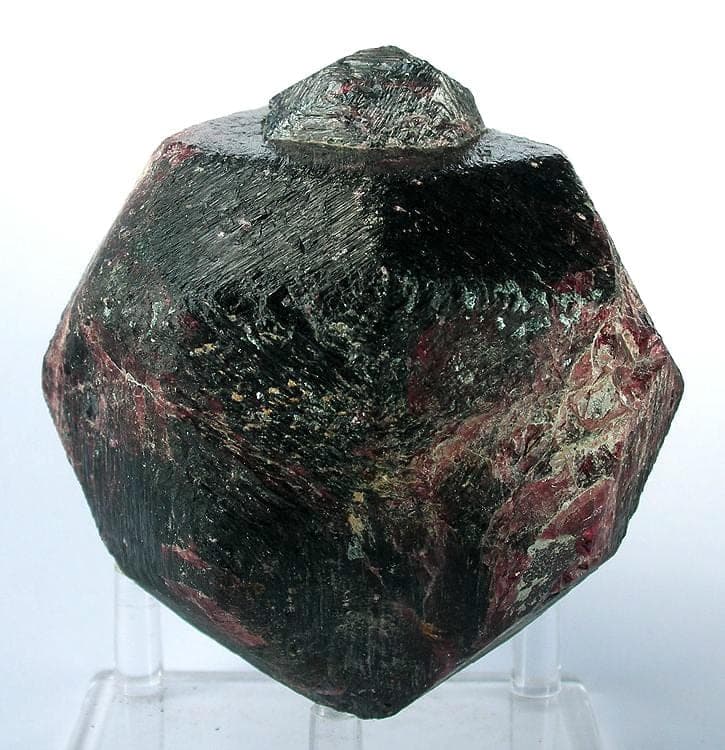
How to tell apart: Pyrope is a brighter, more transparent red and typically comes from mantle rocks rather than schist.
Often found alongside almandine
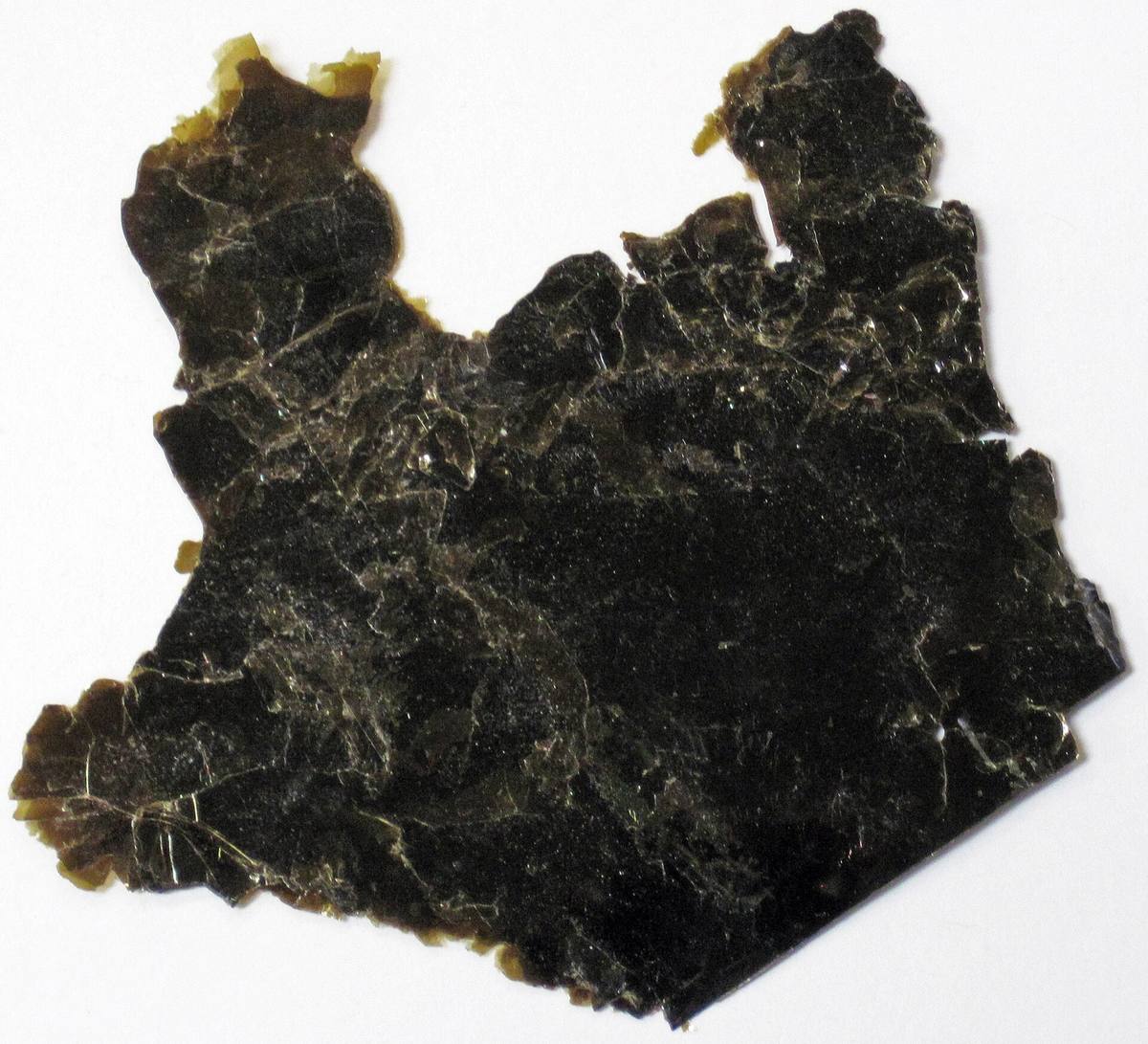
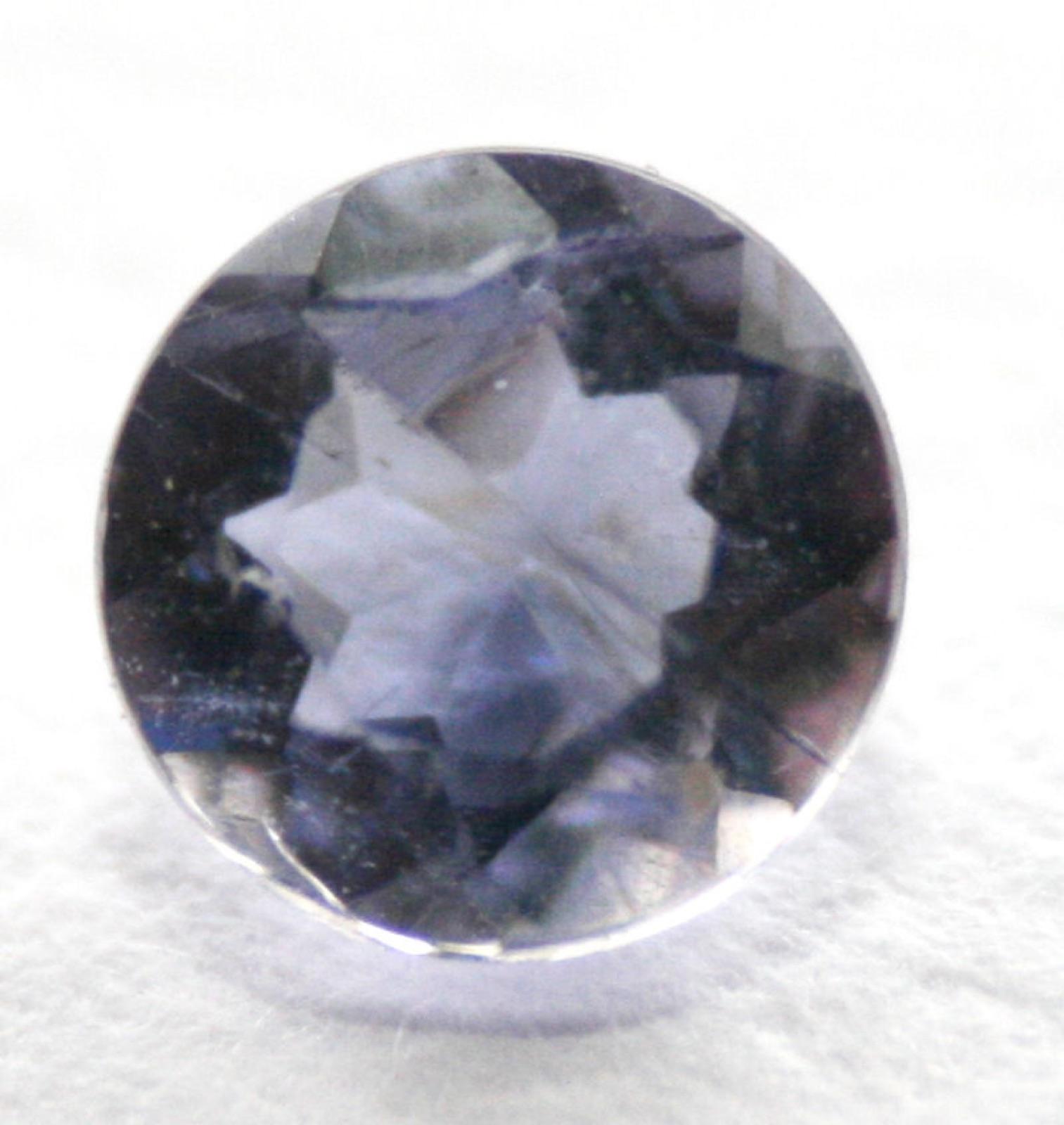
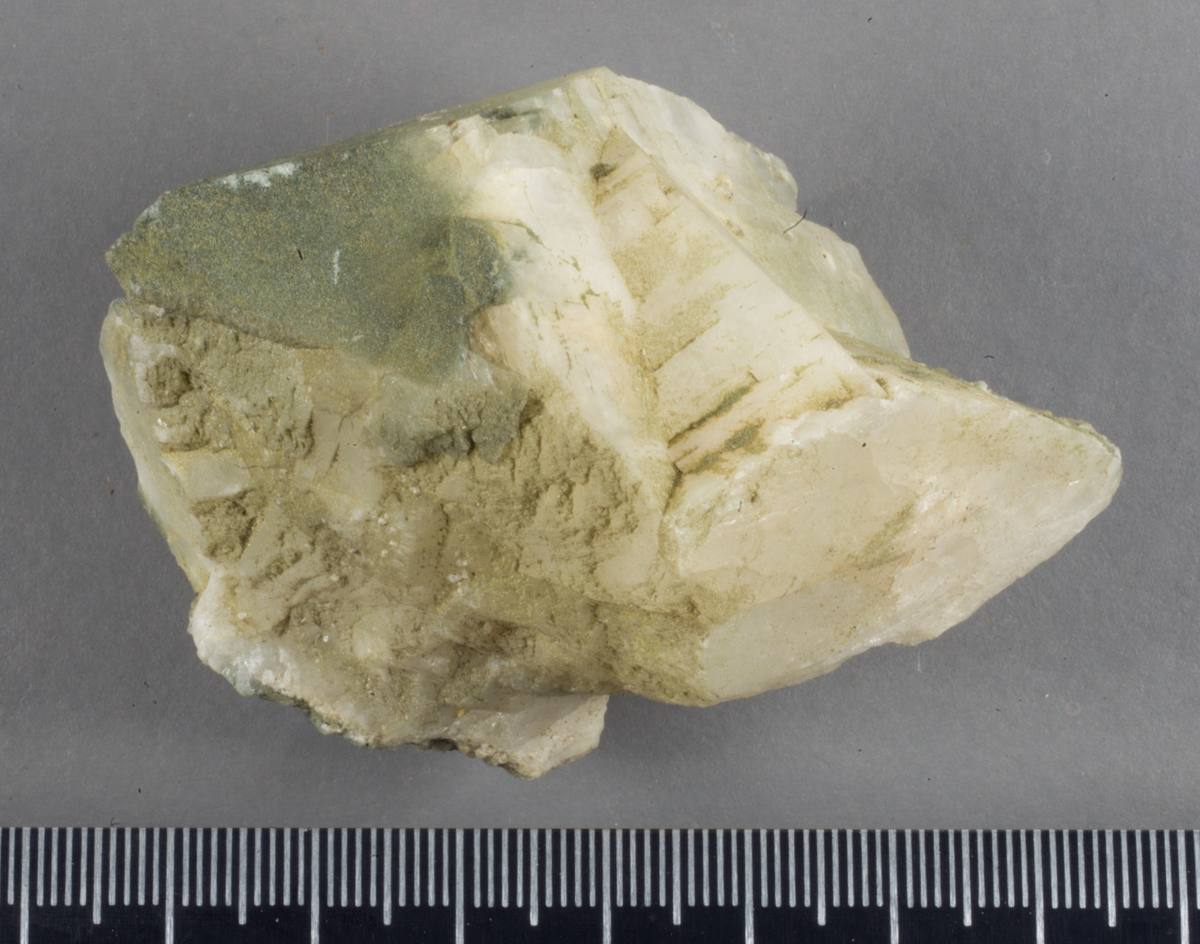
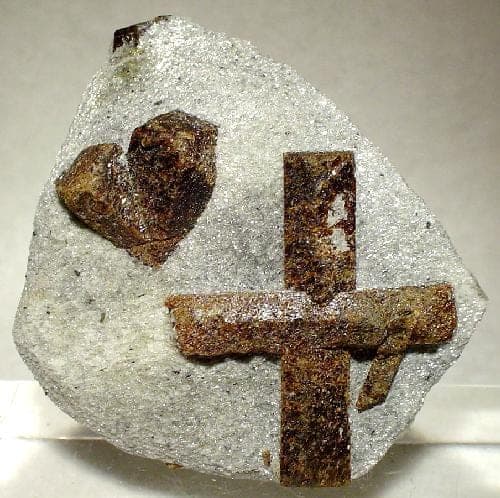
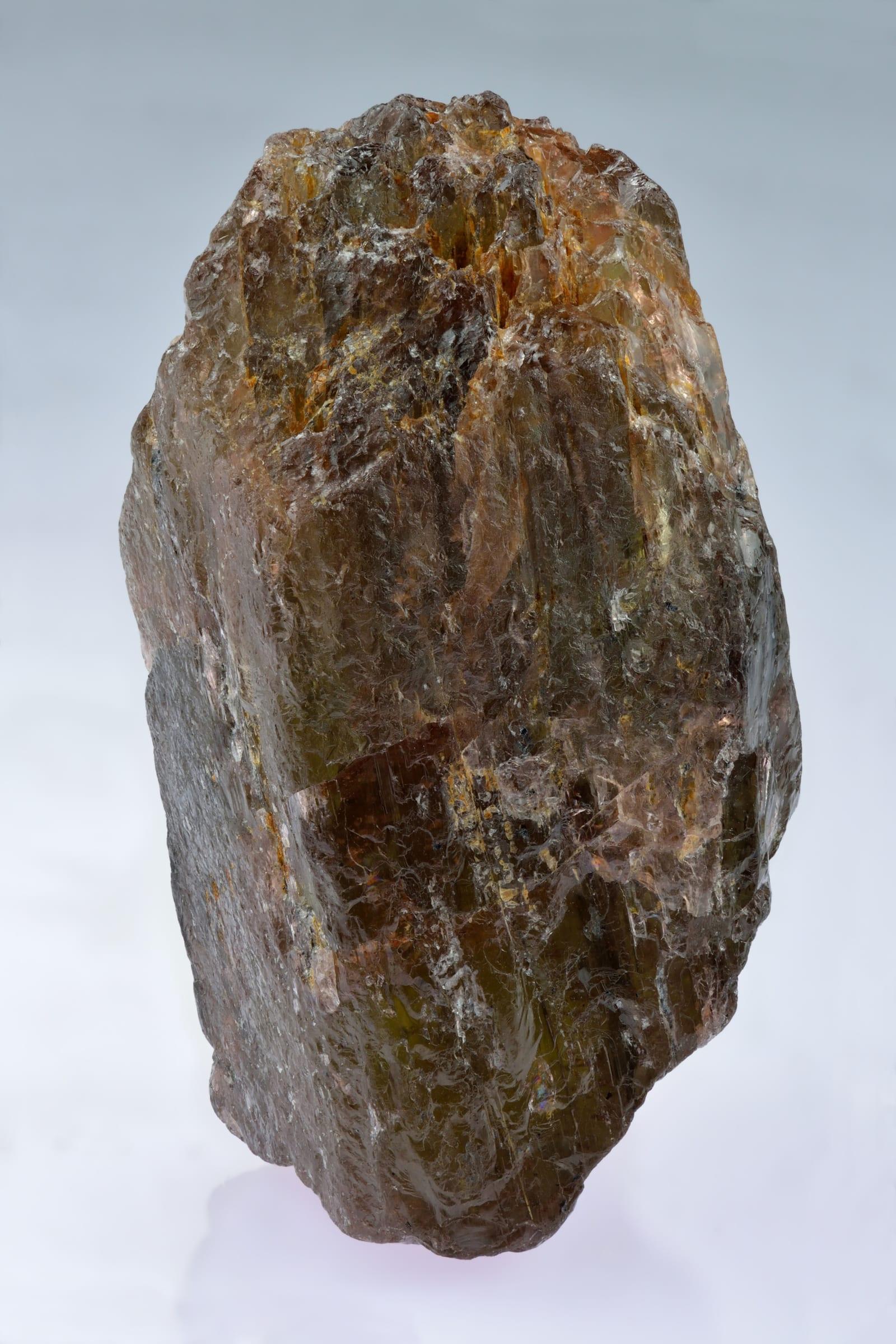
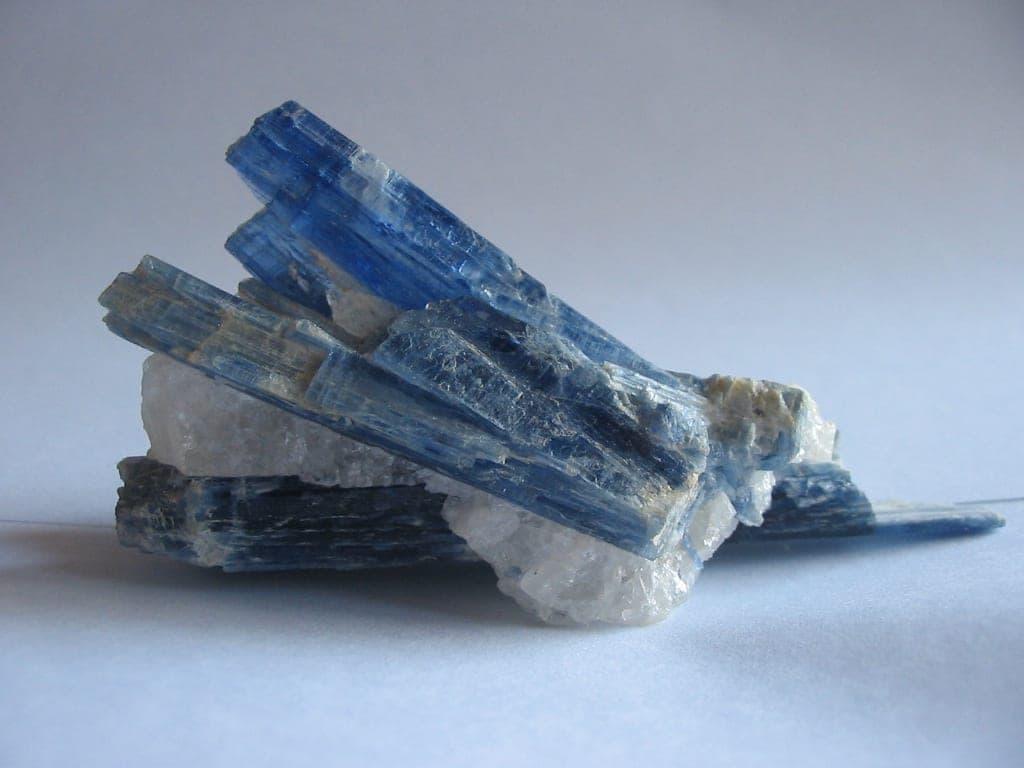
Minerals reported to co-occur with almandine. Spotting these in float or country rock is a strong cue you are in the right ground.
All properties
- Chemical formula
- Fe₃Al₂Si₃O₁₂
- Mohs hardness
- 7-7.5
- Density
- 4.318 g/cm³
- Colors
- Streak
- White
- Luster
- Vitreous to resinous
- Transparency
- Transparent to translucent
- Crystal system
- Cubic
- Crystal habit
- Dodecahedral or trapezohedral crystals, often with rounded edges
- Cleavage
- Parting on {110}
- Rarity
- Common
- Uses
- Gemstone, Abrasive, Collector
- Host rock
- The most common garnet, typically in mica schists and gneisses, from regionally metamorphosed argillaceous sediments and pelites; also in contact metamorphic hornfels
Where rockhounds find almandine
8 mapped spotsClassic worldwide localities
- Roxbury, Litchfield Co., and Southbury, New Haven Co., Connecticut, USA
- Auburn, Androscoggin Co., and Topsham, Sagadahoc Co., Maine, USA
- Westfield and Russell, Hampden Co., Massachusetts, USA
- Hanover, Grafton Co., New Hampshire, USA
- Zillertal, Tirol, Austria
- Falun, Sweden
Field-hunting tip
Where it forms: The most common garnet, typically in mica schists and gneisses, from regionally metamorphosed argillaceous sediments and pelites; also in contact metamorphic hornfels. If you start seeing biotite, cordierite, chlorite in float, you are in the right ground. Typical habit: dodecahedral or trapezohedral crystals, often with rounded edges. Train your eye for that shape before scanning the outcrop. In the U.S., the densest reported localities are in Wisconsin, New York, Alabama. Start trip planning there.
More almandine photos
Common questions
How do you identify almandine?+
Where is almandine found?+
Can I find almandine in the United States?+
What rocks look like almandine?+
What minerals are found with almandine?+
What kind of rock does almandine form in?+
What is almandine used for?+
Find almandine on the map
RockHoundR shows mapped rockhounding spots, access rules, and lets you log every find.