
Aventurine is a translucent variety of quartz characterized by its shimmering or glistening effect known as aventurescence, caused by inclusions of mica or other minerals. It is typically found in massive, granular forms and is frequently used in jewelry and ornamental carvings. Collectors should look for the distinctive glitter created by plate-like inclusions suspended within the quartz matrix.
Spotting aventurine in the field
Field marks- 1
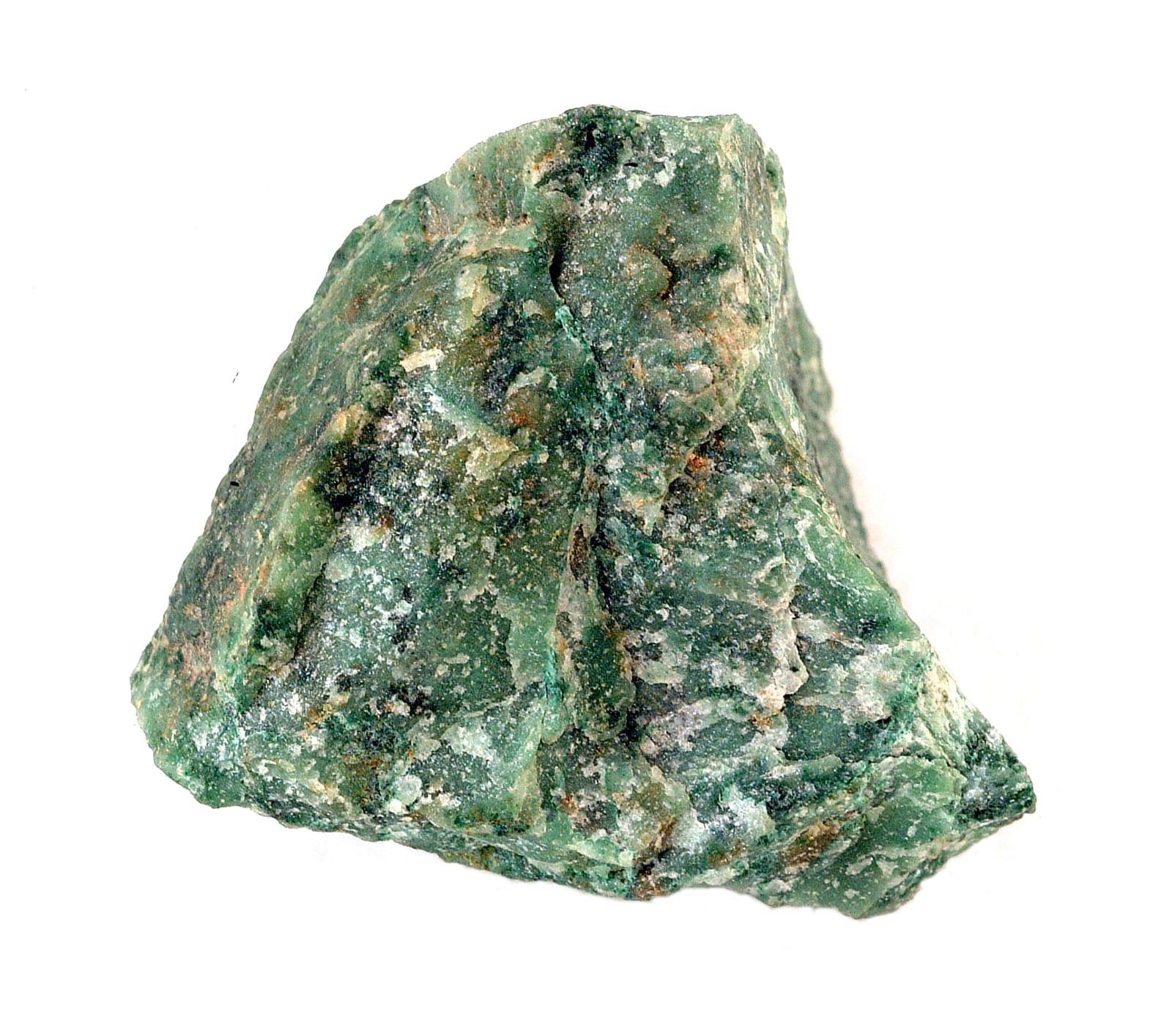
Massive green quartz with a glittery sheen from tiny mica flakes
- 2
The sparkle moves as you rotate the piece, rather than sitting on the surface
- 3
Opaque to slightly translucent, hardness 7
Aventurine is quartzite shot through with platy inclusions, usually the chromium mica fuchsite, which gives both the green color and the glitter. That internal glitter, called aventurescence, is the whole identification: rotate the piece in sunlight and the flashes should appear and disappear from inside, not sit on the surface like a coating. Most material comes from India and Brazil.
Straight answers
- Is it worth cutting?
- Reliable, cheap and forgiving. A very common tumbling and beginner cabbing stone.
- What is it really worth?
- Inexpensive. Strong even color with visible aventurescence is the useful quality mark.
- Can you legally keep it?
- Ordinary personal-use collecting rules apply.
Often confused with
Aventurine vs. its common look-alikes, and how to tell them apart in the field.
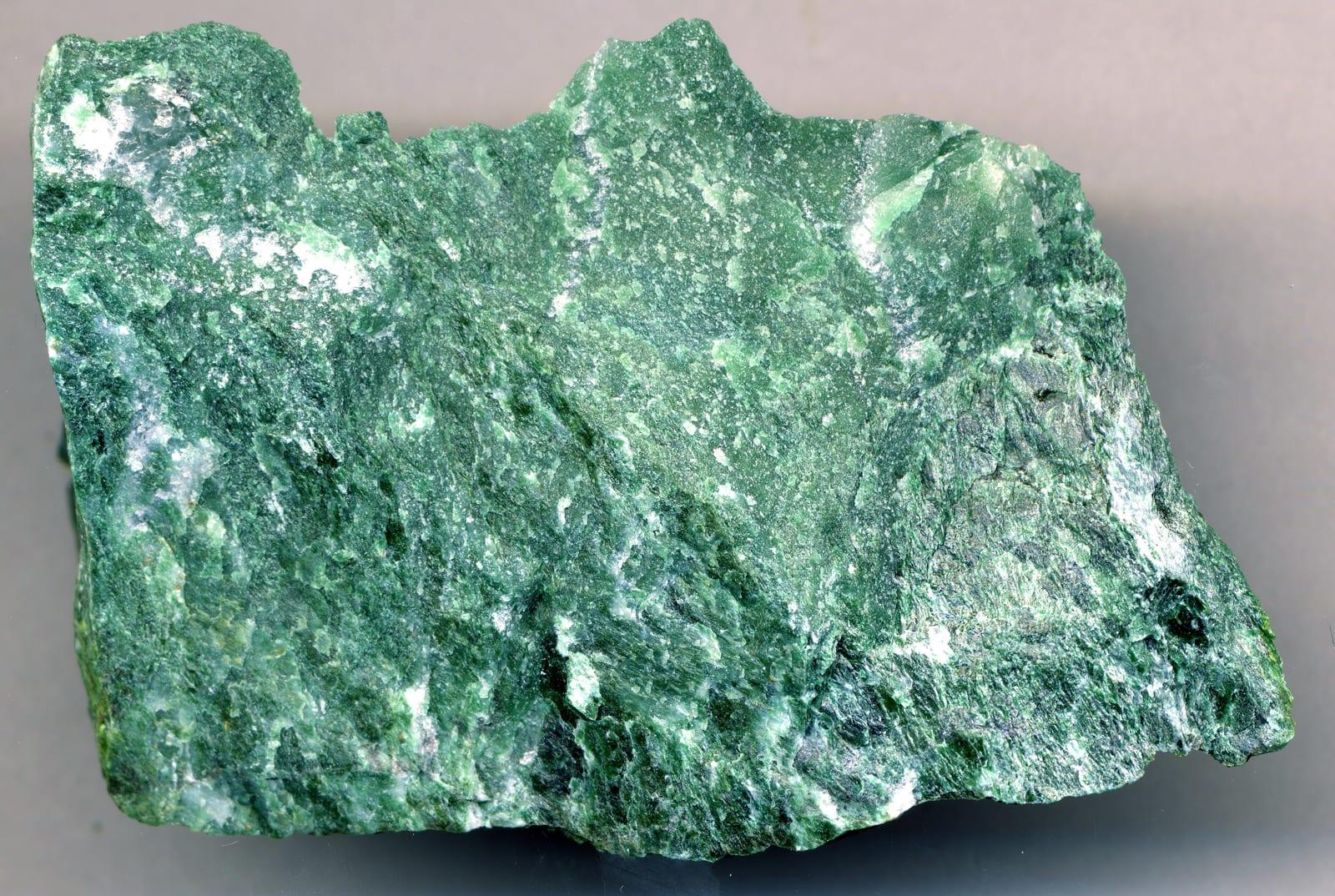
Often found alongside aventurine
Minerals reported to co-occur with aventurine. Spotting these in float or country rock is a strong cue you are in the right ground.
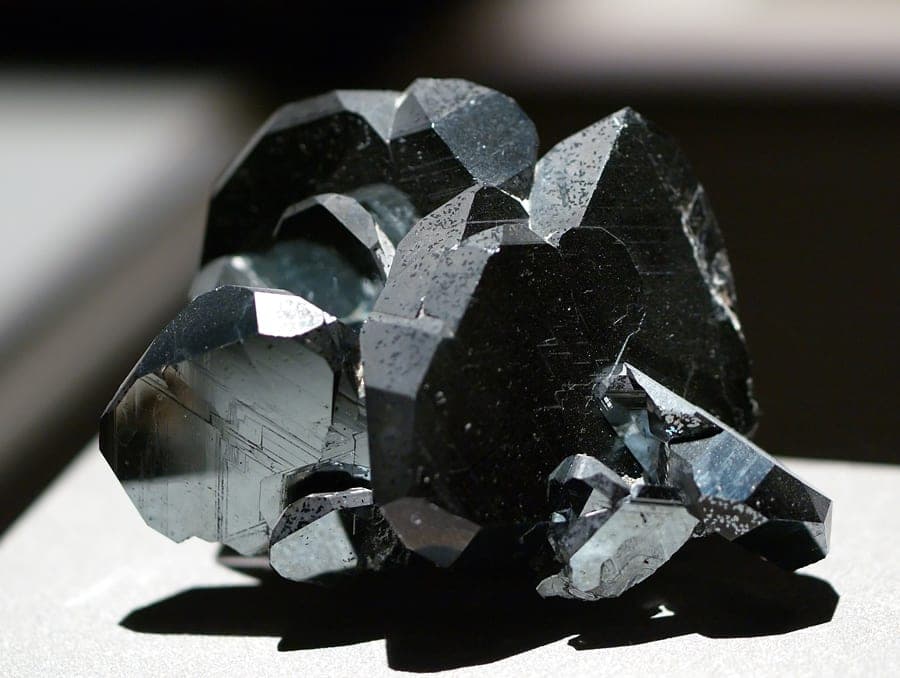
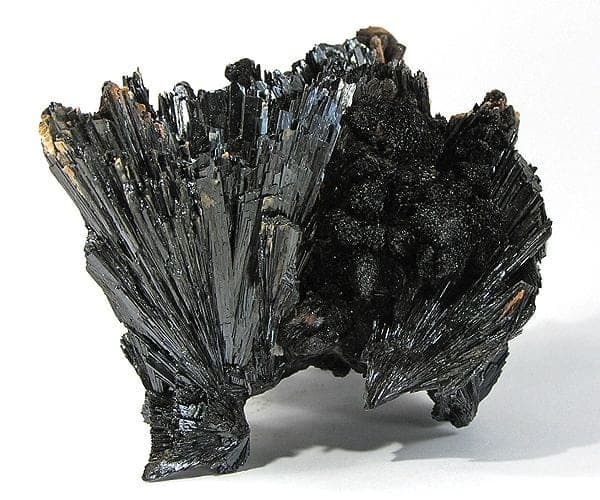
All properties
- Chemical formula
- SiO₂
- Mohs hardness
- 6.5-7
- Density
- 2.6-2.7 g/cm³
- Streak
- White
- Luster
- Vitreous
- Transparency
- Translucent
- Crystal system
- Trigonal
- Crystal habit
- Massive
- Cleavage
- None
- Rarity
- Common
- Uses
- Gemstone, Lapidary, Decorative
- Host rock
- metamorphic rocks
Where rockhounds find aventurine
3 mapped spotsClassic worldwide localities
- India
- Brazil
- Russia
- Chile
- Spain
Field-hunting tip
Where it forms: metamorphic rocks. If you start seeing fuchsite, hematite, goethite in float, you are in the right ground. Typical habit: massive. Train your eye for that shape before scanning the outcrop. In the U.S., the densest reported localities are in North Carolina, Wisconsin, Wyoming. Start trip planning there.
Common questions
How do you identify aventurine?+
Where is aventurine found?+
Can I find aventurine in the United States?+
What rocks look like aventurine?+
What minerals are found with aventurine?+
What kind of rock does aventurine form in?+
What is aventurine used for?+
Find aventurine on the map
RockHoundR shows mapped rockhounding spots, access rules, and lets you log every find.

