Cavansite is a highly sought-after secondary mineral known for its vibrant, electric blue spherical crystal clusters. It is typically found lining cavities in basalt, often associated with white zeolites like stilbite or apophyllite, which provide a striking aesthetic contrast.
Spotting cavansite in the field
Field marks- 1
Vivid blue rosettes and spherical clusters of fine bladed crystals
- 2
Sits on white or cream zeolite-lined cavities in dark basalt
- 3
Soft at 3 to 4, and the blue is unmistakably electric
Cavansite is essentially a one-region mineral: the basalt quarries around Pune and Nashik in Maharashtra, India, produce virtually everything on the market. It forms as brilliant blue rosettes in cavities alongside zeolites like stilbite and heulandite. There is no realistic American field-collecting option, so this is a buying material, and the thing to check is that the rosettes are intact, because they are fragile and get damaged in transit.
Straight answers
- Is it worth cutting?
- Never cut. A fragile display mineral.
- What is it really worth?
- Moderate. Large intact rosettes with strong color on clean white matrix are the premium.
- Can you legally keep it?
- Imported from working Indian quarries through the specimen trade.
Often confused with
Cavansite vs. its common look-alikes, and how to tell them apart in the field.
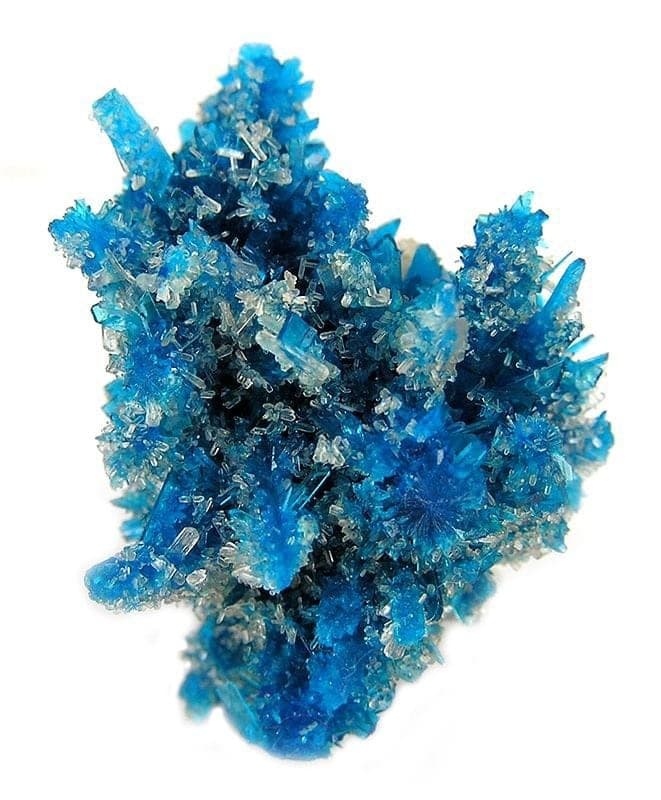
How to tell apart: A rare structural twin with the same chemistry and color, forming sharper star-shaped twinned crystals rather than rounded rosettes.
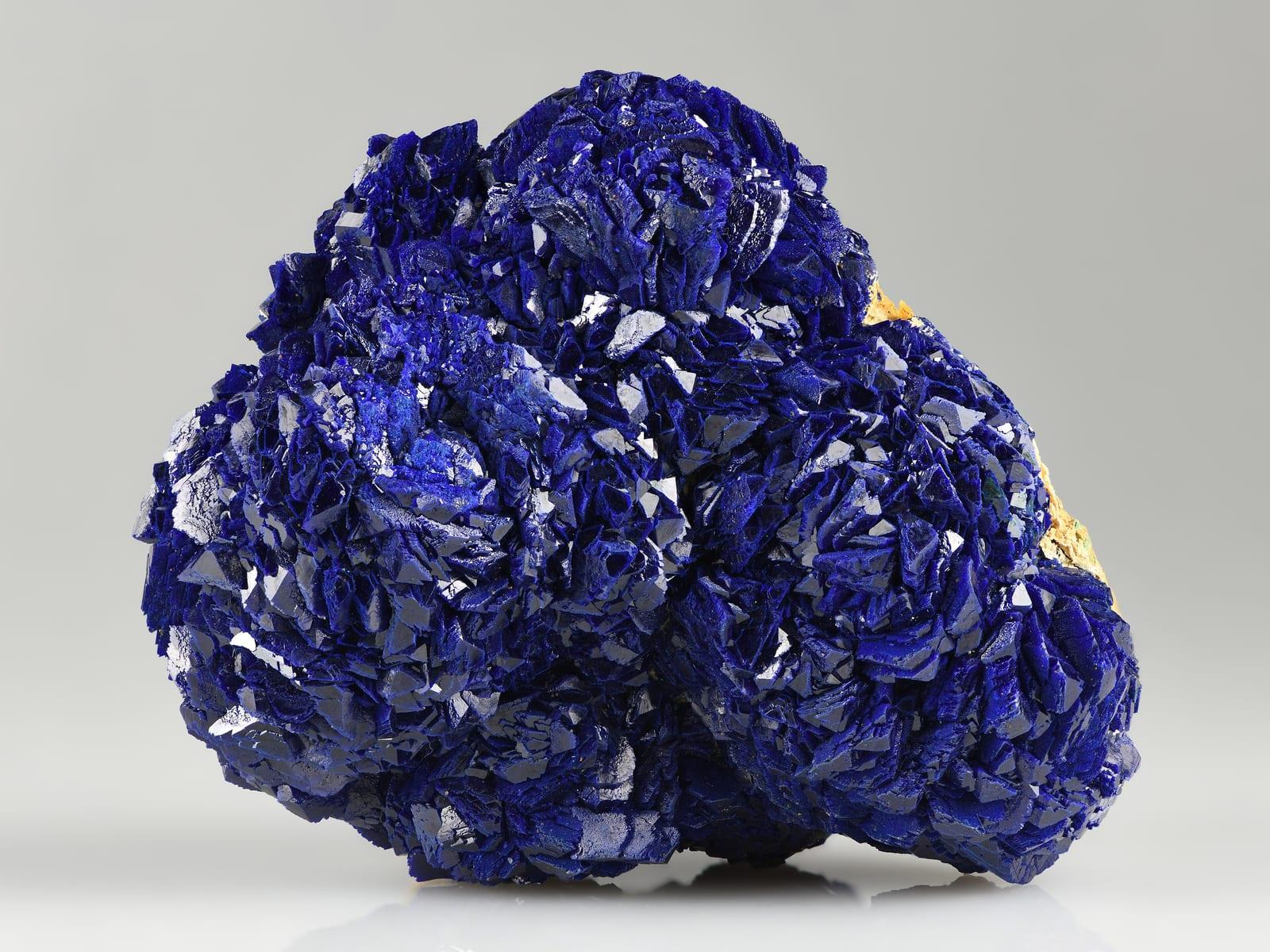
How to tell apart: Azurite is a deeper, more purple blue, is a copper carbonate and fizzes in acid.
Often found alongside cavansite
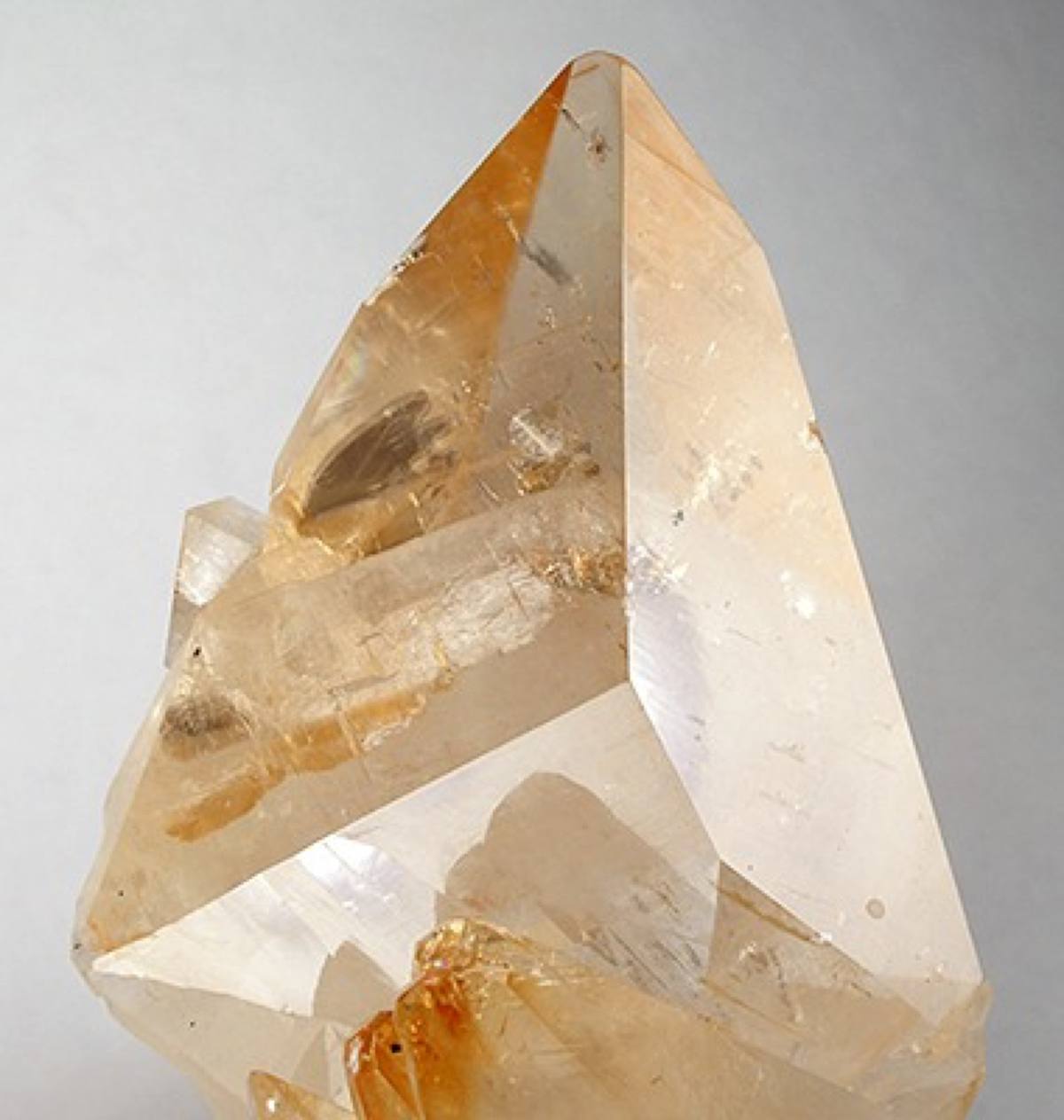
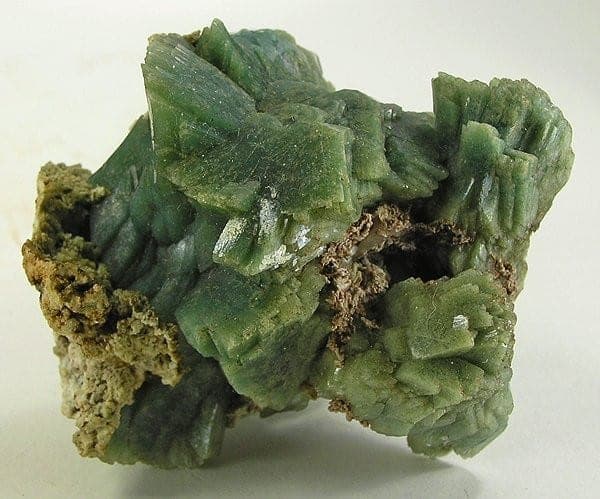
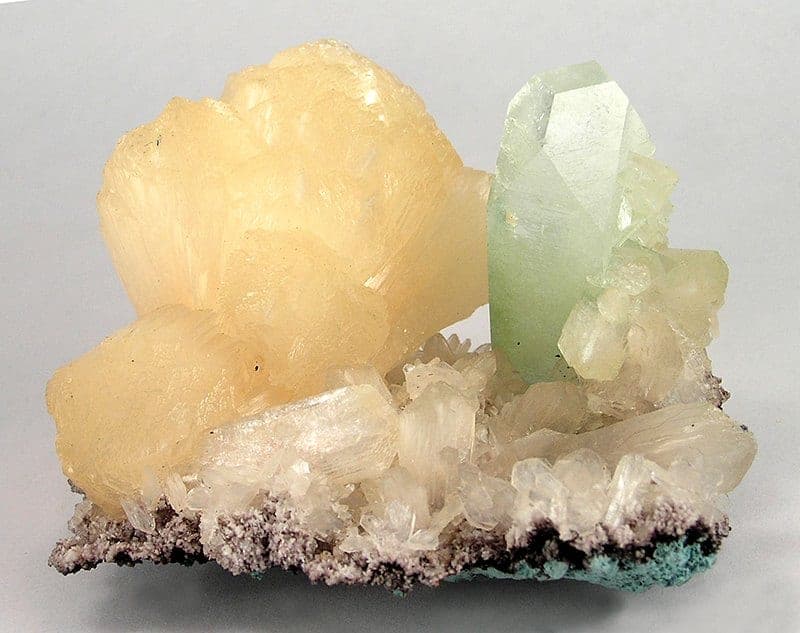
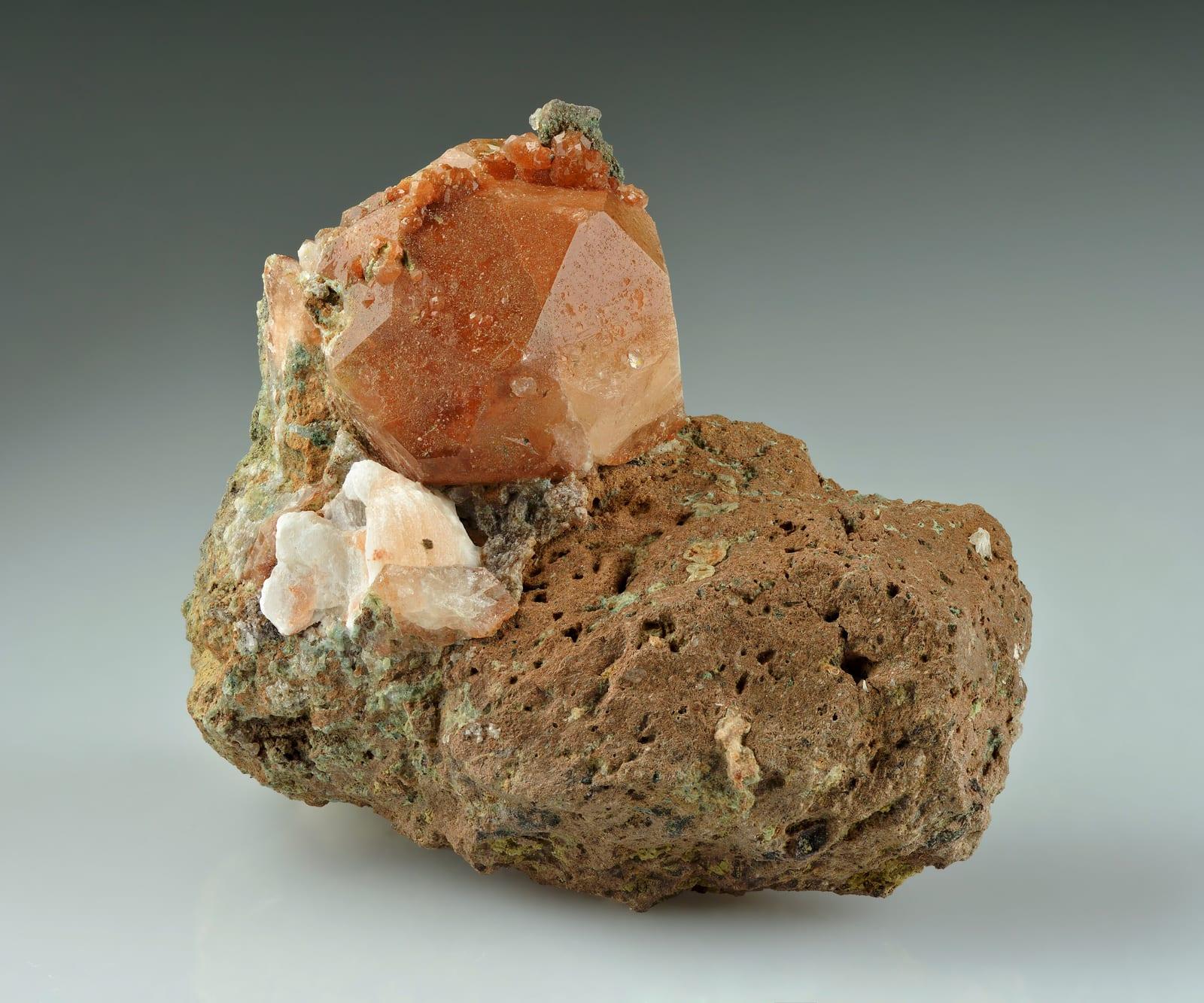
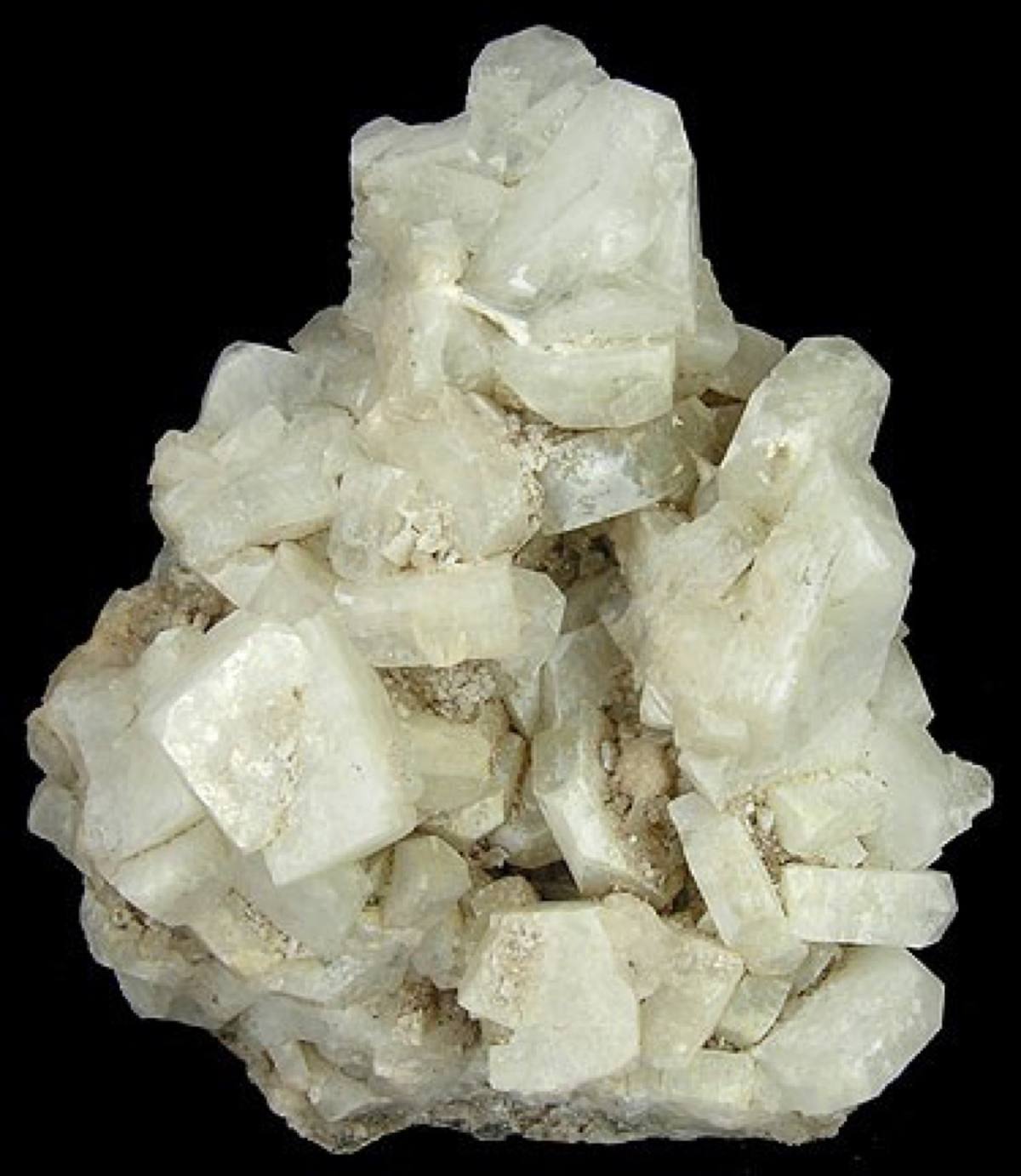
Minerals reported to co-occur with cavansite. Spotting these in float or country rock is a strong cue you are in the right ground.
All properties
- Chemical formula
- Ca(VO)Si₄O₁₀·4H₂O
- Mohs hardness
- 3-4
- Density
- 2.21-2.31 g/cm³
- Streak
- Bluish white
- Luster
- Vitreous
- Transparency
- Transparent
- Crystal system
- Orthorhombic
- Crystal habit
- Radiating spherical clusters, bow-tie aggregates
- Cleavage
- Good on {010}
- Rarity
- Rare
- Uses
- Collector
- Host rock
- In a brown tu® partly filling a fault fissure (Lake Owyhee State Park, Oregon, USA); in a vesicular basalt and red tu® breccia, as cavity fillings and in calcite veinlets (Chapman quarry, Oregon, USA)
Where rockhounds find cavansite
Classic worldwide localities
- Deccan trap basalts, Poona, India (type locality)
Field-hunting tip
Where it forms: In a brown tu® partly filling a fault fissure (Lake Owyhee State Park, Oregon, USA); in a vesicular basalt and red tu® breccia, as cavity fillings and in calcite veinlets (Chapman quarry, Oregon, USA). If you start seeing pentagonite, calcite, heulandite in float, you are in the right ground. Typical habit: radiating spherical clusters, bow-tie aggregates. Train your eye for that shape before scanning the outcrop.
Common questions
How do you identify cavansite?+
Where is cavansite found?+
Is cavansite safe to handle?+
What rocks look like cavansite?+
What minerals are found with cavansite?+
What kind of rock does cavansite form in?+
What is cavansite used for?+
Find cavansite on the map
RockHoundR shows mapped rockhounding spots, access rules, and lets you log every find.