
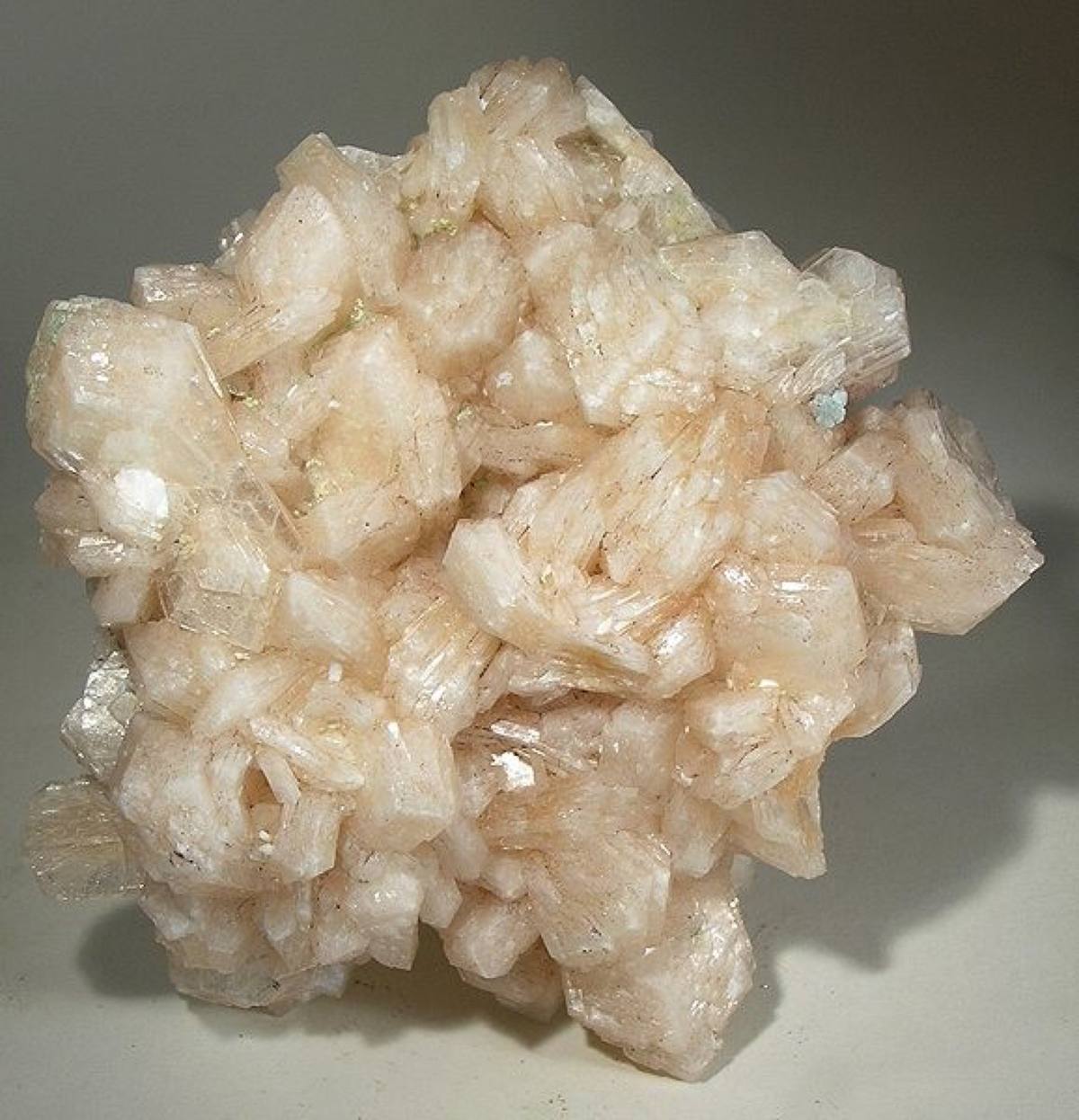
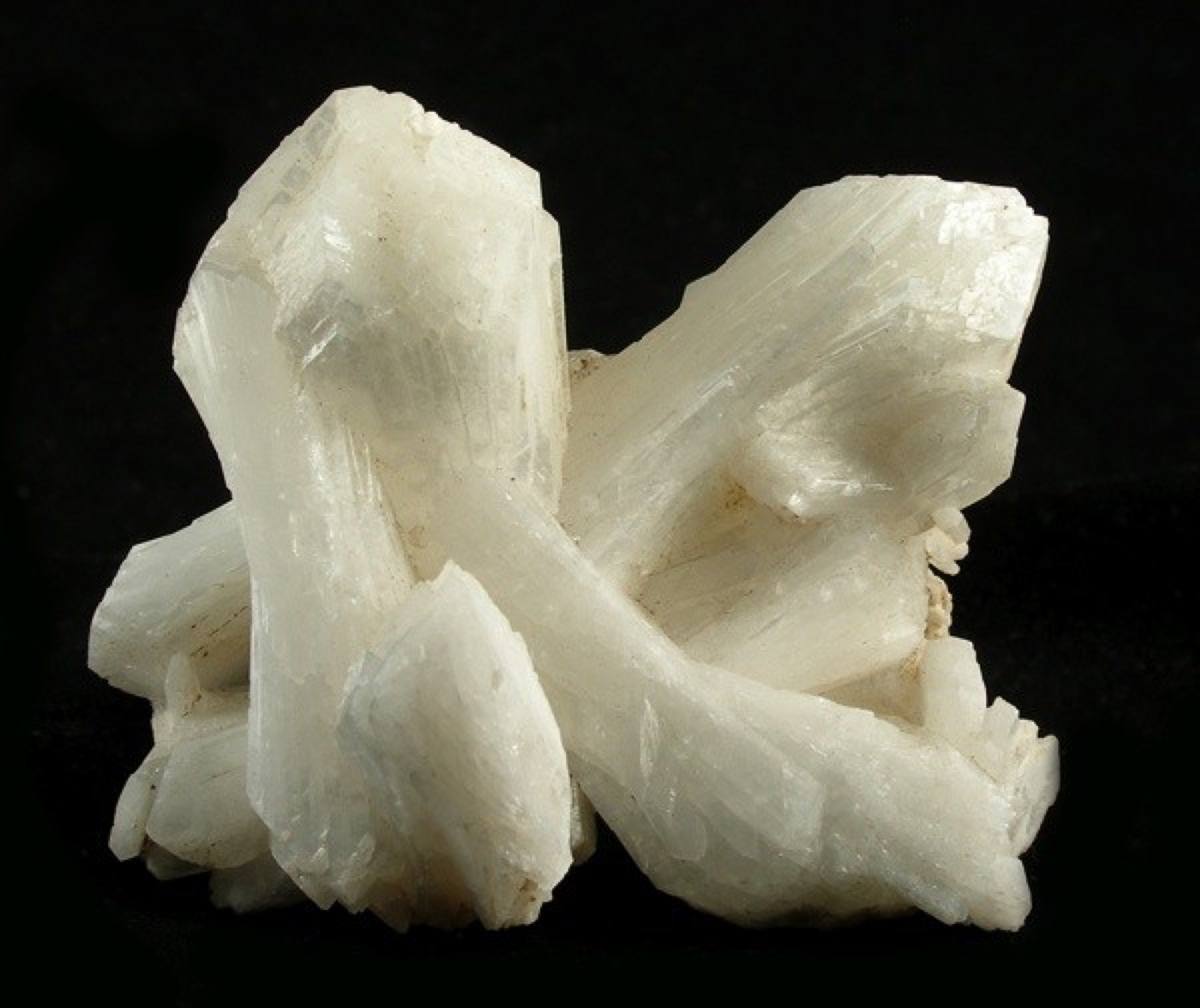
Stilbite is best known for its distinctive bowtie or sheaf-like crystal clusters, which are highly prized by collectors for their aesthetic beauty. It forms primarily in the cavities of basaltic volcanic rocks and is often found associated with other minerals like apophyllite and heulandite.
Spotting stilbite in the field
Field marks- 1
Sheaf-like or bowtie-shaped bundles of thin tabular crystals
- 2
Usually white, cream, peach or salmon pink, with a pearly luster
- 3
Soft at 3.5 to 4, filling cavities in basalt
The wheat-sheaf habit is the identification: bundles of blades that pinch in the middle and fan out at both ends. Stilbite is a zeolite, forming in gas cavities in basalt, so the places to look are traprock quarries and lava flows. India's Deccan basalt quarries supply most specimens, with New Jersey's traprock and Nova Scotia's Bay of Fundy basalts as the classic North American localities.
Straight answers
- Is it worth cutting?
- Not cut. A display mineral.
- What is it really worth?
- Inexpensive. Large peach-colored sheaves and specimens with apophyllite or cavansite carry more.
- Can you legally keep it?
- Active traprock quarries are private, and organized club field trips are the practical access route in New Jersey and Nova Scotia.
Often confused with
Stilbite vs. its common look-alikes, and how to tell them apart in the field.
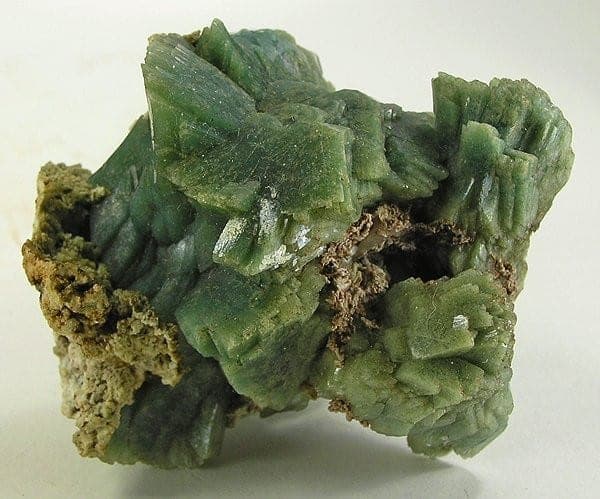
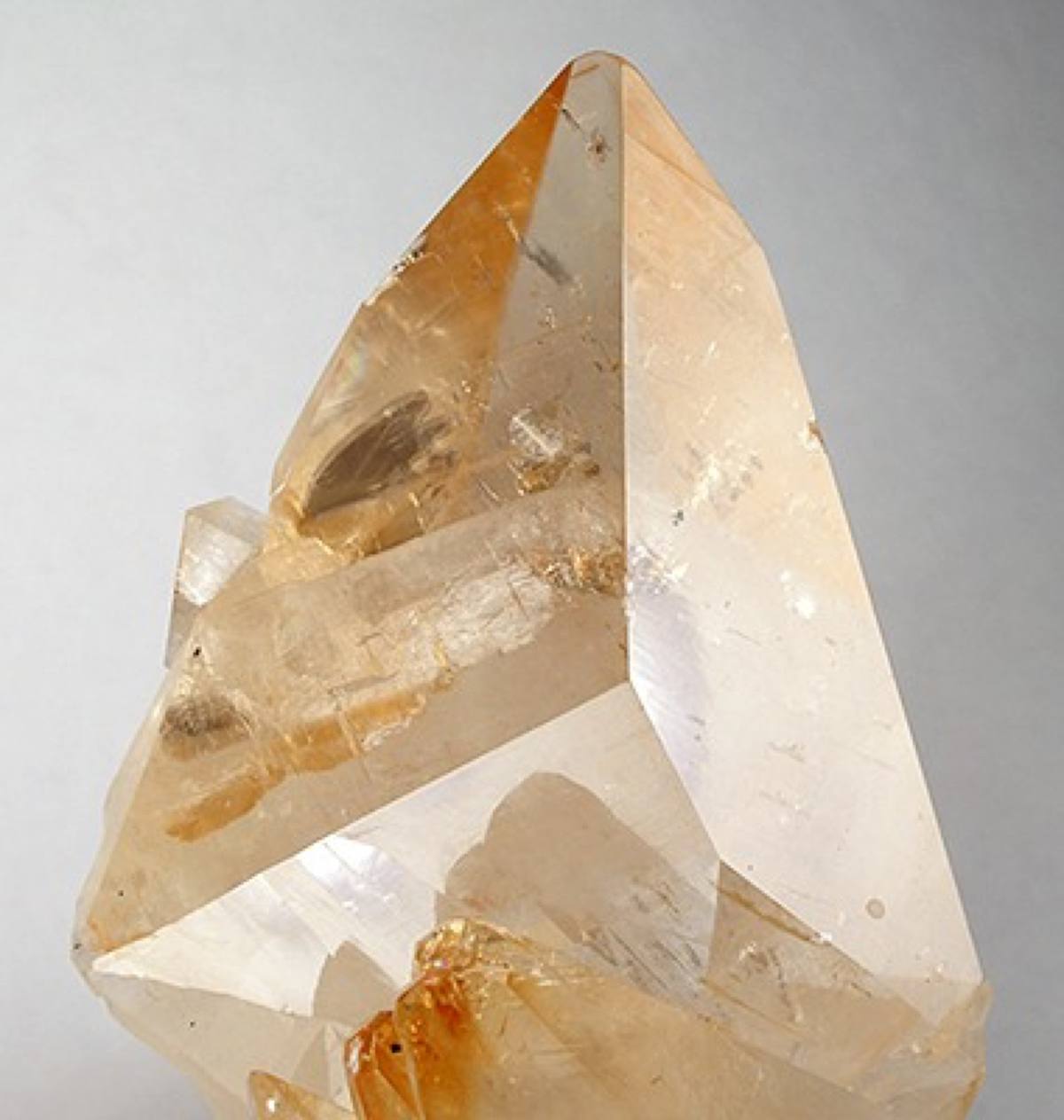
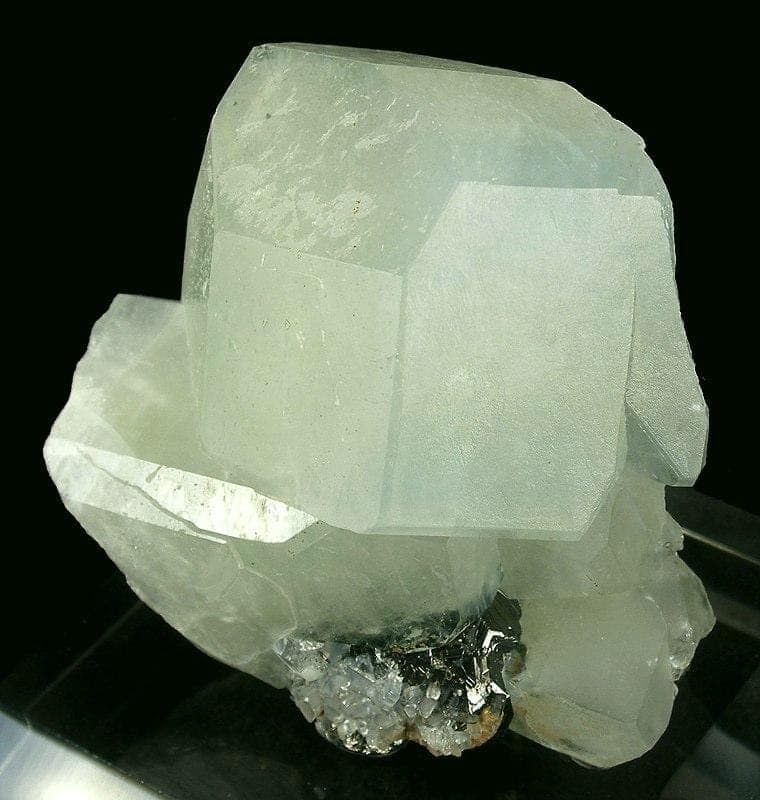
How to tell apart: Closely related and often together. Heulandite forms coffin-shaped tabular crystals rather than sheaves, with a strong pearly sheen on the flat face.
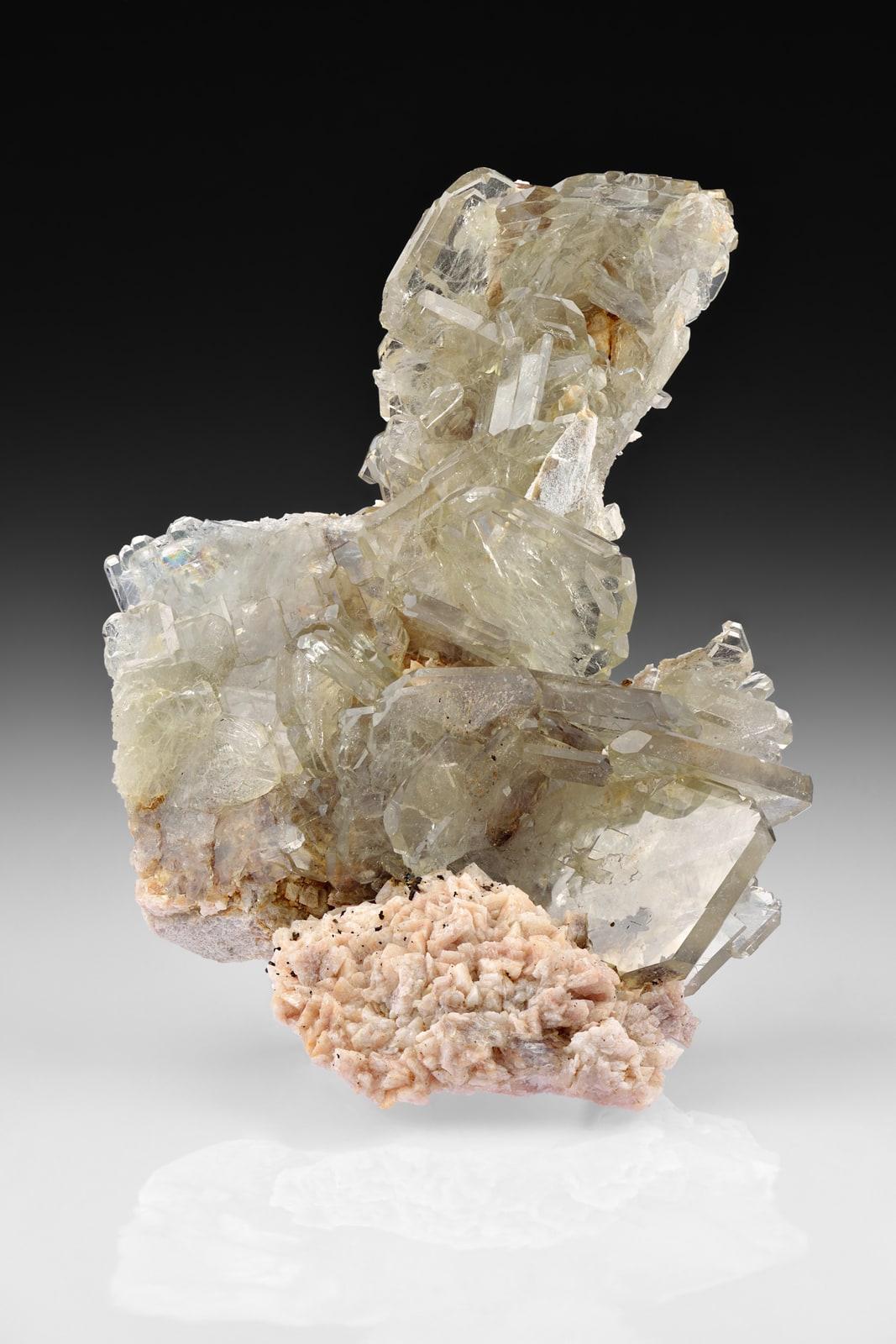
How to tell apart: Barite is dramatically heavier and does not form sheaf bundles.
Often found alongside stilbite
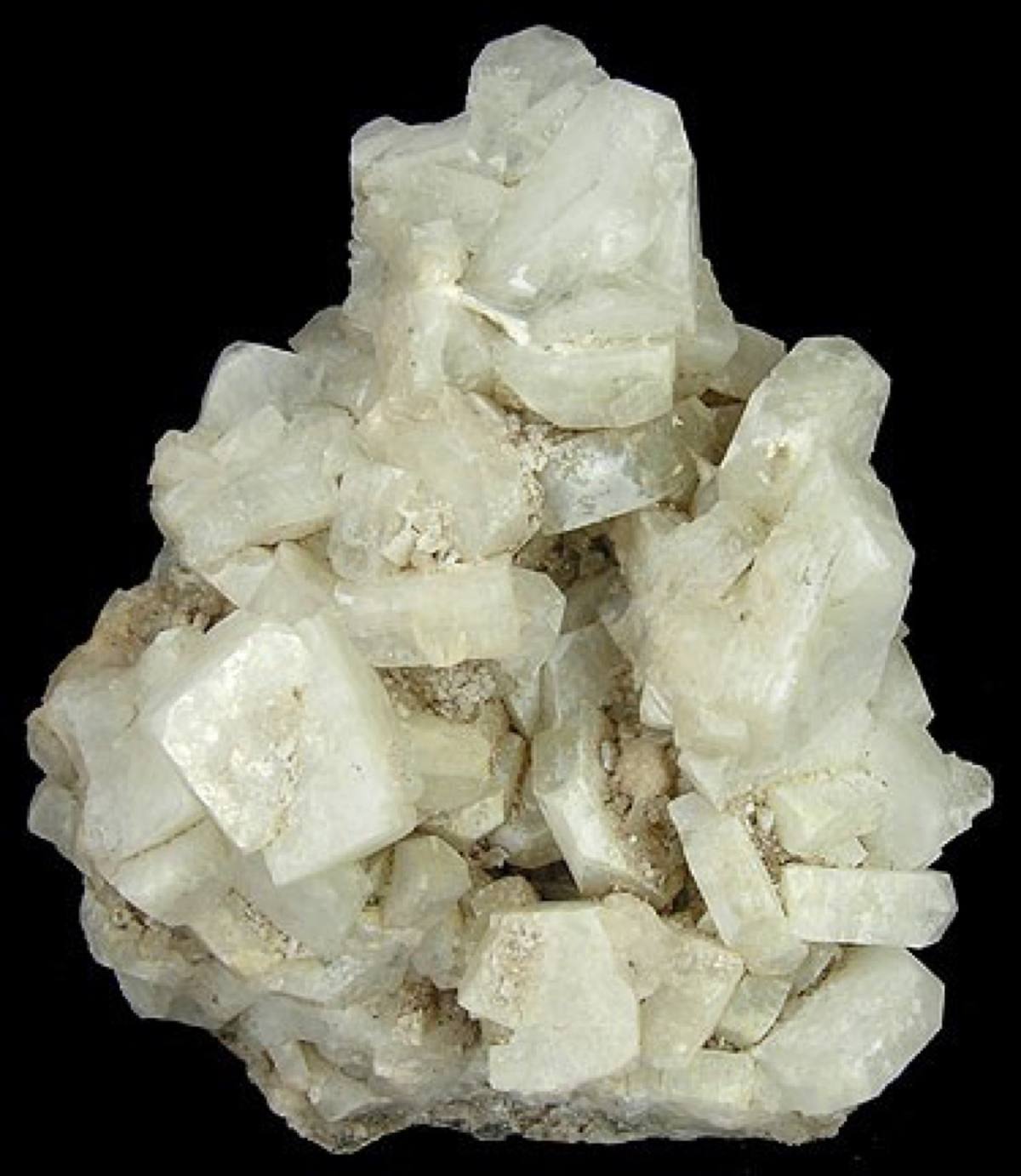
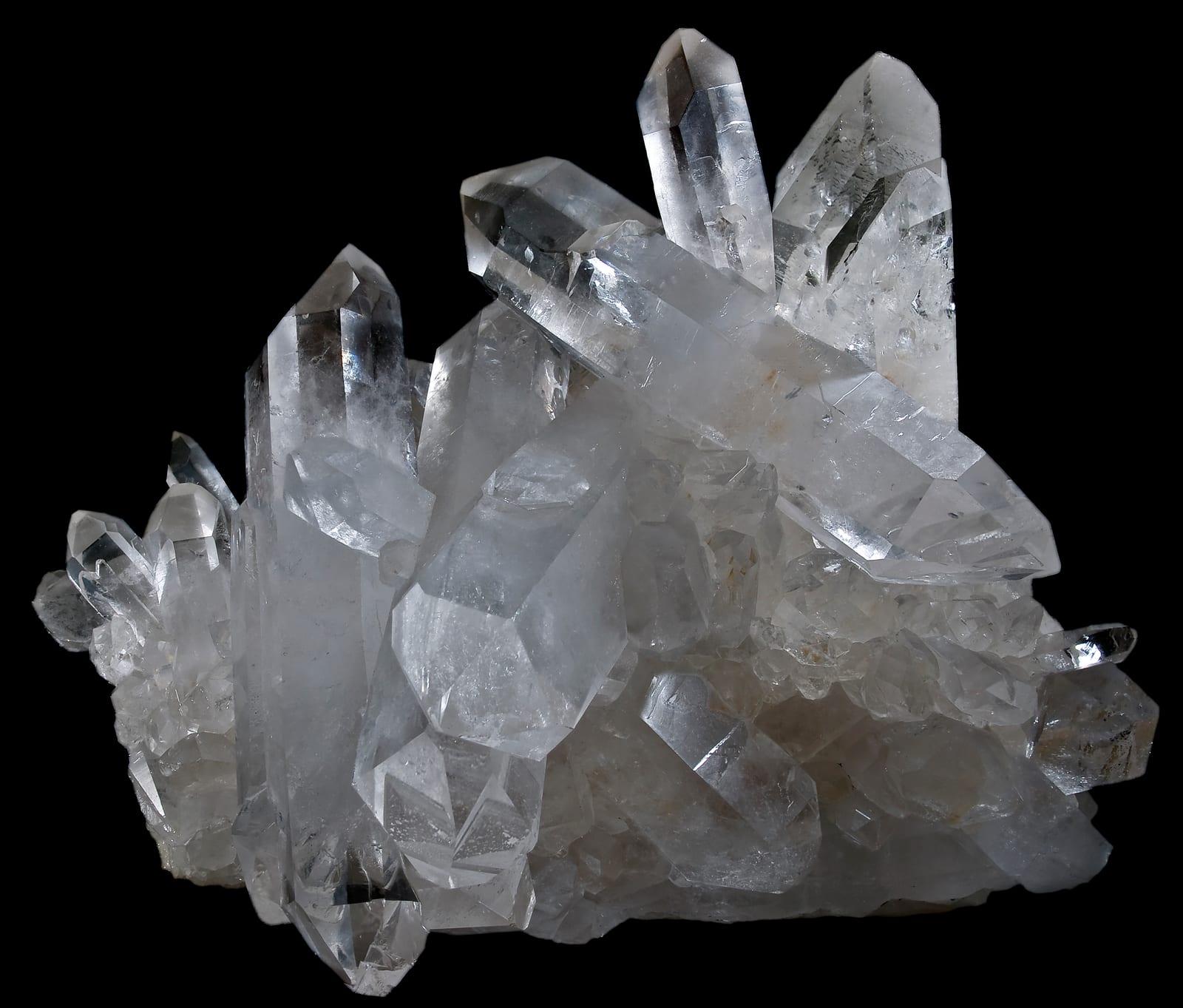
Minerals reported to co-occur with stilbite. Spotting these in float or country rock is a strong cue you are in the right ground.
All properties
- Chemical formula
- (Na,Ca,K)₉(Si₂₇Al₉)O₇₂·28H₂O
- Mohs hardness
- 3.5-4
- Density
- 2.1-2.2 g/cm³
- Streak
- White
- Luster
- Vitreous
- Transparency
- Translucent
- Crystal system
- Monoclinic
- Crystal habit
- Sheaf-like aggregates, radiating, bladed, tabular
- Cleavage
- Perfect on {010}
- Rarity
- Common
- Uses
- Collector, Decorative
- Host rock
- basaltic vugs, cavities in volcanic rocks
Where rockhounds find stilbite
10 mapped spotsClassic worldwide localities
- Nasik, India
- Teigarhorn, Iceland
- Paterson, New Jersey, USA
- Nova Scotia, Canada
- Poona, India
Field-hunting tip
Where it forms: basaltic vugs, cavities in volcanic rocks. If you start seeing heulandite, apophyllite, quartz in float, you are in the right ground. Typical habit: sheaf-like aggregates, radiating, bladed, tabular. Train your eye for that shape before scanning the outcrop. In the U.S., the densest reported localities are in Pennsylvania, Utah, Idaho. Start trip planning there.
More stilbite photos
Common questions
How do you identify stilbite?+
Where is stilbite found?+
Can I find stilbite in the United States?+
What rocks look like stilbite?+
What minerals are found with stilbite?+
What kind of rock does stilbite form in?+
What is stilbite used for?+
Find stilbite on the map
RockHoundR shows mapped rockhounding spots, access rules, and lets you log every find.

