Heulandite is a common member of the zeolite group, typically identified by its unique coffin-shaped crystal habit. It is frequently found lining cavities in basaltic rocks, often associated with other zeolites like stilbite or apophyllite.
Spotting heulandite in the field
Field marks- 1
Tabular coffin-shaped crystals with a strongly pearly flat face
- 2
White, cream, pink or orange-brown
- 3
Soft at 3.5 to 4, in basalt cavities alongside stilbite
Heulandite's coffin-shaped tabular crystal, wider at one end and tapering at the other, is its signature, along with a strong pearly sheen on the perfect cleavage face. It occurs with stilbite constantly and the two are the most common zeolites in traprock. Look in the same basalt quarries and lava flow cavities: India, New Jersey, Nova Scotia, Iceland and Oregon all produce it.
Straight answers
- Is it worth cutting?
- Not cut.
- What is it really worth?
- Inexpensive. Well-formed crystals with good color on clean matrix are the collectible form.
- Can you legally keep it?
- Quarry access through clubs is the usual route.
Often confused with
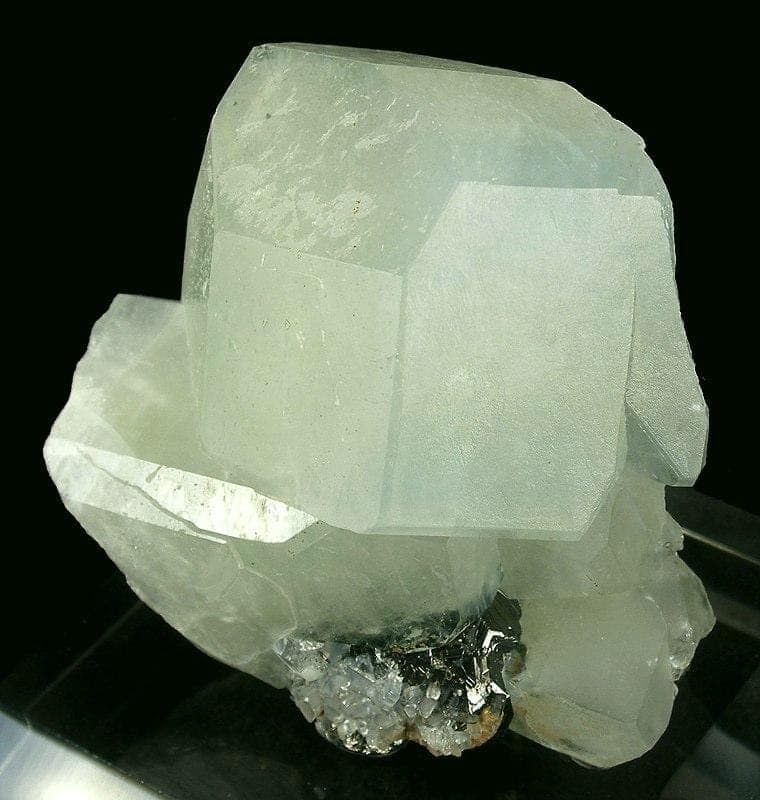
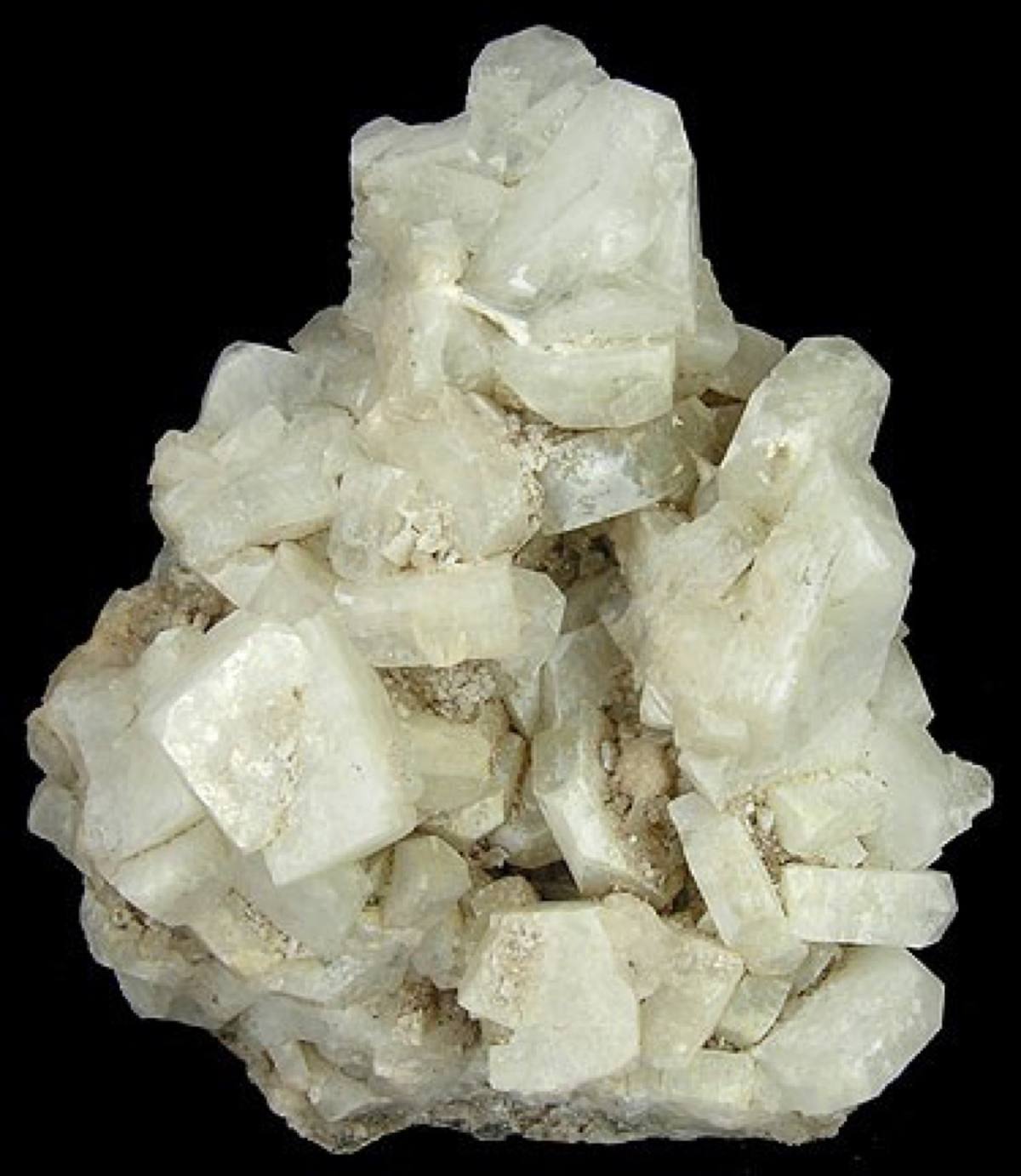
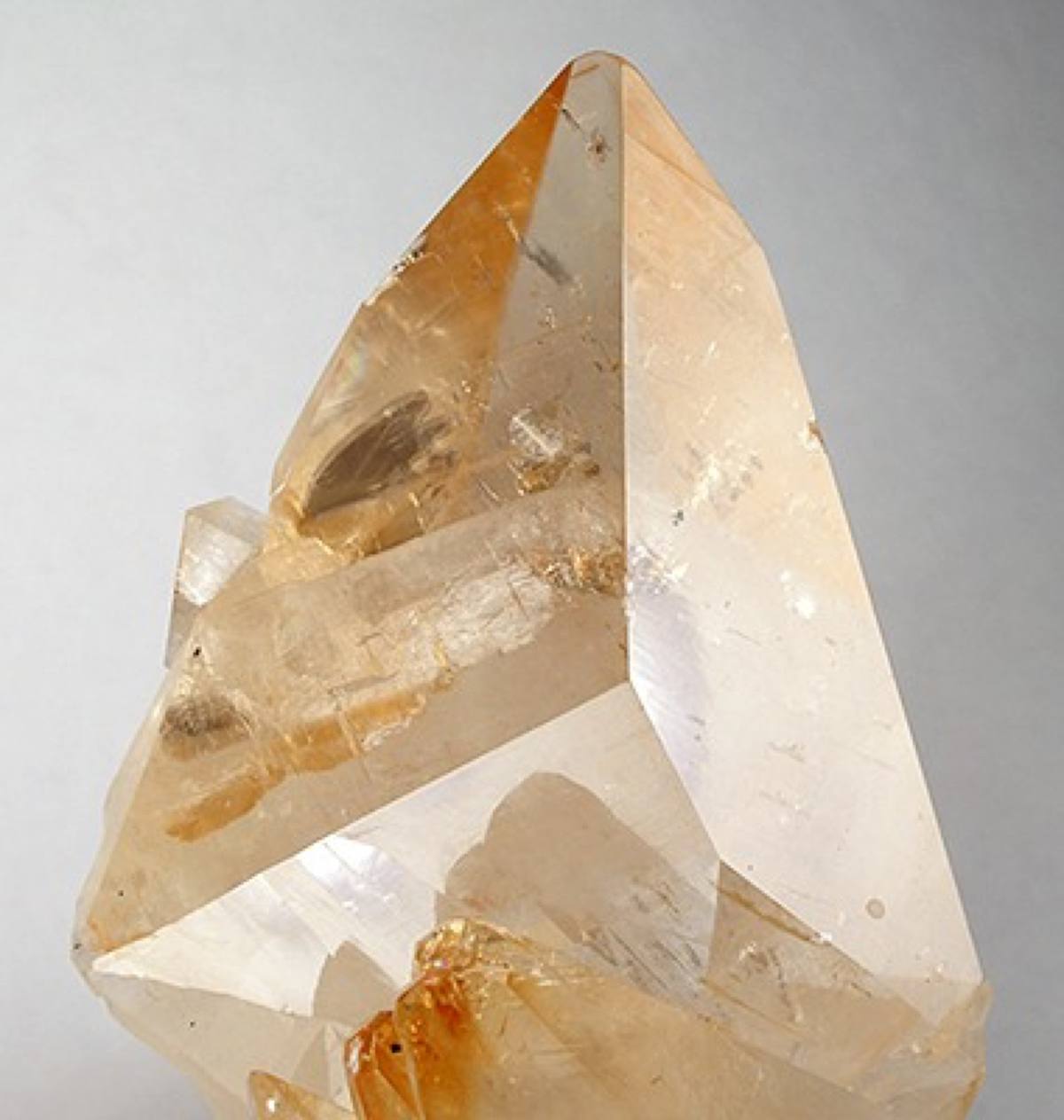
Heulandite vs. its common look-alikes, and how to tell them apart in the field.
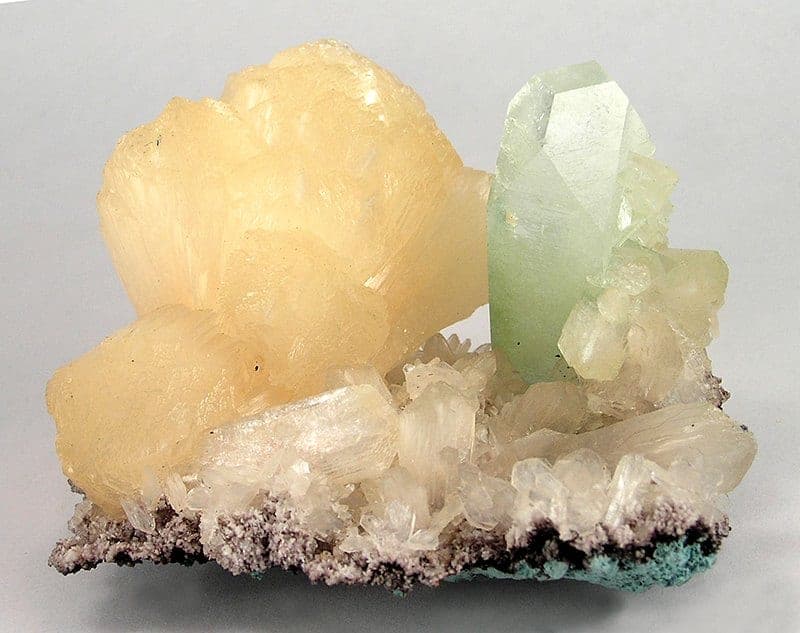
Often found alongside heulandite
Minerals reported to co-occur with heulandite. Spotting these in float or country rock is a strong cue you are in the right ground.
All properties
- Chemical formula
- (Ca,Na,K)₅(Si₂₇Al₉)O₇₂·26H₂O
- Mohs hardness
- 3.5-4
- Density
- 2.10-2.20 g/cm³
- Streak
- White
- Luster
- Vitreous, pearly on {010}
- Transparency
- Transparent to translucent
- Crystal system
- Monoclinic
- Crystal habit
- Tabular crystals often with a coffin-like shape, crusts, radial aggregates
- Cleavage
- {010}, perfect
- Rarity
- Common
- Uses
- Collector, Geological study
- Host rock
- In cavities in basalts; in highly weathered andesites and diabases; as a devitrification product of volcanic glasses and tuffs
Where rockhounds find heulandite
2 mapped spotsClassic worldwide localities
- Paterson, Passaic Co., and Bergen Hill, Hudson Co., New Jersey, USA
- Goble, Columbia Co., Oregon, USA
- Skookumchuck Dam, near Bucoda, Thurston Co., Washington, USA
- Teigarhorn, Berufjord, Iceland
- Haldarsvik, on Streymoy, Faeroe Islands
- Glasgow, Dumbartonshire, Scotland
Field-hunting tip
Where it forms: In cavities in basalts; in highly weathered andesites and diabases; as a devitrification product of volcanic glasses and tuffs. If you start seeing zeolites, datolite, apophyllite in float, you are in the right ground. Typical habit: tabular crystals often with a coffin-like shape, crusts, radial aggregates. Train your eye for that shape before scanning the outcrop. In the U.S., the densest reported localities are in Colorado, Oregon. Start trip planning there.
Common questions
How do you identify heulandite?+
Where is heulandite found?+
Can I find heulandite in the United States?+
What rocks look like heulandite?+
What minerals are found with heulandite?+
What kind of rock does heulandite form in?+
What is heulandite used for?+
Find heulandite on the map
RockHoundR shows mapped rockhounding spots, access rules, and lets you log every find.