
Chrysocolla is a hydrated copper silicate that typically forms as colorful, glassy blue-green coatings or botryoidal masses in the oxidized zones of copper mines. It is very soft and fragile, making it popular for lapidary work when found in its harder, silicified form often referred to as Gem Silica.
Spotting chrysocolla in the field
Field marks- 1
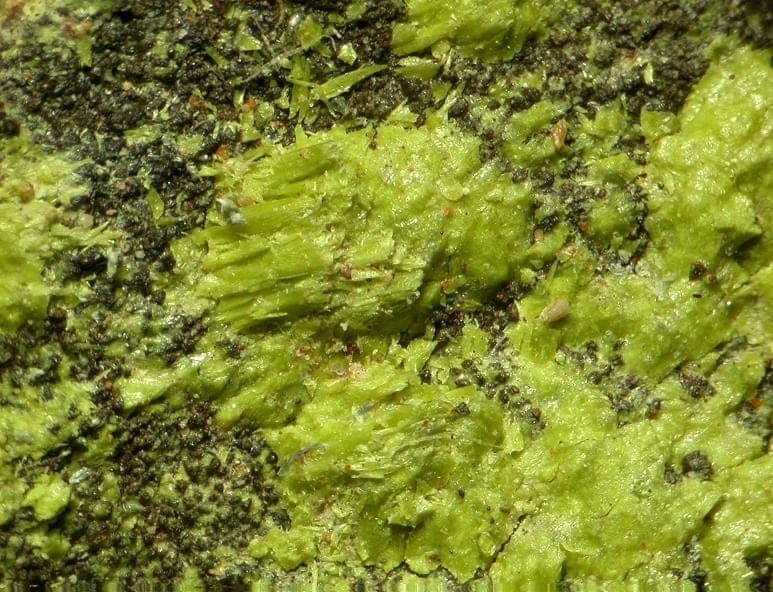
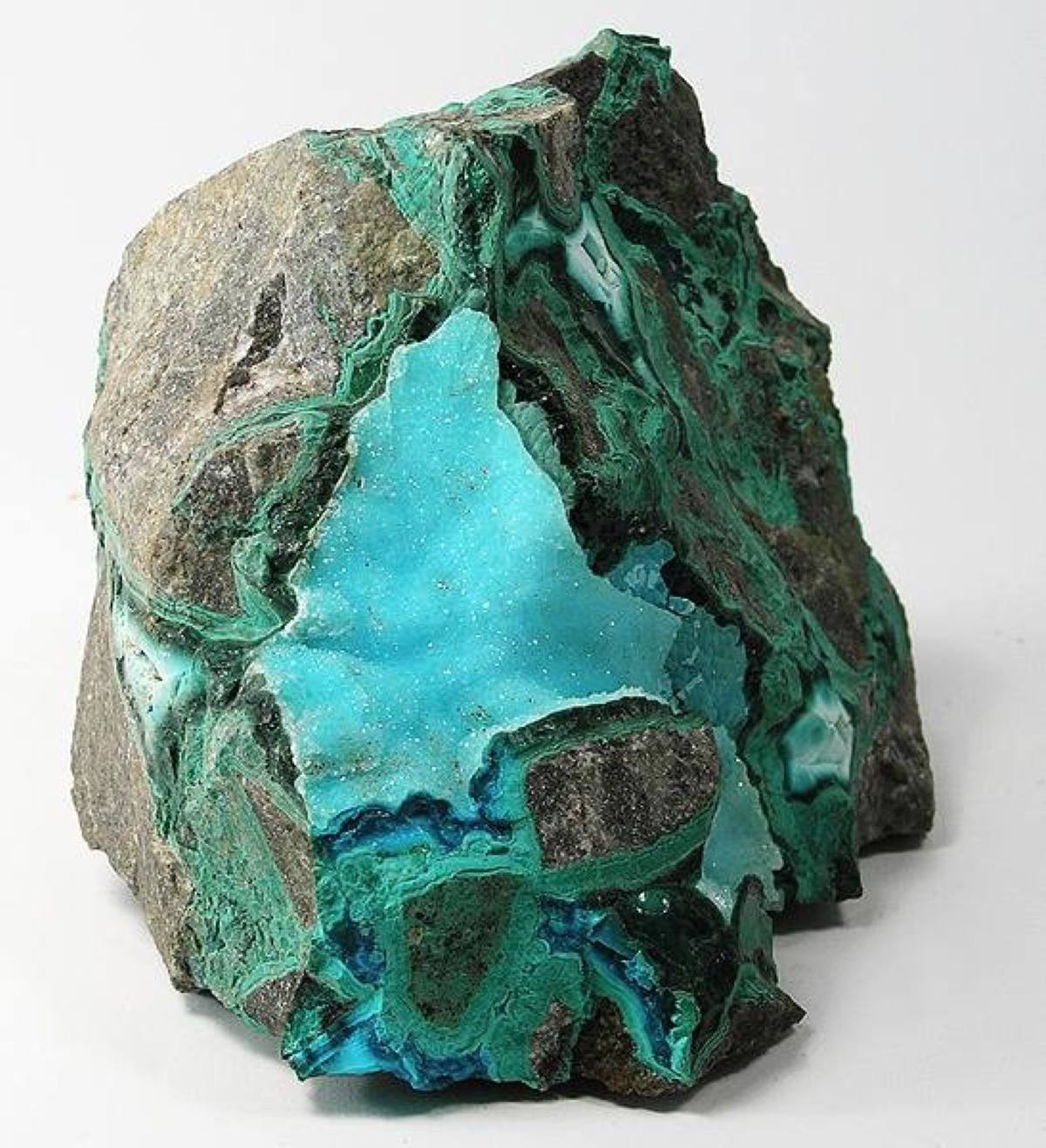
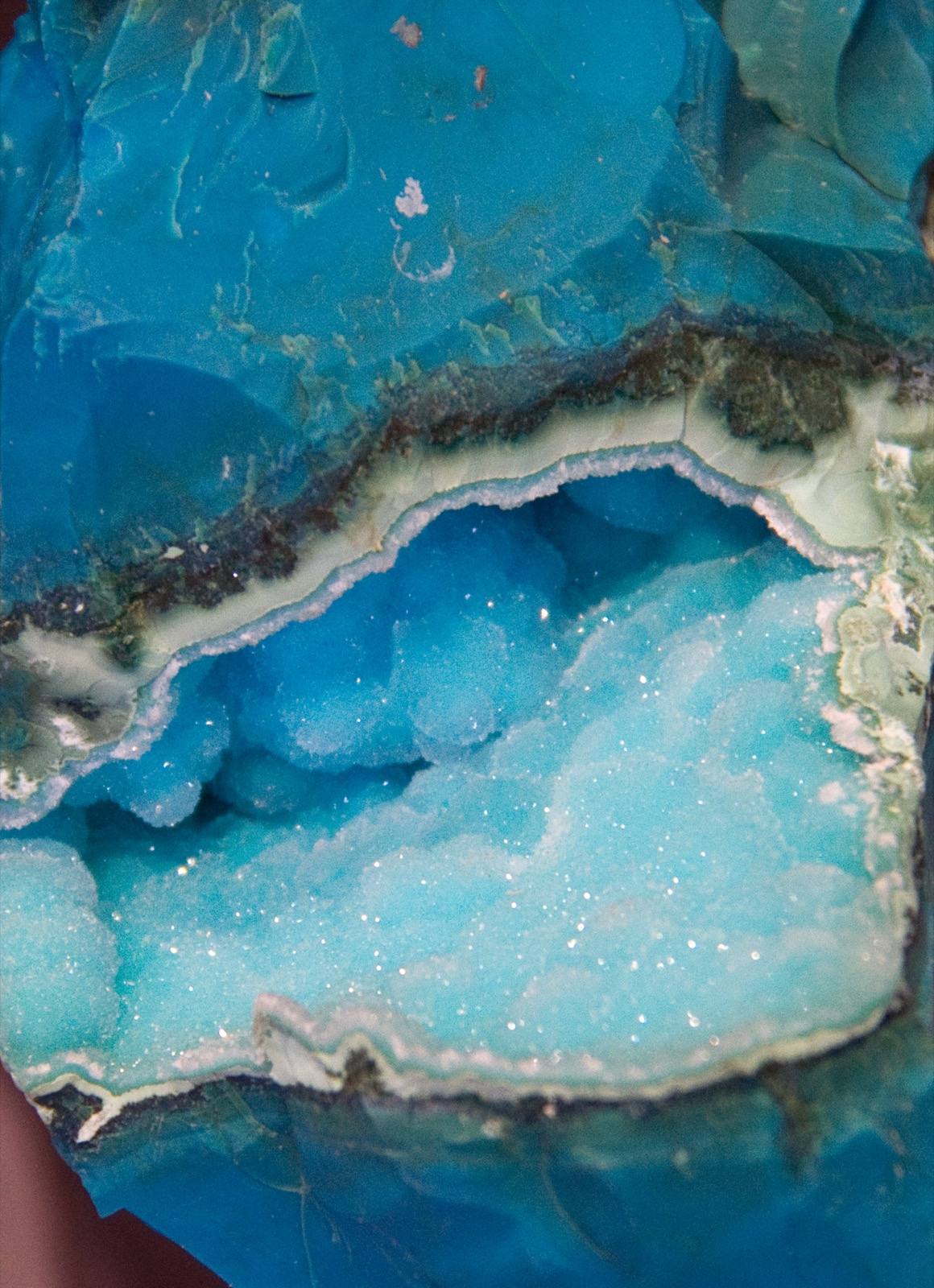
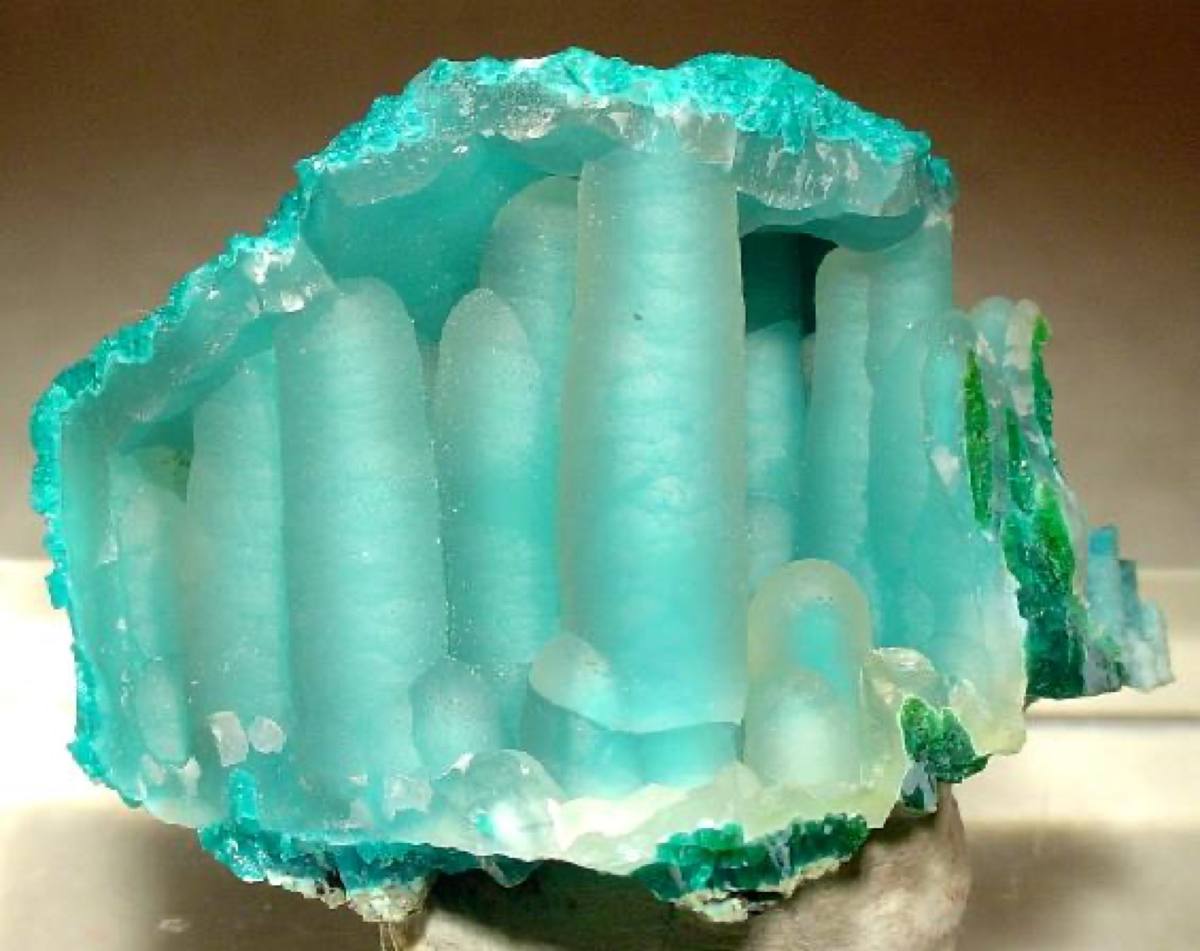
Bright blue-green, often in botryoidal crusts or as a coating on other rock
- 2
Very soft on its own, from 2 to 4, and can be marked with a fingernail edge
- 3
Frequently intergrown with quartz or chalcedony, which hardens it
Pure chrysocolla is far too soft to cut, and the material rockhounds actually want is chrysocolla in chalcedony, sold as gem silica or chrysocolla chalcedony, where silica has hardened the copper mineral to something workable. In the field, test hardness on a corner: if a knife marks it easily, it is soft chrysocolla suitable only as a specimen. Look in oxidized copper deposits in the Southwest.
Before you collect
A copper mineral. Cut and grind wet with a respirator.
Straight answers
- Is it worth cutting?
- Only silicified material is worth cutting. Gem silica chrysocolla is a superb translucent blue-green cabbing stone and one of the more valuable copper-related materials.
- What is it really worth?
- Soft chrysocolla is cheap. Gem silica, the translucent chalcedony-hardened form, is expensive and increasingly scarce.
- Can you legally keep it?
- Southwestern copper districts are private or claimed.
Often confused with
Chrysocolla vs. its common look-alikes, and how to tell them apart in the field.
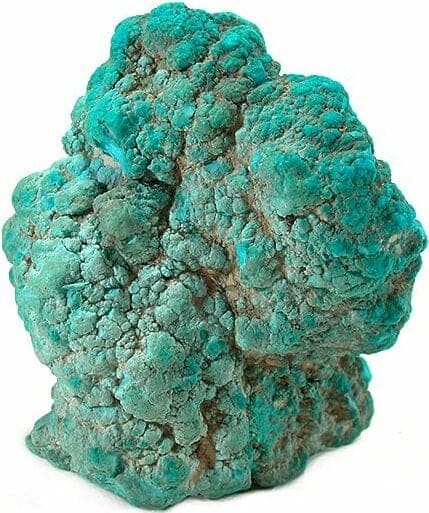
How to tell apart: Turquoise is harder at 5 to 6 and its blue is softer and more sky-toned. Chrysocolla is more electric blue-green and usually much softer.
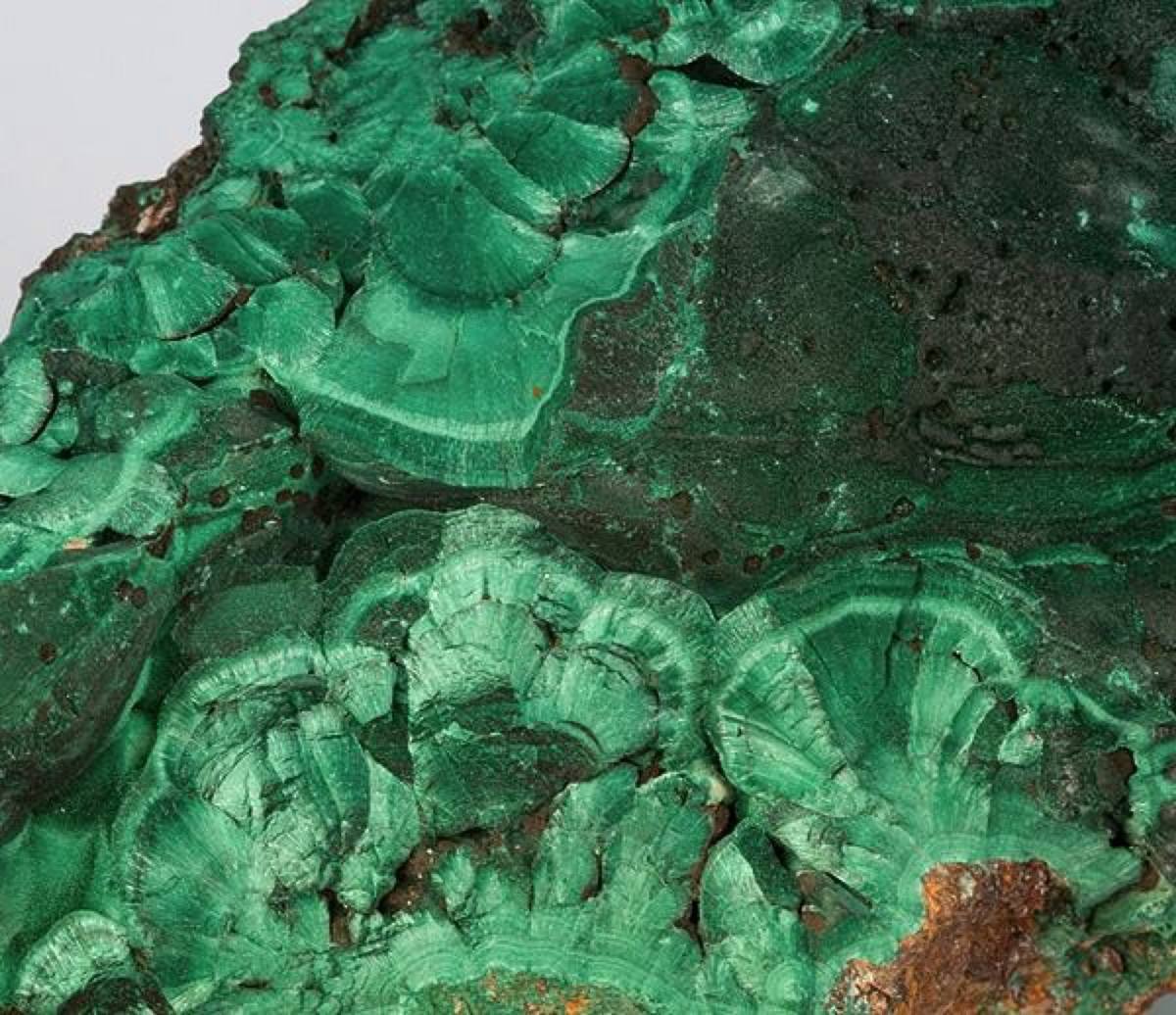
How to tell apart: Malachite is pure green and fizzes in acid. Chrysocolla is blue-green and does not.
Often found alongside chrysocolla
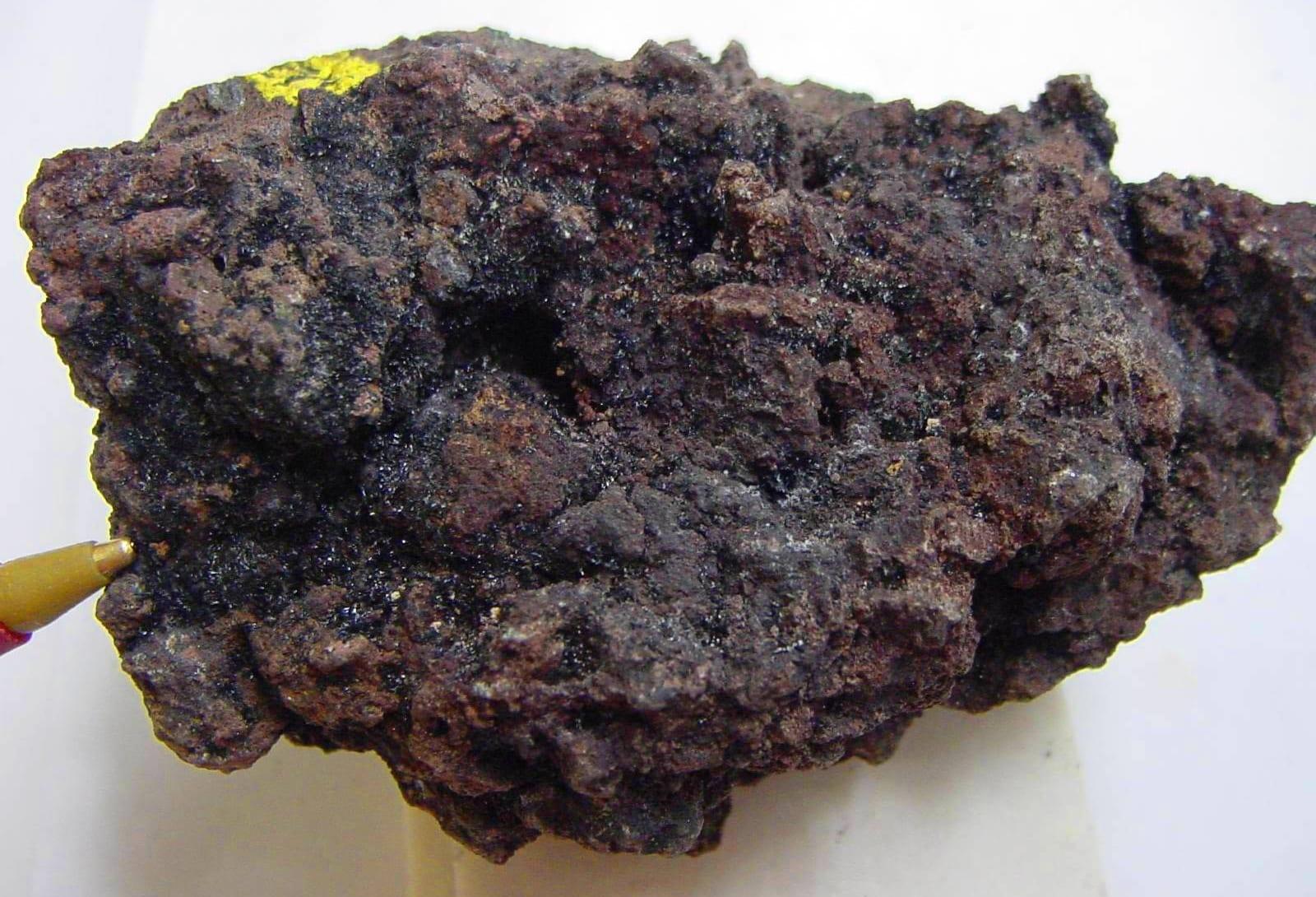
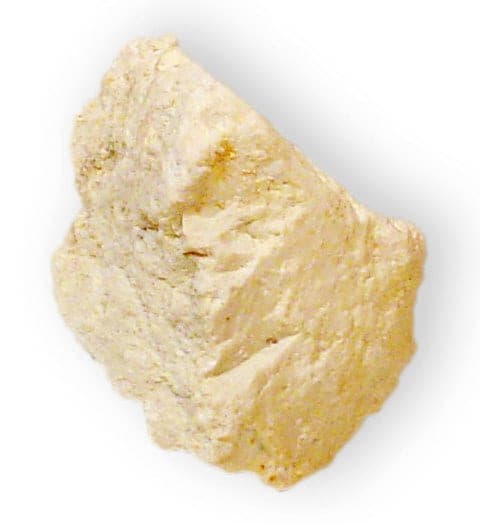
Minerals reported to co-occur with chrysocolla. Spotting these in float or country rock is a strong cue you are in the right ground.
All properties
- Chemical formula
- (Cu,Al)₂H₂Si₂O₅(OH)₄·nH₂O
- Mohs hardness
- ~2-4
- Density
- 1.93-2.4 g/cm³
- Colors
- Streak
- White when pure
- Luster
- Vitreous, porcelaneous, earthy
- Transparency
- Translucent to opaque
- Crystal system
- Orthorhombic
- Crystal habit
- Botryoidal, crusts, massive, earthy
- Cleavage
- None
- Rarity
- Common
- Uses
- Collector, Lapidary, Decorative
- Host rock
- In the oxidized portions of many copper deposits
Where rockhounds find chrysocolla
42 mapped spotsClassic worldwide localities
- Constitutes parts of large orebodies, as in the Globe-Miami district, Gila Co., Morenci, Greenlee Co., San Manuel and Ray mines, Pinal Co., Arizona, USA
- Santa Rita, Grant Co., New Mexico, USA
- Tintic district, Juab Co., Utah, USA
- Nizhni Tagil, Ural Mountains, Russia
- Lubietová, near Banská Bystrica (Libethen, near Neusohl), Slovakia
- Timna (King Solomon's) mine, Israel
U.S. states with chrysocolla
Each link opens a state-specific list of mapped rockhounding spots that produce chrysocolla.
Field-hunting tip
Where it forms: In the oxidized portions of many copper deposits. If you start seeing malachite, tenorite, halloysite in float, you are in the right ground. Typical habit: botryoidal, crusts, massive, earthy. Train your eye for that shape before scanning the outcrop. In the U.S., the densest reported localities are in New Mexico, Utah, Arizona. Start trip planning there.
More chrysocolla photos
Common questions
How do you identify chrysocolla?+
Where is chrysocolla found?+
Can I find chrysocolla in the United States?+
Is chrysocolla safe to handle?+
What rocks look like chrysocolla?+
What minerals are found with chrysocolla?+
What kind of rock does chrysocolla form in?+
What is chrysocolla used for?+
Find chrysocolla on the map
RockHoundR shows mapped rockhounding spots, access rules, and lets you log every find.

