Dioptase is highly prized by collectors for its stunning, intense emerald-green color and exceptional clarity. It typically forms sharp rhombohedral crystals in the oxidized zones of copper ore bodies and is quite fragile due to its perfect cleavage.
Spotting dioptase in the field
Field marks- 1
An intense emerald green that is brighter than almost any other mineral
- 2
Short prismatic crystals with rhombohedral terminations
- 3
Soft at 5, with perfect cleavage, and a green streak
Nothing else is quite this green. Dioptase is a copper silicate from the oxidized zones of copper deposits, and its color rivals emerald while being far softer. Tsumeb in Namibia and Altyn-Tyube in Kazakhstan are the great localities, with the Christmas Mine in Arizona the notable American source. Crystals are small and the perfect cleavage makes them fragile, so collect them on matrix and never try to separate them.
Before you collect
A copper mineral. Do not grind or cut it, and wash hands after handling.
Straight answers
- Is it worth cutting?
- Almost never cut. Too soft and too cleavable, and worth far more as a crystal specimen.
- What is it really worth?
- Moderate to high. Bright well-formed crystals on contrasting matrix are the collectible form.
- Can you legally keep it?
- American occurrences are on private mine land. Most specimens are imported.
Often confused with
Dioptase vs. its common look-alikes, and how to tell them apart in the field.
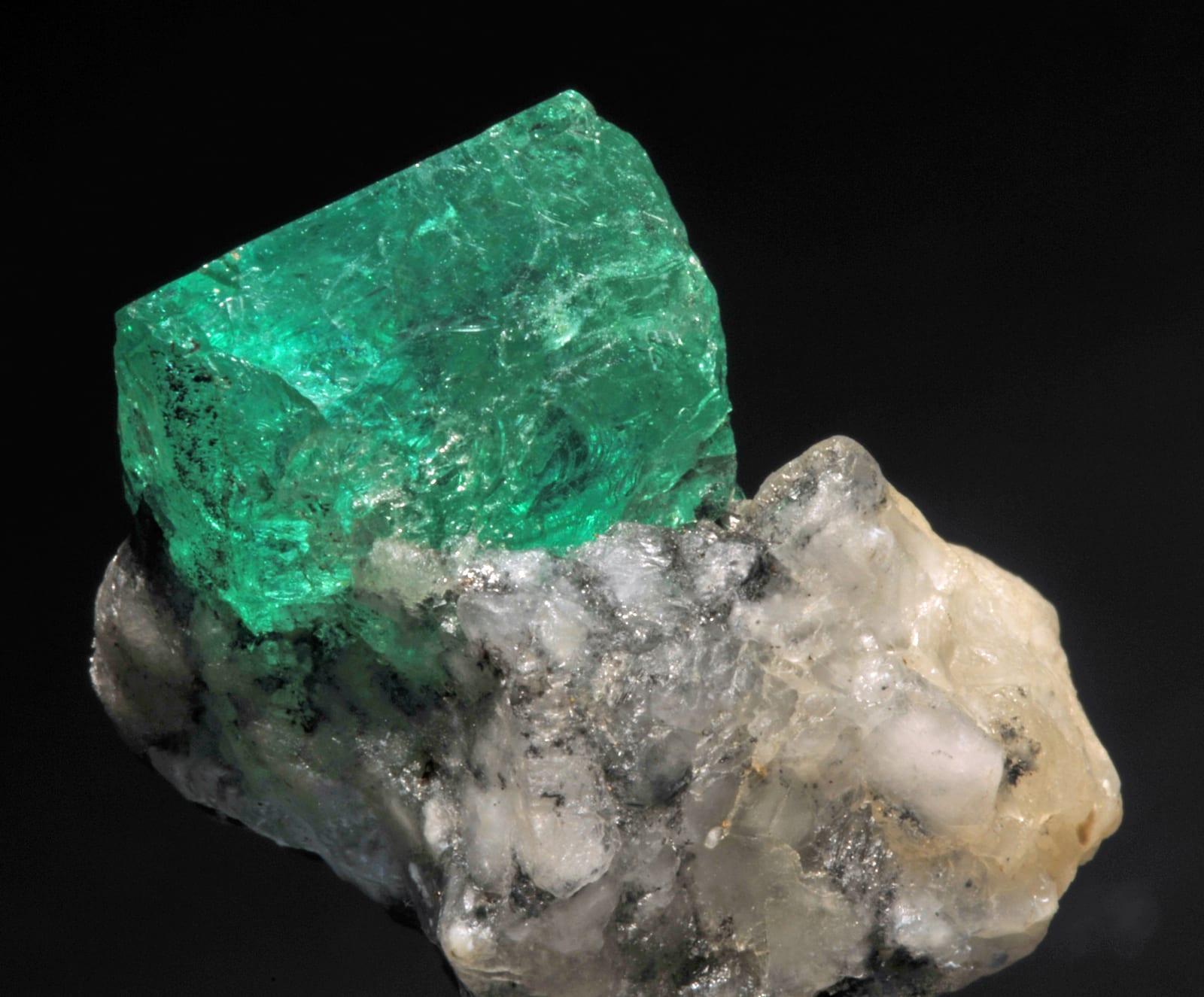
How to tell apart: Emerald is far harder at 7.5 to 8 and forms hexagonal prisms. Dioptase is soft, cleaves perfectly and gives a green streak.
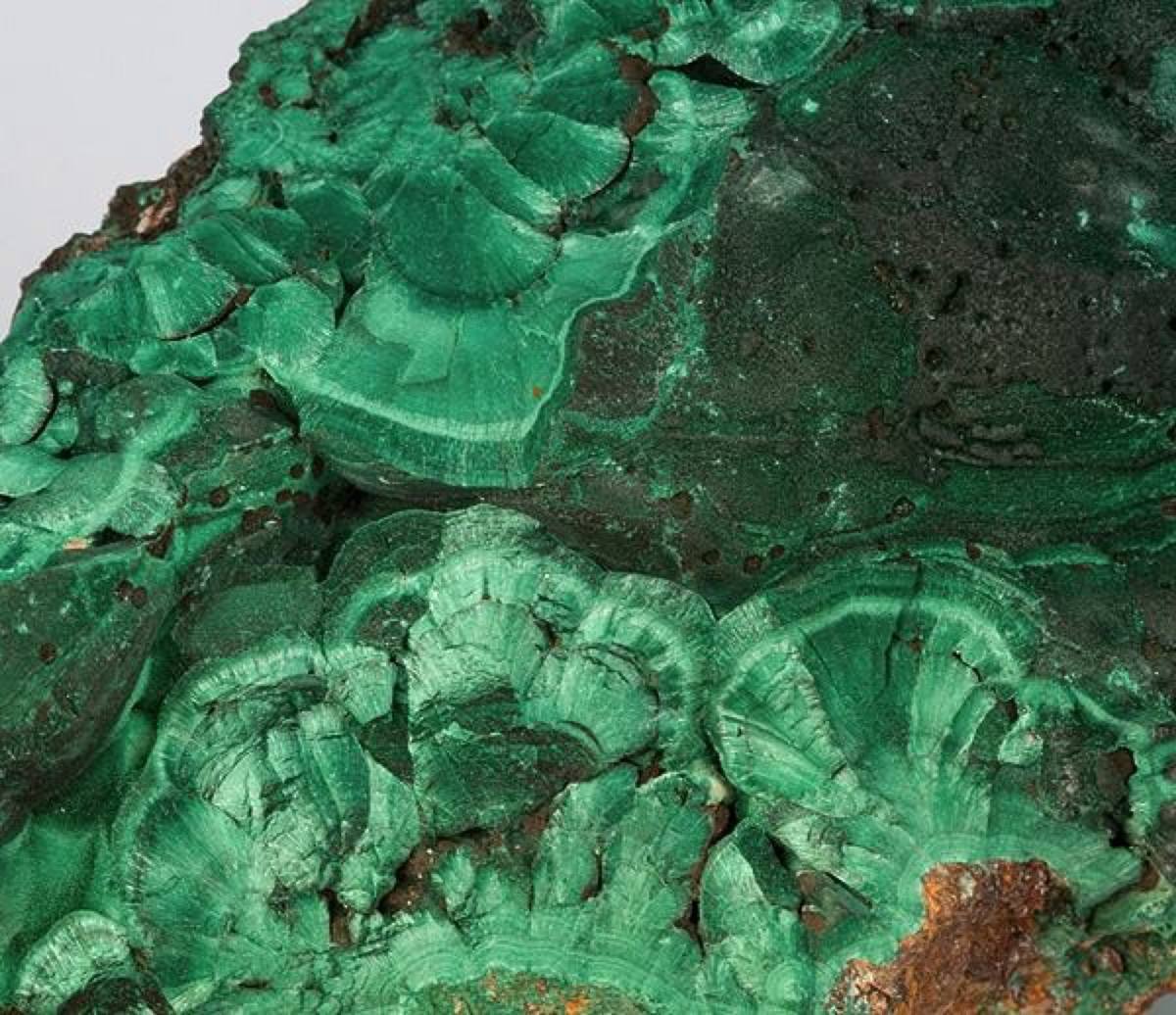
How to tell apart: Malachite is a duller green, forms botryoidal masses rather than crystals, and fizzes in acid.
Often found alongside dioptase
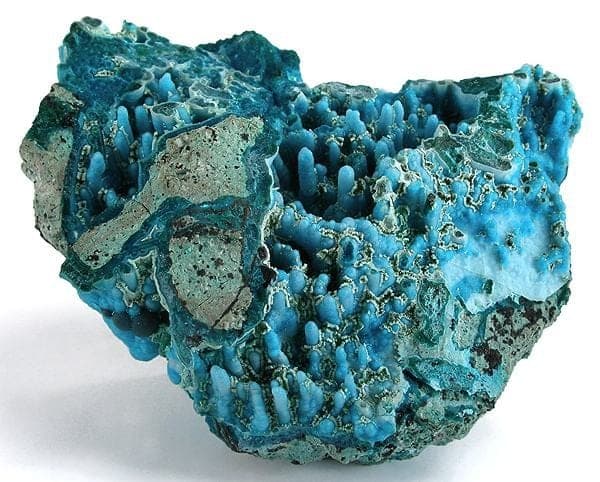
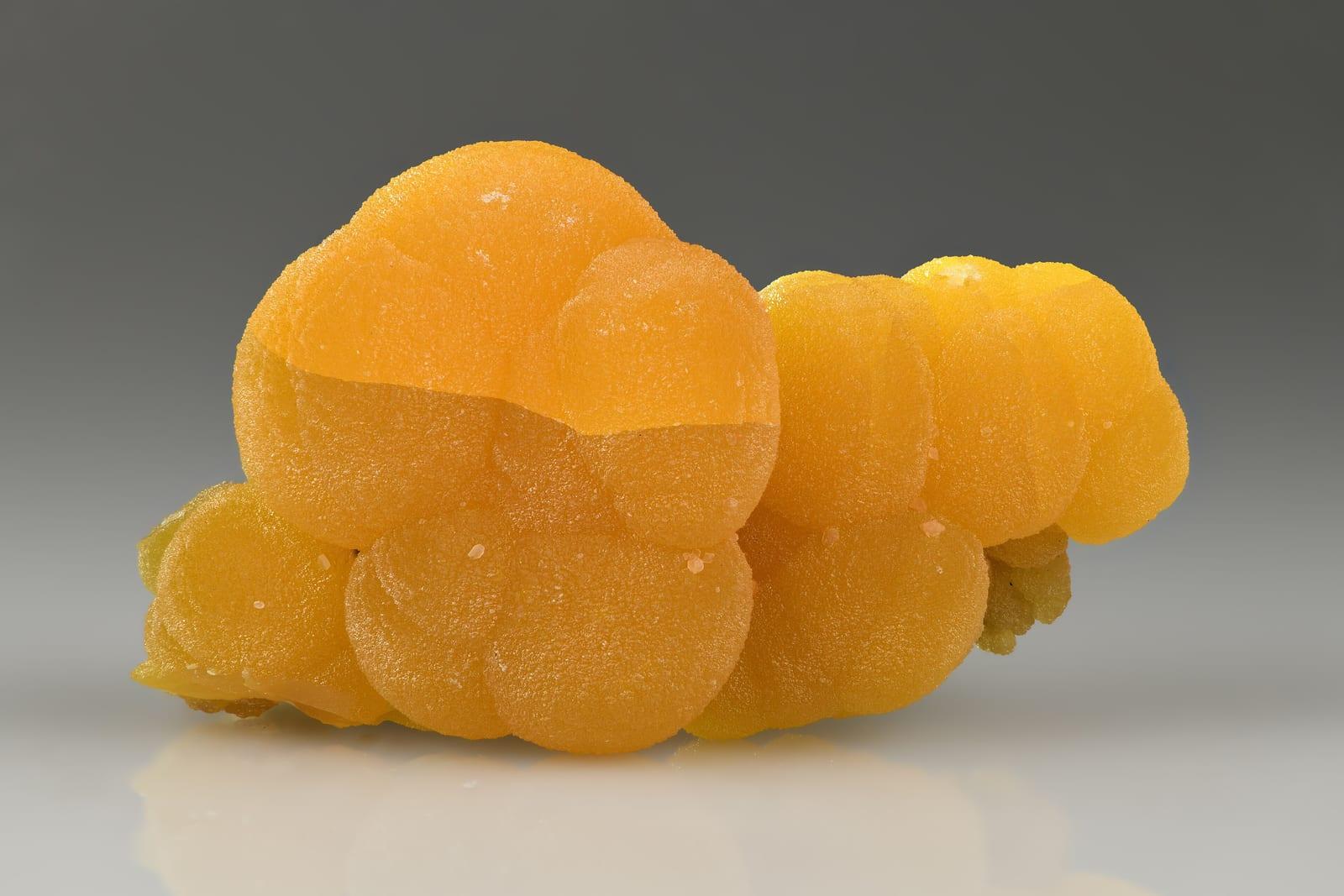
Minerals reported to co-occur with dioptase. Spotting these in float or country rock is a strong cue you are in the right ground.
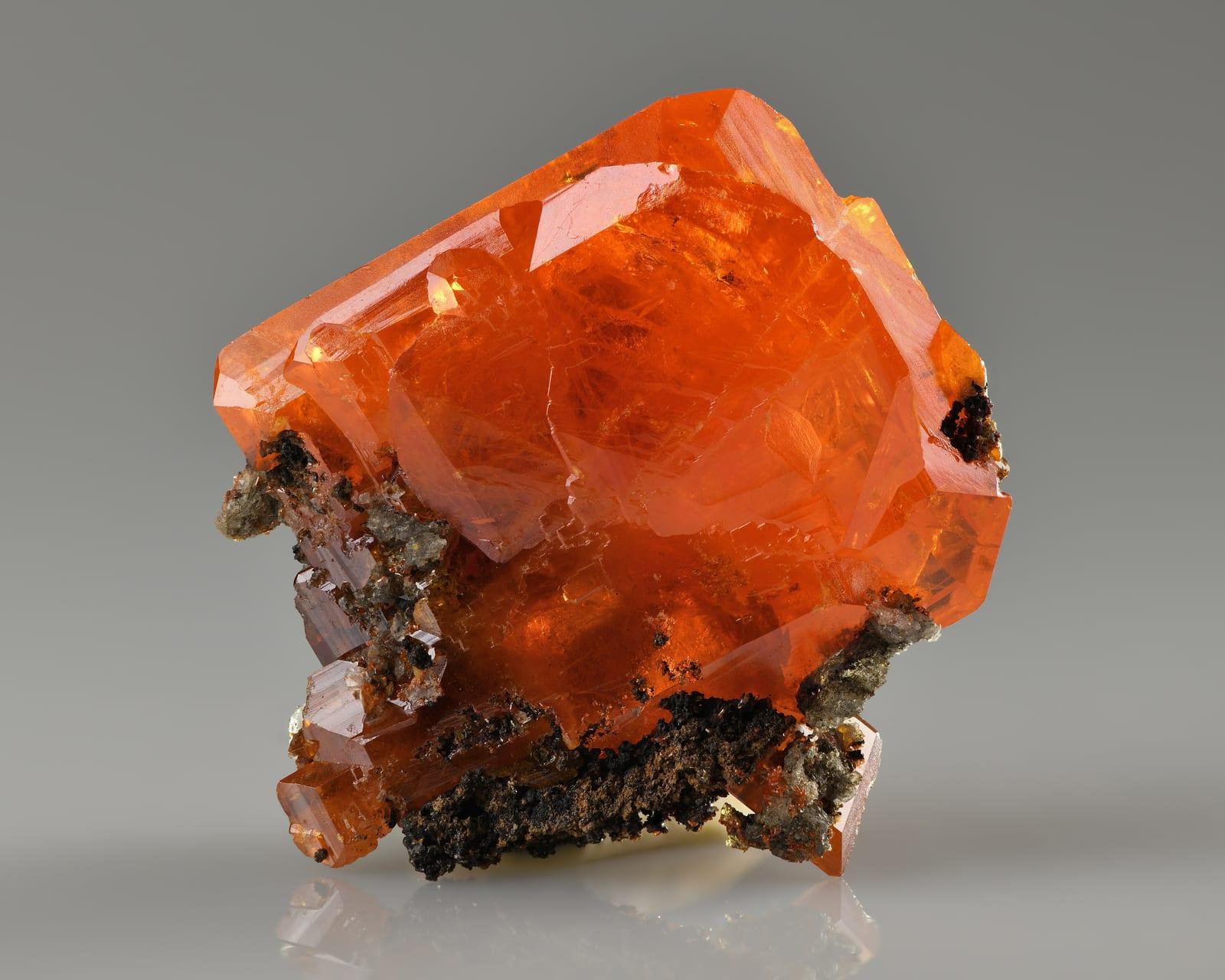
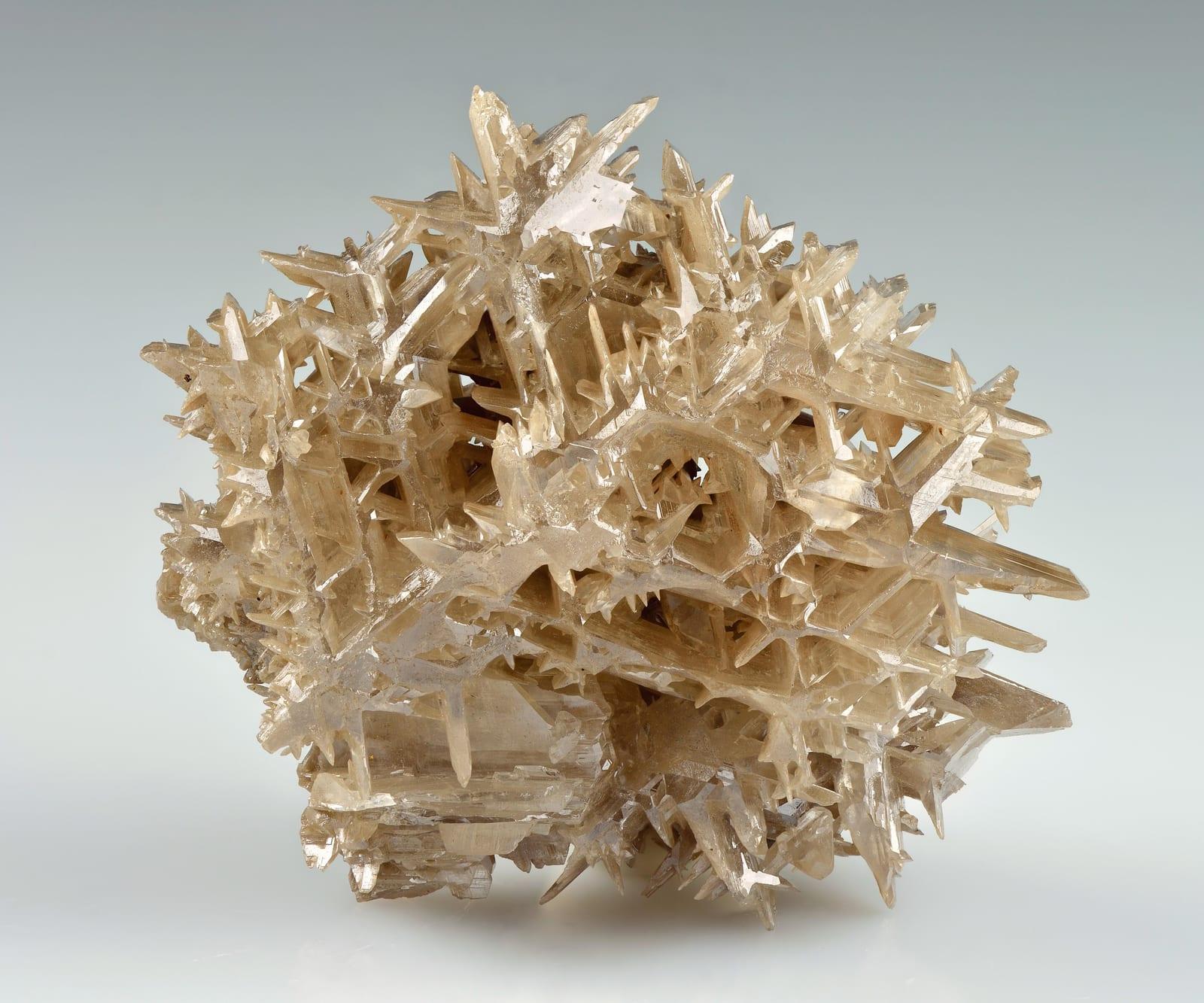
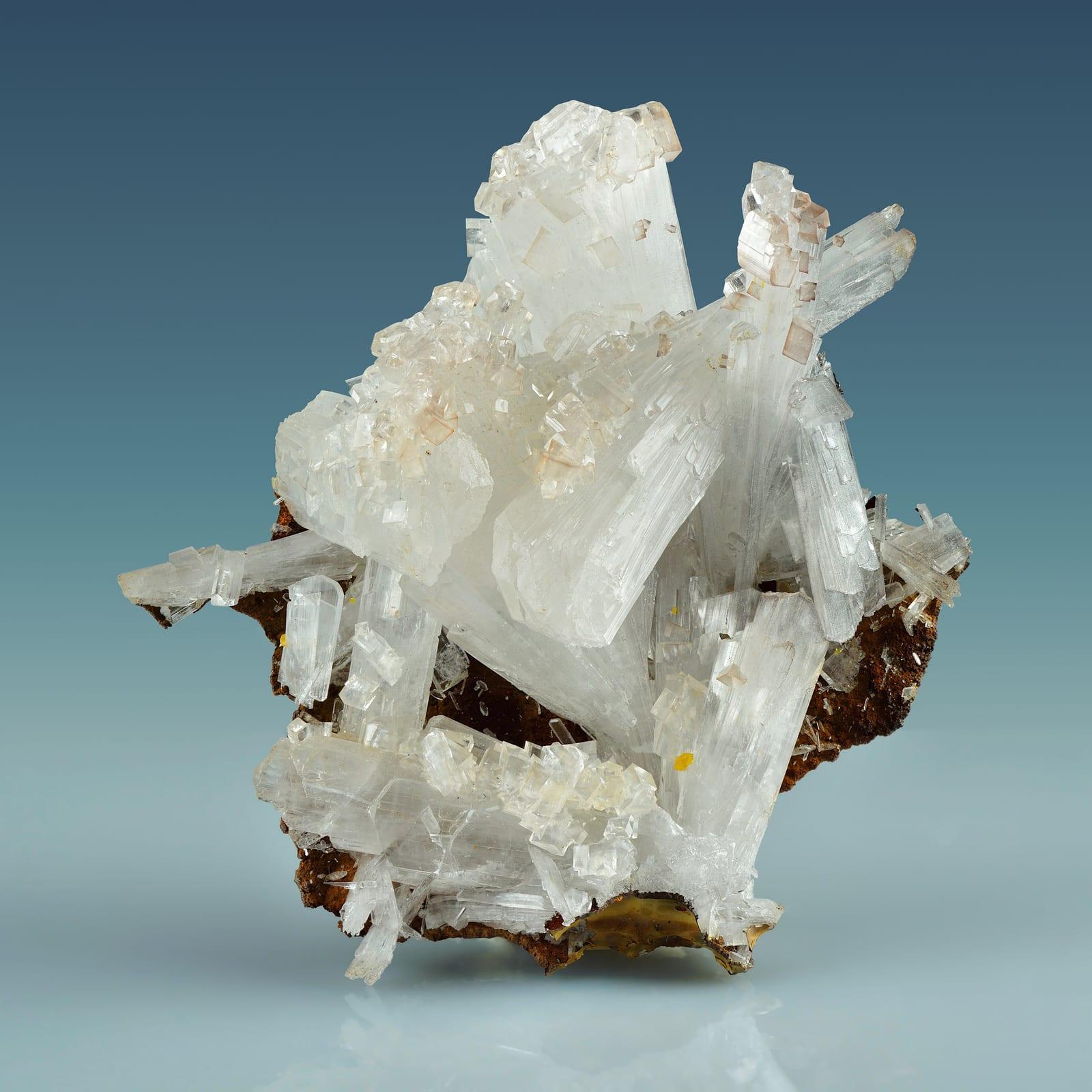
All properties
- Chemical formula
- CuSiO₃·H₂O
- Mohs hardness
- 5
- Density
- 3.28-3.35 g/cm³
- Colors
- Streak
- Green
- Luster
- Vitreous
- Transparency
- Transparent to translucent
- Crystal system
- Trigonal
- Crystal habit
- Prismatic crystals, drusy, granular
- Cleavage
- Perfect on {101̄1}
- Rarity
- Uncommon
- Uses
- Collector, Decorative
- Host rock
- In the oxidized zone of some copper deposits
Where rockhounds find dioptase
1 mapped spotsClassic worldwide localities
- Mammoth-St. Anthony mine, Tiger, at Ray, and in the Table Mountain mine, Galiuro Mountains, Pinal Co., and from the Harquehala mine, Harquehala Mountains, La Paz Co. (formerly Yuma Co.), Arizona, USA
- Blue Bell claims, near Baker, San Bernardino Co., California, USA
- Altyn-Tyube, 50 km east of Karaganda, Kirghiz Steppe, Kazakhstan
- Bӑiƫa (Rézbánya), Romania
- Chiviquin, Cordoba Province, Argentina
- Mina La Verde, Copiapó, Chile
Field-hunting tip
Where it forms: In the oxidized zone of some copper deposits. If you start seeing chrysocolla, malachite, mimetite in float, you are in the right ground. Typical habit: prismatic crystals, drusy, granular. Train your eye for that shape before scanning the outcrop. In the U.S., the densest reported localities are in Arizona. Start trip planning there.
Common questions
How do you identify dioptase?+
Where is dioptase found?+
Can I find dioptase in the United States?+
Is dioptase safe to handle?+
What rocks look like dioptase?+
What minerals are found with dioptase?+
What kind of rock does dioptase form in?+
What is dioptase used for?+
Find dioptase on the map
RockHoundR shows mapped rockhounding spots, access rules, and lets you log every find.