
Thomsonite is a member of the zeolite group most prized by collectors for its beautiful, radiating concentric patterns often found in amygdules of volcanic rock. It is typically found in dense, botryoidal masses that polish well for lapidary work, showing striking eye-like motifs.
Spotting thomsonite in the field
Field marks- 1
Small rounded nodules with concentric eye-like rings in green, pink, white and black
- 2
Radiating fibrous structure inside each eye
- 3
Hardness 5 to 5.5, found as beach pebbles on Lake Superior
Thomsonite is a zeolite that filled gas cavities in the Lake Superior basalts, and it weathers out as small nodules that wash onto the Minnesota North Shore beaches, most famously around Grand Marais. The concentric eyes are the identification and they are quite unlike agate banding, being tighter, more radial and more clearly separated into discrete circles. Wet the stones, work the cobble line, and expect small pieces, because good thomsonite is rarely larger than a fingernail.
Straight answers
- Is it worth cutting?
- Cabbed small, and the eyes must be centered on the dome. Because the pieces are tiny, most finished thomsonite ends up in rings and small pendants.
- What is it really worth?
- Modest to moderate. Tight, high-contrast, well-centered eyes in a hard nodule are what carry the value.
- Can you legally keep it?
- Minnesota North Shore beach collecting on public land is generally permitted, but state parks prohibit it and much of the shoreline is private.
Where it is worth going
- Grand Marais and the North ShoreCook County, Minnesota
Thomsonite Beach and nearby shoreline. Heavily hunted, so work after storms.
Often confused with
Thomsonite vs. its common look-alikes, and how to tell them apart in the field.
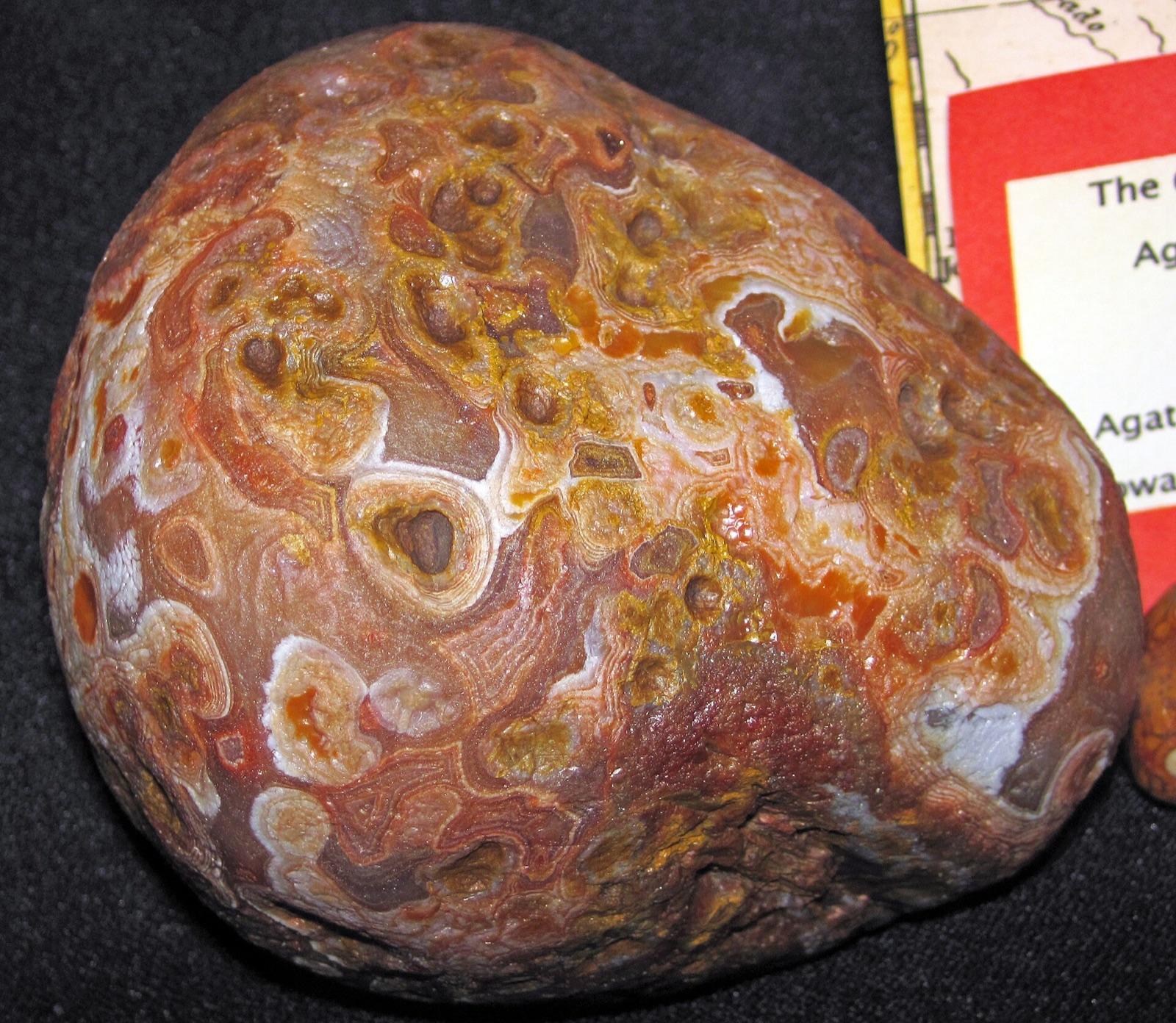
How to tell apart: Agate is translucent and banded in continuous layers. Thomsonite is opaque with discrete radiating eyes.
How to tell apart: Greenstone has a segmented turtleback pattern rather than concentric eyes, and it is greener and chatoyant.
Often found alongside thomsonite
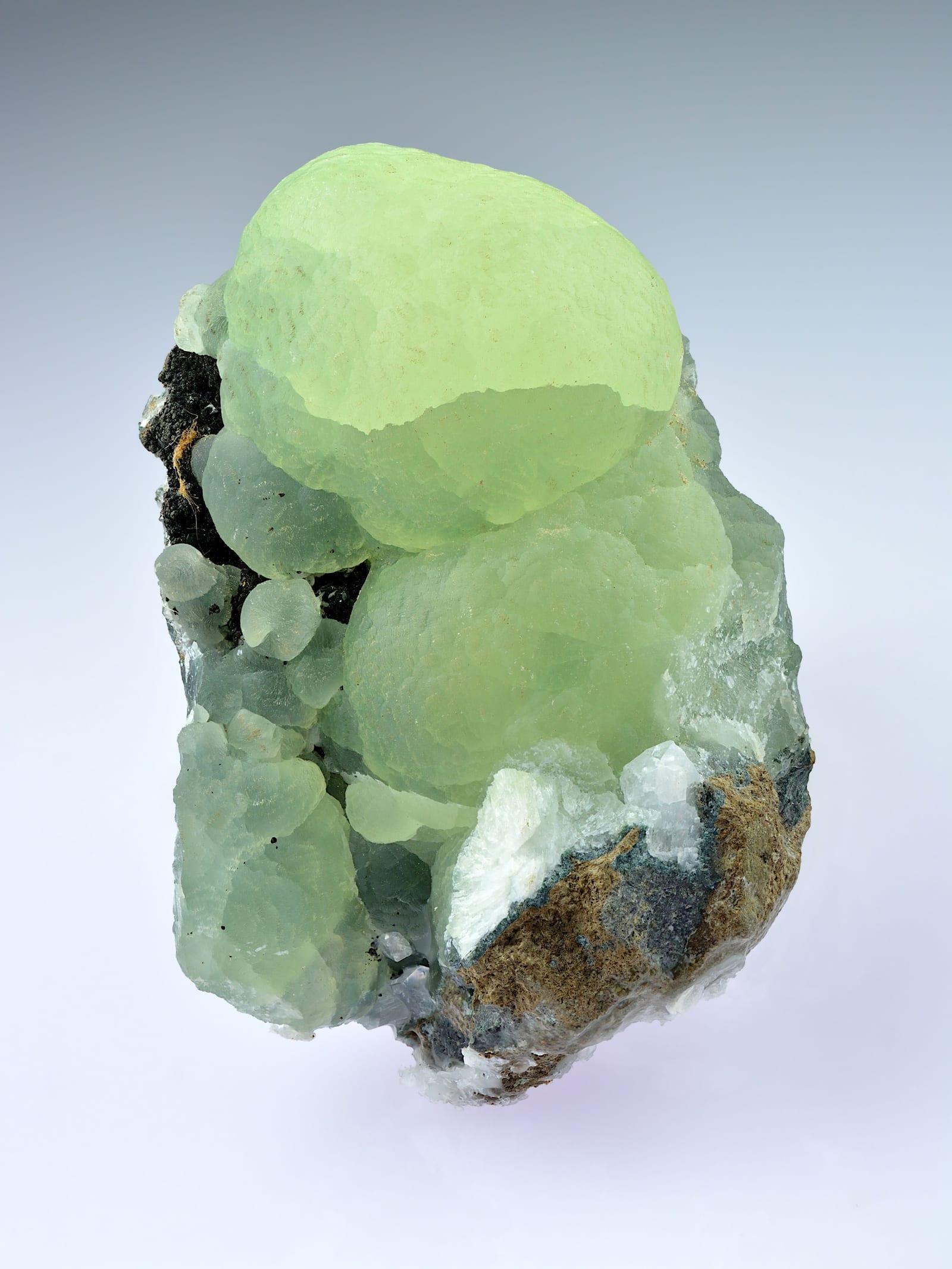
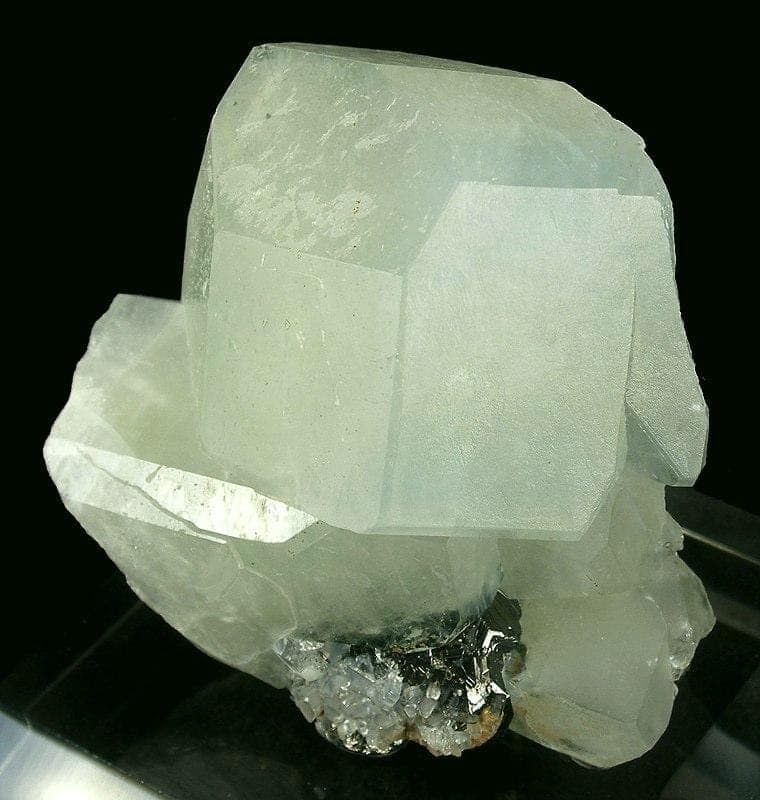
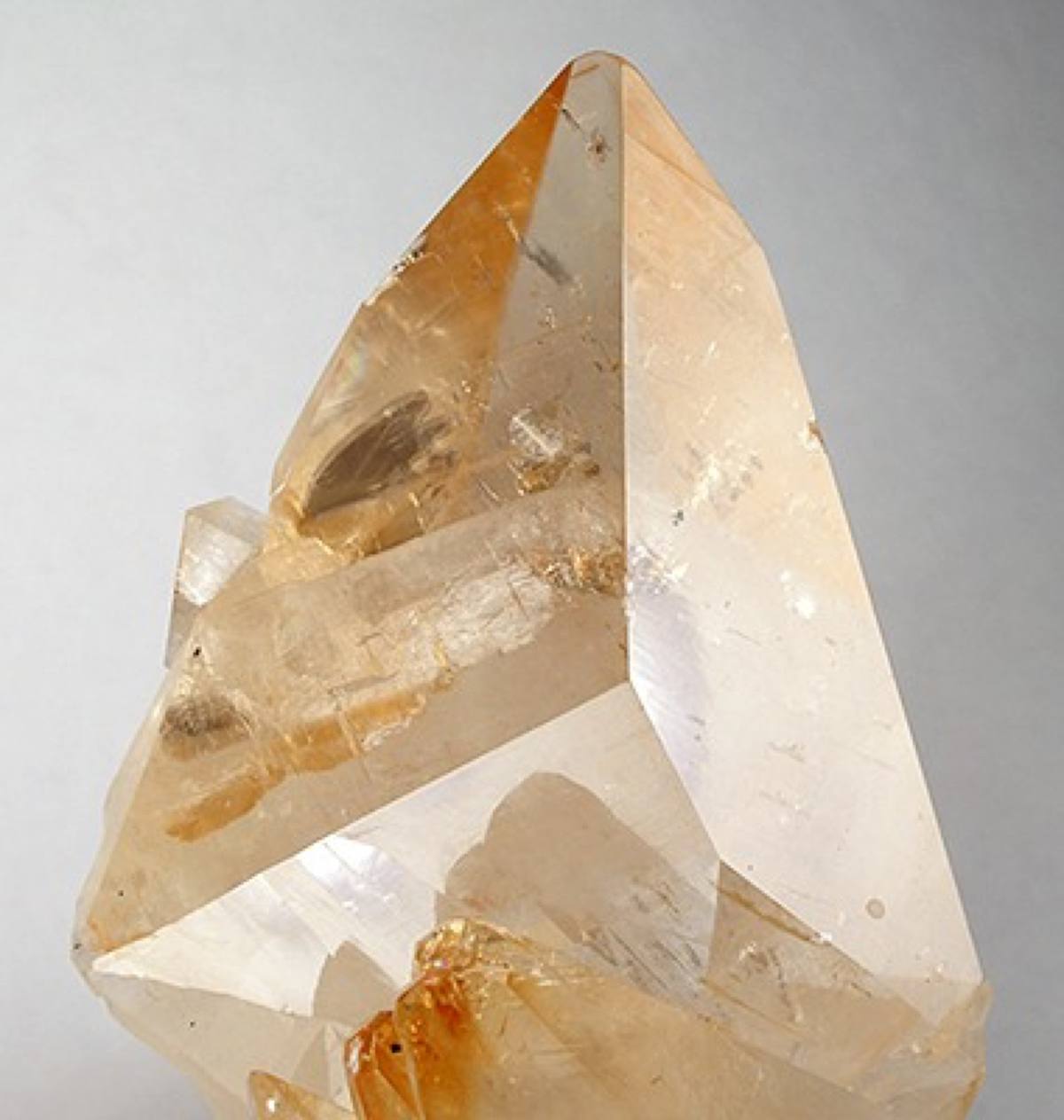
Minerals reported to co-occur with thomsonite. Spotting these in float or country rock is a strong cue you are in the right ground.
All properties
- Chemical formula
- NaCa₂Al₅Si₅O₂₀·6H₂O
- Mohs hardness
- 5-5.5
- Density
- 2.3-2.4 g/cm³
- Streak
- White
- Luster
- Vitreous
- Transparency
- Translucent
- Crystal system
- Orthorhombic
- Crystal habit
- Botryoidal, radiating fibrous, bladed crystals
- Cleavage
- Perfect in one direction
- Rarity
- Uncommon
- Uses
- Collector, Lapidary
- Host rock
- basaltic lava amygdales
Where rockhounds find thomsonite
9 mapped spotsClassic worldwide localities
- Grand Marais, Minnesota
- Keweenaw Peninsula, Michigan
- Fayoum, Egypt
- Dunbar, Scotland
- Nova Scotia, Canada
Field-hunting tip
Where it forms: basaltic lava amygdales. If you start seeing prehnite, datolite, calcite in float, you are in the right ground. Typical habit: botryoidal, radiating fibrous, bladed crystals. Train your eye for that shape before scanning the outcrop. In the U.S., the densest reported localities are in Michigan, Minnesota, Wisconsin. Start trip planning there.
Common questions
How do you identify thomsonite?+
Where is thomsonite found?+
Can I find thomsonite in the United States?+
What rocks look like thomsonite?+
What minerals are found with thomsonite?+
What kind of rock does thomsonite form in?+
What is thomsonite used for?+
Find thomsonite on the map
RockHoundR shows mapped rockhounding spots, access rules, and lets you log every find.

