
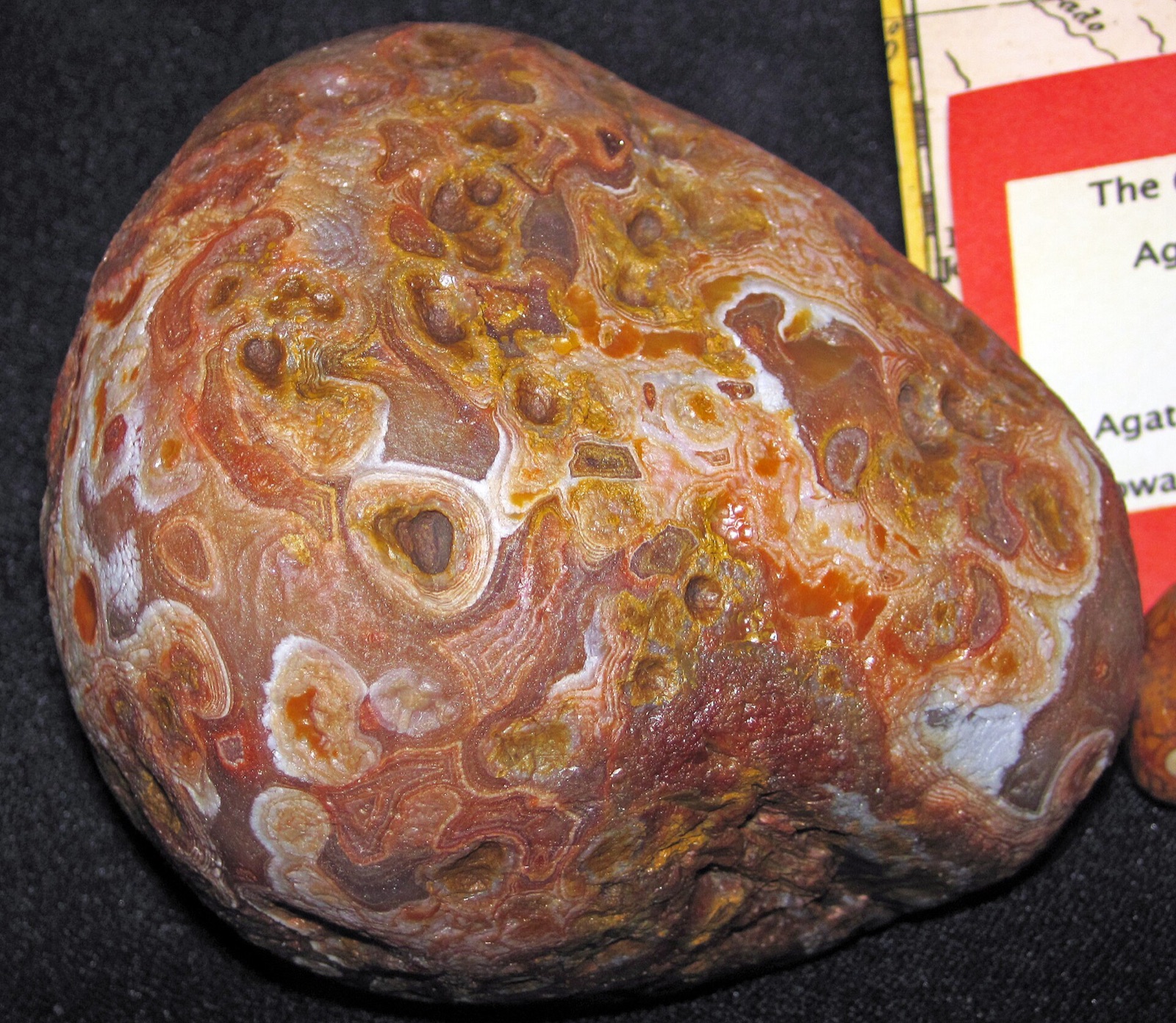
Lake Superior AgateMohs 6.5-7
Red-orange-white concentric fortification banding with iron-stained halos. Minnesota's state gem. Confuse with: generic Brazilian or Laguna fortification.
Photo: James St. John · wikimedia
Every agate is the same mineral (microcrystalline quartz), so what separates them is pattern, color, and locality. A photo identifier built on the pattern axis can tell a Lake Superior agate from a Fairburn, a Blue Lace from a Botswana, a fire agate from a plume. Upload a clean photo of a wet or polished face and you get three ranked variety matches with the pattern family, the color cause, and the closest agate to rule out.
Reviewed by RockHoundR Field Team · Field identification & geology editors · Last verified
Quick answer
Agate identification is mostly about pattern. Concentric fortification bands point at Lake Superior, Fairburn, Botswana, or Brazilian; parallel bands at Botswana or onyx; suspended inclusions at moss, plume, or dendritic; iridescent flash at fire. Upload a wet or polished face. The identifier returns three ranked variety matches with the pattern family, color cause, and the closest variety to rule out.
Agate is microcrystalline quartz (chalcedony) that grew in concentric or parallel bands inside a cavity. Mineralogically, every agate is the same thing as every other agate: silica, Mohs 6.5 to 7, vitreous-to-waxy luster, conchoidal fracture. What collectors actually mean when they name a Lake Superior, a Fairburn, a Blue Lace, or a fire agate is the pattern the silica took as it crystallized, the colors the host environment lent it, and often the locality the piece came from. The identifier is built around that pattern axis.
Pattern reads first. Concentric, fortress-wall bands describe fortification agates, the largest and most-collected family: Lake Superior, Fairburn, Botswana, Brazilian, Laguna, and many regional U.S. varieties all carry concentric bands with distinct hand-styles. Parallel banding (alternating dark and light flat layers) is onyx, sardonyx, or Botswana when the bands are very fine. Suspended green-black inclusions that look like trapped plant matter are moss agate (chlorite needles) or dendritic agate (manganese oxide ferns). Iridescent rainbow flash on a polished face is fire agate. Linear flame-like inclusions are plume agate. Wavy, swirled multi-color ribbons are crazy lace. The identifier writes which pattern family each candidate belongs to, then names the regional variety.
Color comes from the host environment. Red, orange, and yellow agates carry iron oxide impurities (limonite, hematite). The classic husk-red of Lake Superior agates comes from iron-rich groundwater in the Midcontinent Rift basalts. Black bands carry manganese. Green moss inclusions are chlorite group minerals. Sky-blue Blue Lace agate carries fine bands of microcrystalline silica with traces of iron in a particular oxidation state. The identifier uses the color palette as a regional signal, especially when you add a locality, but never invents locality details you did not provide.
Reference pieces for the most-collected agate varieties. Each card shows the pattern signature and the closest agate to confuse it with.
Red-orange-white concentric fortification banding with iron-stained halos. Minnesota's state gem. Confuse with: generic Brazilian or Laguna fortification.
Photo: James St. John · wikimedia
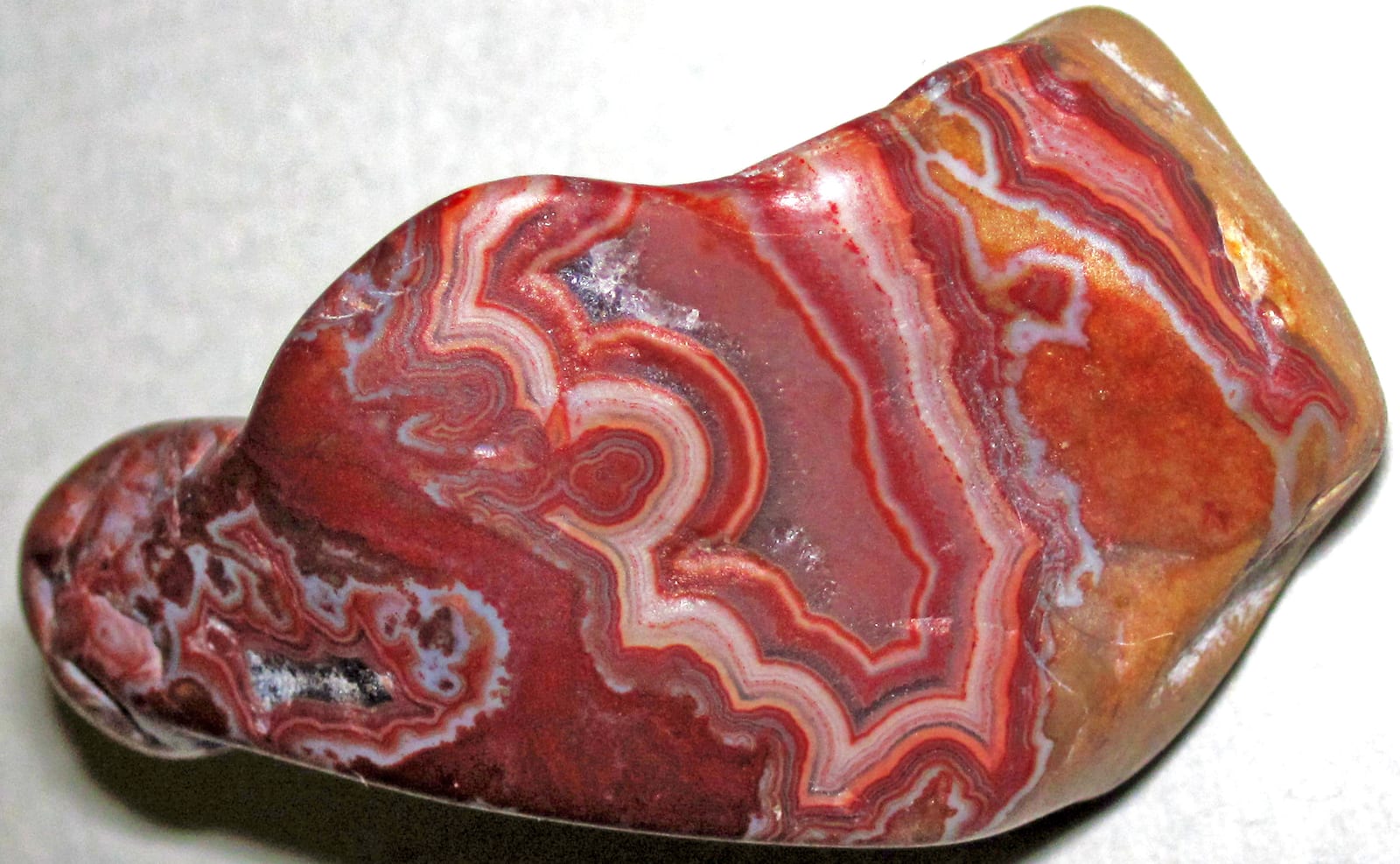
Spiked, holly-leaf style fortification banding in pink, red, brown, and white. South Dakota Badlands. The most-prized U.S. agate.
Photo: Wikipedia contributors · wikipedia
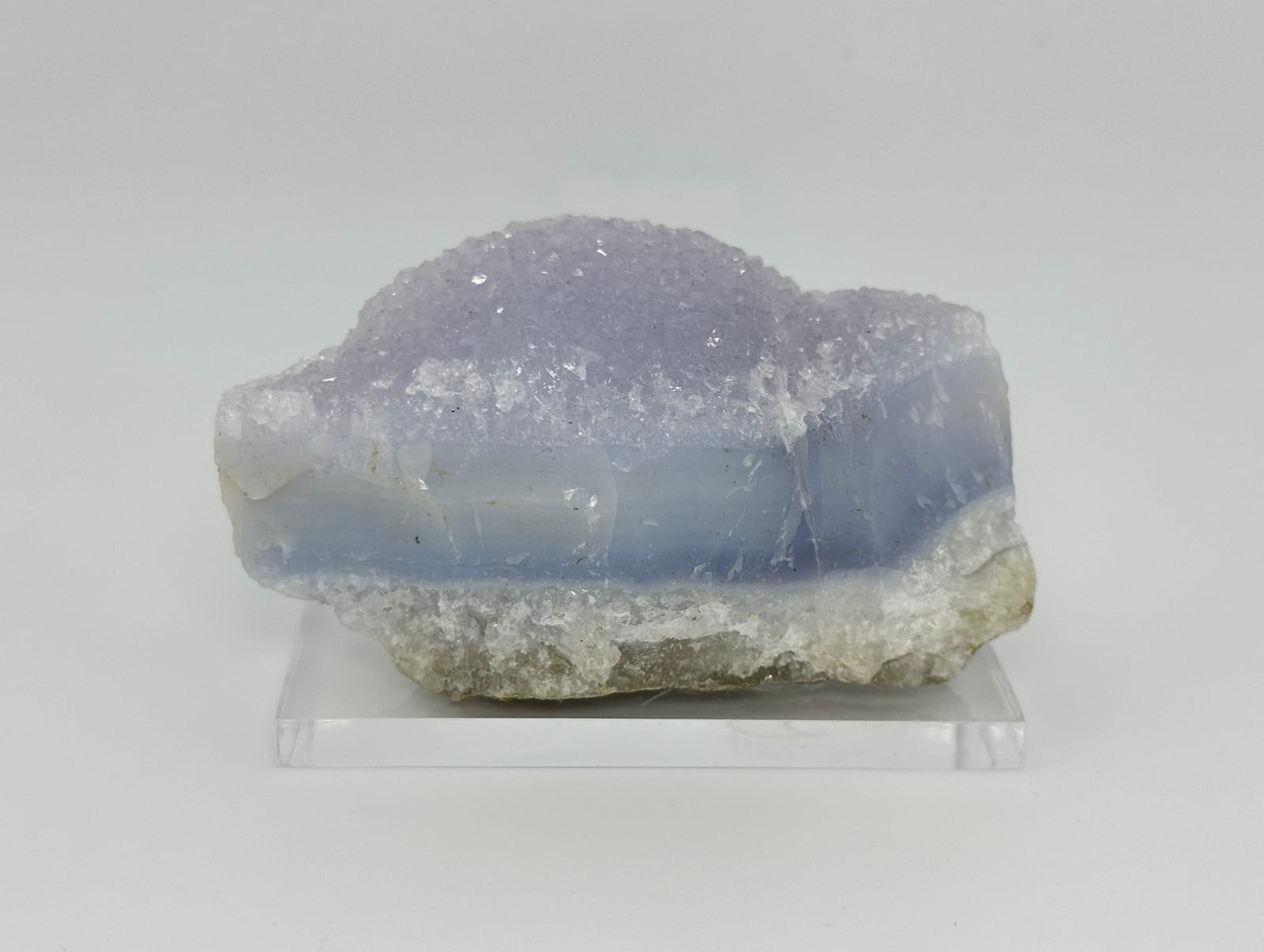
Pale sky-blue with delicate parallel-to-wavy bands. Single source: Ysterputs, Namibia. Soft pastel palette is the giveaway.
Photo: I2Overcome · wikimedia
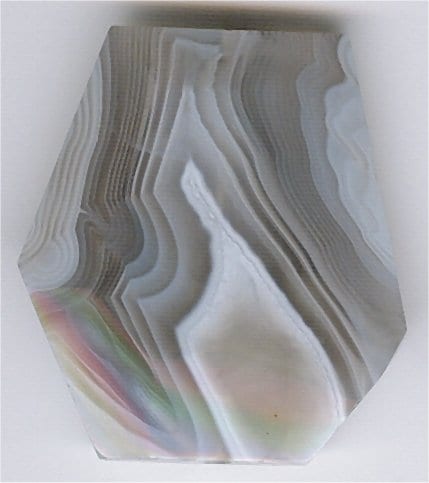
Fine, regular parallel-to-circular bands in gray, pink, peach, and white. Bulb-shaped nodules. Botswana volcanic host.
Photo: Pschemp at English Wikipedia · wikimedia
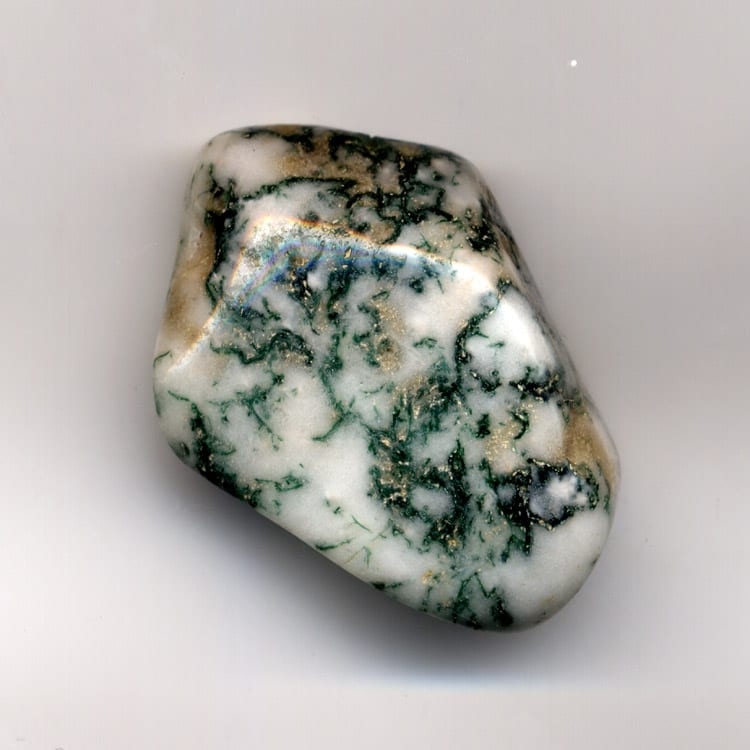
Translucent chalcedony with suspended green-black chlorite or manganese 'moss' inclusions. No traditional concentric bands.
Photo: Wikipedia contributors · wikipedia
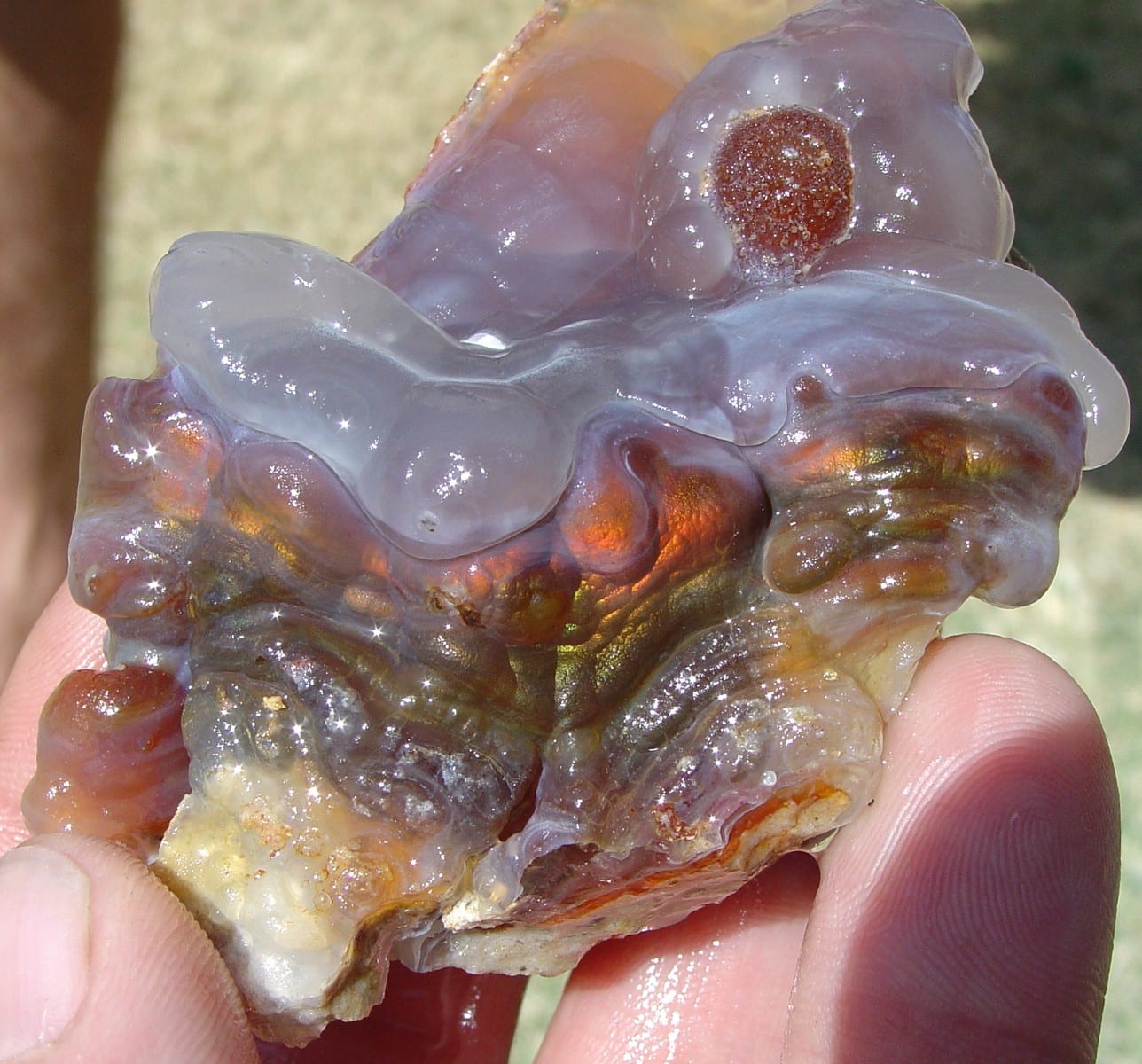
Iridescent rainbow flash from thin iridescent goethite-iron oxide layers within brown chalcedony. Southwest U.S. and northern Mexico.
Photo: Wikipedia contributors · wikipedia
Pattern family, color palette, and locality decide most calls. Hardness is always 6.5 to 7 since every agate is chalcedony.
| Specimen | Hardness (Mohs) | Luster | Habit | Field tell |
|---|---|---|---|---|
| Lake Superior Agate | 6.5-7 | vitreous | banded nodules | Concentric red/orange/white bands with iron-stained halo. Lake Superior shoreline gravels. |
| Fairburn Agate | 6.5-7 | vitreous | botryoidal | Holly-leaf spike-style fortification. South Dakota Badlands and Nebraska. |
| Blue Lace Agate | 6.5-7 | vitreous | banded | Pale sky-blue, delicate parallel bands. Namibia only. |
| Botswana Agate | 6.5-7 | waxy | banded, nodular, massive | Fine regular parallel bands, pink/gray/white. Volcanic-hosted nodules. |
| Moss Agate | 6.5-7 | vitreous | massive | Translucent chalcedony with green-black chlorite or manganese inclusions, no concentric bands. |
| Fire Agate | 6.5-7 | waxy | botryoidal | Iridescent rainbow flash from thin iron-oxide layers. Brown chalcedony host. |
Lake Superior Agate
Red-orange-white concentric bands, iron-stained halos. Minnesota/Wisconsin shoreline classic.
Fairburn Agate
Spiked holly-leaf fortification banding in pink, red, brown, and white. Badlands of South Dakota.
Blue Lace Agate
Pale sky-blue with delicate parallel-to-curved bands. Single Namibian source.
Botswana Agate
Fine gray, pink, peach, and white parallel bands. Bulb-shaped nodules in volcanic host.
Moss Agate
Translucent chalcedony with suspended green-black chlorite 'moss' inclusions. Common in basalt vesicles.
Plume Agate
Linear flame-like mineral inclusions suspended in clear chalcedony. Mexican and Oregon classic.
Fire Agate
Iridescent rainbow flash from thin iridescent goethite layers. Southwest U.S. and northern Mexico.
Crazy Lace Agate
Wild swirled multi-color ribbons of red, orange, white, gray. Chihuahua, Mexico.
Carnelian
Translucent orange-red chalcedony, often without bands. Iron-oxide colored. Brazil and India are major sources.
The single strongest variety cue. Read the pattern before the color.
The host environment colors the silica. Color narrows the regional variety.
A wet face or a polished slice reads pattern and color the best. Natural light, fill the frame. JPG, PNG, or WebP up to 6MB.
Lake Superior shoreline, South Dakota Badlands, Botswana. Locality decides which fortification variety the piece is.
Each result: pattern family, variety name, color cause, and the look-alike agate to rule out.
Distinctive pattern families (fortification, moss, plume, fire) read well from photos. Locality-specific calls without a locality input drop in accuracy fast, since two regional fortification agates can look nearly identical.
The RockHoundR app works offline, saves every find to your map, and overlays them onto 250,000+ rockhounding spots with geology and land-access data.


Lake Superior agates carry a husk-red or orange iron-stain halo around the banding, hosted in chalcedony with red-orange-white concentric bands. The iron stain comes from the iron-rich groundwater that moved through the Midcontinent Rift basalts. Pebble-sized fortification agates from the shoreline of Minnesota, Wisconsin, and the U.P. of Michigan are the genuine Lake Superior product. Brazilian fortification agates lack the halo and tend to deeper, more saturated colors.
Fairburn agates show a unique spiked, holly-leaf-style fortification pattern in pink, red, brown, and white. They eroded out of an Oligocene paleosol layer in the Badlands of South Dakota (and nearby Nebraska) and have to be picked up on the surface; there is no productive in-situ deposit. The combination of a tiny, single-region source, the distinctive pattern, and the rarity make Fairburns one of the most-prized U.S. agates. Pieces over a few inches are uncommon.
Effectively yes. Pale sky-blue chalcedony with the delicate parallel-to-wavy banding called Blue Lace comes from a single farm at Ysterputs, Namibia. Commercial pieces sold as 'blue agate' from other sources usually have darker or grayer banding and a different pattern style. Genuine Blue Lace has been the gold standard for the type since the 1960s.
Mineralogically yes, mossagate is chalcedony, the same microcrystalline quartz as fortification agate, with Mohs 6.5 to 7. What distinguishes it is the suspended green-to-black inclusions (chlorite group minerals or manganese oxides) that look like trapped plant matter. Strictly, traditional definitions reserved 'agate' for banded chalcedony, but the trade name moss agate is well-established and widely accepted.
Fire agate carries thin iridescent layers of goethite-iron oxide within brown chalcedony. Light reflecting and diffracting off the parallel layers produces the rainbow play-of-color, similar in mechanism to opal's play of color but with iron oxide instead of silica spheres. The Southwest U.S. (Arizona, New Mexico) and northern Mexico are the world's primary source.
Sometimes, not always. Very saturated purple, turquoise, or strong red commercial bands (especially on small pieces with very even color) usually indicate dye. Genuine Brazilian fortification agates are commonly dyed and sold as 'amethyst-banded agate' or 'turquoise agate'. The identifier flags suspected dye in the description when the color saturation is uncharacteristic of any natural variety.
Yes. Three free identifications per day per device, no signup, no install. The RockHoundR app removes the daily limit, saves every agate with photos and notes, and overlays your finds onto 250,000+ rockhounding spots including Lake Superior, Fairburn, and Pacific Northwest agate beds.
Property data and reference imagery used on this page are cross-checked against the following sources.
Reference for variety names, host rocks, and locality data used in the comparison table.
Reference for the chalcedony parent group (agate is banded chalcedony) and its properties.
State reference for the Lake Superior agate, Minnesota's state gemstone, and where it's found.