
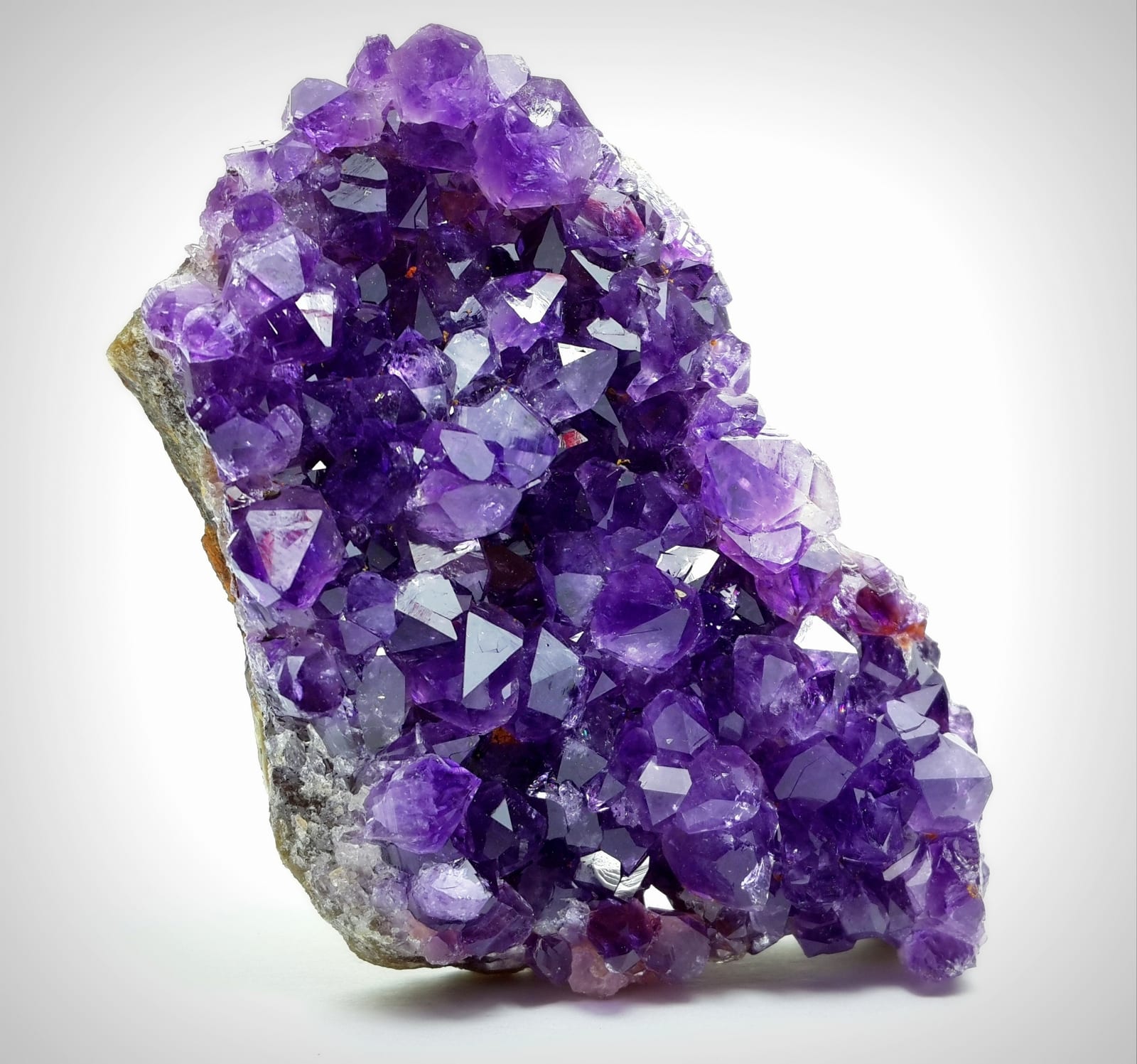
AmethystMohs 7
Purple quartz, iron + natural radiation color. Color is deepest at the crystal tip and fades toward the base. Brazilian basalt geodes are iconic.
Photo: Wikipedia contributors · wikipedia
All quartz is the same mineral, SiO2, Mohs 7, hexagonal. The whole interesting job in quartz identification is varietal: which variety of quartz is this. Color does most of the work (purple amethyst, yellow citrine, brown smoky, pink rose), inclusions decide the rest (rutile needles, black tourmaline, fluid 'milky' veils). Upload a photo of a single crystal or cluster and you get three ranked variety matches with the cause of color and the look-alike to rule out.
Reviewed by RockHoundR Field Team · Field identification & geology editors · Last verified
Quick answer
Quartz identification is varietal. Color is the strongest cue: purple amethyst, yellow citrine, brown smoky, pink rose, white milky, clear with needles rutilated or tourmalinated, doubly terminated Herkimer, green sparkly aventurine. Upload a clean photo. The identifier returns three ranked variety matches with the cause of color and the look-alike (fluorite, calcite, beryl) to rule out.
Quartz is the second-most-common mineral in the Earth's crust. Every variety, every name (amethyst, citrine, smoky, rose, milky, rutilated, tourmalinated, Herkimer, prasiolite, aventurine), is the same mineral: SiO2, hexagonal crystal system, Mohs 7, vitreous luster, no cleavage, conchoidal fracture. What separates the varieties is the cause of color and the inclusions trapped inside. Identifying a quartz specimen at the species level is trivial; the interesting question is varietal, and the identifier is built around that.
Color drives variety. Iron impurities under natural radiation produce amethyst (purple) and, when the radiation pushes further or when amethyst is heated, citrine (yellow to orange). Aluminum with radiation makes smoky quartz (brown to black). Titanium or microscopic dumortierite fibers give rose quartz its pink. Fluid inclusions of water and gas turn quartz milky white. Microscopic rutile (titanium dioxide) needles produce rutilated quartz; black schorl tourmaline needles produce tourmalinated quartz. Chromium-rich fuchsite microflakes embedded in massive quartz produce green sparkly aventurine. The cause of color shifts the identifier's confidence on each call.
Treatment is a real factor, especially with citrine. Most citrine sold commercially is heat-treated amethyst, with a more reddish-orange tone and flat color zoning. Natural citrine is rarer and shows a softer yellow gradient. Heat-treated rose-pink quartz exists but is uncommon. Dyed quartz (especially saturated turquoise, magenta, and bright green specimens) is more obvious. The identifier flags suspected heat treatment when the color signature points that way, but the call is not always possible from a photo alone. For confirmation, lab work (UV-vis spectroscopy or thermal analysis) is the next step.
Reference crystals for the main color and inclusion varieties. Each card shows the variety, the cause of color, and the closest variety or look-alike to rule out.
Purple quartz, iron + natural radiation color. Color is deepest at the crystal tip and fades toward the base. Brazilian basalt geodes are iconic.
Photo: Wikipedia contributors · wikipedia
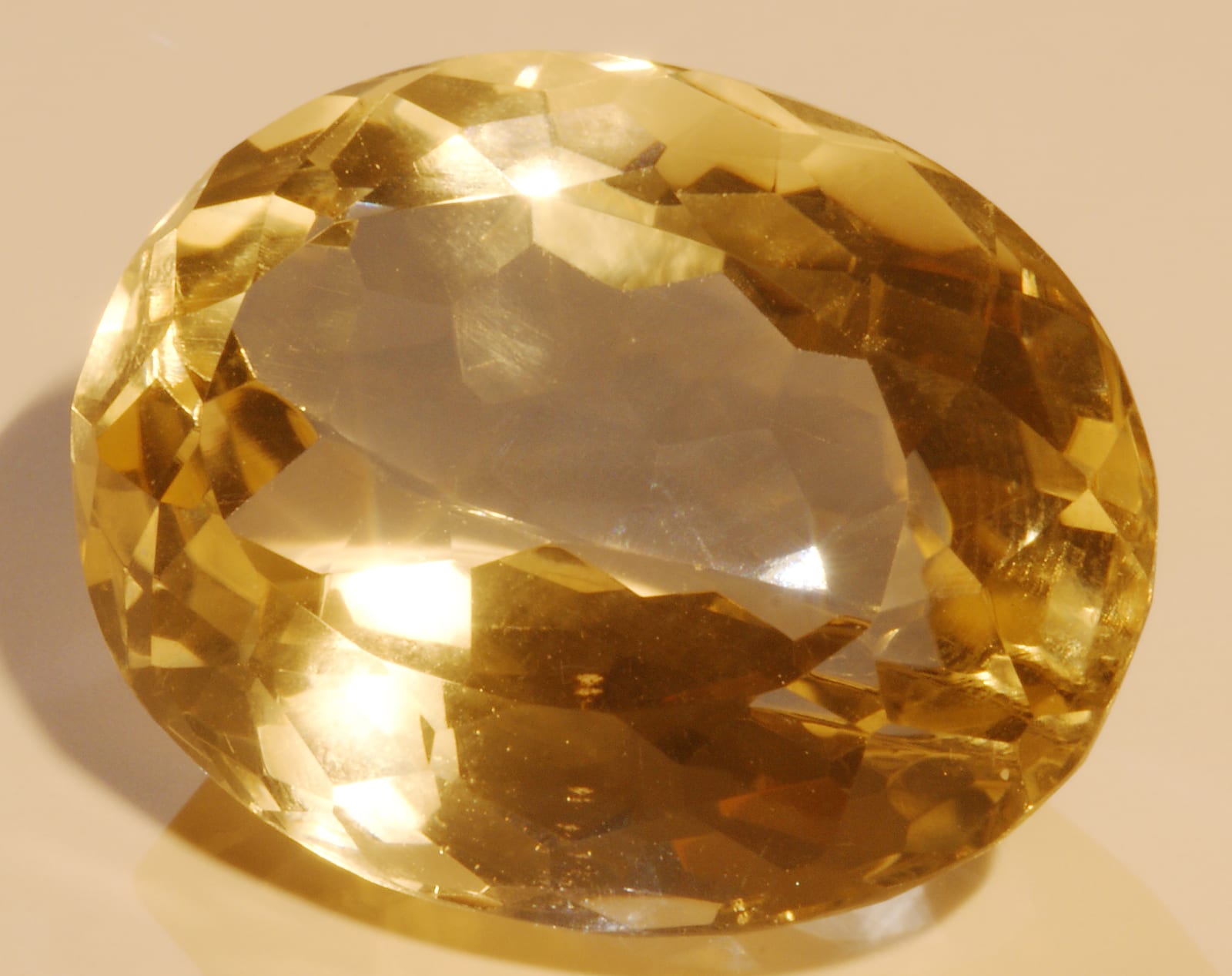
Yellow to orange quartz. Most commercial pieces are heat-treated amethyst (reddish-orange, flat zoning); natural is softer yellow with a gradient.
Photo: Wikipedia contributors · wikipedia
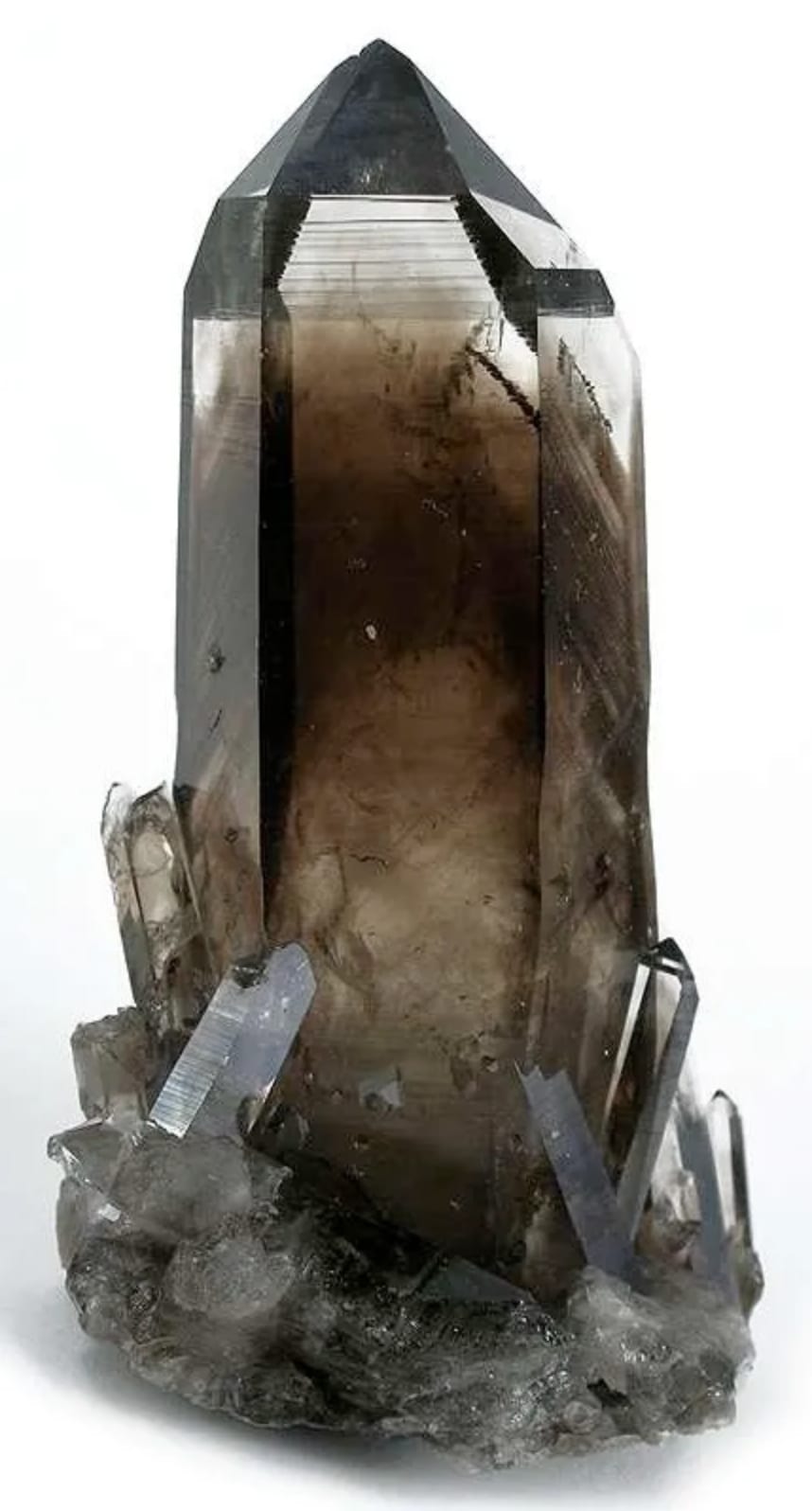
Brown to black quartz from aluminum impurities and natural radiation. Cairngorm (Scotland) and Pikes Peak (Colorado) are the famous localities.
Photo: Wikipedia contributors · wikipedia
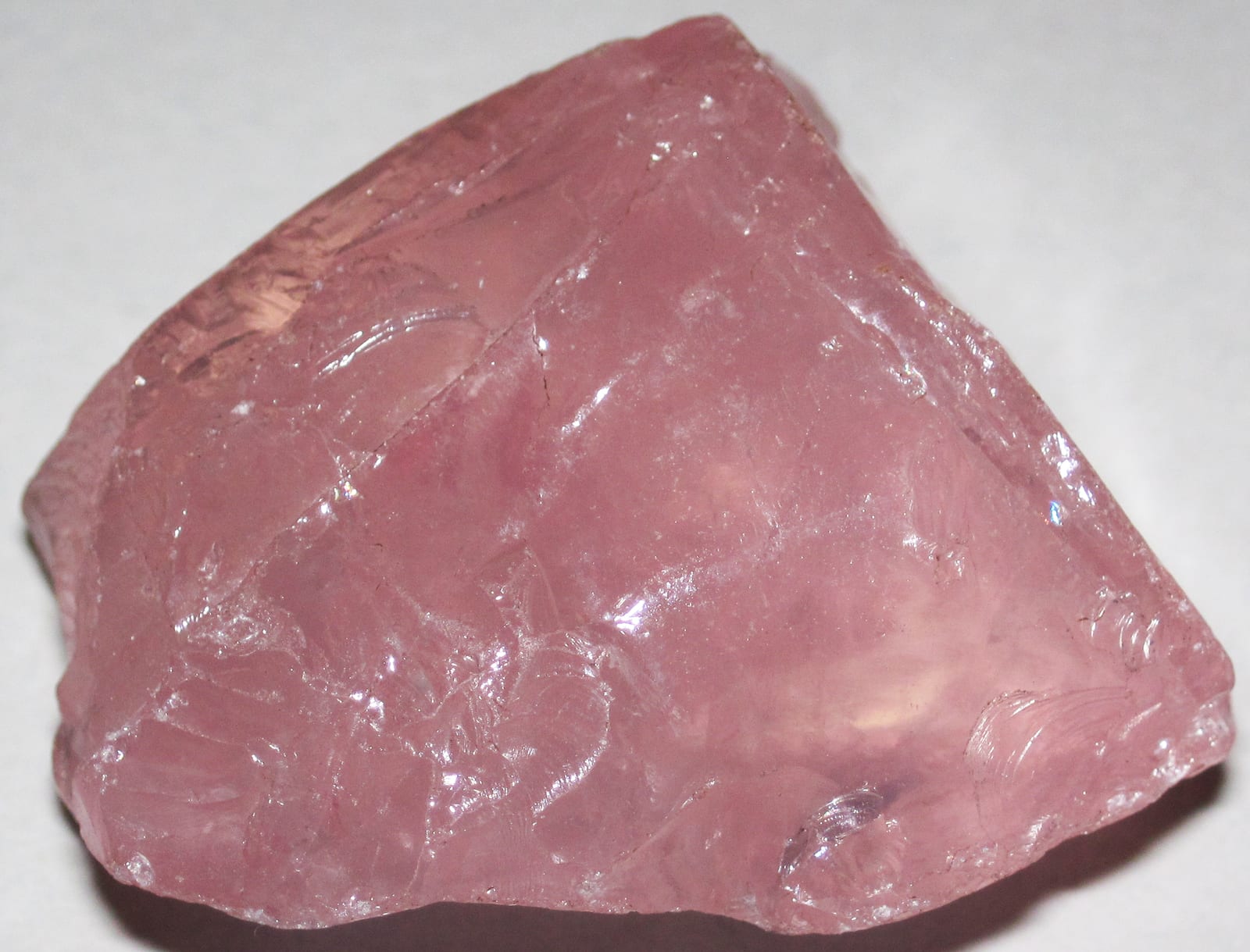
Pink quartz, usually massive (terminated crystals are rare). Color comes from titanium or microscopic dumortierite fibers, can fade in long sunlight.
Photo: Wikipedia contributors · wikipedia
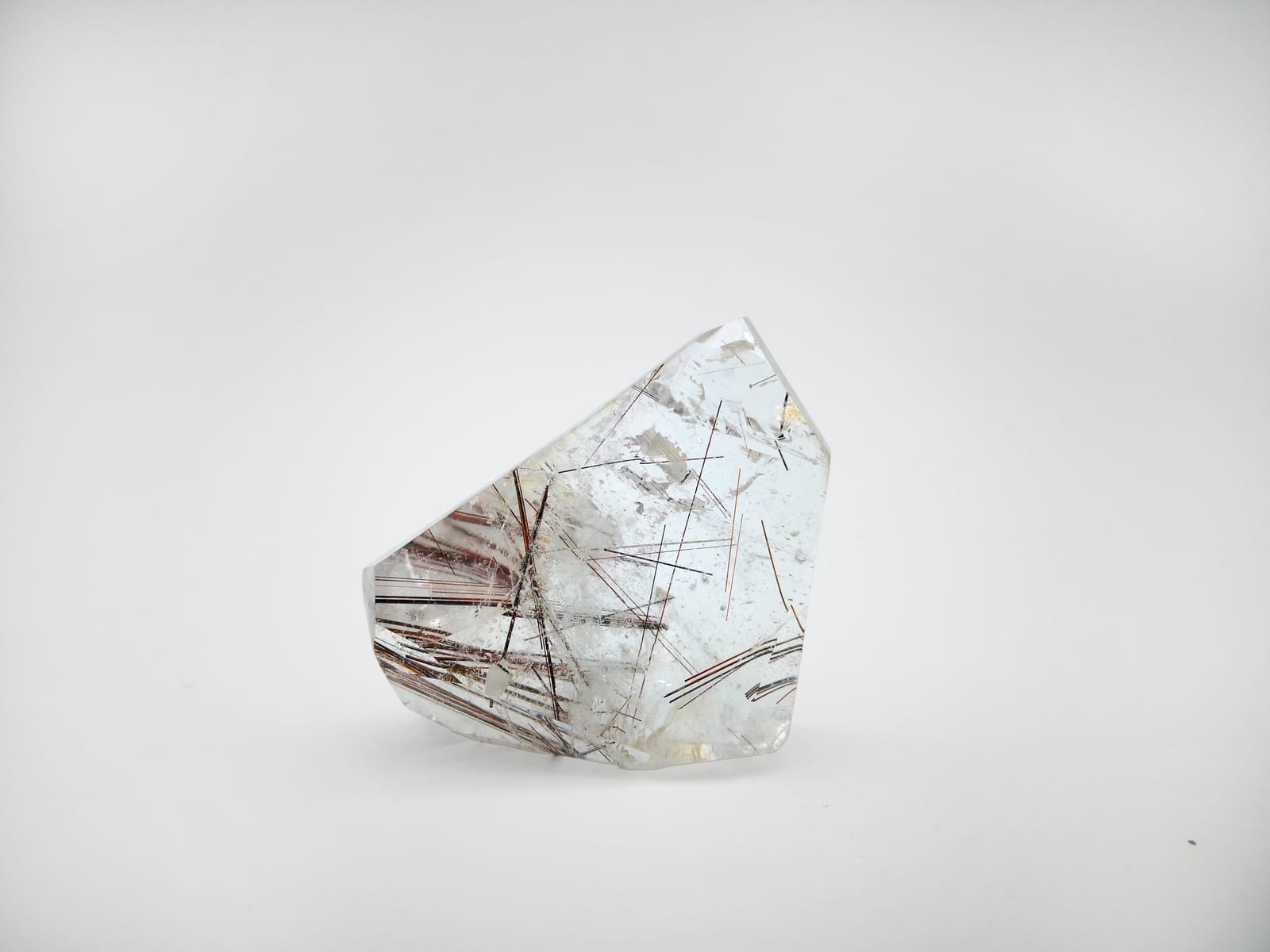
Clear or smoky quartz threaded with golden-to-red rutile (titanium dioxide) needles. Brazil is the main source. Distinctive and unmistakable.
Photo: Meralt Limited · wikimedia
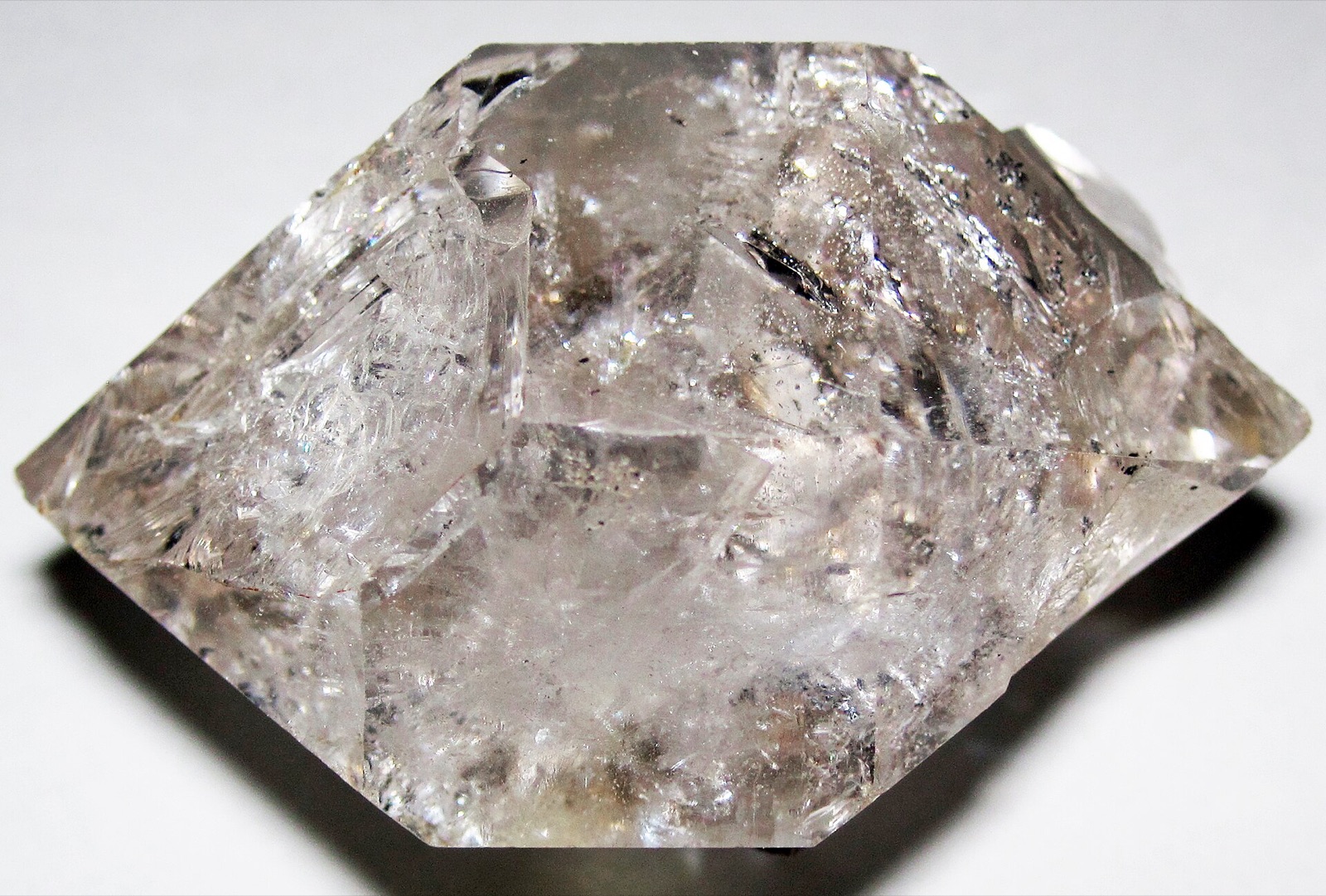
Doubly terminated clear quartz from Herkimer County, NY. Both ends faceted naturally, free-grown in dolomite vugs. Sharp, brilliant, gemmy.
Photo: James St. John · wikimedia
Hardness is always Mohs 7. Color and inclusion patterns do the variety work; locality tightens the call.
| Specimen | Hardness (Mohs) | Luster | Habit | Field tell |
|---|---|---|---|---|
| Amethyst | 7 | vitreous | prismatic crystals in geodes | Purple, deepest at tip; iron + natural radiation color. |
| Citrine | 7 | vitreous | prismatic crystals | Yellow to orange. Reddish-orange + flat zoning = heat-treated amethyst. |
| Smoky Quartz | 7 | vitreous | prismatic crystals | Brown to black. Aluminum + radiation. Often associated with feldspar in pegmatites. |
| Rose Quartz | 7 | vitreous | massive | Pink (massive), terminated crystals rare. Color fades in long sunlight. |
| Rutilated Quartz | 7 | vitreous | prismatic crystals with acicular inclusions | Clear with golden-to-red rutile needles. Brazilian classic. |
| Herkimer Diamond | 7 | vitreous | doubly terminated hexagonal prismatic | Doubly terminated, sharp natural facets, gemmy clear. Herkimer County, NY dolomite vugs only. |
Amethyst
Purple. Iron impurities + natural radiation. Brazilian and Uruguayan basalt geodes are the iconic source.
Citrine
Yellow to orange. Most commercial citrine is heat-treated amethyst; natural is rarer and softer-toned.
Smoky Quartz
Brown to black. Aluminum impurities + natural radiation. Cairngorm Scotland and Pikes Peak Colorado classics.
Rose Quartz
Pink. Titanium or microscopic dumortierite fibers. Usually massive, terminated crystals are rare and prized.
Milky Quartz
White / opaque white. Fluid inclusions of water and gas. The most common quartz in granitic veins.
Rutilated Quartz
Clear with golden-to-red rutile (titanium dioxide) needles. Brazilian classic.
Tourmalinated Quartz
Clear with black schorl tourmaline needles. Brazilian and Madagascar sources.
Herkimer Diamond
Doubly terminated clear quartz from Herkimer County, New York. Free-grown in dolomite vugs, sharp natural facets.
Aventurine
Massive green quartz with sparkly chromium-rich fuchsite mica flakes. Most common as cabbed or tumbled material.
The strongest variety cue. Read color first, then check zoning and habit.
Past color, the included minerals and the crystal habit decide the call.
Plain background, daylight, full crystal in frame including termination. JPG, PNG, or WebP up to 6MB.
Brazilian, Arkansas, Herkimer NY, Madagascar. The locality decides treatment expectations and varietal weighting.
Each result: variety name, cause of color or inclusion, hardness, and the look-alike variety or mineral to rule out.
Color-based variety calls are reliable. Treatment (heat-treated amethyst sold as citrine, irradiated smoky) often requires lab work to confirm.
The RockHoundR app works offline, saves every find to your map, and overlays them onto 250,000+ rockhounding spots with geology and land-access data.


Iron impurities exposed to natural radiation during the crystal's geologic history. The radiation knocks electrons into color centers tied to the iron, producing the purple. The color is often deepest at the crystal tip and fades toward the base because the late-growth, tip-most zone trapped the most iron in its lattice. Heating amethyst above about 470 degrees Celsius drives the color toward yellow-orange, which is how most commercial citrine is made.
Heat-treated amethyst sold as citrine usually shows a more reddish-orange tone with relatively flat or banded color zoning, often with a smoky undertone at the base. Natural citrine is a softer yellow with a smoother gradient and tends to come in lighter, more pale-honey tones. Geographic clues help: Brazilian 'citrine' geodes are nearly always heat-treated amethyst. Definitive separation requires UV-vis spectroscopy or thermal analysis in a lab.
No. Herkimer Diamonds are doubly terminated clear quartz crystals that grew free in dolomite vugs in Herkimer County, New York. They earned the name because their natural faceting is so sharp and brilliant that early collectors mistook them for diamond. Mineralogically they are quartz (Mohs 7, SiO2), not diamond (Mohs 10, carbon). The term 'Herkimer Diamond' is officially trademarked to the Herkimer County, NY source; doubly terminated quartz from elsewhere is properly called 'diamond quartz' or just 'doubly terminated quartz'.
The cause of rose quartz's pink color (microscopic dumortierite fibers or titanium impurities) tends to occur in massive vein-quartz contexts in granitic pegmatites, not in vug environments where free-grown terminated crystals form. Terminated rose quartz crystals do exist, mostly from Minas Gerais in Brazil, but they are rare and command a premium. The bulk of rose quartz sold and collected is massive, often shaped into hearts, spheres, or cabochons.
Both are clear quartz with needle-like mineral inclusions. Rutilated quartz contains golden, copper, or red rutile (titanium dioxide) needles, which give the piece a warm metallic sparkle. Tourmalinated quartz contains black schorl (iron-rich tourmaline) needles, which give a cooler, contrast-rich look. The two are mineralogically different (titanium vs iron silicate) but visually distinguishable by needle color.
No. This tool is specifically for the quartz family. If a specimen has rhombohedral cleavage (calcite), cubic or octahedral habit (fluorite), or a hexagonal habit with higher hardness (beryl), try the crystal identifier or mineral identifier instead. The identifier will flag obviously non-quartz specimens with an error rather than guess.
Yes. Three free identifications per day per device, no signup, no install. The RockHoundR app removes the daily limit, saves every variety with photos and notes, and overlays your finds onto 250,000+ rockhounding spots including the Arkansas crystal belt and Herkimer County, NY.
Property data and reference imagery used on this page are cross-checked against the following sources.
Reference for the quartz varieties, color causes, and locality data used in the comparison table.
Federal reference for U.S. quartz occurrences and the Arkansas crystal belt.
Industry reference for varietal naming and treatment standards (heat-treated citrine, etc.).