
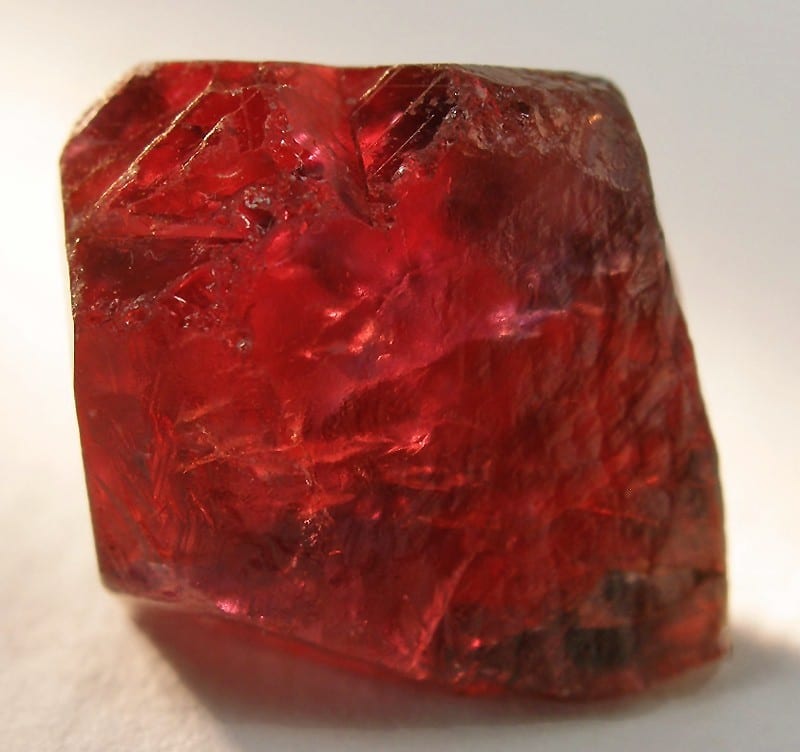
RubyMohs 9
Red corundum. Strong red fluorescence under longwave UV, very high SG, RI 1.76-1.77. Most-confused with red garnet (lower RI, no fluorescence) and red spinel.
Photo: Wikipedia contributors · wikipedia
A cut gemstone has lost its crystal habit, the strongest visual cue you get with a raw specimen. What it has gained is a precise read on color saturation, luster, and dispersion as light bounces through the facets. This identifier is tuned for finished gem material. Upload a photo of a faceted stone or a cabochon and you get three ranked species matches with refractive index hints, Mohs hardness, and the gem to rule out by the property a refractometer or specific-gravity test would decide.
Reviewed by RockHoundR Field Team · Field identification & geology editors · Last verified
Quick answer
Photograph a cut or cabbed stone face-up on a plain background in natural light. The identifier returns three ranked species/variety matches with hue/tone/saturation, Mohs hardness, refractive-index hints, and the gem to rule out by RI or specific gravity. Natural vs synthetic is not decided from a photo. Lab work confirms.
Identifying a cut gemstone is not the same job as identifying a rough crystal. The lapidary work has stripped away crystal habit, termination, and visible matrix, three of the strongest cues you would use on a raw specimen. What remains is color, luster, and the way light moves through the facets: hue, tone, saturation, dispersion (the rainbow flash called fire), and birefringence (the doubling of facet edges when a stone is strongly doubly-refractive). The identifier reads those cues and ranks the most likely species and variety.
The most useful framing is by color group, because two unrelated gems can look nearly identical at a glance. Red and pinkish-red splits between ruby (corundum, Mohs 9, RI 1.76-1.77), spinel (Mohs 8, RI 1.72, no pleochroism), pyrope and almandine garnet (Mohs 7-7.5, RI 1.74-1.83, high specific gravity), and rubellite tourmaline (Mohs 7-7.5, RI 1.62-1.64, strong pleochroism). Blue splits between sapphire (Mohs 9), tanzanite (Mohs 6-7, trichroic, blue/violet/burgundy), aquamarine (Mohs 7.5-8, beryl), blue topaz, and indicolite tourmaline. The identifier writes the property that would decide each pair into the description so the next step is obvious.
Natural versus synthetic is the question this tool will not answer. Flame-fusion ruby, hydrothermal emerald, lab-grown sapphire, and flux-grown spinel are visually indistinguishable from natural in nearly every photo. The species ID stays accurate (a lab-grown ruby is still corundum), but origin and treatment require a refractometer, polariscope, microscope, FTIR, or a sealed lab report. The accuracy block and FAQs on this page say that plainly. If natural versus synthetic matters for your decision, send the stone to a recognized lab (GIA, AGS, AGL, SSEF) for a full report.
Reference cut stones for the most-confused species. Each card shows the single property that separates it from its closest look-alike.
Red corundum. Strong red fluorescence under longwave UV, very high SG, RI 1.76-1.77. Most-confused with red garnet (lower RI, no fluorescence) and red spinel.
Photo: Wikipedia contributors · wikipedia
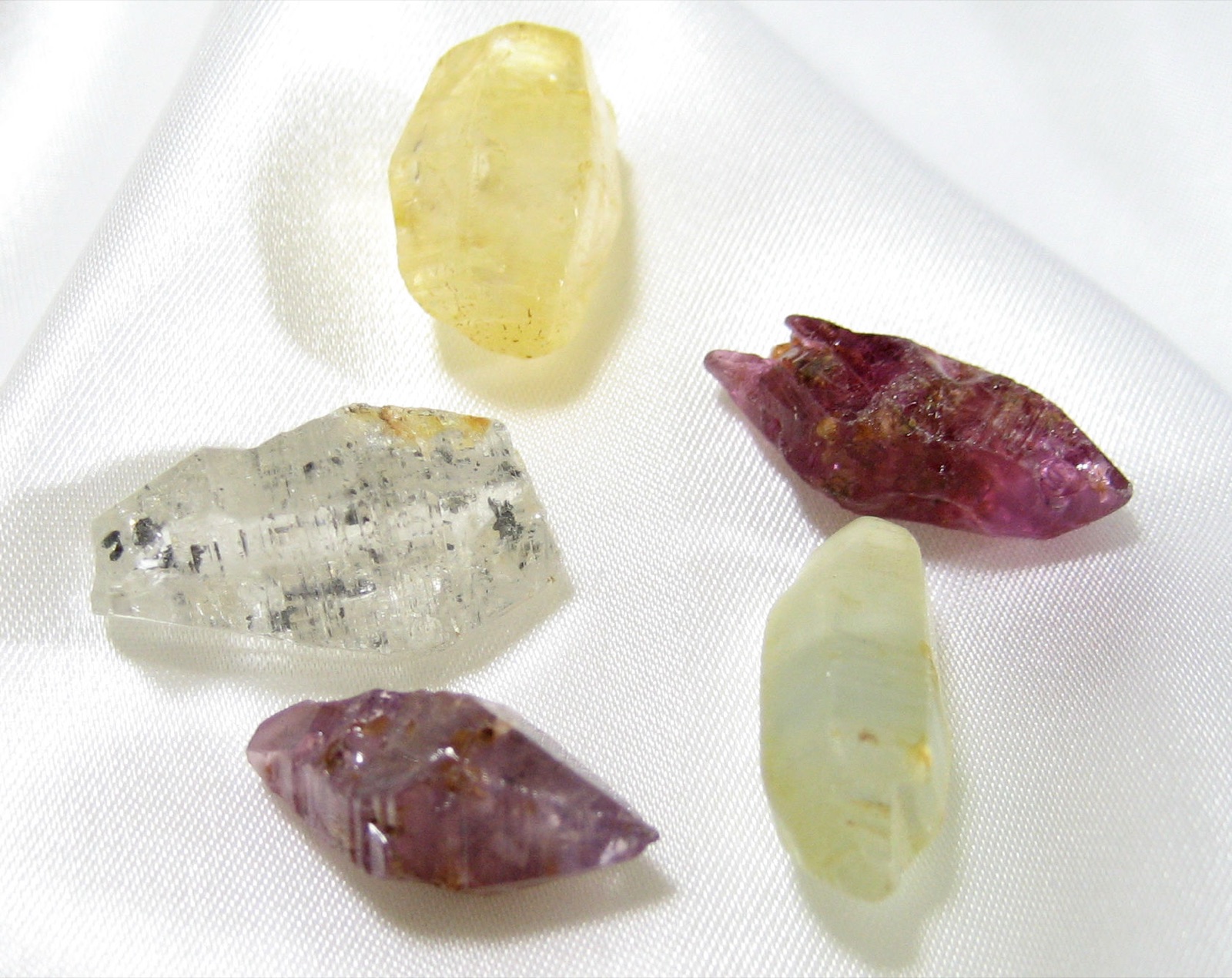
Corundum. Same hardness and RI as ruby (Mohs 9, 1.76-1.77). Blue is default; the other 'fancy' colors exist. Crisp facet edges, vitreous luster.
Photo: Ra'ike (see also Ra'ike on de.wikipedia · wikimedia
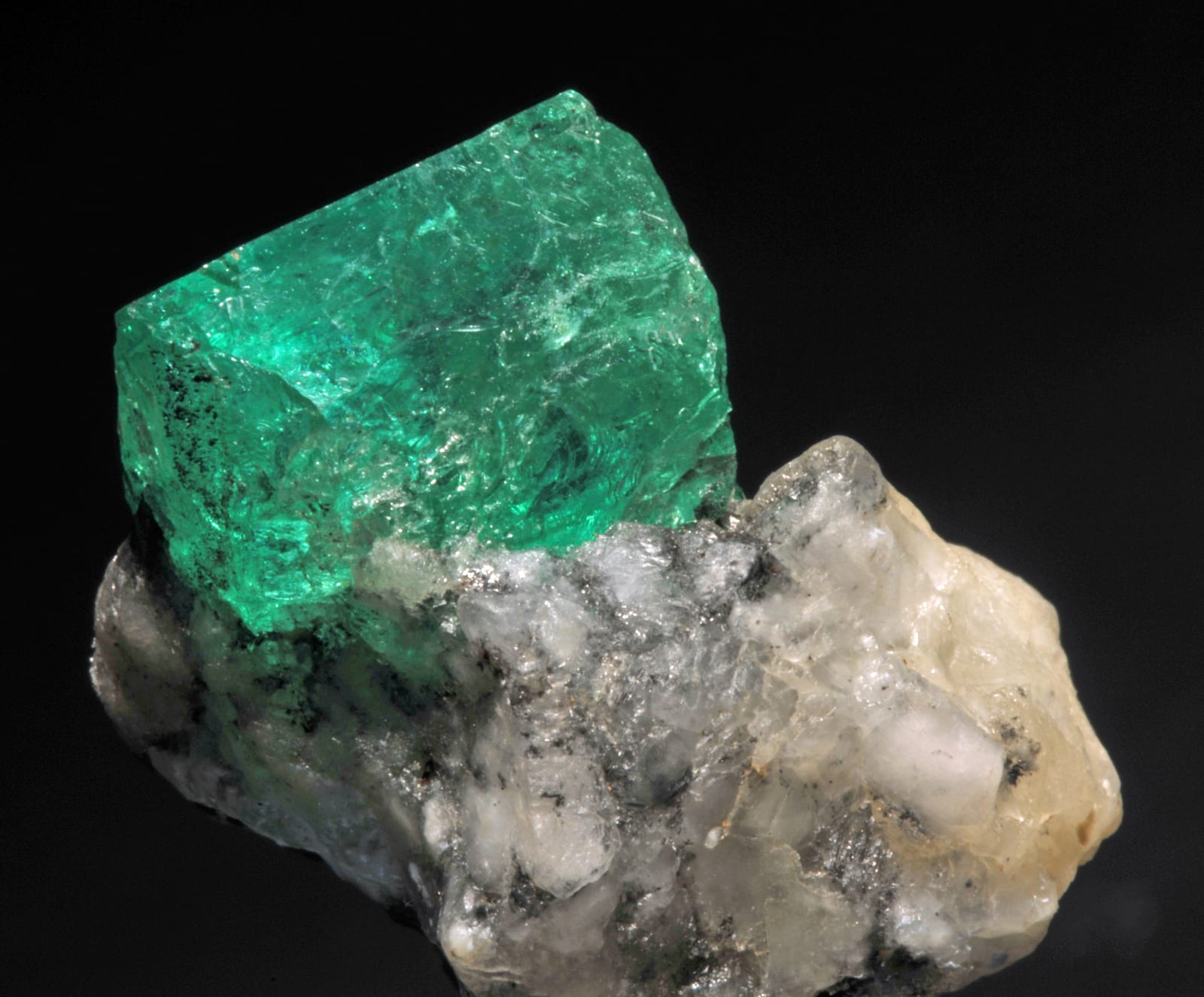
Green beryl, Mohs 7.5-8. Often has visible 'jardin' (garden) inclusions. Almost universally treated with cedarwood oil or resin to fill surface fractures.
Photo: Wikipedia contributors · wikipedia
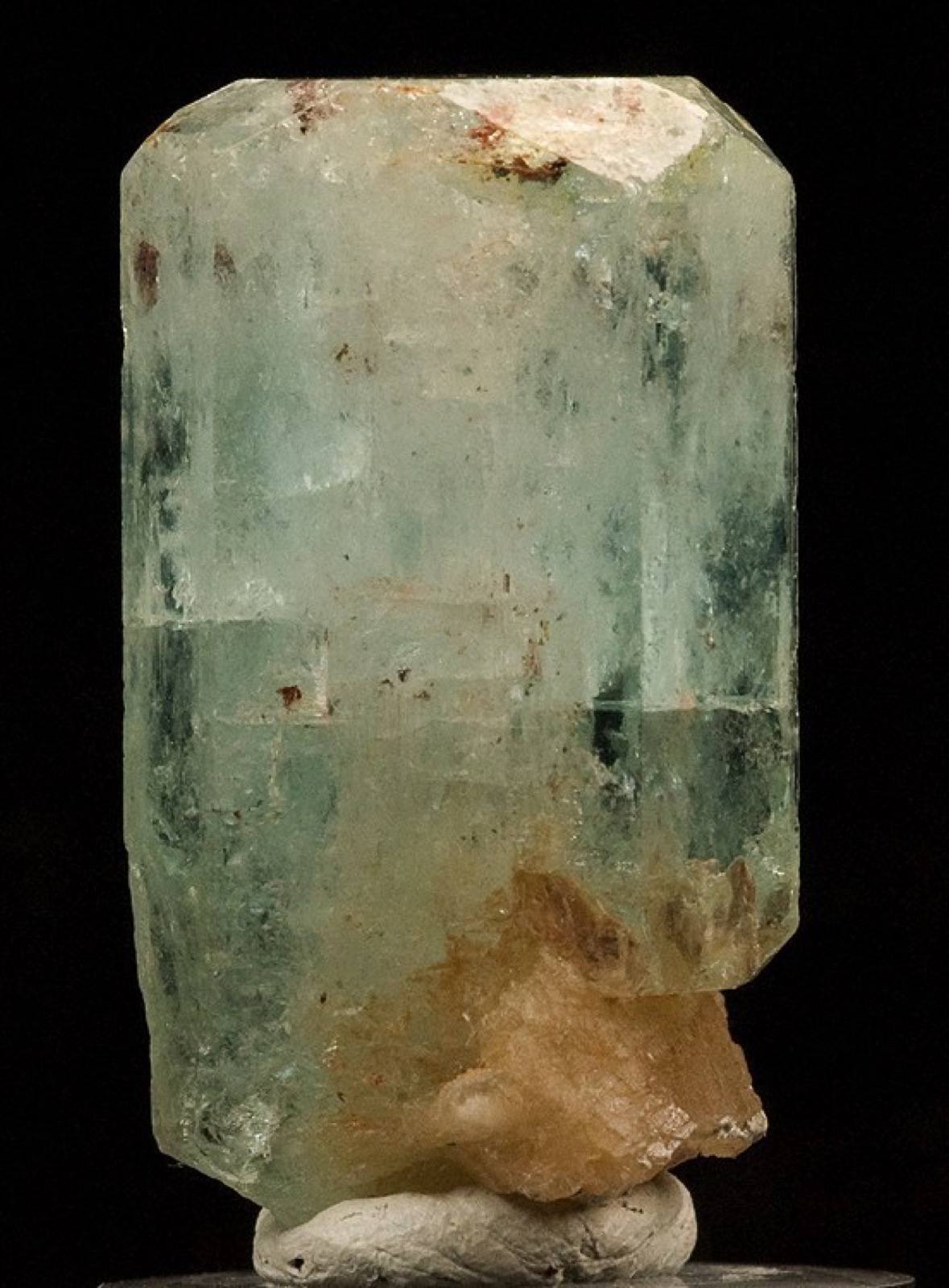
Blue beryl. Lower RI than sapphire (1.57-1.58 vs 1.76-1.77), gentler color zoning, lower SG. Pale to medium blue is typical.
Photo: Robert M. Lavinsky · wikimedia
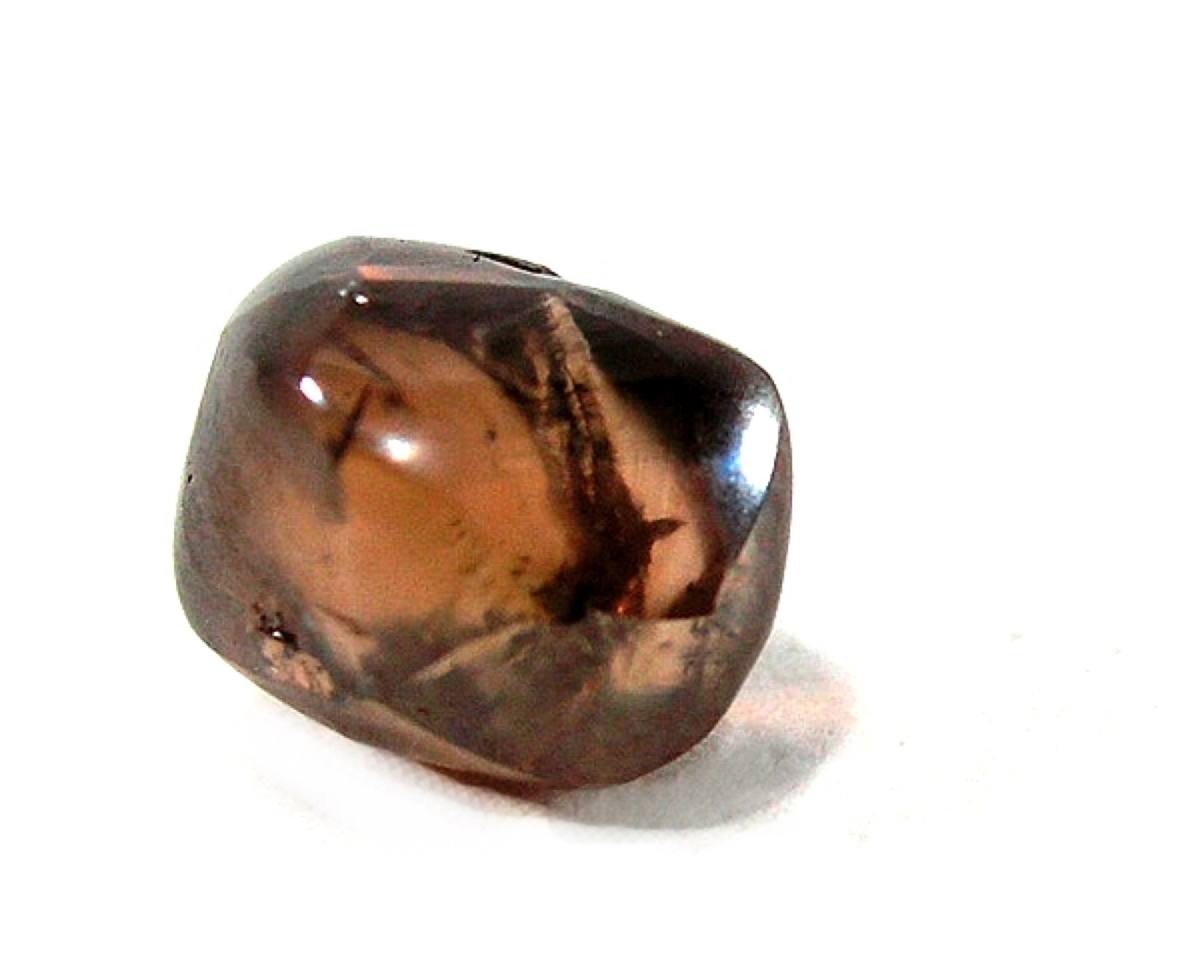
Mohs 10, adamantine luster, high dispersion (fire). Single refractive. Most-confused with moissanite (doubly refractive, even higher fire) and white sapphire.
Photo: Robert M. Lavinsky · wikimedia
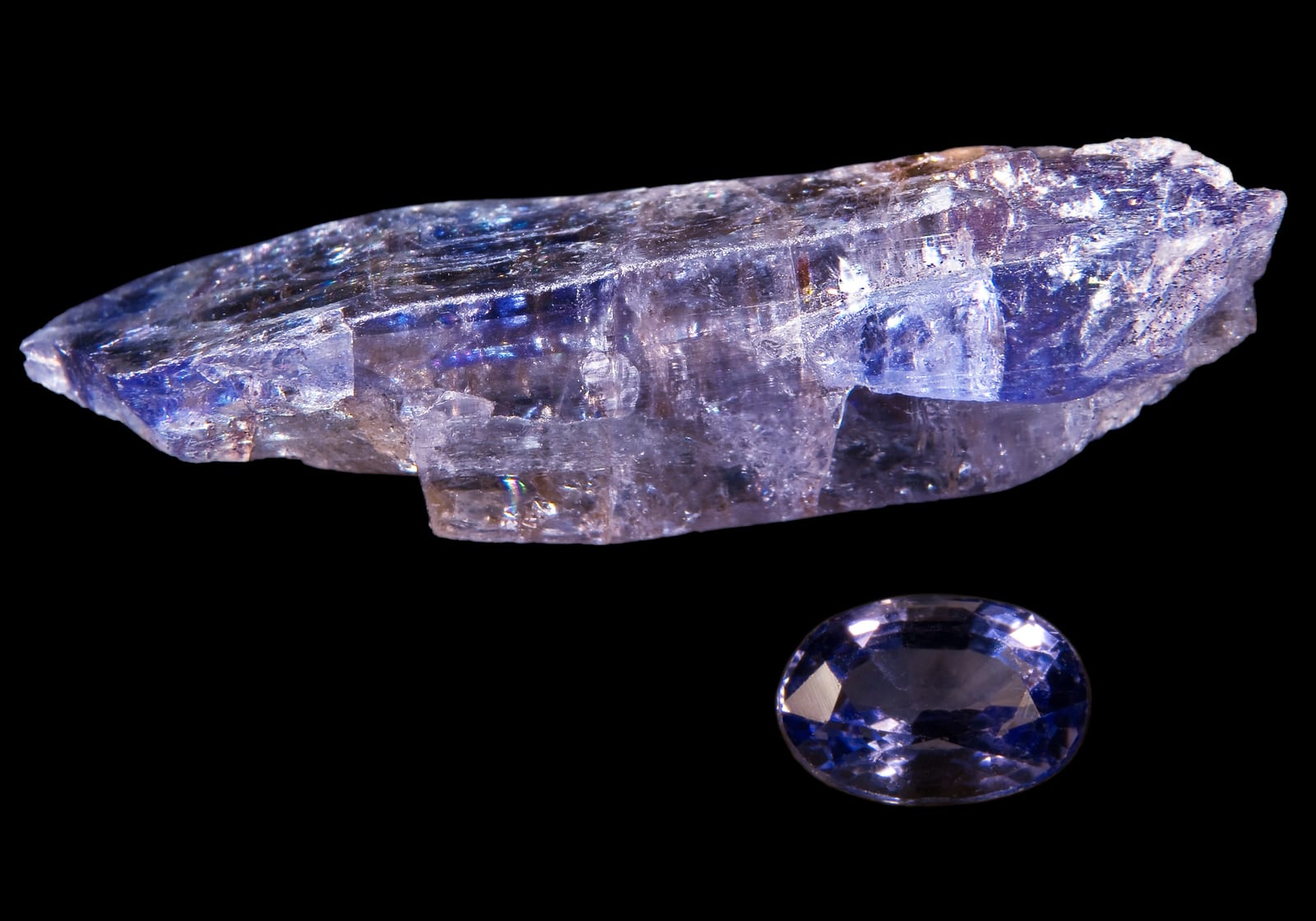
Zoisite. Mohs 6-7. Strongly pleochroic: blue, violet, and burgundy from different angles. Almost all is heat-treated to enhance the blue.
Photo: Wikipedia contributors · wikipedia
Hardness and refractive index do the heavy lifting. Specific gravity and pleochroism decide the close calls.
| Specimen | Hardness (Mohs) | Luster | Field tell |
|---|---|---|---|
| Ruby | 9 | vitreous | RI 1.76-1.77, very high SG, red fluorescence under longwave UV. |
| Sapphire | 9 | vitreous | RI 1.76-1.77, blue or fancy colors, sharp facet edges. |
| Emerald | 7.5-8 | vitreous | Beryl RI 1.57-1.59, often has 'jardin' inclusions, almost always oiled. |
| Aquamarine | 7.5-8 | vitreous | Beryl RI 1.57-1.59, pale-to-medium blue, lower SG than blue topaz. |
| Diamond | 10 | adamantine to greasy | Mohs 10, adamantine luster, high fire, single refractive. |
| Tanzanite | 6.5-7 | vitreous | Pleochroic blue/violet/burgundy from different viewing angles. |
Ruby
Red corundum. Mohs 9, RI 1.76-1.77. Often heat-treated. Burmese is the classic origin.
Sapphire
Any non-red corundum. Default blue, but pink, yellow, padparadscha exist. Mohs 9.
Emerald
Green beryl. Mohs 7.5-8. Almost always oiled or resin-filled at the surface.
Aquamarine
Blue beryl. Mohs 7.5-8. Higher RI than topaz, gentler color zoning than sapphire.
Diamond
Mohs 10, adamantine luster, exceptional dispersion. Most-confused with moissanite (higher dispersion) and white zircon.
Tanzanite
Zoisite variety, Mohs 6-7. Strong pleochroism (blue/violet/burgundy). Only one mine: Merelani, Tanzania.
Topaz
Mohs 8, RI 1.61-1.63. Blue topaz is almost always irradiated; imperial topaz is sherry-pink.
Garnet
Mohs 6.5-7.5, RI 1.74-1.83 (highest among common gems). High specific gravity is the giveaway.
Peridot
Olivine, Mohs 6.5-7. Distinctive yellowish-green, strongly doubly refractive (doubled facet edges).
Two gems can share a color but not a refractive index. Read color, then run the next test.
How the cut stone returns light is the second cue. Adamantine + high fire is a tiny club.
White or neutral background, no flash, both face-up and profile if possible. JPG, PNG, or WebP up to 6MB.
Burmese, Colombian, Australian. Origin shifts treatment expectations and weighting heavily.
Each result: species/variety, Mohs hardness, RI hint, and the property (RI, SG, pleochroism, fluorescence) to confirm.
Species ID from a photo is reasonable for distinctive gems and the major color groups. Natural vs synthetic, origin (Burmese vs Mozambique ruby), and treatment level all need lab work.
The RockHoundR app works offline, saves every find to your map, and overlays them onto 250,000+ rockhounding spots with geology and land-access data.


Almost never. Flame-fusion and hydrothermal lab-grown corundum, beryl, and spinel are visually indistinguishable from natural in most photos. The species ID stays accurate (a lab-grown ruby is still corundum), but the natural vs synthetic question requires a refractometer, polariscope, microscope inclusion study, FTIR spectrometer, or a recognized lab report.
Hardness and refractive index are the two most diagnostic gem properties after color. Diamond at Mohs 10 with adamantine luster reads completely differently from moissanite (lower SG, doubly refractive, even higher dispersion). Sapphire at RI 1.76-1.77 reads differently from aquamarine at RI 1.57-1.58. Knowing both, even approximately, lets you confirm the call with a refractometer or scratch test.
Often yes from a clean photo. Ruby is corundum (Mohs 9, RI 1.76-1.77) with strong red fluorescence under longwave UV. Almandine and pyrope garnets are softer (Mohs 7-7.5) with lower RI (1.74-1.83 depending on species) and no UV fluorescence. The identifier names the next test in the description (UV, refractometer, SG) so you can confirm.
Yes, with lower confidence on small cabs and beads where dispersion and facet behavior are not visible. Cabbed material is identified mostly on color, luster, and inclusion patterns (cat's eye, asterism, jardin, dendritic moss). Faceted stones identify more reliably because cut quality, dispersion, and birefringence can be read.
The crystal identifier is tuned for raw, terminated crystal specimens with visible habit. It leads with prism, termination, and varietal names from the rough form. This gemstone identifier is tuned for cut, faceted, or polished material, where habit is gone and color/luster/dispersion carry the ID. Use whichever matches what you are holding.
No. Carat weight needs a scale, and value depends on natural vs synthetic, treatment, origin, cut quality, and the current market. All of those need a gemological lab and a market professional, not a photo. The identifier covers species and variety identification only.
Property data and reference imagery used on this page are cross-checked against the following sources.
Primary industry reference for species properties (RI, SG, hardness, optical character).
Cross-reference for mineralogy and locality information.
Open reference tables for refractive index, specific gravity, and dispersion used in the comparison.