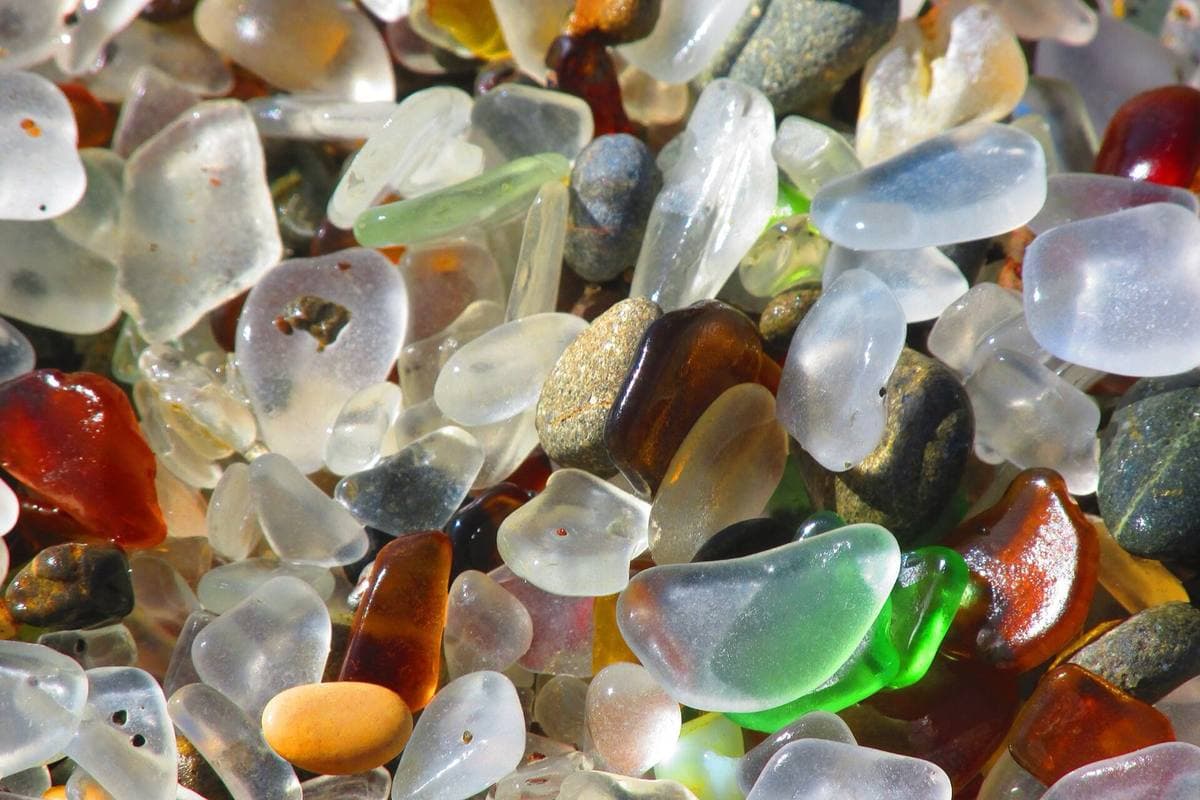
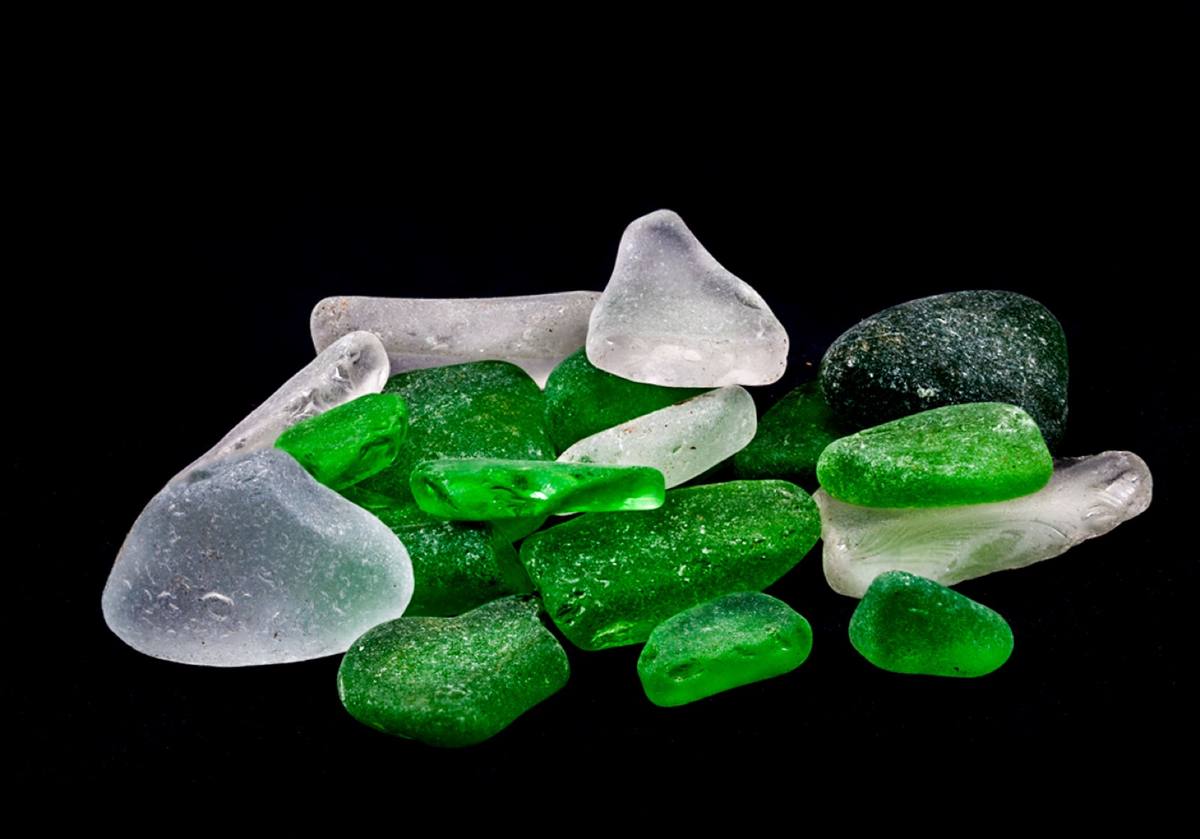
Beach glass is broken glass that waves and sand have tumbled until its edges are rounded and its surface is frosted. Pieces from salt water are called sea glass, and pieces from fresh water, which are often less frosted, are called beach glass. The most common colors are green, brown, white and clear, from beverage bottles; red turns up about once in 5,000 pieces and orange about once in 10,000. Small C-shaped marks across the surface are one of the most reliable signs a piece is natural, and it is most often used in jewelry.
Is this beach glass?
3-step field checkRun through these checks against the specimen in your hand. The more boxes tick, the more confident the ID.
- 1Read the textureLook at a fresh break with a hand lens. Texture: Frosted surface with C-shaped marks; edges rounded by tumbling. Grain size: glassy.
- 2Pick out the mineralsComposition: Glass from broken bottles, tableware, windows and windshields. Identify the two or three most abundant grains.
- 3Match the color rangeCompare against the expected color range: green, brown, white, clear.
All properties
- Uses
- Jewelry, Decorative
- Host rock
- Beaches of oceans (sea glass) and freshwater lakes (beach glass)
- Texture
- Frosted surface with C-shaped marks; edges rounded by tumbling
- Grain size
- glassy
- Composition
- Glass from broken bottles, tableware, windows and windshields
Where rockhounds find beach glass
9 mapped spotsField-hunting tip
Where it forms: Beaches of oceans (sea glass) and freshwater lakes (beach glass). In the U.S., the densest reported localities are in Wisconsin, Michigan, Indiana. Start trip planning there.
More beach glass photos
Common questions
Can I find beach glass in the United States?+
What kind of rock does beach glass form in?+
What is beach glass used for?+
Find beach glass on the map
RockHoundR shows mapped rockhounding spots, access rules, and lets you log every find.