
Hexagonite is the red to pink, lilac to purple manganese-bearing variety of tremolite, an amphibole, also called mangan-tremolite. Manganese gives it its color, and it is pleochroic, showing different shades of blue, violet, purple or red depending on the viewing direction. It was named when its structure was thought to be hexagonal, but like other tremolite it is monoclinic. It comes mainly from the Balmat-Edwards zinc district of St. Lawrence County, New York, and has also been found in the Chýnov caves of the Czech Republic. It has a hardness of 5 to 6 and has been faceted as a gemstone.
Is this hexagonite?
5-step field checkRun through these checks against the specimen in your hand. The more boxes tick, the more confident the ID.
- 1Test the hardnessTry to scratch hexagonite with a known reference. Hexagonite sits at Mohs 5-6, softer than the next harder reference, harder than the previous one.
- 2Check the streakDrag the specimen across an unglazed porcelain plate. Streak: white.
- 3Read the lusterHold the specimen under a strong light. Luster: vitreous.
- 4Match the color rangeCompare against the expected color range: pink, lilac, purple, red.
- 5Look at form & habitCrystal system: monoclinic.
All properties
- Chemical formula
- Ca₂Mg₅Si₈O₂₂(OH)₂
- Mohs hardness
- 5-6
- Density
- 2.99-3.03 g/cm³
- Streak
- White
- Luster
- Vitreous
- Transparency
- Transparent
- Crystal system
- Monoclinic
- Cleavage
- Perfect on {110}
- Uses
- Gemstone
Where rockhounds find hexagonite
2 mapped spotsClassic worldwide localities
- Balmat-Edwards zinc district, St. Lawrence County, New York, USA
- Chýnov caves, Czech Republic
Field-hunting tip
In the U.S., the densest reported localities are in New York. Start trip planning there.
More hexagonite photos
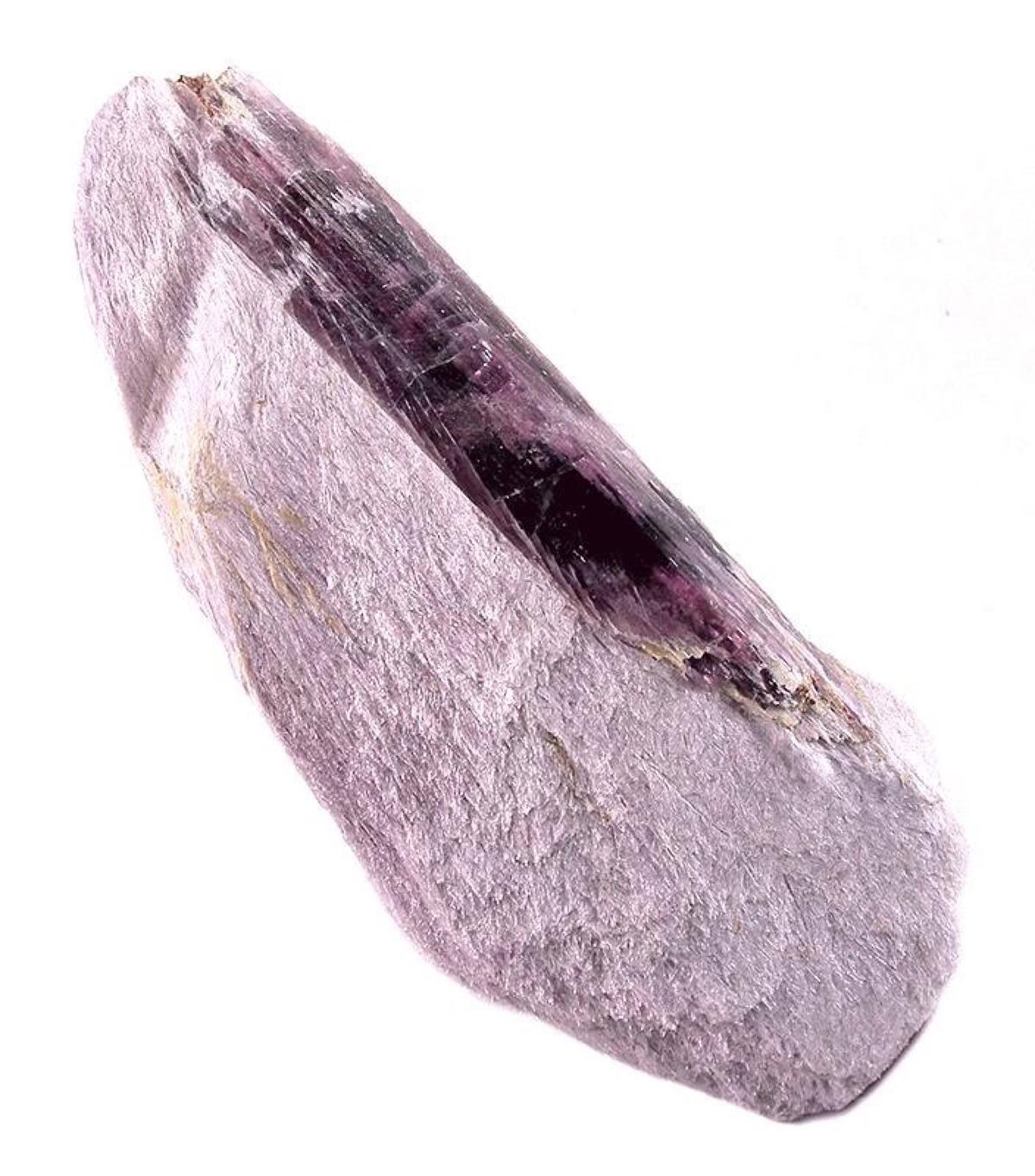
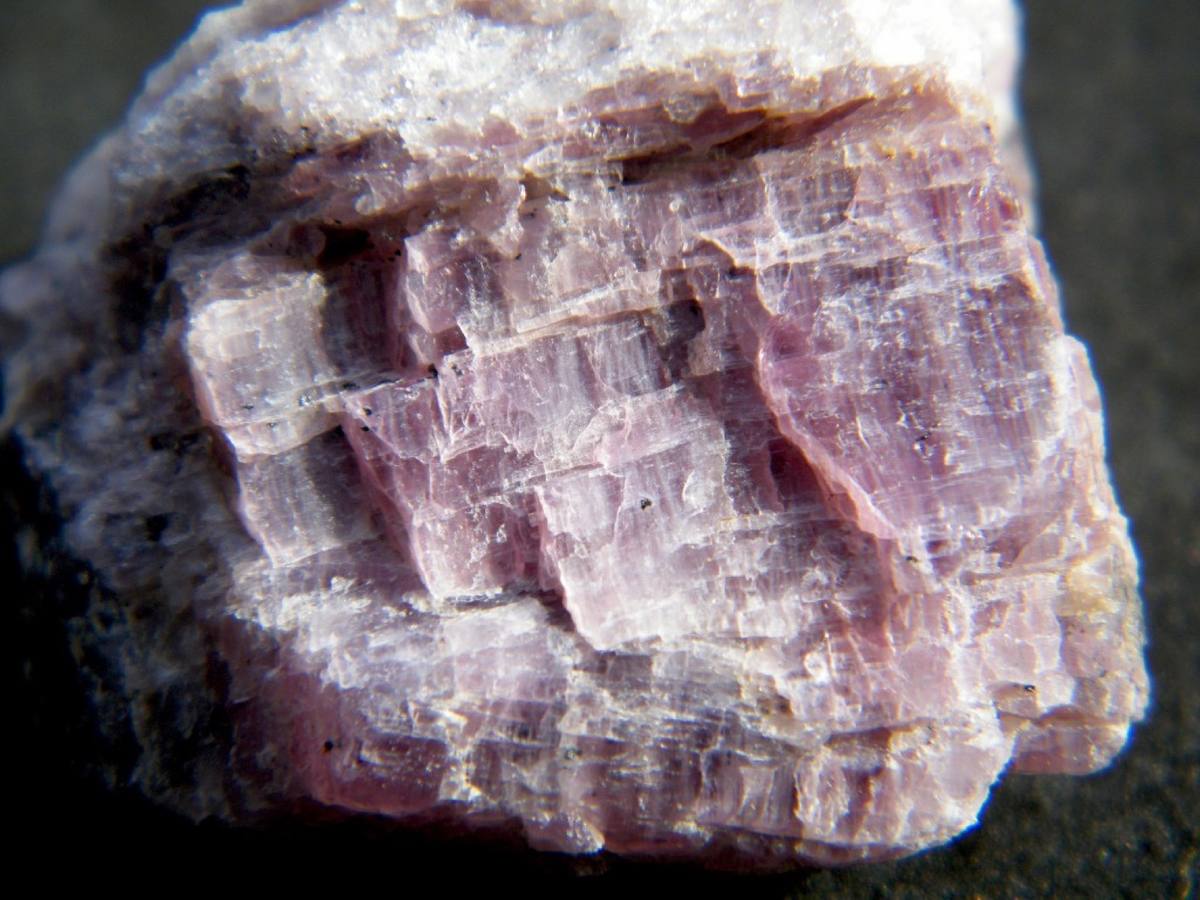
Common questions
How do you identify hexagonite?+
Where is hexagonite found?+
Can I find hexagonite in the United States?+
What is hexagonite used for?+
Find hexagonite on the map
RockHoundR shows mapped rockhounding spots, access rules, and lets you log every find.

