
A shark tooth fossil is composed primarily of apatite, which replaced the original calcium phosphate structure over millions of years. Collectors hunt for them in sedimentary riverbeds, beaches, and phosphate mines where prehistoric layers are exposed. They range widely in size, from small, sharp serrated teeth to the palm-sized tooth of the extinct megalodon.
Spotting shark tooth in the field
Field marks- 1
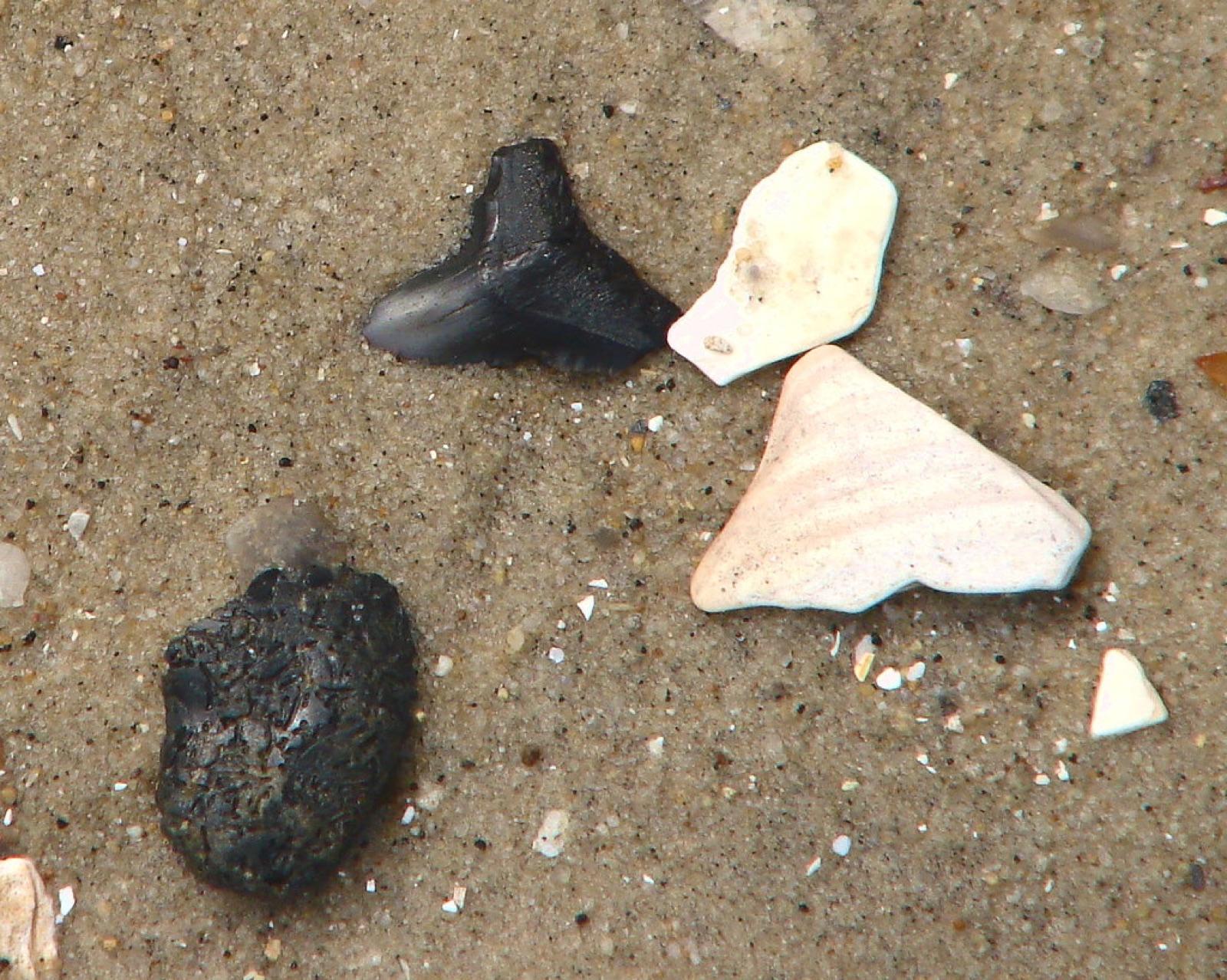
Glossy enamel crown, usually black, grey or brown, over a duller porous root
- 2
Bilaterally symmetrical triangle with a defined cutting edge, often serrated
- 3
The enamel shine catches light differently from every pebble around it
Hunt the shine, not the shape. In wet gravel a shark tooth reflects light in a way that nothing else on the beach does, and experienced hunters spot that glint long before they resolve the outline. Work the low tide line, the base of eroding cliffs, and river gravel bars, and use a sifting screen in the shallows where teeth concentrate. A rising tide pushes fresh material up; a falling tide exposes it. Black teeth are not burned or old in the way people assume, they simply took on minerals from the sediment.
Before you collect
Florida requires a state fossil permit to collect vertebrate fossils, including shark teeth, from state lands and waterways such as the Peace River. It is inexpensive and issued by the Florida Museum of Natural History, but collecting without one is a violation. Check the rules for the specific water you plan to hunt.
Straight answers
- Is it worth cutting?
- Not a cutting material. Clean gently with water and a soft brush. Avoid acids, which attack the porous root, and avoid consolidants unless a piece is actively crumbling.
- What is it really worth?
- Common species are inexpensive and abundant. Size, an undamaged tip, complete serrations and an intact root are what separate a display tooth from a jar of beach finds.
- Can you legally keep it?
- Fossil sharks are vertebrates, which matters enormously on federal land, where vertebrate fossils cannot be collected without a permit. Most productive American hunting is on beaches, private land and fee-dig sites where different rules apply, and several states have their own systems.
Where it is worth going
- Venice BeachSarasota County, Florida
The best-known beach hunting in the country. Teeth wash in constantly, and sifting in the shallows outproduces walking the sand.
- Calvert CliffsChesapeake Bay, Maryland
Miocene cliffs shedding teeth onto the beach. Collect from the beach, never dig into the cliffs, which are unstable and have killed people.
- AuroraBeaufort County, North Carolina
Spoil material from the phosphate mine, made available to the public through the local fossil museum.
Often found alongside shark tooth
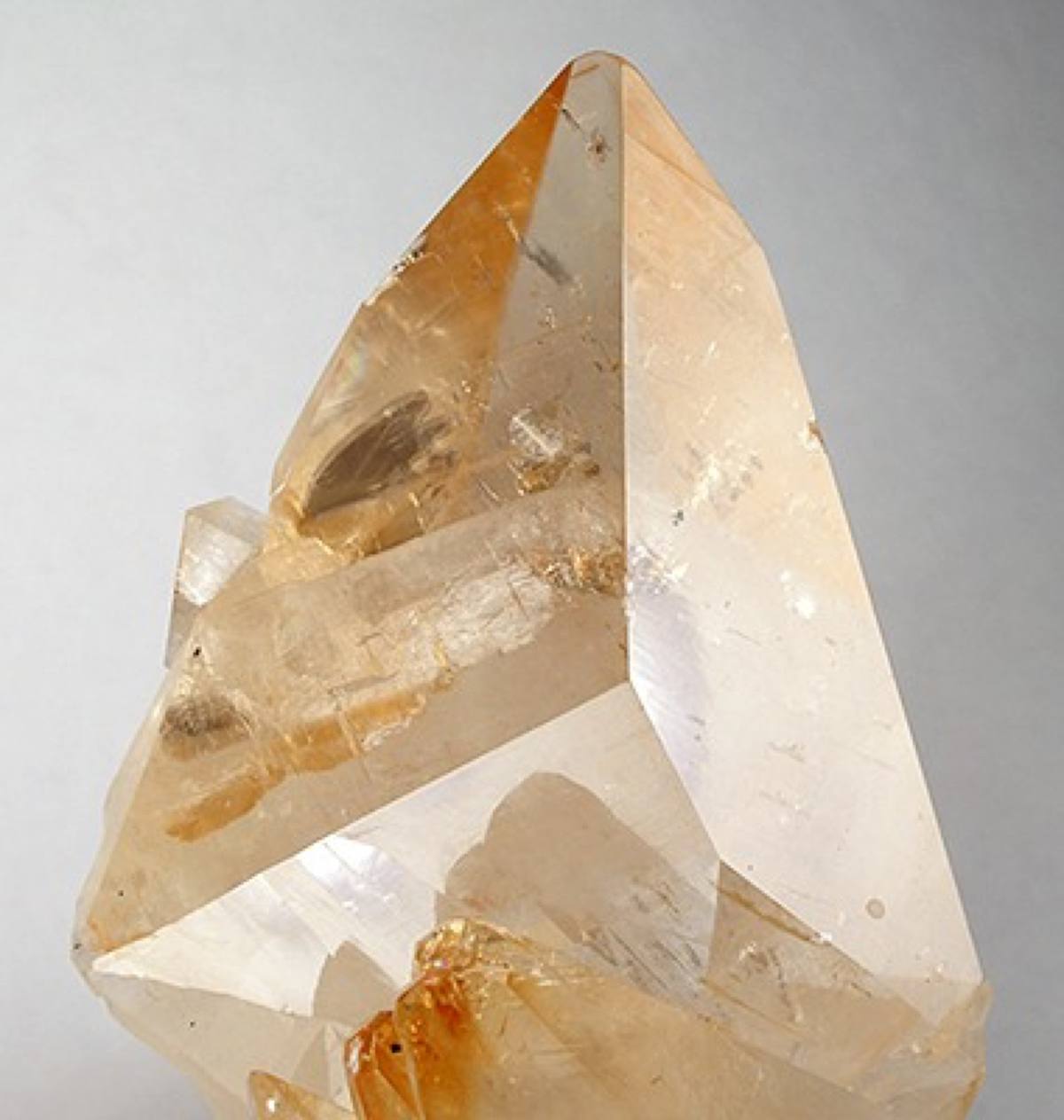
Minerals reported to co-occur with shark tooth. Spotting these in float or country rock is a strong cue you are in the right ground.
All properties
- Mohs hardness
- 3-5
- Density
- 2.5-3.0 g/cm³
- Luster
- Dull to waxy
- Transparency
- Opaque
- Rarity
- Common
- Uses
- Collector, Decorative, Jewelry
- Host rock
- sedimentary deposits
- Organism
- Sharks
- Age
- Late Ordovician to recent; most fossil shark teeth found are Cenozoic
Where rockhounds find shark tooth
17 mapped spotsClassic worldwide localities
- Florida, USA
- South Carolina, USA
- Morocco
- Chile
- Maryland, USA
U.S. states with shark tooth
Each link opens a state-specific list of mapped rockhounding spots that produce shark tooth.
Field-hunting tip
Where it forms: sedimentary deposits. If you start seeing phosphate minerals, calcite, sedimentary matrix in float, you are in the right ground. In the U.S., the densest reported localities are in Maryland, Florida, New Jersey. Start trip planning there.
More shark tooth photos
Common questions
How do you identify shark tooth?+
Where is shark tooth found?+
Can I find shark tooth in the United States?+
What minerals are found with shark tooth?+
What kind of rock does shark tooth form in?+
What is shark tooth used for?+
Find shark tooth on the map
RockHoundR shows mapped rockhounding spots, access rules, and lets you log every find.

