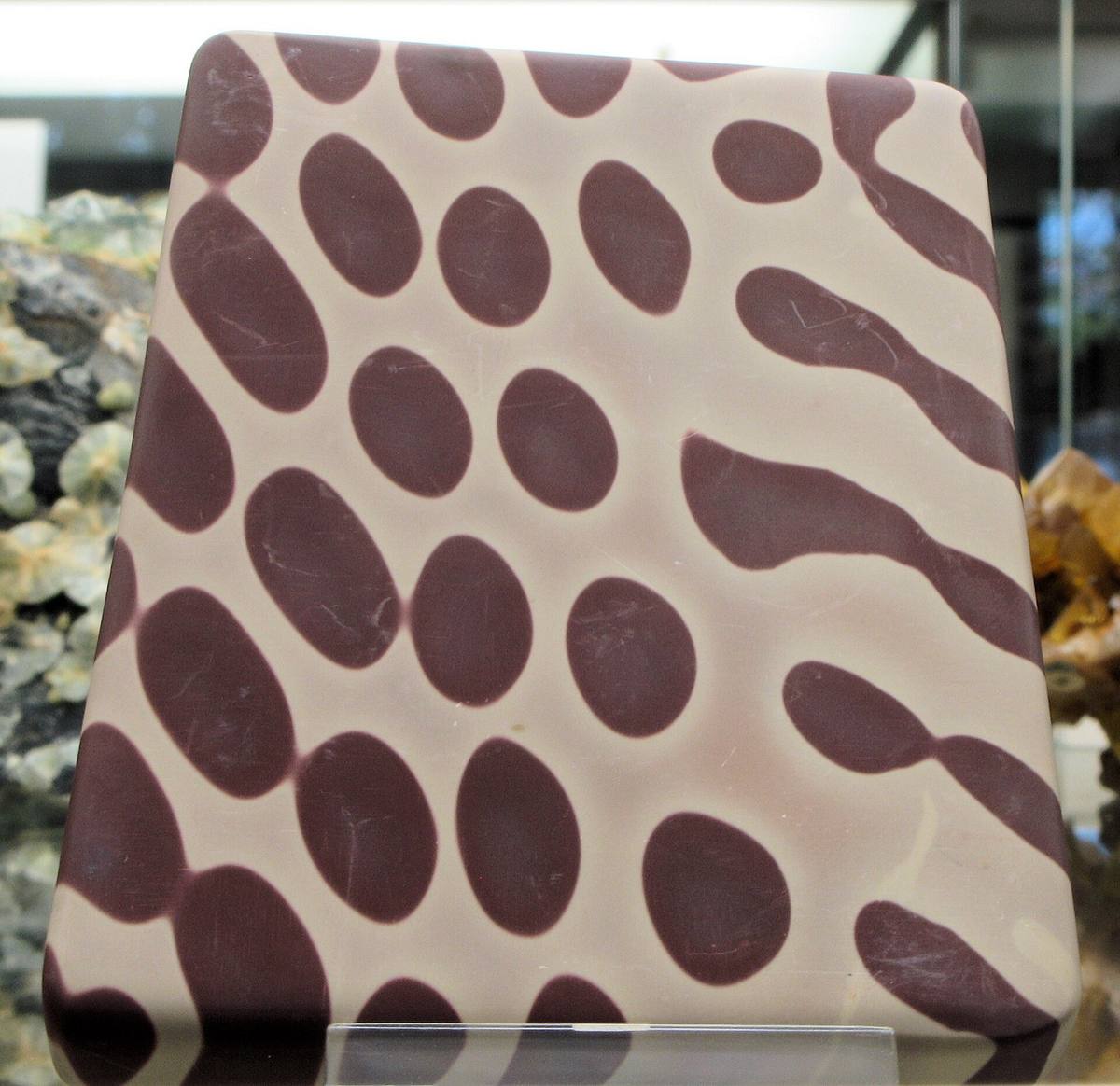
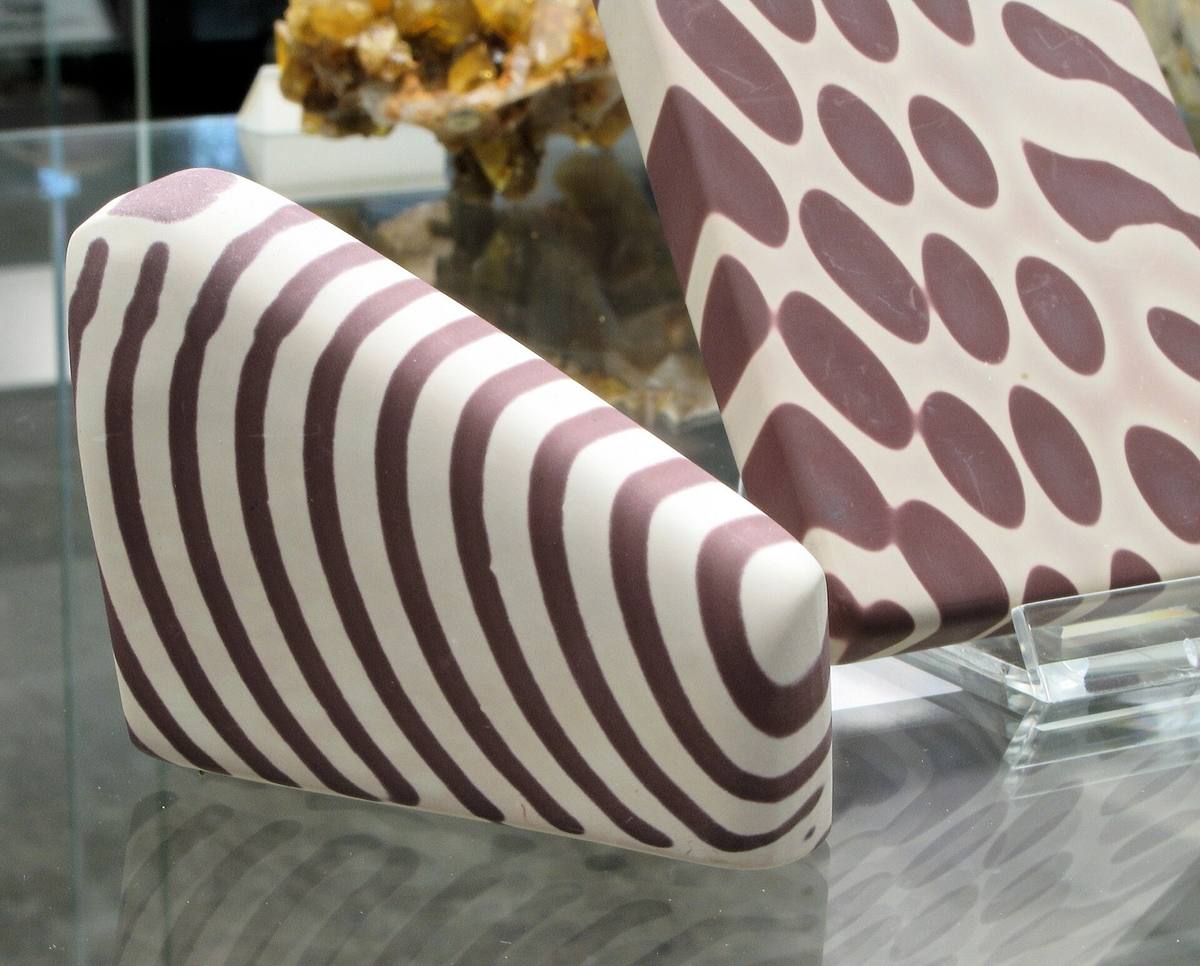
Zebra rock is an ornamental clayey siltstone unique to northern Western Australia, found around and in Lake Argyle south of Kununurra. It forms beds 5 to 15 cm thick in the Johnny Cake Member of the early Ediacaran Ranford Formation, banded in diffuse red and grey stripes 4 to 25 mm thick, with the red coming from hematite. How the banding formed is debated: it has been explained as marine clay, groundwater or hydrothermal alteration, and, in a 2020 study, an ancient waterlogged soil. It is widely used in jewelry and sculpture.
Is this zebra rock?
3-step field checkRun through these checks against the specimen in your hand. The more boxes tick, the more confident the ID.
- 1Read the textureLook at a fresh break with a hand lens. Texture: Diffuse red and grey bands 4 to 25 mm thick. Grain size: clayey siltstone.
- 2Pick out the mineralsComposition: Clayey siltstone; red bands colored by hematite. Identify the two or three most abundant grains.
- 3Match the color rangeCompare against the expected color range: red, gray, white.
Often found alongside zebra rock
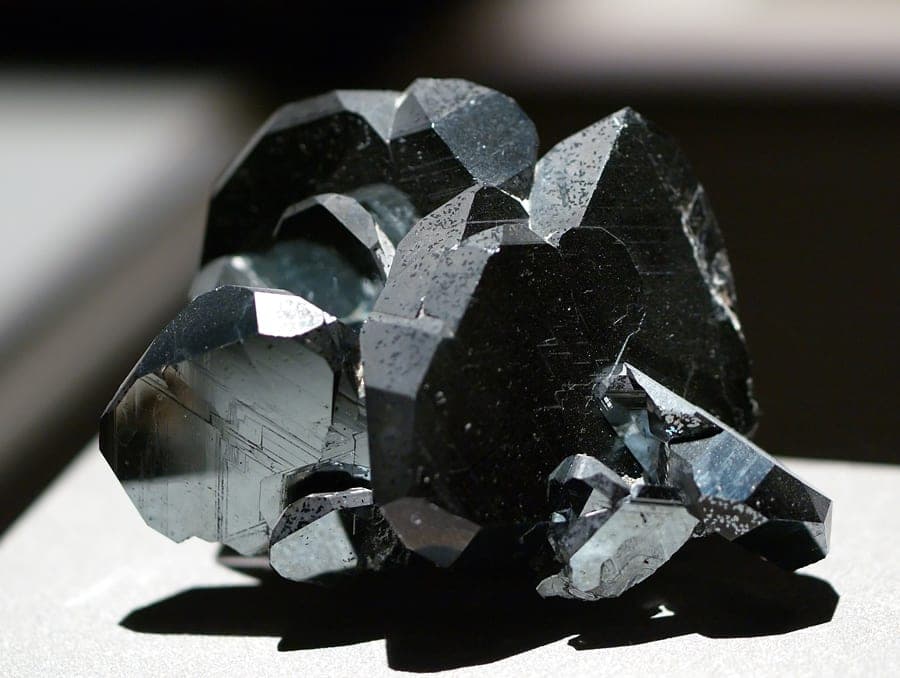
Minerals reported to co-occur with zebra rock. Spotting these in float or country rock is a strong cue you are in the right ground.
All properties
- Uses
- Jewelry, Decorative
- Host rock
- Johnny Cake Member of the early Ediacaran Ranford Formation
- Texture
- Diffuse red and grey bands 4 to 25 mm thick
- Grain size
- clayey siltstone
- Composition
- Clayey siltstone; red bands colored by hematite
Where rockhounds find zebra rock
Classic worldwide localities
- Lake Argyle, south of Kununurra, Western Australia
Field-hunting tip
Where it forms: Johnny Cake Member of the early Ediacaran Ranford Formation. If you start seeing hematite in float, you are in the right ground.
More zebra rock photos
Common questions
Where is zebra rock found?+
What minerals are found with zebra rock?+
What kind of rock does zebra rock form in?+
What is zebra rock used for?+
Find zebra rock on the map
RockHoundR shows mapped rockhounding spots, access rules, and lets you log every find.