
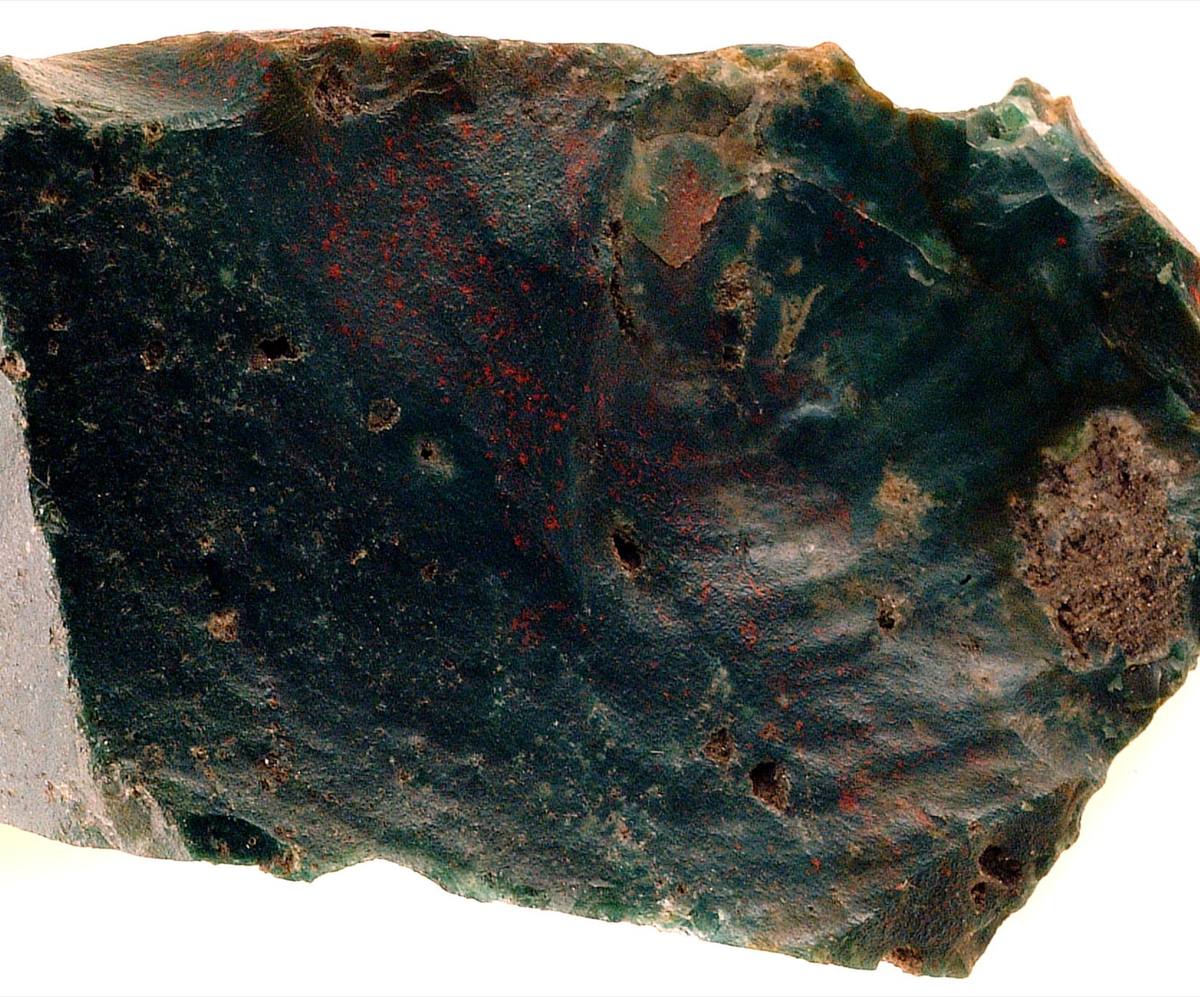
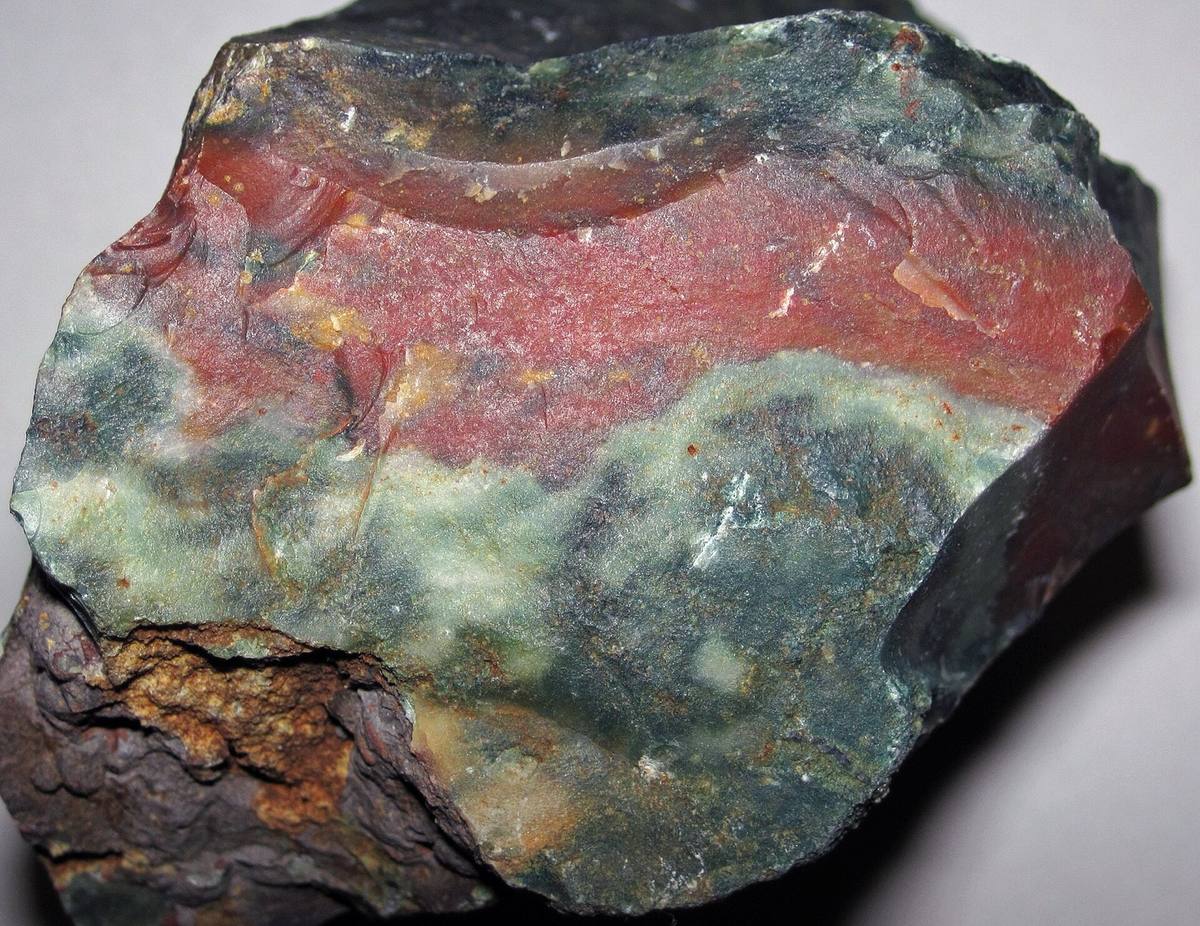
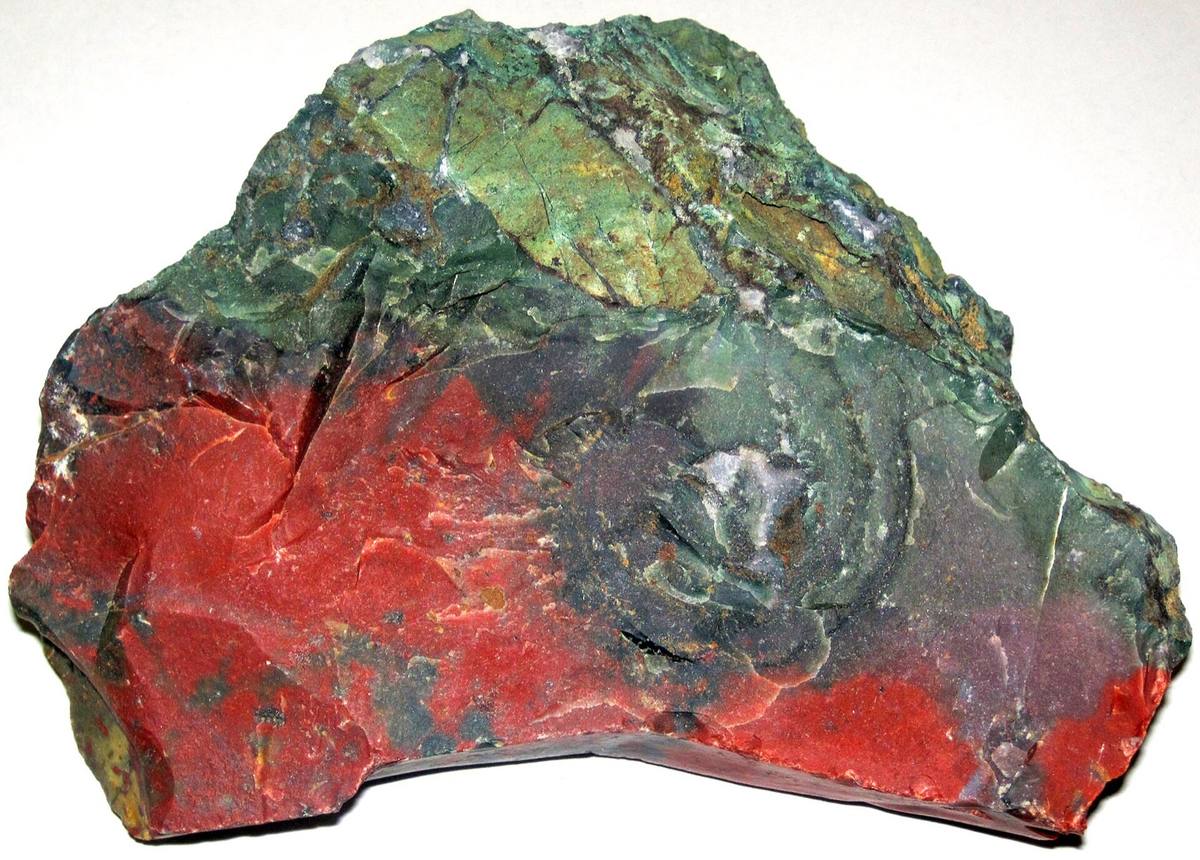
Bloodstone is a dense, green variety of chalcedony characterized by distinct red spots of iron oxide inclusions. Collectors prize it for its unique appearance, which resembles droplets of blood on a deep green background, making it a classic choice for lapidary work and cameos.
Spotting bloodstone in the field
Field marks- 1
Dark green opaque chalcedony flecked with distinct blood-red spots
- 2
Red spots are iron oxide and sit sharply against the green ground
- 3
Opaque to barely translucent, waxy, hardness 7
Also called heliotrope. The green comes from chlorite or amphibole inclusions and the red spots from iron oxide, and the contrast is the whole point: green chalcedony without the red flecks is just green chalcedony, and the difference in value is large. Classic material comes from India, with occurrences in Scotland, Brazil and scattered US localities including Oregon and California.
Straight answers
- Is it worth cutting?
- Cuts and polishes well. Orient cabs so the red flecks land on the dome rather than being ground away at the edges.
- What is it really worth?
- Inexpensive to moderate. Well-distributed bright red spots on a deep green ground carry the premium, and evenly spotted material is much rarer than the tumbled stones suggest.
- Can you legally keep it?
- Ordinary personal-use collecting rules apply.
Often confused with
Bloodstone vs. its common look-alikes, and how to tell them apart in the field.
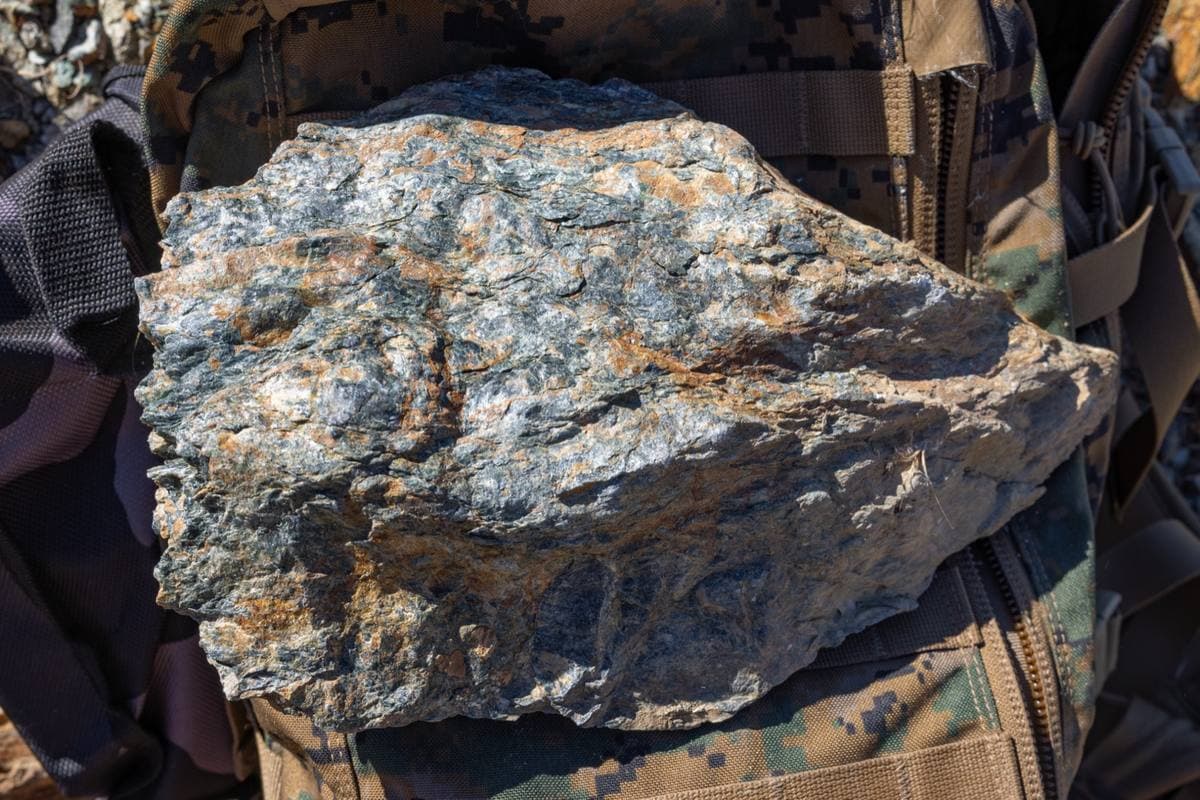
Often found alongside bloodstone
Minerals reported to co-occur with bloodstone. Spotting these in float or country rock is a strong cue you are in the right ground.
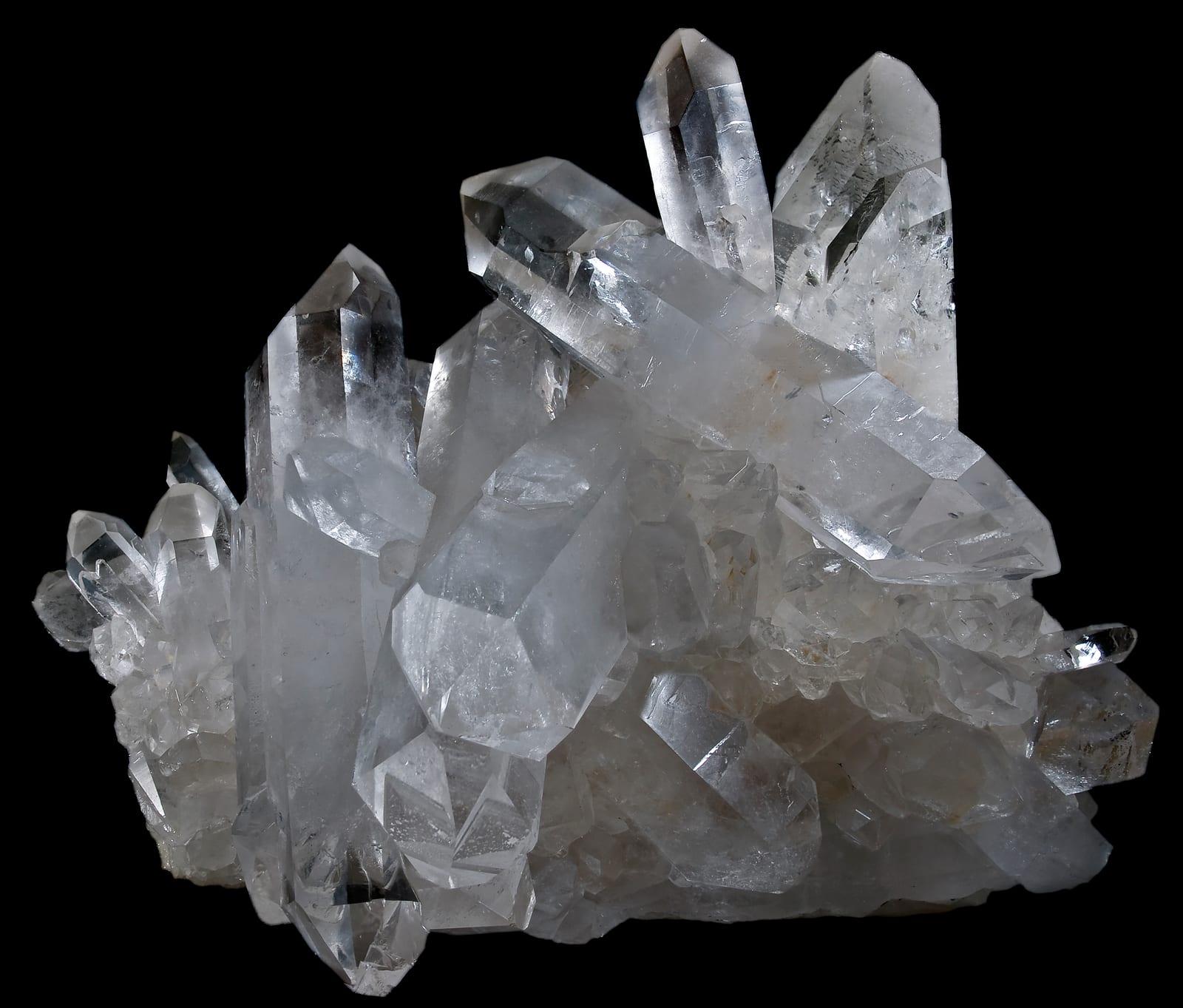
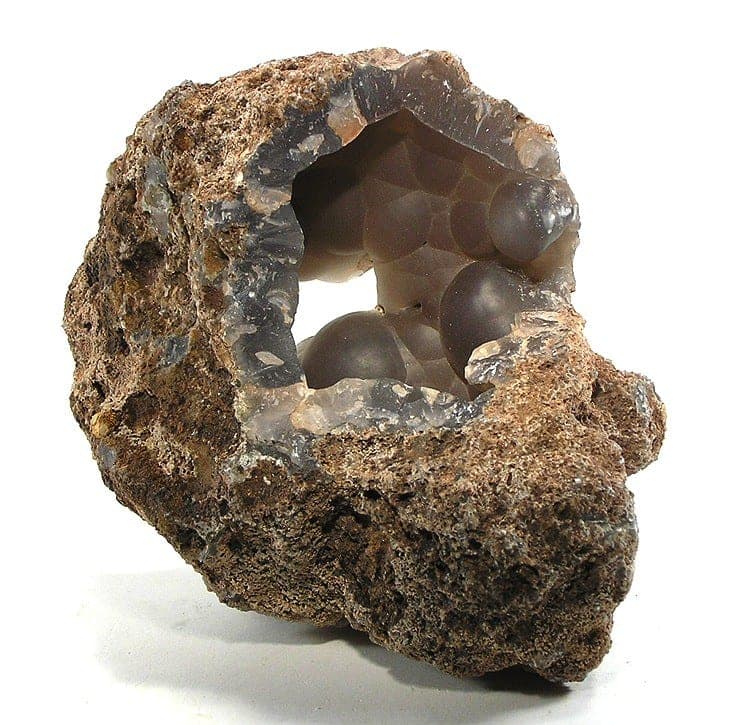
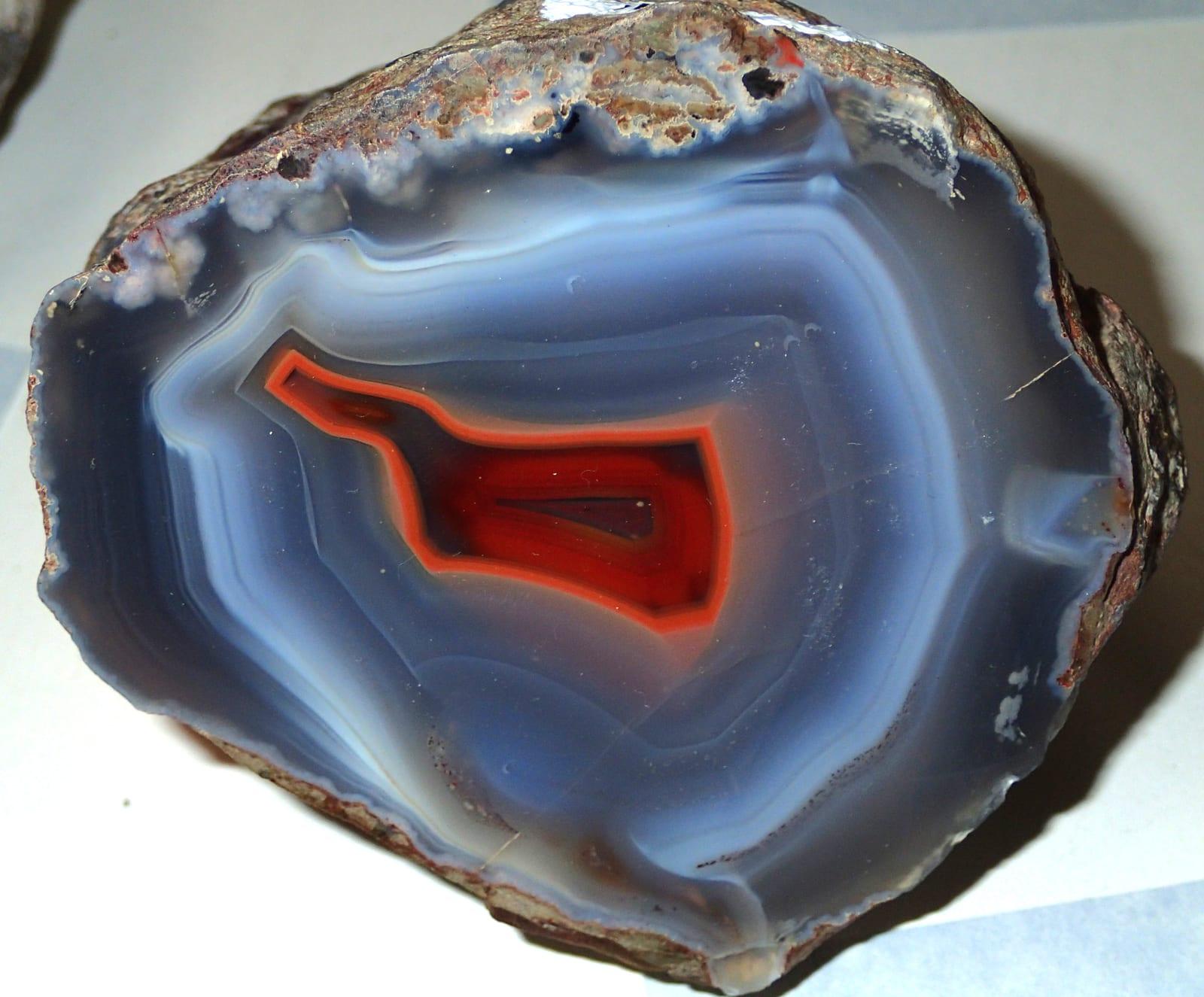
All properties
- Chemical formula
- SiO₂
- Mohs hardness
- 6.5-7
- Density
- 2.58-2.64 g/cm³
- Streak
- White
- Luster
- Waxy
- Transparency
- Opaque
- Crystal system
- Trigonal
- Crystal habit
- Massive
- Cleavage
- None
- Rarity
- Common
- Uses
- Lapidary, Decorative, Collector
- Host rock
- sedimentary rocks and hydrothermal veins
Where rockhounds find bloodstone
13 mapped spotsClassic worldwide localities
- India
- Brazil
- Australia
- USA
- Madagascar
Field-hunting tip
Where it forms: sedimentary rocks and hydrothermal veins. If you start seeing quartz, chalcedony, agate in float, you are in the right ground. Typical habit: massive. Train your eye for that shape before scanning the outcrop. In the U.S., the densest reported localities are in Oregon, California, New York. Start trip planning there.
More bloodstone photos
Common questions
How do you identify bloodstone?+
Where is bloodstone found?+
Can I find bloodstone in the United States?+
What rocks look like bloodstone?+
What minerals are found with bloodstone?+
What kind of rock does bloodstone form in?+
What is bloodstone used for?+
Find bloodstone on the map
RockHoundR shows mapped rockhounding spots, access rules, and lets you log every find.

