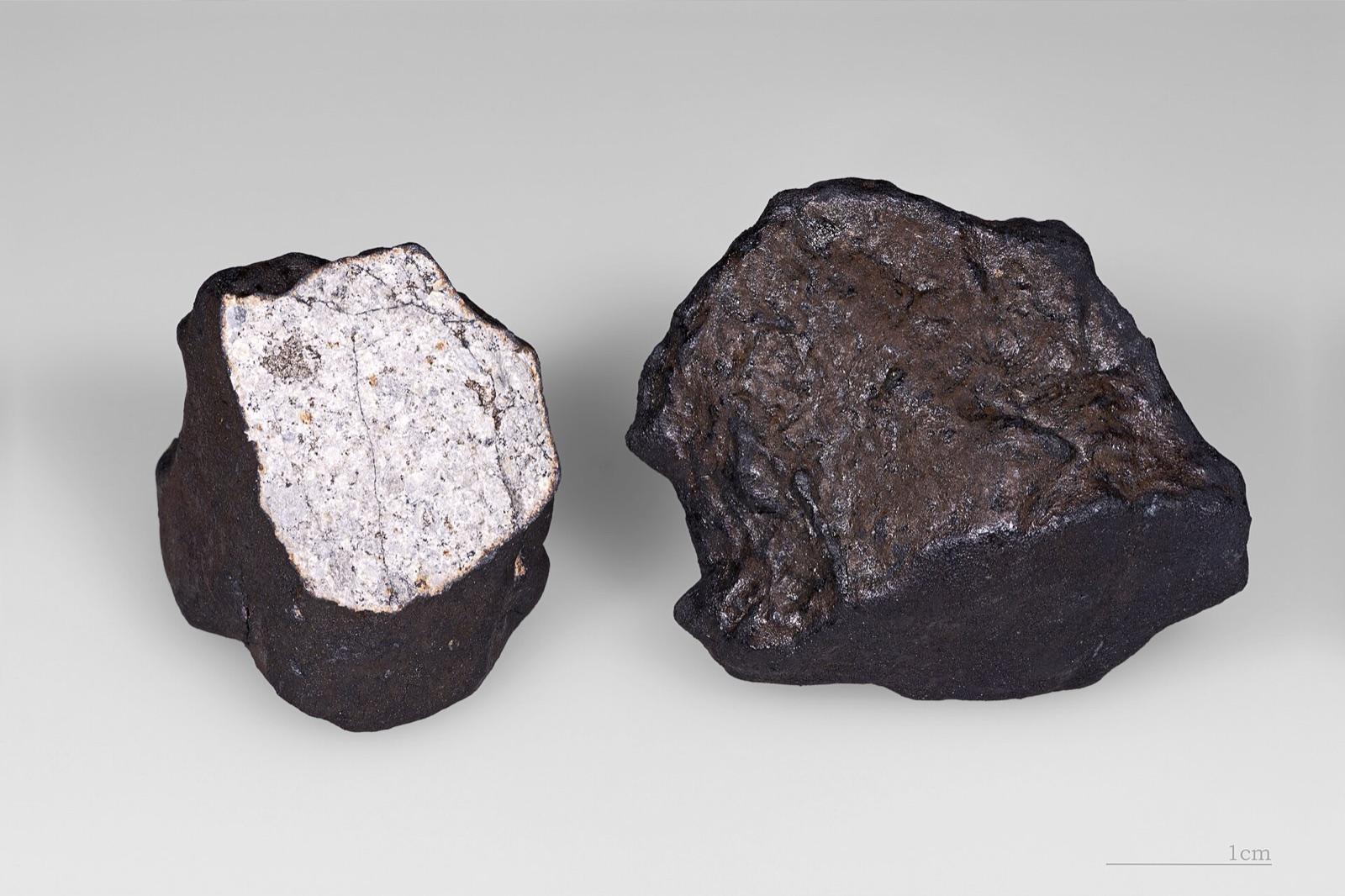
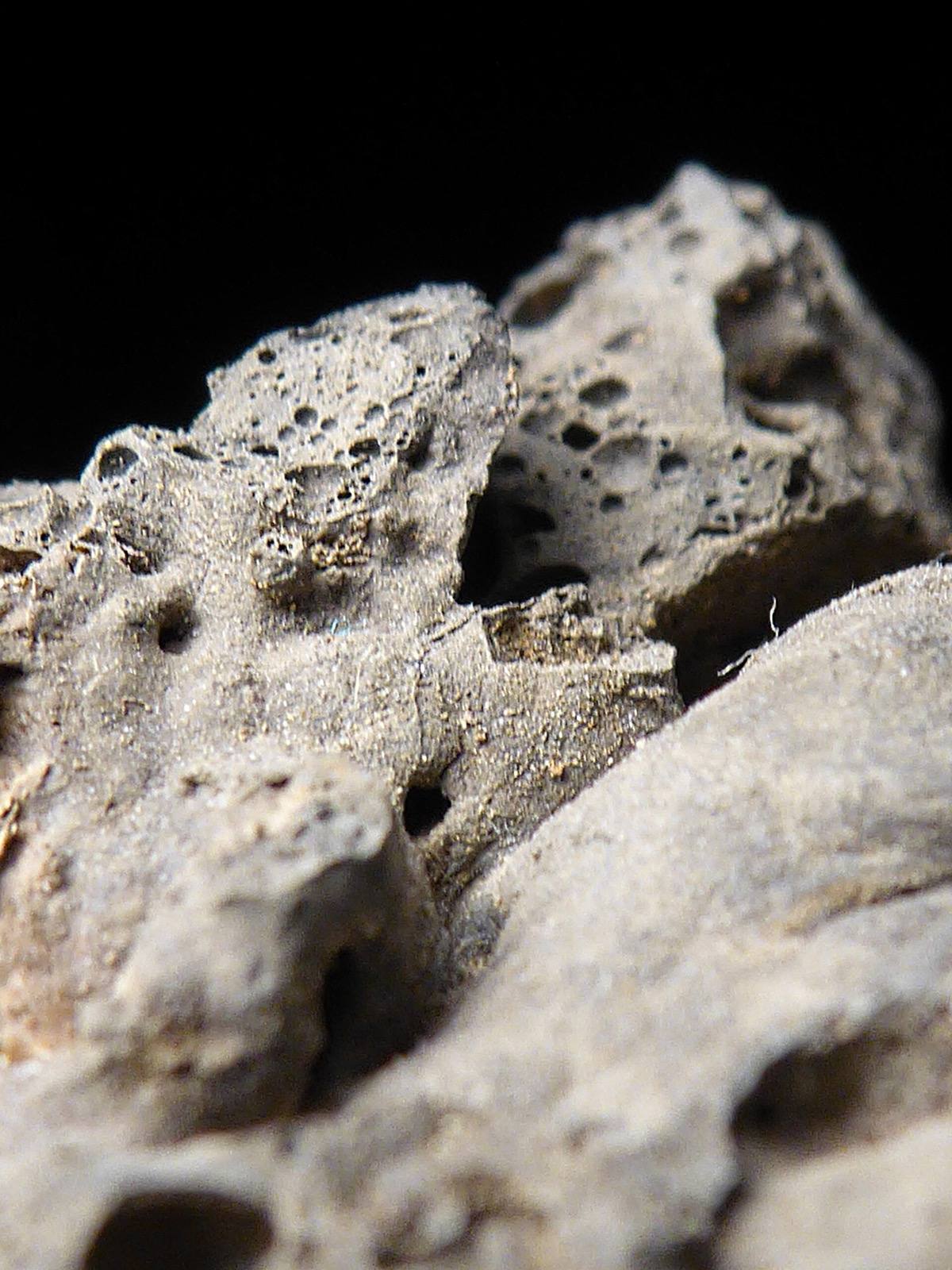
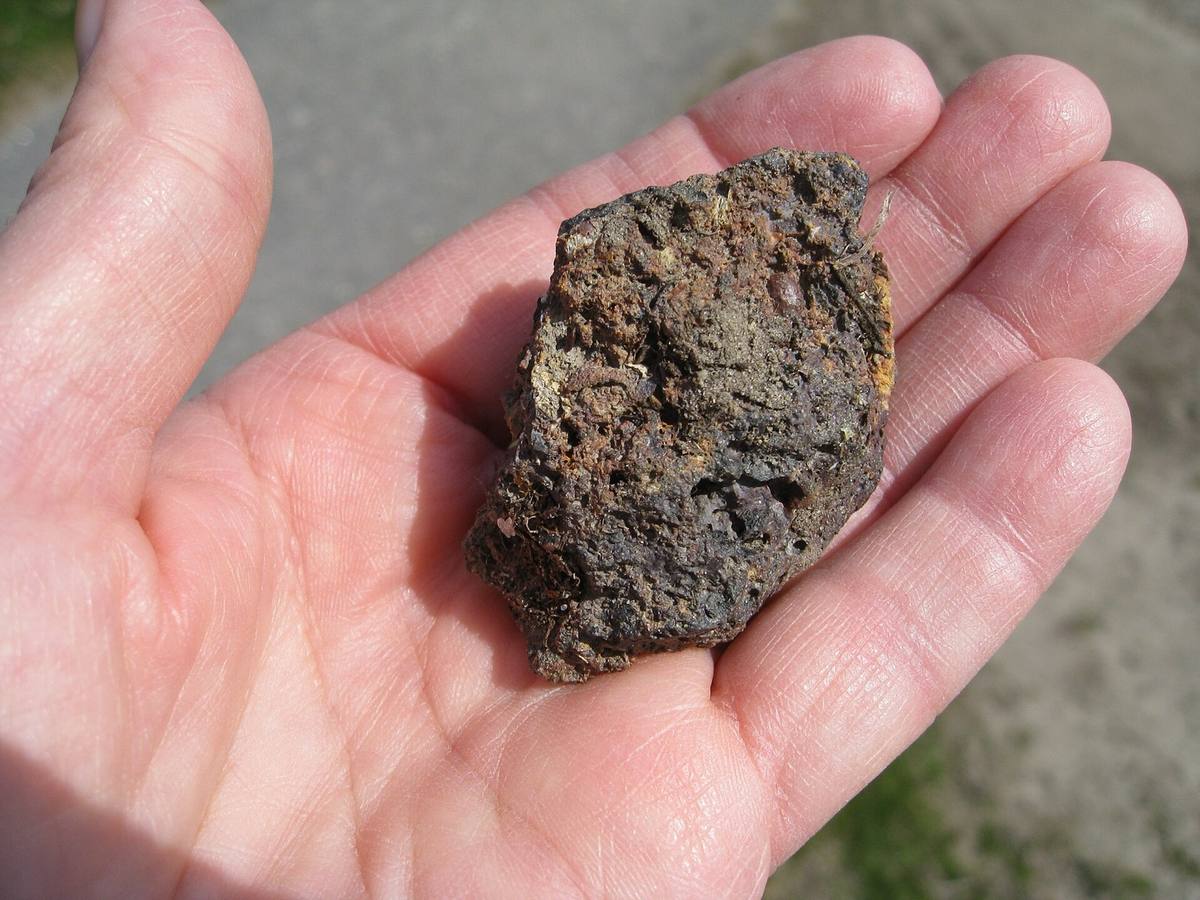
Slag is the glassy by-product of smelting ore to recover metal. It is typically vitreous and full of gas bubbles, often with a very rough exterior, and it may attract a magnet because of metal left behind. Many rocks photographed and sent to a meteorite researcher as possible meteorites turned out to be slag, and slag has no fusion crust. Its main components are oxides of calcium, magnesium, silicon, iron and aluminium, and it is reused in road construction and landscaping gravel.
Is this slag?
3-step field checkRun through these checks against the specimen in your hand. The more boxes tick, the more confident the ID.
- 1Read the textureLook at a fresh break with a hand lens. Texture: Glassy, with vesicles (gas bubbles); exteriors often very rough. Grain size: glassy.
- 2Pick out the mineralsComposition: Oxides of calcium, magnesium, silicon, iron and aluminium; may contain metal grains. Identify the two or three most abundant grains.
- 3Read the lusterHold the specimen under a strong light. Luster: vitreous.
Often confused with
Slag vs. its common look-alikes, and how to tell them apart in the field.
All properties
- Density
- 2.4 g/cm³
- Luster
- Vitreous
- Uses
- Construction
- Host rock
- Not a natural rock: a by-product of smelting ore
- Texture
- Glassy, with vesicles (gas bubbles); exteriors often very rough
- Grain size
- glassy
- Composition
- Oxides of calcium, magnesium, silicon, iron and aluminium; may contain metal grains
Where rockhounds find slag
11 mapped spotsClassic worldwide localities
- Road construction fill and landscaping gravel
Field-hunting tip
Where it forms: Not a natural rock: a by-product of smelting ore. In the U.S., the densest reported localities are in Michigan, Ohio. Start trip planning there.
More slag photos
Common questions
How do you identify slag?+
Where is slag found?+
Can I find slag in the United States?+
Is slag safe to handle?+
What rocks look like slag?+
What kind of rock does slag form in?+
What is slag used for?+
Find slag on the map
RockHoundR shows mapped rockhounding spots, access rules, and lets you log every find.