
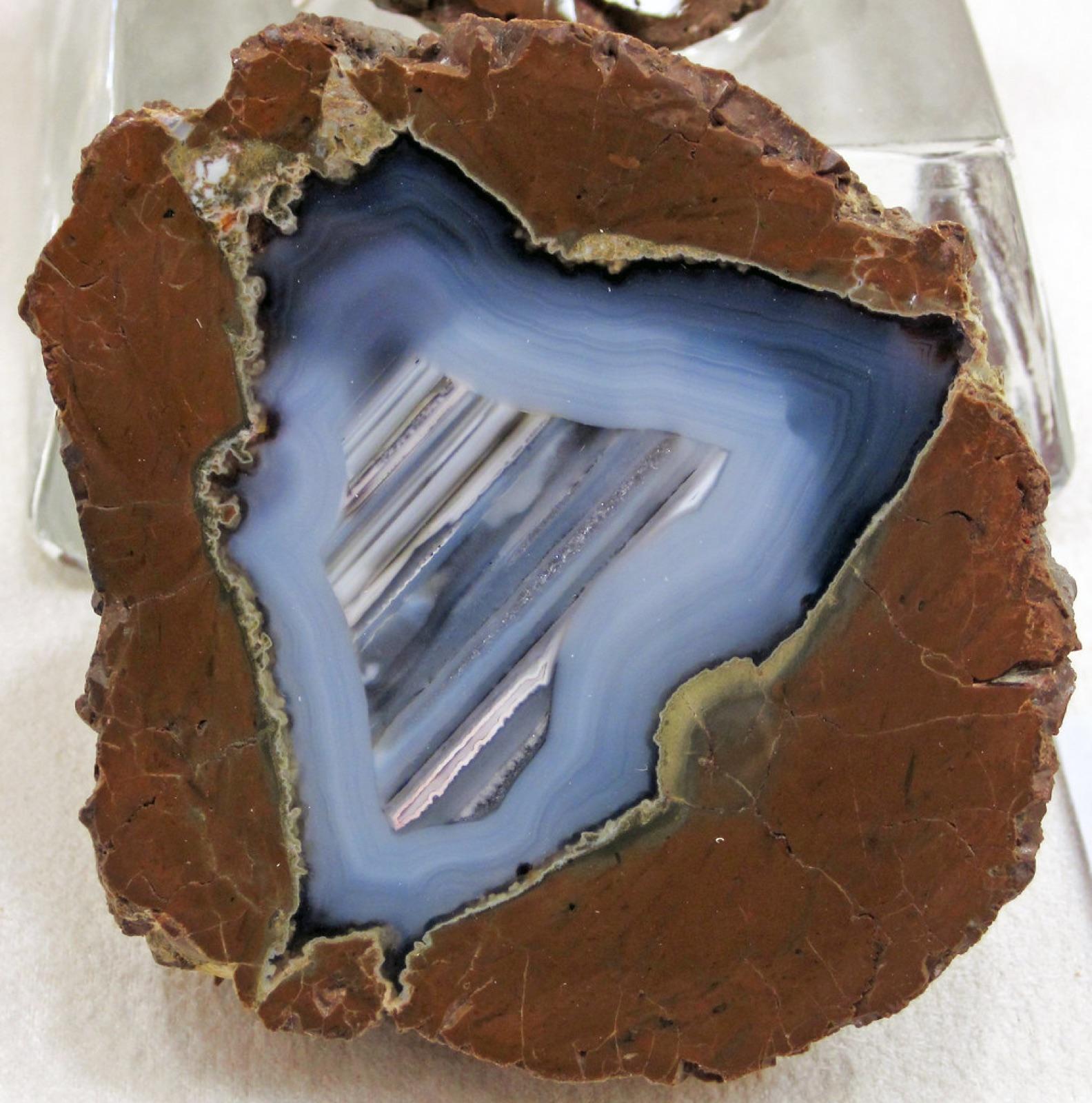
A thunderegg is a spherical, nodular structure found within rhyolitic volcanic ash flows, with a center of agate or chalcedony. It looks like a plain, weathered rock on the outside but reveals a colorful, patterned, or banded agate interior when cut and polished. Collectors prize it for intricate internal formations and color patterns specific to each locality.
Spotting thunderegg in the field
Field marks- 1
Knobbly, warty rhyolite exterior, usually fist sized and unremarkable
- 2
Roughly spherical but lumpier and more irregular than a geode
- 3
Solid and heavy, because the center is filled rather than hollow
A thunderegg is a rhyolite nodule with an agate or chalcedony center, and from the outside it looks like nothing at all, which is exactly why beds get worked systematically rather than by eye. They are Oregon's state rock, and the classic beds are in the central and eastern part of the state. Dig into the ash and weathered rhyolite rather than surface hunting, and cut the ends of a few to see what the bed is producing before you haul out a hundred pounds of it.
Straight answers
- Is it worth cutting?
- Cut across the middle for the classic star-shaped agate center. Many are cut as matched pairs, one half polished flat, the other left as sawn.
- What is it really worth?
- Cheap by the pound at the beds. Value depends entirely on the center: strong banding, a moss or plume filling, or an unusual color pattern.
- Can you legally keep it?
- Oregon's beds are a mix of BLM land open to personal-use collecting and private ranches that charge by the pound. Both are straightforward, but they are different rules, so know which you are on.
Where it is worth going
- Richardson's Rock RanchNear Madras, Oregon
Long-running private thunderegg beds, dig your own and pay by the pound.
- Succor Creek and OwyheeEastern Oregon
Public-land thunderegg and agate ground, remote and rough on vehicles.
Often confused with
Thunderegg vs. its common look-alikes, and how to tell them apart in the field.
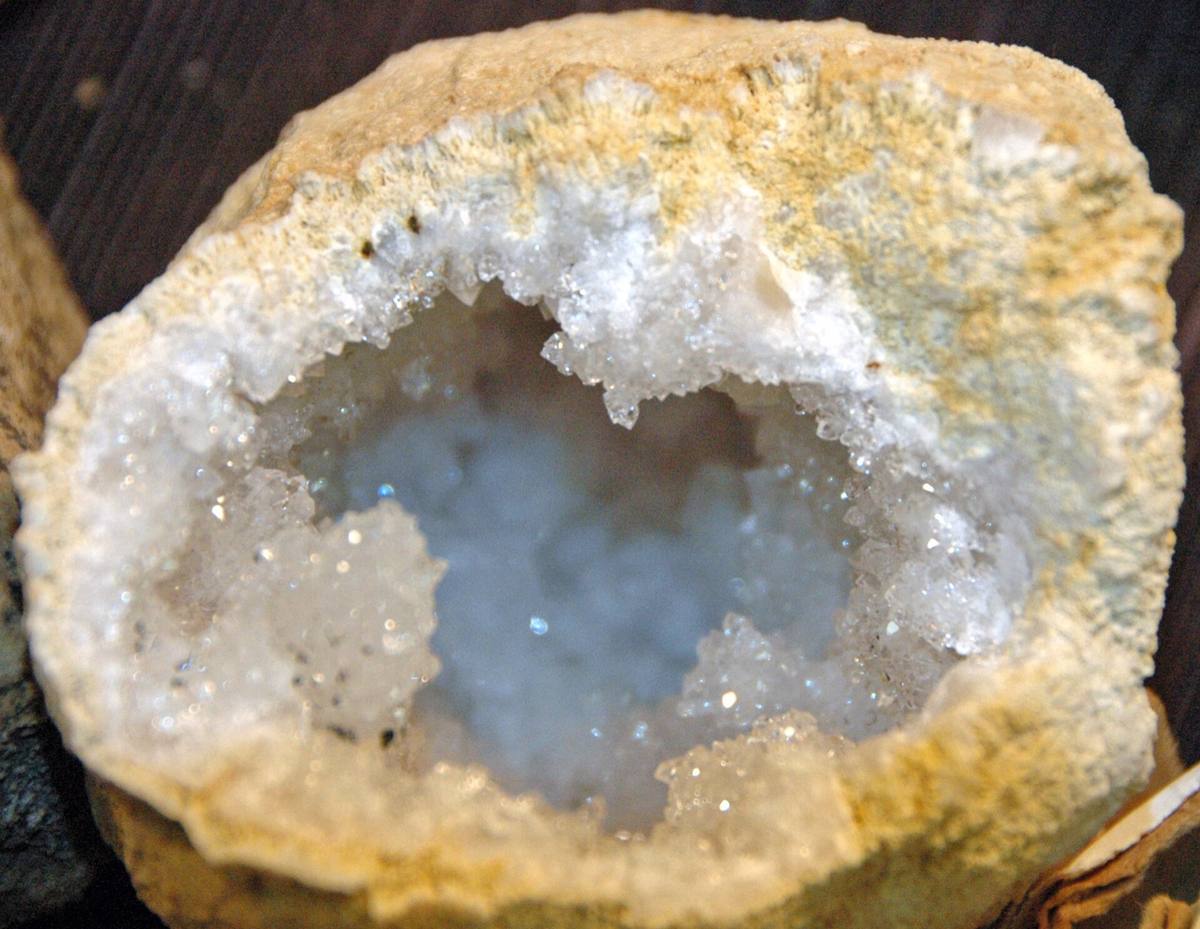
Often found alongside thunderegg
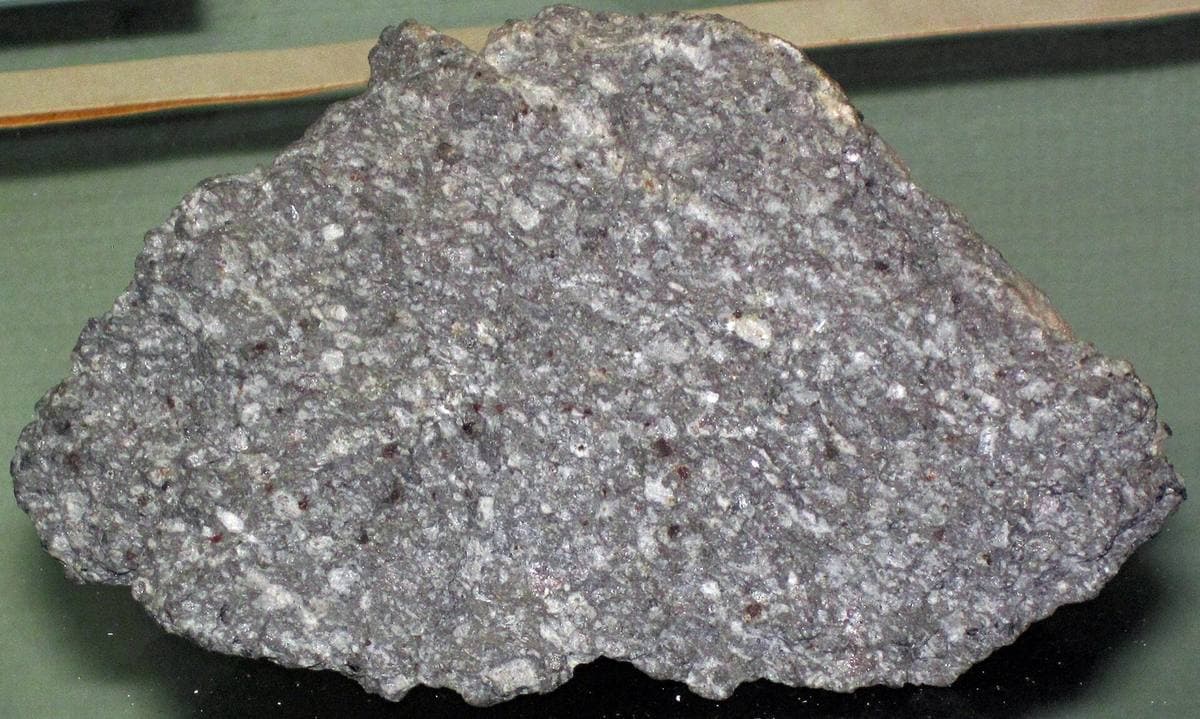
Minerals reported to co-occur with thunderegg. Spotting these in float or country rock is a strong cue you are in the right ground.
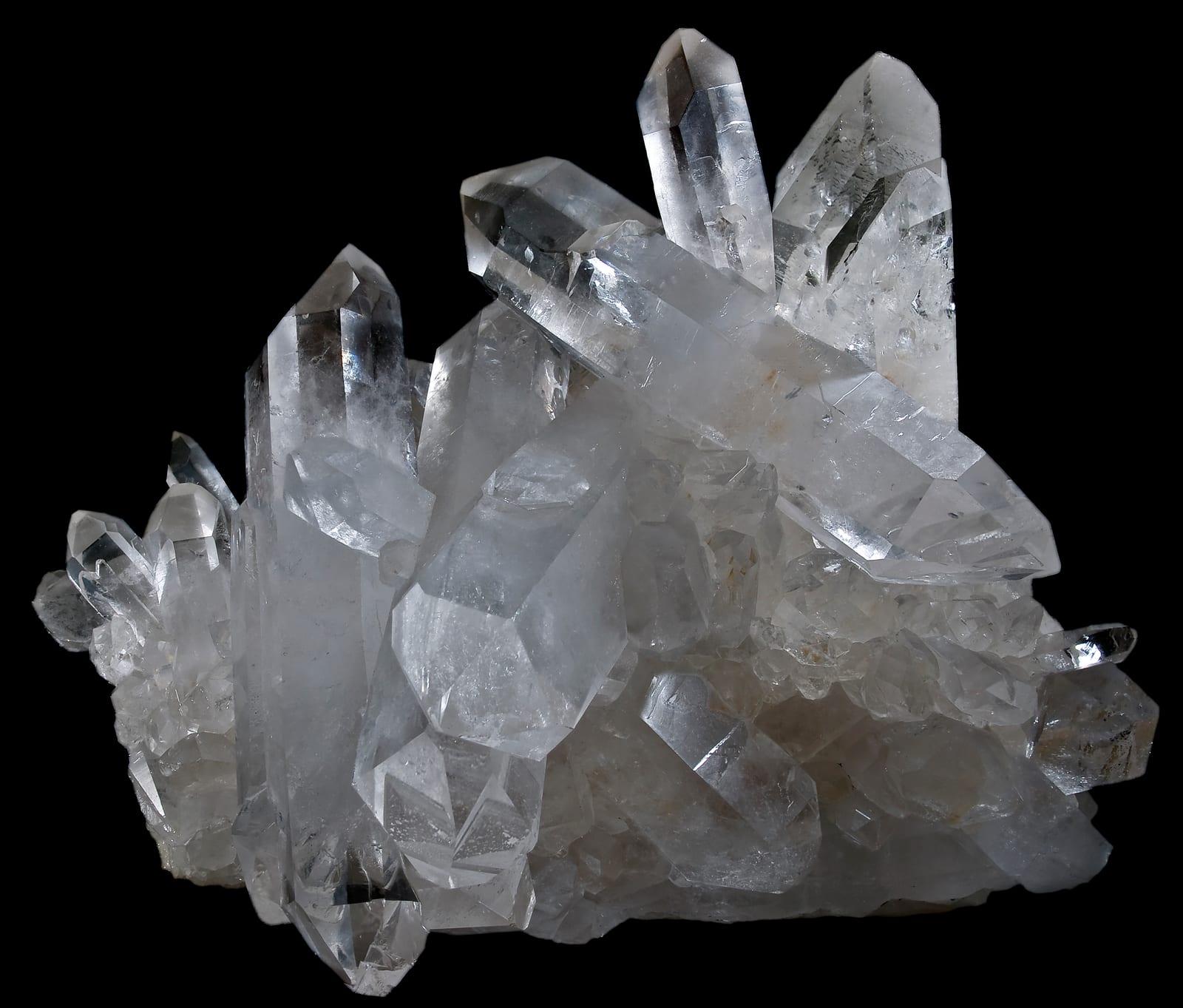
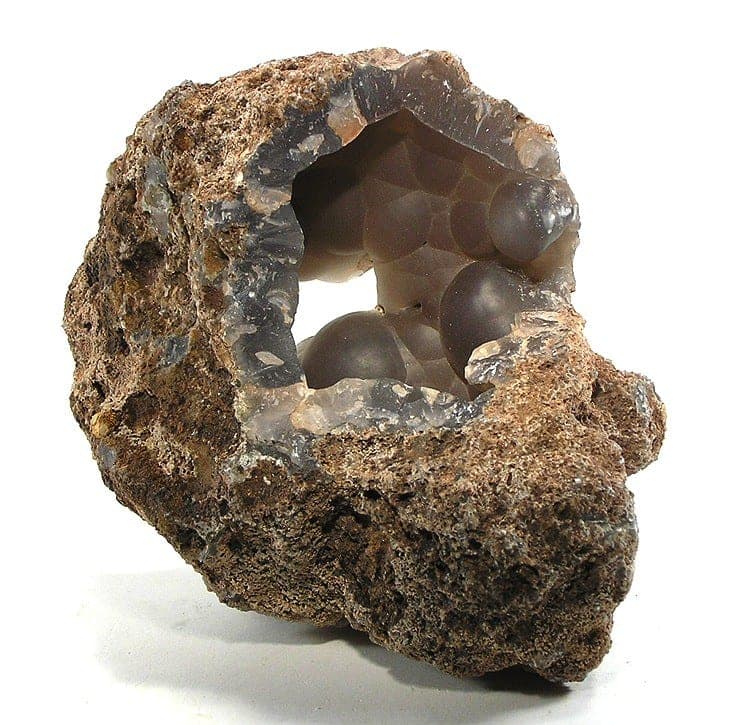
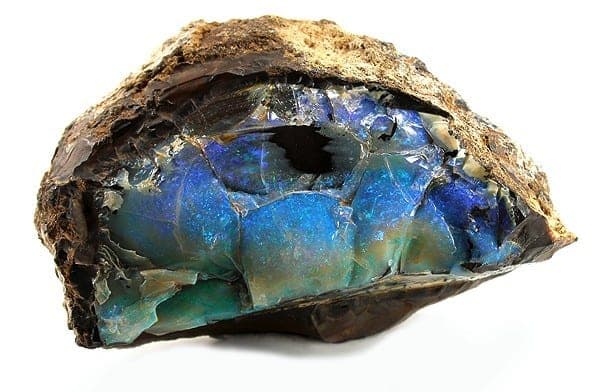
All properties
- Chemical formula
- SiO₂
- Mohs hardness
- 6.5-7
- Density
- 2.65 g/cm³
- Streak
- White
- Luster
- Vitreous
- Transparency
- Translucent
- Crystal system
- Trigonal
- Crystal habit
- Nodular
- Cleavage
- None
- Rarity
- Common
- Uses
- Lapidary, Collector, Decorative
- Host rock
- rhyolite
Where rockhounds find thunderegg
28 mapped spotsClassic worldwide localities
- Oregon, USA
- Germany
- New Mexico, USA
- Ethiopia
- Mexico
U.S. states with thunderegg
Each link opens a state-specific list of mapped rockhounding spots that produce thunderegg.
Field-hunting tip
Where it forms: rhyolite. If you start seeing quartz, chalcedony, opal in float, you are in the right ground. Typical habit: nodular. Train your eye for that shape before scanning the outcrop. In the U.S., the densest reported localities are in Oregon, New Mexico, California. Start trip planning there.
More thunderegg photos
Common questions
How do you identify thunderegg?+
Where is thunderegg found?+
Can I find thunderegg in the United States?+
What rocks look like thunderegg?+
What minerals are found with thunderegg?+
What kind of rock does thunderegg form in?+
What is thunderegg used for?+
Find thunderegg on the map
RockHoundR shows mapped rockhounding spots, access rules, and lets you log every find.

